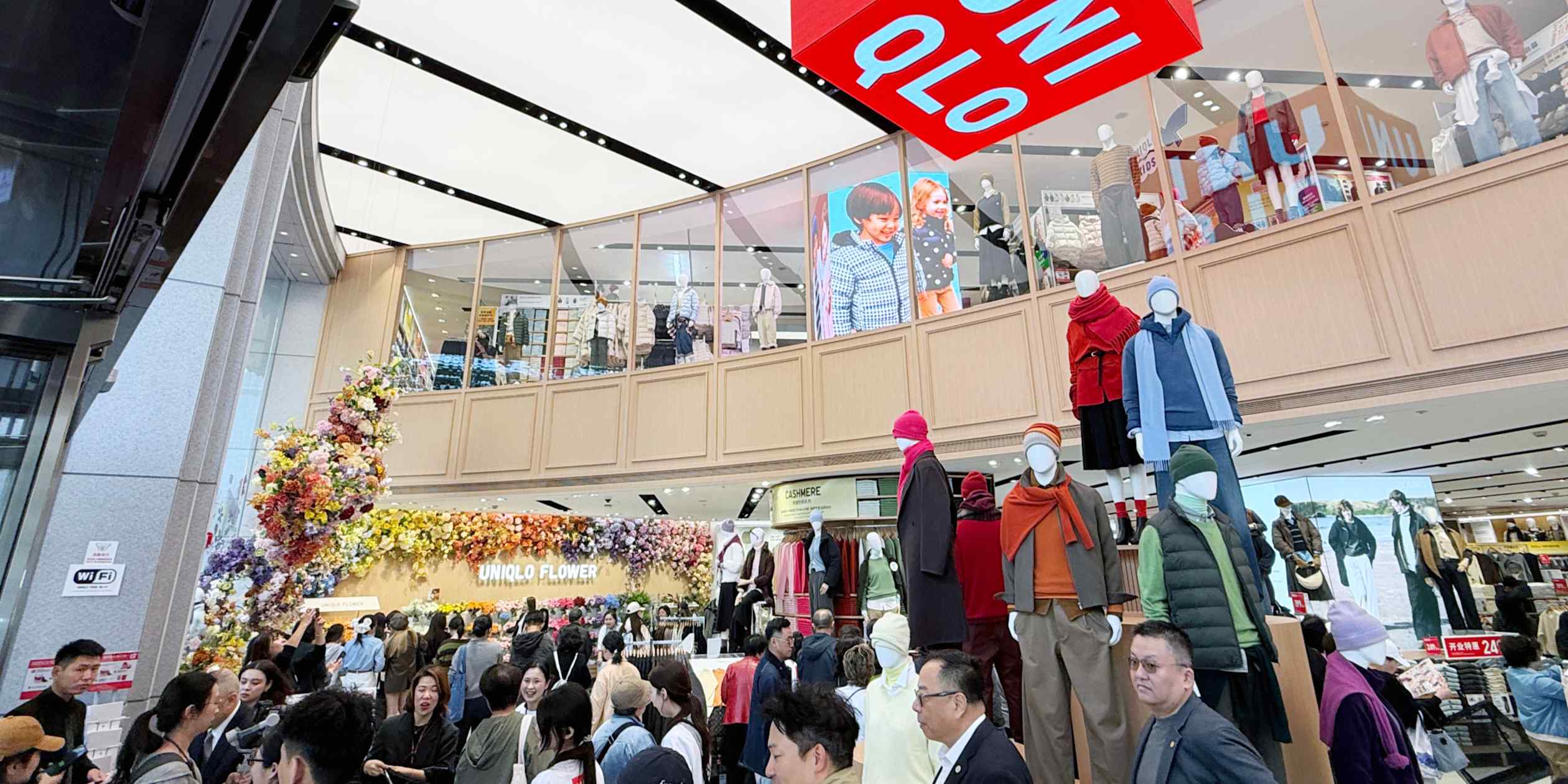
东京/上海 —— 优衣库已将其中国业务的重心从扩张转向逐店提升盈利能力,并以一家搬迁后的上海全球旗舰店为起点。
TOKYO/SHANGHAI -- Uniqlo has shifted the focus of its China business from expansion to boosting profitability on a store-by-store basis, starting with a relocated global flagship store in Shanghai.
“这一门店不仅代表优衣库旗舰店的焕新,”优衣库母公司迅销集团高级执行役员潘宁周五在开业仪式上表示,“更是我们持续深耕中国市场的重要里程碑。” 近1000名排队等候的顾客在开门瞬间涌入店内。该旗舰店位于一条繁华商业街上,作为品牌的展示窗口。
"This store represents more than just a renewal of a flagship location for Uniqlo," Pan Ning, a group senior executive officer at Uniqlo parent Fast Retailing, said at an opening ceremony Friday. "It is an important milestone in our efforts to continue moving forward in the Chinese market." Nearly 1,000 shoppers who had waited in line streamed into the store when doors opened. Located on a bustling commercial street, the flagship serves as a showcase for the brand.
门店共三层,销售面积约2800平方米。此前于2013年开业的旧址面积约8000平方米,并容纳了GU等迅销集团其他品牌。新店仅经营优衣库品牌。
The store occupies three floors and has a sales area of about 2,800 square meters. The previous location, which opened in 2013, spanned roughly 8,000 square meters and housed other Fast Retailing brands including GU. The new outlet is dedicated solely to Uniqlo.
尽管面积缩小,门店却提供了更丰富的产品阵容,包括仅在上海发售的商品。“我们希望通过周到的陈列道具与商品布局,打造高度便利的购物环境,”该店日本籍店长表示。
Despite the smaller footprint, the store offers an expanded product lineup, including items available only in Shanghai. "We want to create a highly convenient shopping environment through thoughtful arrangements of fixtures and merchandise," said the store's Japanese manager.
门店融入了上海传统建筑的设计元素,并结合本地特色。店内提供定制T恤,图案由与老字号餐厅合作设计而成,还采用了上海主题的刺绣图案。优衣库期望借此强化的店内体验吸引更多顾客。新店销售多款上海限定商品。此次旗舰店搬迁是优衣库中国业务全面改革的一部分。
The store incorporates design elements inspired by Shanghai's traditional architecture and integrates local characteristics. It offers custom T-shirts featuring designs created in collaboration with long-established local restaurants and embroidery using Shanghai-themed motifs. Uniqlo hopes to attract more customers through this enhanced in-store experience. The new store sells a variety of Shanghai-exclusive merchandise. The flagship relocation is part of a broader overhaul of Uniqlo's China operations.
2010年代,优衣库在中国加速开店,建立起约900家门店的网络,规模超越其在日本的版图。
Uniqlo accelerated store openings across China during the 2010s, building a network of around 900 stores that surpassed its footprint in Japan.
随着本土市场萎缩、扩张空间有限,中国成为优衣库海外业务中最大的利润贡献者,并帮助推动海外销售额在截至2019年8月的财年达到1万亿日元(按当前汇率约合63.6亿美元)。
With limited room for expansion in its shrinking home market, China became the biggest earnings contributor among its overseas operations and helped push overseas Uniqlo sales to 1 trillion yen ($6.36 billion at today's rates) in the year ended August 2019.
但自2024年前后起,中国市场增长放缓。在截至2025年8月的财年,大中华区——包含香港和台湾——成为唯一一个销售额和利润双双下滑的海外地区。
But growth in China has slowed since around 2024. In the year ended August 2025, greater China -- which includes Hong Kong and Taiwan -- was the only overseas region to post declines in both sales and profit.
随着中国经济降温,许多优衣库门店所在的购物中心难以吸引客流。优衣库的商品结构和营销举措也过度标准化,导致难以根据当地需求调整运营。
As China's economy cooled, shopping centers, where many Uniqlo stores are located, have struggled to attract visitors. Uniqlo's merchandise selection and marketing efforts also became overly standardized, making it harder to tailor operations to local demand.
尽管截至8月的财年营收转为增长,同比上升11%,但增速落后于北美的35%和欧洲的39%。该地区还录得优衣库海外市场中最低的业务利润率。
Although revenue in the year ended August turned to growth, rising 11% from the previous year, the growth lagged North America's 35% and Europe's 39%. The region also recorded the lowest business profit margin among Uniqlo's overseas markets.
迅销已启动结构性改革,旨在重燃增长势头。除了关闭表现不佳的门店外,公司还将店铺搬迁至黄金地段以提升盈利能力。
Fast Retailing has launched structural reforms aimed at reigniting growth. In addition to closing underperforming stores, it is relocating shops to prime sites to improve profitability.
截至2024年8月底,中国大陆门店数量为926家,但到今年8月底已减少至851家。多家上海门店计划在2026年底前完成翻新升级。
The number of stores in mainland China stood at 926 at the end of August 2024 but was down to 851 by the end of August this year. Multiple Shanghai stores are scheduled for updates by the end of 2026.
公司也在重新审视营销策略。优衣库过去通过分权模式扩张,赋予店长广泛权力以适应当地情况。
The company is also reexamining its marketing approach. Uniqlo historically expanded through a decentralized model that gave store managers broad authority to adapt to local conditions.
“在符合当地需求的商品结构和销售计划等方面,仍有相当大的改进空间,”迅销首席财务官冈崎健士表示。
"There is still considerable room for improvement in areas like merchandise selection and sales planning that are aligned with local needs," said Fast Retailing Chief Financial Officer Takeshi Okazaki.
为此,该公司正加快培养店长等人员,使其能够制定适应当地气候和文化的商品组合与销售计划。公司还在武汉、成都等其他主要城市开设了体验型旗舰店,以强化品牌知名度。
To address this, the company is accelerating the development of store managers and other personnel so they can create product assortments and sales plans suited to regional climates and cultures. It has opened experience-focused flagship stores in other major cities like Wuhan and Chengdu to strengthen brand awareness.
据欧睿国际数据,2025年中国服装市场增长2%,达到2.2万亿元人民币(约合3300亿美元),成为仅次于美国的第二大市场。随着国产运动品牌集团和韩国品牌崛起,竞争日益激烈。
China's apparel market grew 2% in 2025 to 2.2 trillion yuan ($330 billion), making it the second largest after the U.S., according to Euromonitor. Competition has intensified as domestic sportswear groups and South Korean brands gain ground.
优衣库母公司迅销的主要增长动力越来越多地来自北美和欧洲,公司在这些地区利用旗舰店加深消费者对品牌的理解并提升知名度,从而维持了双位数销售增长。在截至8月的一个年度里,欧洲和北美合计销售额首次超过大中华区。
Fast Retailing's primary growth drivers are increasingly North America and Europe, where the company has used flagship stores to deepen consumer understanding of the brand and raise awareness, helping sustain double-digit sales growth. In the year ended August, combined sales in Europe and North America exceeded those of greater China for the first time.
预计迅销2027财年合并营收将首次突破4万亿日元,有望超越瑞典H&M,成为全球第二大服装零售商。
Fast Retailing's consolidated revenue is projected to surpass 4 trillion yen for the first time in fiscal 2027 -- potentially enough to overtake Sweden's H&M and become the world's second-largest apparel retailer by sales.
创始人兼首席执行官柳井正表示:“自创业以来,我们始终以成为世界第一为目标。为实现这一目标,我们制定计划、采取行动、不断自我变革。”尽管迅销正逼近第二名位置,但与拥有Zara的西班牙印地集团(年销售额约7万亿日元)之间仍存在巨大差距。
"Since the company's founding, we have always set our sights on becoming the world's best," said founder and CEO Tadashi Yanai. "We have made plans, taken action and changed ourselves to achieve that goal." Although Fast Retailing is closing in on the No. 2 position, it will still face a large gap between it and Spain's Inditex, owner of Zara, which has about 7 trillion yen in annual sales.