几代人以来,“中国人”这个名号走得比大多数被它所指代的人还要远。高铁改变了这一切。
For generations, the name ‘Chinese’ travelled farther than most of the people it described. High-speed rail has changed all that.
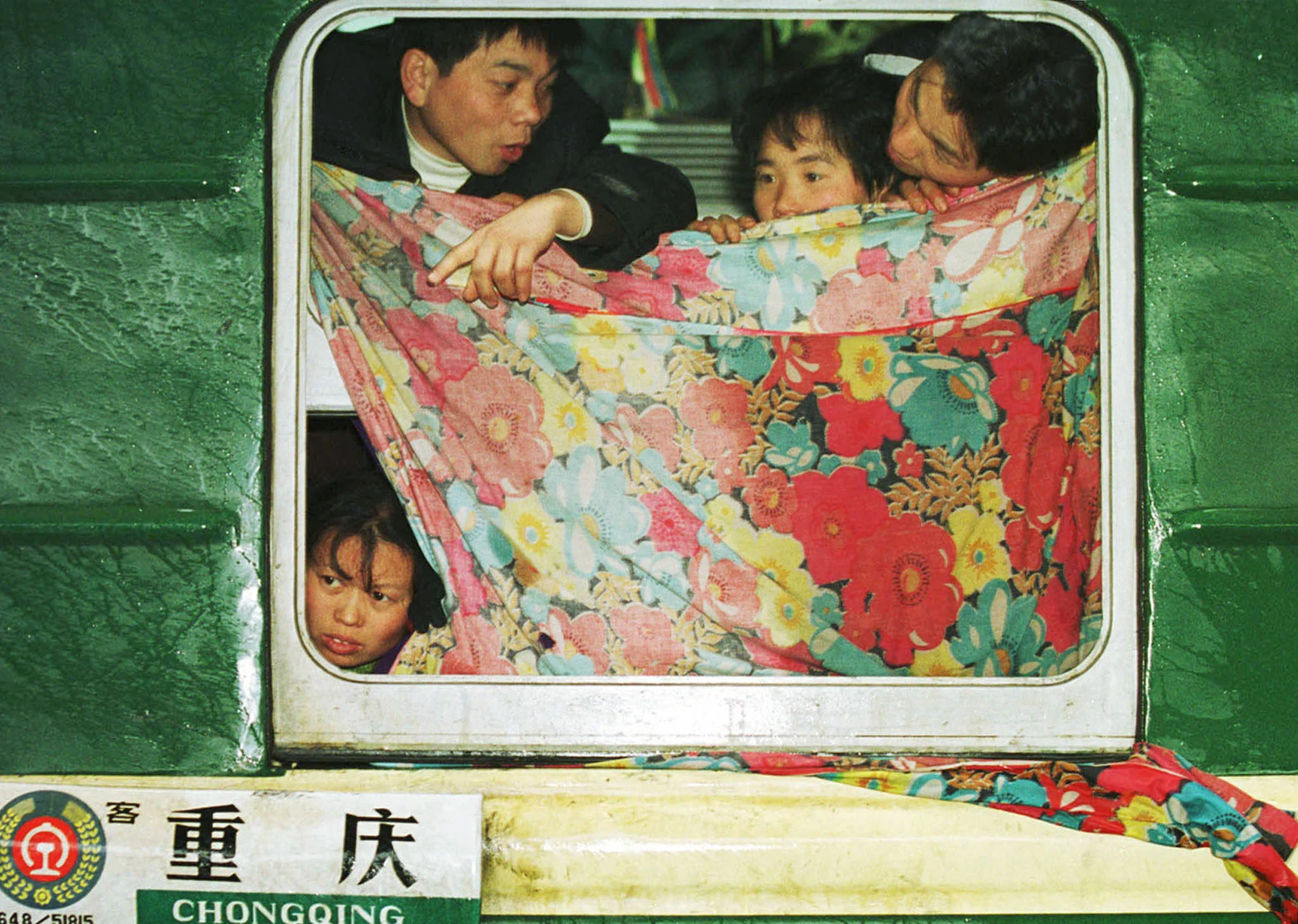
2001年,湖北省武汉火车站,民工从列车破损的窗户向外张望。飞行更快,但旅程只是两点之间的一条弧线。乘火车,距离依然触手可及。 。我一句听不懂,也分辨不出它们的区别。那也是我第一次品尝福建的铁观音茶、潮州风格的蟹粥和海南鸡饭。
Migrant workers peep from the broken window of a train at Wuhan railway station, Hubei province in 2001. Flying is faster but the journey is an arc between two points. By train, distance remains tangible. Photo: Reuters It was only in my 20s, when I moved to Singapore for work, that I began hearing Hokkien, Teochew and Hainanese in everyday life. I understood nothing, nor could I distinguish between them. That was also where I first tried tieguanyin tea from Fujian, Teochew-style crab porridge and Hainanese chicken rice .
我在湖北中部的一个山区县长大。省会武汉素有“九省通衢”之称。可在我的家乡县里,我从未有意识地遇见过来自福建、潮汕或海南的人——这些沿着数千公里海岸线延伸的整片区域——也从未尝过他们的美食。
I grew up in a mountainous county in Hubei province, central China. The provincial capital, Wuhan, is known as the “thoroughfare to nine provinces”. Yet in my home county I had never knowingly met anyone from Fujian, Chaoshan or Hainan – entire regions stretching along thousands of kilometres of coastline – nor tasted their food.
只有在新加坡,这些地名才有了声音和滋味。令我震惊的是,在新加坡,这一切竟是如此寻常。
Only in Singapore did the place names acquire voices and flavours. What struck me was how ordinary all this was in Singapore.
我的祖母生于1920年代,在私塾读了七年中国传统经典——对于她那一代女性来说,这是罕见的教育。她能读懂几百年前的典籍,是我认识的最有智慧的人之一,但我怀疑她一生从未离家超过50公里。
My grandmother, born in the 1920s, spent seven years studying Chinese classics at a sishu , a traditional private school – an unusual education for a woman of her generation. She could read centuries-old texts and was one of the wisest people I knew, yet I doubt she ever travelled more than 50km from home.
祖父母种水稻蔬菜,养鸡养猪。他们想象别的省份也是过着大同小异的日子,觉得没什么理由去走一遭。
My grandparents grew rice and vegetables and kept chickens and pigs. They imagined much the same life in other provinces and saw little reason to visit.
我的外公生于1910年代,也上过私塾,学会了识字和记账。识字和谋生的需要给了他外出闯荡的勇气。他做起生意,从武汉进厂制布匹回老家县里倒卖。单程110公里,步行需数日,这已让他成为方圆一带见识最广的人之一。他只不过走到了咱们的省会城市而已。
My maternal grandfather, born in the 1910s, had also attended a sishu , learning to read and keep accounts. Literacy and the need to earn a living gave him the courage to travel. He built a business buying factory-made cloth in Wuhan for resale in his home county. The 110km walk took several days, making him one of the most widely travelled people in the vicinity. He had merely reached our provincial capital.
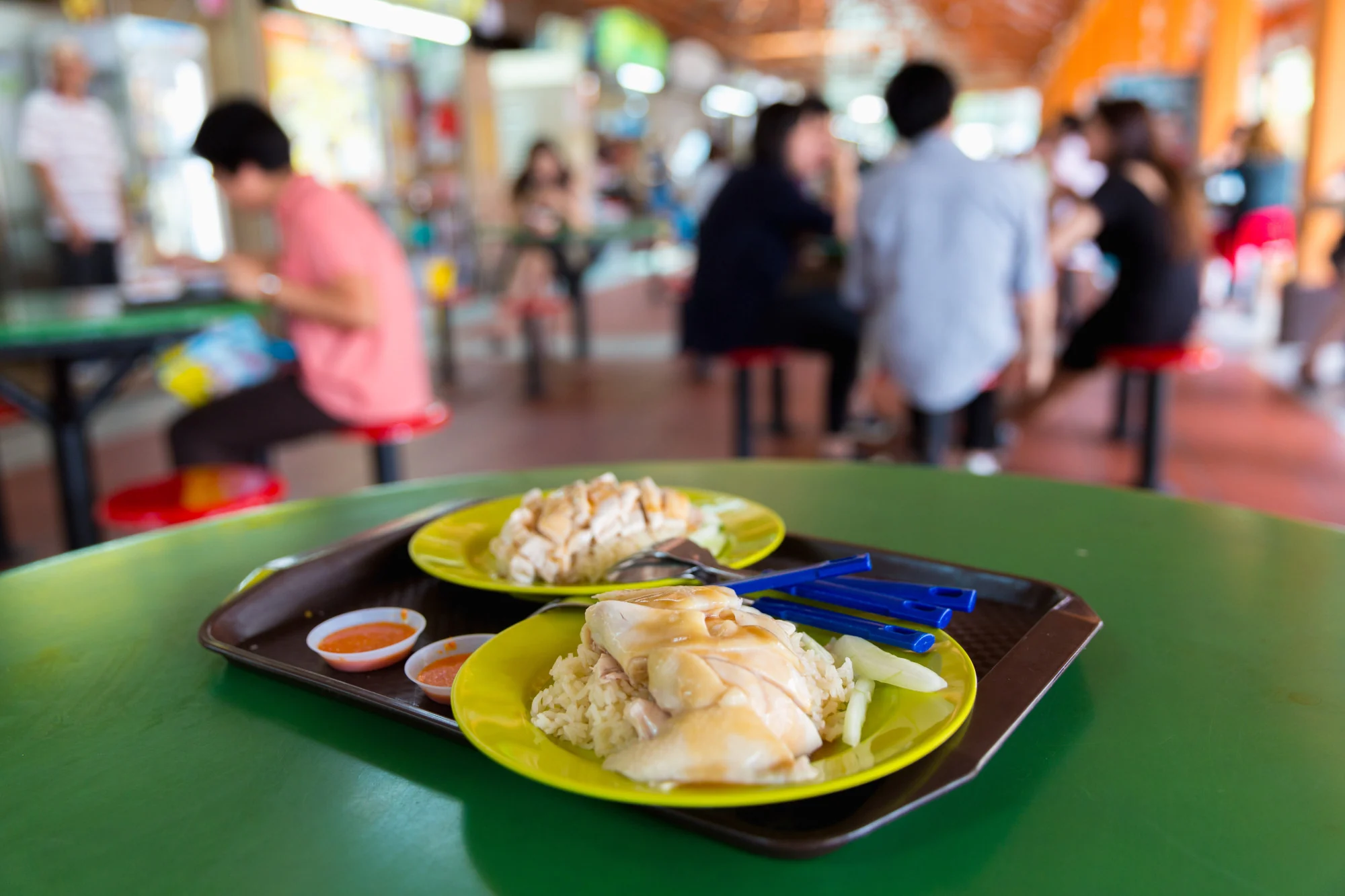
麦士威熟食中心的海南鸡饭。在新加坡,福建、潮汕、海南等中国地名与不同的口音和风味联系在一起。图:Shutterstock祖父母回忆说,日本占领中国东北省份——侵略由此开始——仿佛是另一个国家的消息。他们只知道东北是皇帝的祖籍之地——尽管那个王朝早在20年前就已被推翻。只有当日军占领武汉时,他们才真切感到中国正在被侵略。
Hainanese chicken rice in Maxwell Food Centre. In Singapore, Chinese place names like Fujian, Chaoshan and Hainan are associated with different accents and flavours. Photo: Shutterstock My grandparents recalled that Japan’s occupation of China’s northeastern provinces, where the invasion began, had seemed almost like news from another country. They knew the northeast only as the ancestral home of the emperors – even though that dynasty had been overthrown for 20 years by then. It was only when Japanese forces occupied Wuhan that they truly felt China was being invaded.
福建、潮汕、海南也是历代相传的地名。祖父母或许听过这些名字,但对这些地方或它们有多远毫无概念,更不用说这些地方都属于同一个帝国或共和国了。
Fujian, Chaoshan and Hainan too were place names handed down through the dynasties. My grandparents might have heard these names, but they had little sense of the places or how far away they were, never mind that these places were all part of the same empire or republic.
与祖父母不同,我为高考曾将中国地理(包括铁路线路)背得滚瓜烂熟。然而,我依然带着那张世代相传、模糊不清的心理地图,直到移居新加坡。
Unlike my grandparents, I memorised China’s geography, including its railway routes, in minute detail for the university entrance exams. Yet I carried that inherited, hazy mental map of the country until I moved to Singapore.
20世纪60年代,父亲离家去武汉上大学,母亲去师范学院读书。两人都成了教师,为工作四处奔波,后来又为陪伴子女而迁徙。他们曾和我住在新加坡,最远的一次旅程是陪我在美国待了六个月。
In the 1960s, my father left home for university in Wuhan and my mother for teacher-training college. Both became schoolteachers, travelling for work and later to be with their children. They stayed with me in Singapore and, on their farthest journey, spent six months with me in the United States.
轮到我上大学时,祖父曾徒步走过的110公里到武汉的路程,坐长途汽车仍需五个半小时,其中还要渡过长江。如今,我仍走陆路,不到两小时就能到达:至今没有铁路通达我的县城。
When it was my turn to go to university, the 110km to Wuhan that my grandfather had walked still took five-and-a-half hours by coach, including a ferry crossing of the Yangtze. Today, it takes me less than two hours, still by road: no railway reaches my county.
祖父母回忆说,日本占领中国东北省份——侵略由此开始——仿佛是另一个国家的消息我的第一份工作让我从武汉前往北京。每个月我都乘火车往返,住在硬卧车厢。曾经需要30多个小时才能完成的行程,后来只需14小时,傍晚出发,早晨抵达。这趟夜间列车被宣传为一项突破,它确实感觉像是一次突破,尽管在嘈杂的车厢里我几乎无法入睡。习惯了早晨淋浴的我,到达时急需找个地方洗漱。
My grandparents recalled that Japan’s occupation of China’s northeastern provinces, where the invasion began, had seemed almost like news from another country My first job sent me from Wuhan to Beijing. Each month I made the round trip by train, in a hard sleeping berth. A journey that had once taken more than 30 hours could then be made in 14, with an evening departure and a morning arrival. The overnight service was touted as a breakthrough, and it genuinely felt like one, though seldom could I sleep in the noisy carriage. Accustomed to a morning shower, I arrived needing somewhere to wash.
尽管有这些小小的不便,当别人问起我家乡省份与北京之间的距离时,我学会了说“火车14小时”。大多数人会回答:“那不算远。”
Despite these minor inconveniences, I learnt to say “14 hours by train” when asked about the distance between my home province and Beijing. Most people would reply, “That’s not far.”
如今,从武汉到北京的最快列车大约四小时就能行驶约1200公里。香港在相反方向与武汉的铁路距离相近,到达那里只需多花一点时间。把两趟高铁行程加起来,北京和香港之间乘火车大约相隔八小时。曾经感觉遥不可及的地方,如今变成了我可以轻易想象出发前往的旅程。
Today, the fastest trains from Wuhan to Beijing cover roughly 1,200km in about four hours. Hong Kong lies a similar rail distance from Wuhan in the opposite direction and takes only a little longer to reach. Adding up the two high-speed journeys, Beijing and Hong Kong are about eight hours apart by train. What once felt dauntingly remote becomes a journey I can readily imagine making.
飞行更快,但旅程只是两点之间的一条弧线。乘火车,距离依然触手可及:我可以看到城市之间的城镇和风景。它们让我曾经烂熟于心的铁路线变得更加丰满。
Flying is faster but the journey is an arc between two points. By train, distance remains tangible: I can see the towns and landscapes between cities. They flesh out the railway lines I once learned by heart.
2024年,首趟从香港开往北京的高速卧铺列车抵达北京西站。摄影:Elson Li高铁让更多地方感觉触手可及,仿佛是一次普通的旅程。即使不买票,这种感觉也会改变事情。
The first high-speed sleeper train from Hong Kong to Beijing arrives at Beijing West station in 2024. Photo: Elson Li High-speed rail has made more places feel within reach of an ordinary journey. That changes things even when no ticket is bought.
几代人以来,“中国”这个名字传播得比它所描述的大多数人更远。整体比实际体验更容易被命名。
For generations, the name “Chinese” travelled farther than most of the people it described. The whole was easier to name than to experience.
然而,可达性并不等于熟悉,更不等于相同。我讲湖北方言,至今仍听不懂闽南语、潮州话或海南话。铁路可以把我们带到对方的城市,但它无法翻译我们到达后所说的话。尽管我们可能依然各说各话,但至少我们现在知道彼此之间相隔多少小时。
Yet reachability is not familiarity, much less sameness. I speak a Hubei dialect and I still cannot understand Hokkien, Teochew or Hainanese. A railway can carry us to one another’s cities, but it cannot translate what we say when we arrive. Although we may still talk past one another, at least we now know how many hours lie between us.
栏目:观点 / 中国观点 / 文化 | 话题:中国文化、中国、新加坡、中国旅游、旅游、香港高铁、做中国人短链接:
Sections: Opinion / China Opinion / Culture | Topics: Chinese culture, China, Singapore, China travel, Travel, Hong Kong high-speed rail, Being Chinese Short link: https://sc.mp/be5ow Read the original article on SCMP