种族问题在马来西亚各地的表现各不相同。在马来半岛,身份政治相对僵化:马来人与非马来人对立,伊斯兰教与马来人身份不仅在文化上,而且在宪法层面融为一体。然而在婆罗洲的沙巴和砂拉越两州,情况则不那么二元对立。宗教在日常生活中的作用较小,文化认同更为分散,族群界限也不那么泾渭分明。
Ethnicity plays out differently across Malaysia. On the peninsula, identity politics is comparatively rigid: Malay vs non-Malay, with Islam and Malay identity fused not just culturally but constitutionally. In the Borneo states of Sabah and Sarawak, however, the picture is less binary. Religion plays a smaller role in daily life, cultural identities are more diffuse, and ethnic lines are less clear-cut.
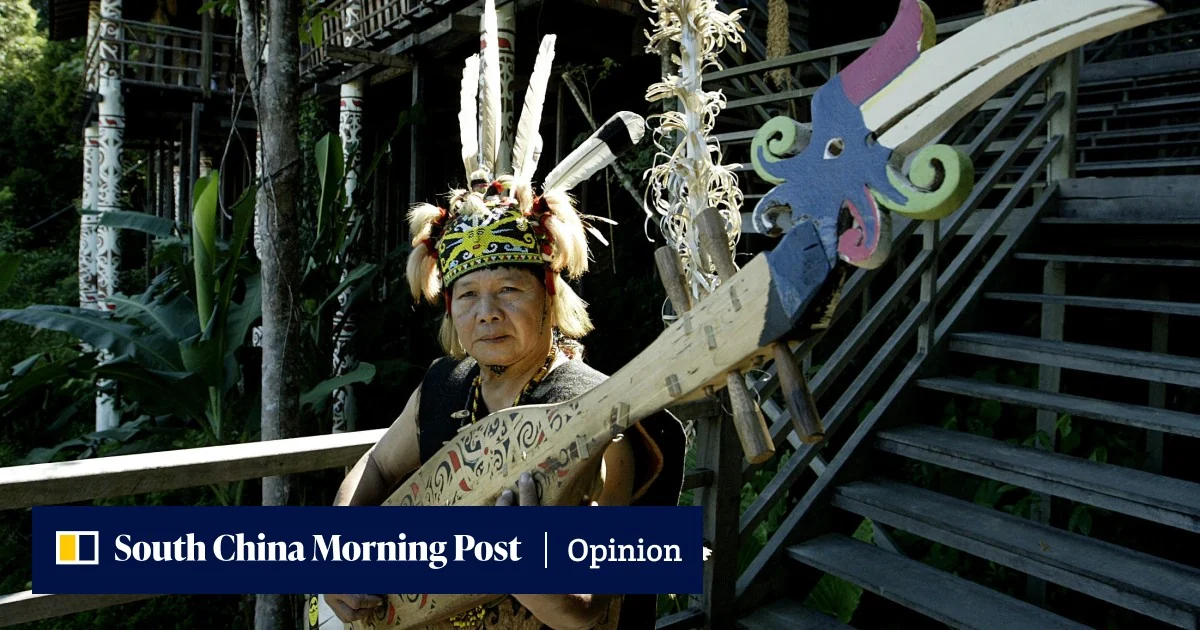
达雅人是砂拉越非穆斯林原住民的统称,占该州人口的42%,是最大族群。他们由伊班族(28%)、比达友族(8%)、奥朗乌鲁族(“内陆人”)及其他原住民群体(6%)组成。马来人(24%)和马拉瑙族(5%),其中大多数为穆斯林,构成了其余人口的大部分,华人(24%)也占相当比例。
The Dayaks, a collective term for Sarawak’s non-Muslim indigenous peoples, are the state’s largest ethnic group at 42 per cent of the population. They comprise the Iban (28 per cent), Bidayuh (8 per cent), Orang Ulu (“people of the interior”) and other indigenous groups (6 per cent). Malays (24 per cent) and Melanau (5 per cent), most of them Muslim, make up much of the rest of the population, alongside Chinese (24 per cent).
达雅社区内部的权力斗争——以及达雅、马来-马拉瑙和华人三大阵营之间的博弈——交织着个人政治,且日益渗入“砂拉越优先”的民族主义。执政的砂拉越政党联盟(GPS)于2018年正式脱离国民阵线,主张砂拉越人身份高于族群身份。其核心成员党——砂拉越土著保守联合党(PBB),自1970年代以来一直掌控州政府。
Power struggles within the Dayak community – and between the Dayak, Malay-Melanau and Chinese blocs – are layered with personality politics and, increasingly, “Sarawak First” nationalism. The ruling Gabungan Parti Sarawak (GPS) coalition formally broke away from Barisan Nasional in 2018 and champions Sarawakian identity over ethnicity. Its dominant component party, Parti Pesaka Bumiputera Bersatu (PBB), has anchored the state government since the 1970s.
在随后的几十年里,每一任砂拉越首席部长均来自穆斯林土著——马来语意为“土地之子”——延续了长达56年不间断的纪录:马拉瑙族(阿卜杜勒·拉赫曼·雅古,1970–1981年;泰益·马哈茂,1981–2014年)或马来族(阿德南·萨特姆,2014–2017年;阿邦·佐哈里,2017年至今)。这种主导地位可追溯至1966年,当时吉隆坡动用紧急权力,以抵制联邦控制为由撤换了伊班族首席部长史蒂芬·卡隆·宁坎。
Over the ensuing decades, every Sarawak chief minister has come from the Muslim bumiputra – a Malay word meaning “sons of the land” – in an unbroken 56-year run: Melanau (Abdul Rahman Ya’kub, 1970–81; Taib Mahmud, 1981–2014) or Malay (Adenan Satem, 2014–17; Abang Johari, 2017 to present). That dominance traces back to 1966, when Kuala Lumpur used emergency powers to remove Iban chief minister Stephen Kalong Ningkan for resisting federal control.
这一局面之所以延续,是因为穆斯林土著选民集中支持单一政党,而达雅族选票则分散在数个政党之中。
It has endured because Muslim bumiputra voters consolidated behind one party while the Dayak vote split across several.
即将到来的州选举可能是阿邦佐哈里作为首席部长的最后一次选战。随着砂拉越政党联盟(GPS)重掌政权几成定局,更关键的问题是继任:砂拉越最终会否由一名达雅人领导?达雅人继任者将证明GPS的“砂拉越优先”口号具有包容性。另一位马来-米拉瑙-穆斯林继任者只会让不满情绪延续,而正是这种不满让民族主义诉求,即“达雅主义”得以滋长。
The coming state election could be Abang Johari’s last as chief minister. With GPS’ return to power virtually assured, the more consequential question is succession: will a Dayak finally lead Sarawak? A Dayak successor would show that GPS’ “Sarawak First” slogan is inclusive. Another Malay-Melanau-Muslim successor would only keep alive the grievance on which ethnonationalist appeals, or “Dayakism”, thrive.
随着砂拉越迈向投票日,争夺达雅选票的角力再度展开。在一个没有任何单一族群能自行掌握多数的州属,没有任何政党能在没有达雅人——这一最大族群板块——支持的情况下执政。
As Sarawak heads to the polls, the contest for the Dayak vote is once again under way. In a state where no ethnic group commands a majority on its own, no party can govern without the Dayak, the largest bloc.
然而,达雅人的代表性依然破碎且不均衡。在州立法议会的82个席位中,有34个是达雅人占多数选区,即达雅选民超过50%。GPS在2021年赢下了其中除两席外的所有席位,分布在其成员党:土著保守党(PBB)、砂拉越人民党(PRS)、进步民主党(PDP)和砂拉越联合人民党(SUPP)之中。作为联盟主要达雅基础政党的PRS持有11个席位。目前议会中没有任何在野党代表达雅人。
Yet Dayak representation remains fragmented and uneven. Of the 82 seats in the state legislative assembly, 34 are Dayak-majority, meaning Dayaks make up more than 50 per cent of voters. GPS won all but two of them in 2021, spread across its component parties: PBB, Parti Rakyat Sarawak (PRS), the Progressive Democratic Party (PDP) and the Sarawak United Peoples’ Party (SUPP). PRS, the coalition’s main Dayak-based party, held 11 seats. No opposition party currently represents Dayaks in the assembly.
社交媒体上充斥着达雅人的不满,从要求收回祖传土地到抱怨在政府中代表性不足。一张广为流传的表格声称显示,达雅人在关键管理职位上远落后于其马来-米拉瑙-穆斯林对应群体。GPS的回应直指要害。在8月的PBB特别大会上,阿邦佐哈里拒绝了边缘化叙事,宣称“”(有能力者将崛起),并将领导权定性为能力而非种族的问题。
Social media has been awash with Dayak grievances, from calls to reclaim ancestral land to complaints of underrepresentation in government. One widely circulated table purported to show Dayaks far behind their Malay-Melanau-Muslim counterparts in key management positions. GPS’ response was pointed. At the PBB Special Convention in August, Abang Johari rejected the marginalisation narrative, declaring “” (whoever is capable will rise), and framing leadership as a matter of merit, not ethnicity.
以往的选举结果显示,达雅克人争取最高领导职位面临巨大困难。即使囊括所有34个达雅克人占多数的选区,达雅克政党仍不足以达到组阁所需的42席,被迫与已锁定加入砂拉越政党联盟(GPS)的马来-马拉瑙族或华人政党结盟。2021年,反对党——其中以砂拉越新达雅克民族党(PBDS)为首——曾抛出达雅克籍首席部长的前景,却未能以任何实质方式动摇选民忠诚度。
Past election results suggest Dayak bids for top leadership roles face steep odds. Even a clean sweep of all 34 Dayak-majority seats would leave a Dayak party short of the 42 needed to govern, forcing it into partnership with Malay-Melanau or Chinese parties already locked into GPS. In 2021, opposition parties, chief among them Parti Bansa Dayak Sarawak Baru (PBDS), dangled the prospect of a Dayak chief minister, but failed to shift loyalties in any meaningful way.
这种诉求由来已久。PBDS成立于1983年,比任何其他政党更持续地动员达雅克族群情绪,并在1991年争取达雅克籍首席部长失败的竞选中创造了“达雅克主义”这一口号。该党于2004年被取消注册,2013年以PBDS Baru(新PBDS)之名复活,并于2022年收回PBDS名称。另一反对党——现已解散的砂拉越联合党(PSB)——2014年由砂华人联合党(SUPP)分裂而出,于2024年3月解散,其成员被吸收进GPS成员党砂拉越民主进步党(PDP)。
That appeal has a long history. Founded in 1983, PBDS mobilised Dayak sentiment more consistently than any other party and coined the rallying cry “Dayakism” during its failed 1991 bid to install a Dayak chief minister. Deregistered in 2004, it was revived in 2013 as PBDS Baru before reclaiming the PBDS name in 2022. Another opposition party, the now-defunct Parti Sarawak Bersatu (PSB), was formed in 2014 after a SUPP breakaway and dissolved in March 2024, with its members absorbed into GPS coalition party PDP.
这使得PBDS成为唯一可见的、以达雅克为基础的GPS挑战者,尽管其实力远不如网络声量所暗示的那样强大。
That leaves PBDS as the only visible Dayak-based challenger to GPS, though a far less formidable one than the online noise around it suggests.
GPS的优势还在于其向农村达雅克占多数地区输送发展的往绩。这一记录加上其熟练运用砂拉越民族主义,助其在2021年轻松赢下那34个选区中的大多数——这衡量出“达雅克主义”拥有多么微弱的选举购买力。
GPS’ edge also lies in its track record of delivering development to rural, Dayak-majority areas. That record, paired with its skilful use of Sarawak nationalism, helped it comfortably win most of those 34 seats in 2021 – a measure of how little electoral purchase Dayakism holds.
更重要的角力在于GPS内部。自砂拉越人民党(PRS)主席詹姆斯·杰穆特·马辛(James Jemut Masing)于2021年10月去世以来,达雅克政坛缺乏一位具备可比地位的领袖。许多人在询问,土著保守党(PBB)秘书长兼加帛国会议员亚历山大·南达·林吉(Alexander Nanta Linggi)能否填补这一空缺。他已表示不会在下届大选中捍卫其国会议席,并已表明有意竞选加帛境内拟新增的州议席梅莱昆(Melekun),以待宪报公布。
The more significant contest is within GPS itself. Since PRS president James Jemut Masing died in October 2021, Dayak politics has lacked a leader of comparable stature. Many are asking whether PBB secretary general and Kapit MP Alexander Nanta Linggi might fill that void. He has said he will not defend his parliamentary seat at the next general election and has signalled his intention to contest a proposed new state seat in Melekun, within Kapit, pending gazettement.
在即将到来的选举中,对于任何想利用族群议题动员支持者的人来说,形势看起来都不利。但南达需要阿邦·佐哈里及其副手、土保党资深达雅族人物道格拉斯·乌加·恩巴斯的支持。因此,国民联盟面临的达雅族挑战,与其说是外部的,不如说是内部的:其自身的达雅族领袖之间正进行一场安静的角逐,以成为该社群的下一任旗手。
In the coming election, the odds look unfavourable for anyone tempted to weaponise ethnicity to mobilise support But Nanta would need the backing of Abang Johari and his deputy Douglas Uggah Embas, PBB’s most senior Dayak figure. The Dayak challenge facing GPS, then, is less external than internal: a quiet contest among its own Dayak leaders to become the community’s next standard-bearer.
前任首席部长阿德南于2014年将“砂拉越优先”推向政治主流,以1963年马来西亚协议下的诉求为框架,而阿邦·佐哈里此后一直延续这一路线。但“砂拉越优先”情绪不仅是国民联盟在州层面的制胜公式;它也是该联盟在联邦政治中举足轻重地位的基石,其23名国会议员是总理安瓦尔·易卜拉欣团结政府的支柱。更令人不安的是,除非联盟真正愿意把权力移交给达雅族领袖,否则这也巩固了土保党,以及随之而来的马来-米拉瑙-穆斯林在国民联盟内的主导地位。
Adenan, the former chief minister, brought Sarawak First into the political mainstream in 2014, framing demands under the Malaysia Agreement 1963 that Abang Johari has since carried forward. But Sarawak First sentiment is more than GPS’ state-level winning formula; it underwrites the coalition’s pivotal role in federal politics, where its 23 MPs are a pillar of Prime Minister Anwar Ibrahim’s unity government. More uncomfortably, it also entrenches PBB, and with it Malay-Melanau-Muslim predominance within GPS, unless the coalition proves genuinely willing to hand power to a Dayak leader.
在即将到来的选举中,对于任何想利用族群议题动员支持者的人来说,形势看起来都不利。那些为选举利益煽动达雅族情绪的人,将不得不不仅说服达雅族,更要说服所有砂拉越人,什么更重要:达雅族优先,还是砂拉越优先。
In the coming election, the odds look unfavourable for anyone tempted to weaponise ethnicity to mobilise support. Those stoking Dayak sentiment for electoral gain will have to convince not only the Dayaks but all Sarawakians of what matters more: Dayak First or Sarawak First.