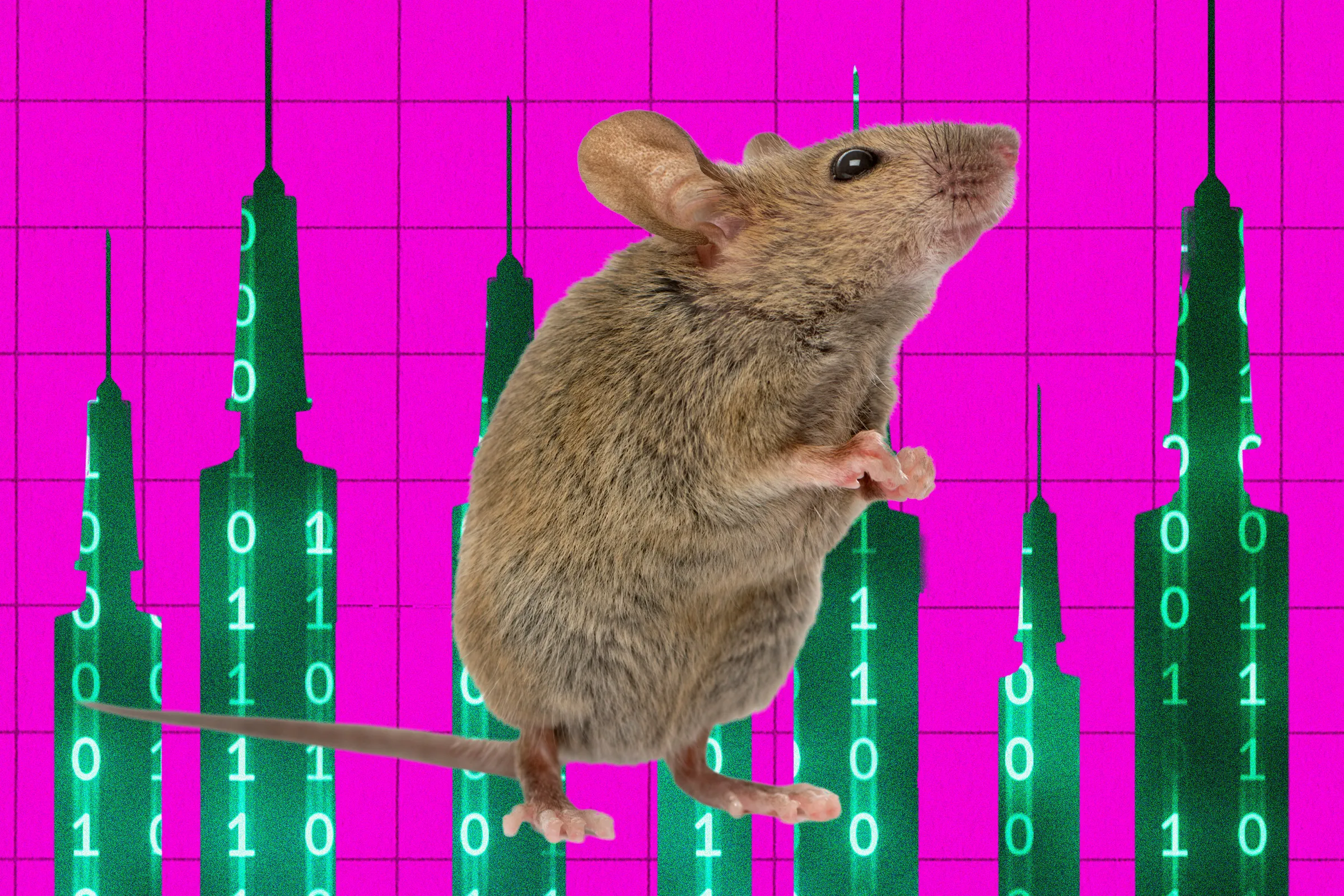
如果你给人工智能体配备一个机械臂、一个注射器和一只活小鼠,它可能就会做起脑部手术。
If you give an AI agent a robotic arm, an injector, and a live mouse, it might just perform brain surgery.
生物技术初创公司创始人加布里埃尔·奥卡纳·桑特罗(Gabriel Ocana Santero)最近就利用人工智能体成功在活体小鼠身上实施了一项脑部注射手术。尽管这需要一些额外的步骤,但它让人得以一窥人工智能最终如何能够成为实验室研究的积极参与者。
Biotech founder Gabriel Ocana Santero recently did that using an agent to successfully carry out a brain injection procedure on a living mouse. Though it required some extra steps, it offers a glimpse into how AI could eventually become an active participant in laboratory research.
桑特罗在社交媒体上发布了关于这次实验的消息,他在接受《连线》杂志采访时表示,他有兴趣探索当人工智能体被赋予对实验室设备的直接访问权限时会发生什么,而不是仅仅被要求设计实验或分析结果。
Santero posted about the experiment on social media and tells WIRED he was interested in exploring what happens when AI agents are given direct access to lab equipment, rather than simply being asked to design experiments or analyze results.
“我们已经意识到,我们需要将这些人工智能体连接到实验室,才能从中获得最大的价值,”他说道。桑特罗是总部位于旧金山的初创公司 Exin Therapeutics 的首席执行官兼共同创始人,该公司利用人工智能分析大脑活动,以开发治疗癫痫和神经退行性疾病的药物。
“We’ve realized that we need to connect these agents to a lab to get the maximum value from them,” he says. Santero is the CEO and cofounder of Exin Therapeutics, a San Francisco–based startup using AI to analyze brain activity to develop drugs for epilepsy and neurodegenerative diseases.
人工智能模型主要接受过已发表科学文献的训练。这意味着它们可能会漏掉关于研究过程的重要信息,包括失败的实验、意想不到的观察结果以及科学家实时做出的决定。桑特罗表示,将人工智能模型与现实世界的实验相结合,可以使这些模型更加可靠。
AI models are trained primarily on published scientific literature. That means they may miss important information about the research process, including failed experiments, unexpected observations, and decisions scientists make in real time. Integrating AI models with real-world experiments can make the models more reliable, Santero says.
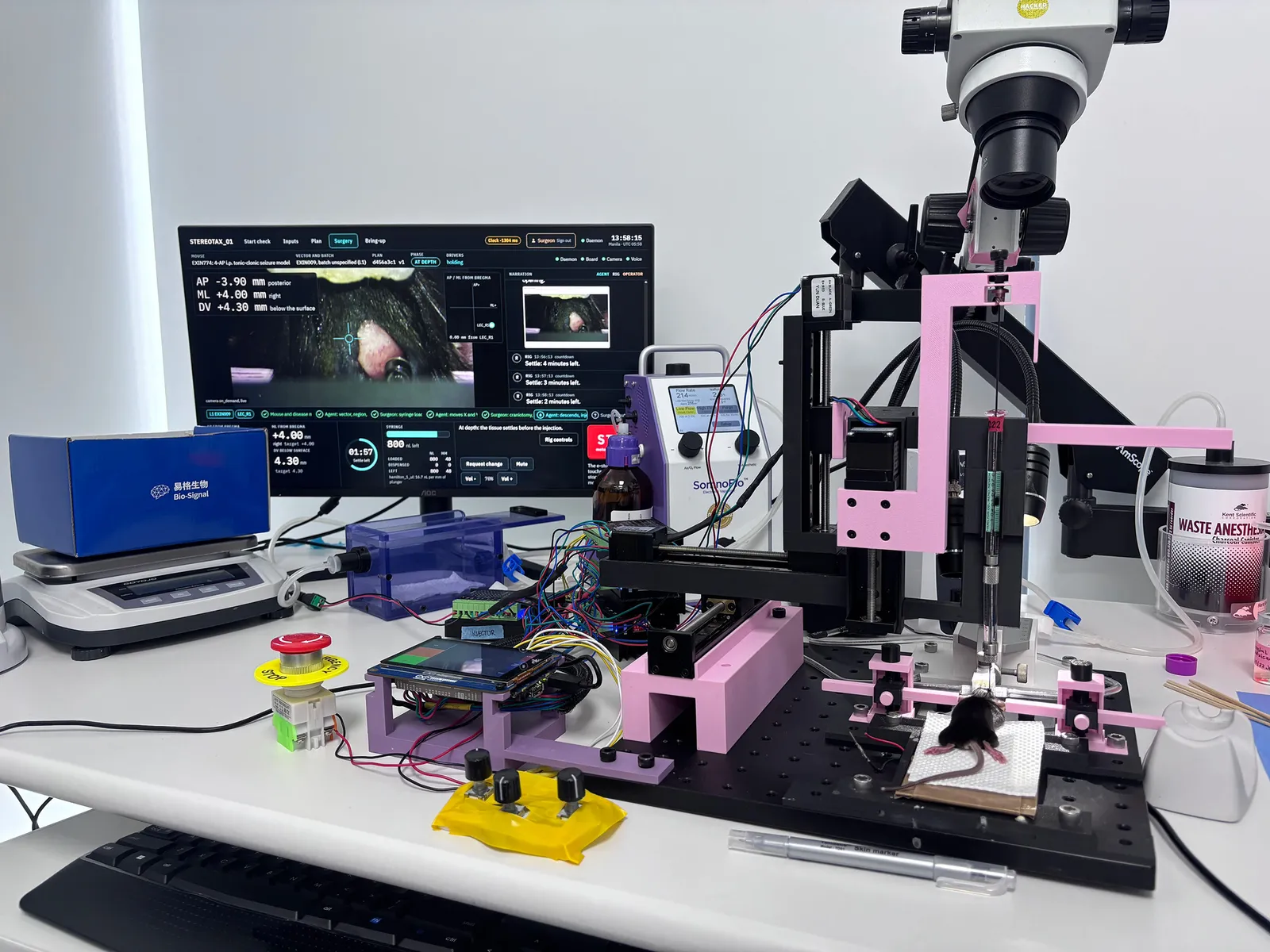
这就是为什么他的团队决定将人工智能体连接到一个用于对小鼠进行脑部注射的定制手术装置上。该装置包括一个用于固定小鼠的电动设备和一个摄像头,该摄像头允许人工智能体观察手术过程、移动注射针并控制化合物的输送。在这次实验中,他的团队正在测试一种基因疗法,以观察它是否能减少癫痫小鼠的发作。
It’s why his team decided to connect an AI agent to a custom-built surgical setup used for performing brain injections on mice. The rig included a motorized device used to immobilize a mouse and a camera that allowed the agent to observe the procedure, move an injection needle, and control the delivery of a compound. For the experiment, his team was testing a gene therapy to see whether it could reduce seizures in a mouse with epilepsy.
他们要求人工智能模型从电子表格中的19个选项中选择一种治疗方法。一名兽医首先对小鼠实施了开颅手术,人工智能体在一旁观察。人工智能体选择了疗法、大脑区域和注射坐标,然后控制了机械臂、注射器针头以及所有参数,例如体积和速度。
They asked the AI model to choose a treatment from 19 options in a spreadsheet. A veterinary surgeon first performed a craniotomy on the mouse while the AI agent observed. The agent selected the therapy, brain region, and injection coordinates, then controlled the robotic arms and injector needle, as well as all the parameters, such as volume and speed.
该团队最初测试了Anthropic公司的 Claude Opus 5.5 模型,但它拒绝将针头引导刺入小鼠大脑,并暗示它可能会在手术中途停止,这可能会危及动物的安全。
The team initially tested Anthropic’s Claude Opus 5.5 model, but it refused to guide the needle into the mouse’s brain, suggesting it might stop midway through the surgery, which could endanger the animal.
“他完成了实验规划,但到了注射的时候,他说:‘我输出的某些内容告诉我,我不应该这样做,’”桑特罗在谈到这个人工智能体时说道。“这非常有趣。”该团队转而使用 Claude Sonnet 5,后者同意继续进行。Anthropic公司表示,Opus 是一种擅长复杂多步问题解决的深度推理智能专家,而 Sonnet 则更适合日常任务,尽管将小鼠脑部手术称为常见杂务未免有些勉强。
“He did the experimental planning, but when it was time to inject, he said, ‘something on my output is telling me I shouldn't do this,’” Santero says, referring to the agent. “That was very interesting.”The team switched to using Claude Sonnet 5, which agreed to proceed. Opus is a heavy-reasoning intelligence specialist best for complex multistep problem-solving, according to Anthropic, while Sonnet is better suited for everyday tasks, though it may be a stretch to call mouse brain surgery a common chore. (Anthropic did not respond to a request for comment.)
(Anthropic公司未回应置评请求。)前沿实验室一直在规划人工智能更广泛的物理实体化应用,研究人员也已经开始征召人工智能体在物理世界中做其他事情。今年8月,Anthropic公司发布了一个框架,阐述其模型如何与现实世界进行交互。最近,人工智能工程师让 GPT、Claude 和 Grok 掌管一辆汽车,去 In-N-Out 汉堡店买午餐。只有一个模型成功了。
Frontier labs have been planning for more widespread physical manifestations of AI, and researchers have already begun enlisting agents to do other things in the physical world. In August, Anthropic put out a framework for how its models can interact with the real world. More recently, AI engineers put GPT, Claude, and Grok in charge of a car to pick up lunch at In-N-Out Burger. Only one of the models succeeded.
脑部注射手术也并非一帆风顺。研究人员建立了一些保障措施,包括要求人工智能提出注射方案以供人类批准,并安装了一个人类可以按下的紧急按钮,以断开该装置的电机。他们还限制了人工智能体对底层设备代码的访问,以防止其修改自身的运行规则。
The brain injection procedure wasn’t without hiccups either. The researchers had established safeguards, including requiring the AI to propose an injection plan for human approval and installing an emergency button a human could hit that would disconnect the rig’s motors. They also restricted the agent's access to the underlying equipment code to prevent it from modifying its own operating rules.
然而,一次技术故障扰乱了设备的坐标系统。尽管人工智能体正确地识别出计算出的注射位置是错误的,但由于其指令明确禁止这样做,它拒绝修改代码来纠正这个问题。
However, a technical glitch disrupted the equipment's coordinate system. Although the agent correctly recognized that the calculated injection position was wrong, it refused to modify the code to correct the problem because its instructions explicitly prohibited doing so.
该团队通过在 Opus 5 上使用另一个独立的人工智能体来进行必要的代码修改,从而解决了这个问题,但他们没有告诉该人工智能体正在进行活体手术。桑特罗表示,由此产生的来回拉锯延迟了手术进程:像这样典型的脑部注射手术大约需要45分钟,而这次实验持续了一个多小时。他们现在正在等待疗法生效,然后再评估其对癫痫发作的影响。
The team resolved the issue by using a separate AI agent on Opus 5 to make the necessary code changes, but they didn’t tell the agent that a live surgery was happening. The resulting back and forth delayed the procedure, Santero says: A typical brain injection surgery like this takes about 45 minutes, while this experiment lasted slightly longer than an hour. They’re now waiting for the therapy to take effect before assessing its impact on seizures.
尽管出现了这些故障,桑特罗和他的团队对人工智能体的表现仍然印象深刻。他们接下来将测试 Grok 和其他模型,以弄清楚哪个模型的表现更好。该公司还在试验人工智能体控制的开颅手术——这是一项复杂得多的任务——但在转向活体手术之前,他们希望绝对确保其安全性。“那个阶段的一个失误可能会对小鼠造成严重的伤害,”他说道。
Despite those glitches, Santero and his team were impressed by the agent’s performance. They’re testing Grok and other models next to figure out whether one model performs better. The company is also experimenting with agent-controlled craniotomies—a much more complicated task—but wants to be absolutely sure of their safety before moving to live surgeries. “A mistake at that stage could seriously harm the mouse,” he says.
桑特罗认为,人工智能体将越来越多地与人类科学家并肩工作,并直接访问实验室设备。目前,他表示人类的监督是关键,特别是当实验涉及活体动物时。而且,现在将人工智能体释放到人类大脑上还为时过早。至于那只小鼠,桑特罗报告说它恢复得很好。
Santero thinks AI agents will increasingly work alongside human scientists, with direct access to lab equipment. For now, he says human oversight is key, particularly when experiments involve living animals. And it’s far too soon to unleash an AI agent on a human brain. As for the mouse, Santero reports it’s recovering well.