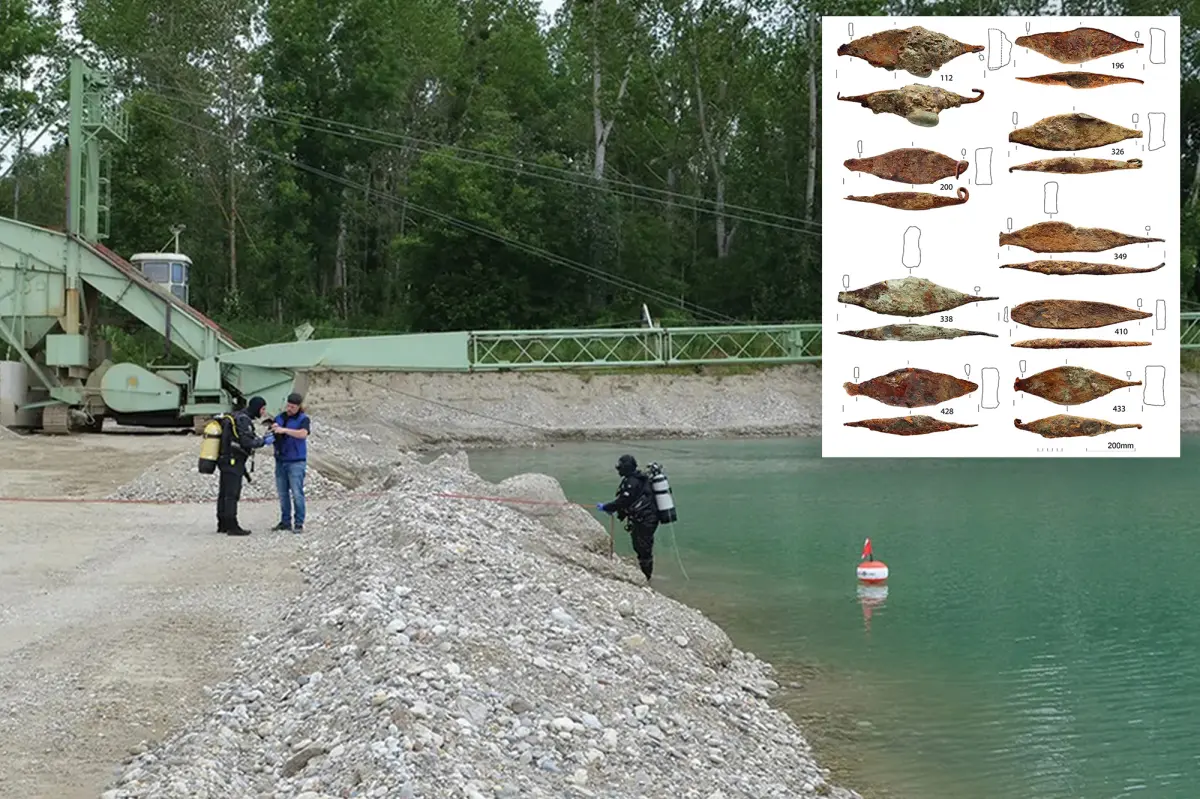
考古学家在奥地利发现了欧洲已知最大的铁器时代铁锭收藏——这批贵重货物可能是在两千多年前多瑙河上的一场沉船事故中遗失的。
Archaeologists have identified Europe’s largest known collection of Iron Age iron bars in Austria — raising the possibility that the valuable cargo was lost in a shipwreck on the Danube River more than 2,000 years ago.
工人打捞出至少500根铁锭,使该收藏成为欧洲已知最大的同类铁器时代发现。研究人员在新闻稿中将其称为“生锈的宝藏”,在铁器时代,这批货物将极其珍贵,当时欧洲的铁生产和贸易正在扩张。
Workers recovered at least 500 bars, making the collection the largest known Iron Age find of its kind in Europe. The “rusty treasure,” as researchers called it in a press release, would have been extremely valuable during the Iron Age, when iron production and trade were expanding across Europe.
“幸运的是,发现铁锭的砾石工人将这一发现报告给了古迹管理局,而没有把它们卖给废品商,”奥地利因斯布鲁克大学教授彼得·特雷布舍对福克斯新闻数字版说。
“Fortunately, the gravel workers [who found the iron bars] reported this find to the Monuments Authority and did not sell them to a scrap dealer,” Peter Trebsche, a professor at the University of Innsbruck in Austria, told Fox News Digital.
研究人员称,这些铁锭总重量超过一公吨,足以锻造大约500把剑,每把剑重量在3.3到4.4磅之间。
The iron bars — which weigh more than a metric ton in total — could have been used to forge roughly 500 swords weighing between 3.3 and 4.4 pounds each, according to the researchers.
这项研究由考古学家特雷布舍和考古学家玛丽昂·贝朗热今年秋天早些时候在《古物》期刊上发表。
The research was published earlier this fall by archaeologist Trebsche as well as archaeologist Marion Berranger in the journal Antiquity.
这些铁锭最初于2019年在奥地利代因汉的砾石开采工作中被发现。
The iron bars were originally discovered in 2019 during gravel extraction work in Deinham, Austria.
研究人员使用碳14测年法确定了铁锭的年代,这些铁锭可能可追溯到公元前三世纪或二世纪。
Researchers used radiocarbon dating to determine the age of the iron bars, which likely date to the third or second century B.C.
虽然其预定目的地仍不清楚,但研究人员认为,这些铁可能是在德国巴伐利亚锻造,然后沿多瑙河运输的。
While its intended destination remains unknown, researchers believe the iron may have been forged in Bavaria, Germany, before being transported along the Danube River.
研究人员表示,这一发现为古代铁生产的规模提供了新的见解,由于铁制品常常被忽视或难以测定年代,其规模一直难以衡量。
The discovery sheds new light on the scale of ancient iron production, which has been difficult to measure because iron objects are often overlooked or difficult to date the researchers said.
“幸运的是,砾石工人将这一发现上报给了古迹管理局,而没有将其卖给废品收购商。”“因此,在多瑙河沿岸砾石开采过程中发现大量双头铁器,为调查史前大规模铁器生产和贸易提供了独特的机会,”新闻稿表示。在一份声明中,特雷布舍称这一发现“堪称小小的奇迹”。
“Fortunately, the gravel workers reported this find to the Monuments Authority and did not sell them to a scrap dealer.”“Therefore, the discovery of numerous double-pointed iron objects during gravel extraction along the River Danube provided a unique opportunity to investigate large-scale prehistoric iron production and trade,” the press release said. In a statement, Trebsche called the discovery “nothing short of a minor miracle.”
他补充说:“我由衷感谢发现者决定将这批非凡的珍藏捐赠给国家博物馆收藏。”特雷布舍向福克斯新闻数字版表示,这些铁条是在多瑙河一条旧的淤积河道中进行砾石开采工作时发现的。
He added, “I am sincerely grateful to the finders that [the workers] decided to donate this extraordinary trove to a state museum collection.”Trebsche told Fox News Digital the iron bars were found during gravel extraction work in an old, silt-filled channel of the Danube River.
他说,沉船是解释这些铁条如何进入河流的最合理说法,尽管未发现任何船只残骸。
He said a shipwreck is the most plausible explanation for how the bars ended up in the river, although no remains of a vessel were found.
“未打捞到船体的任何部分,因为多瑙河这一段存在石球和沙洲等航行危险,”特雷布舍指出。
“No parts of the ship were recovered, because this section of the Danube poses some dangers to navigation like stone balls and sand banks,” Trebsche noted.
“支持这一解释的还有这样一个事实,即没有任何发现物显示出故意毁坏的迹象,而这在晚期铁器时代通常表明是祭祀供品。”他还说,500把剑的数字只是估计,因为这些铁材也可能被用来制作工具或首饰,而非武器。
“In support of this interpretation is also the fact that none of the finds shows signs of intentional destruction, which would be indicative of a ritual offering during the Late Iron Age.”He also said the 500-sword figure is only an estimate, as the iron could have been used to make tools or jewelry instead of weapons.
“德因哈姆的铁器数量大约是该时期最大铁器储藏发现量的十倍,”他说。
“The amount of iron from Deinham is about ten times larger than the largest iron hoard finds of that period,” he said.
特雷布舍表示,这一发现最令人惊讶的方面是一次运输的铁器数量之巨,以及晚期铁器时代竟有如此多的铁器可用于单笔贸易交易。
Trebsche said the most surprising aspect of the discovery was the sheer quantity of iron being transported at once — and the fact that so much was available for a single trade transaction during the Late Iron Age.
“这一发现表明,公元前3世纪至2世纪,多瑙河地区的铁器生产能力有了显著提升,”他说。过去一年中,欧洲各地宣布了许多其他铁器时代的发现。
“This finding demonstrates the increased capacities of iron production that were reached in the 3rd/2nd century BC in the Danube region,” he said. A number of other Iron Age discoveries have been announced across Europe over the past year.
今年早些时候,考古学家在丹麦一处曾是区域权力与财富中心的重要铁器时代定居点,发现了一座有2000年历史的神庙。
Earlier this year, archaeologists uncovered a 2,000-year-old temple in Denmark at a major Iron Age settlement that once served as a regional center of power and wealth.
几乎在同一时间,研究人员宣布,在英格兰北部出土的950件铁器时代金属物品中,发现了罕见的四轮马车遗骸,这标志着在不列颠首次发现此类车辆的潜在证据。
At around the same time, researchers announced the discovery of rare four-wheeled wagon remains among 950 Iron Age metal objects unearthed in northern England, marking the first potential evidence of such vehicles in Britain.