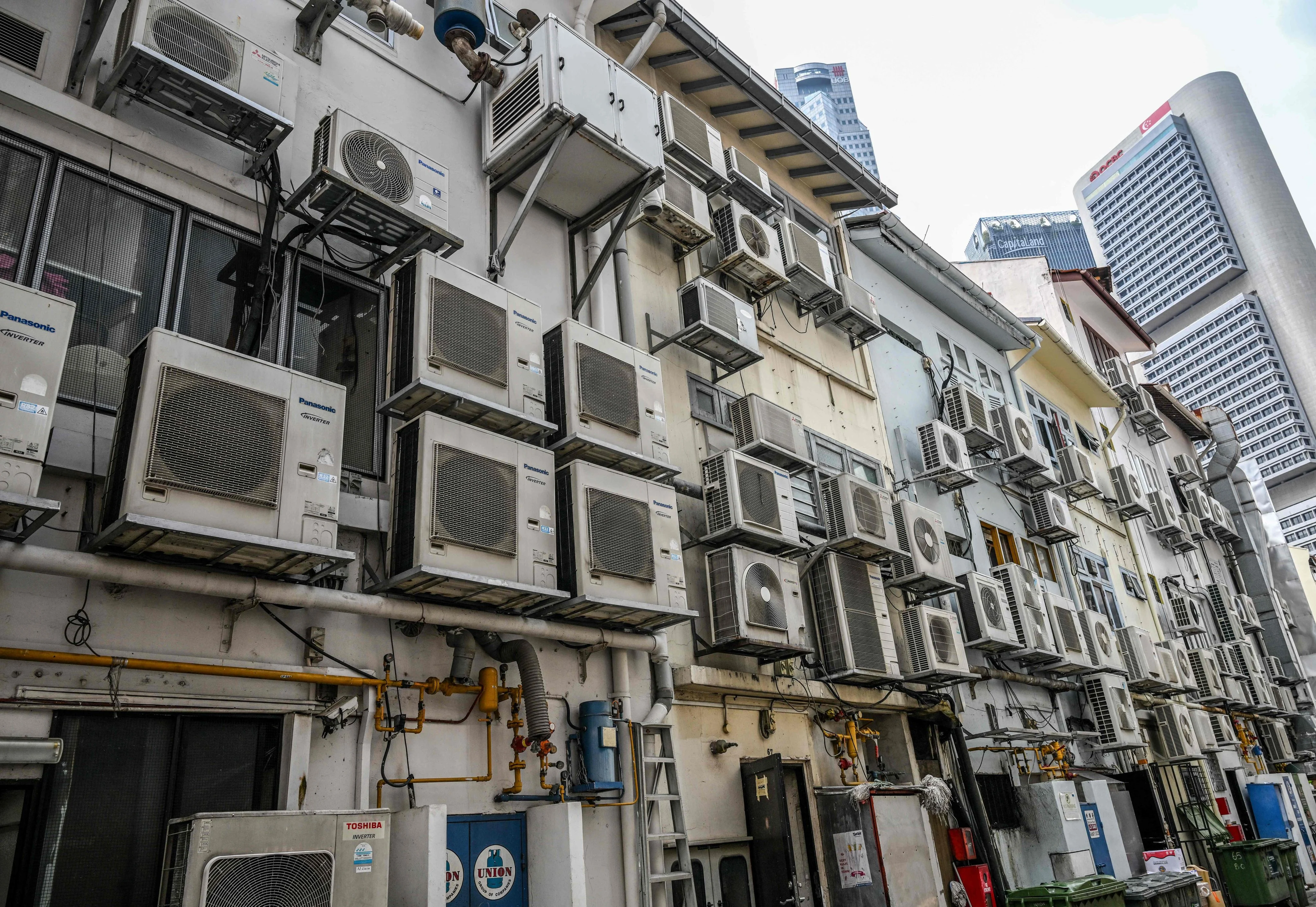
长期被称为“空调国家”的新加坡,正在尝试从冷冻梁到“置换通风”等制冷替代方案,以遏制其对耗能巨大的空调系统的依赖。
Long dubbed an “air-conditioned nation”, Singapore is experimenting with cooling alternatives from chilled beams to “passive displacement” to curb its thirst for energy-guzzling air conditioning.
这个城市国家拥有东南亚最高的人均空调拥有率,约99%的私人住宅都配备了制冷设备。
The city state has the highest per-capita air conditioner ownership rate in Southeast Asia, with about 99 per cent of private residences equipped with cooling units.
根据研究,新加坡本地建筑业占其排放量的五分之一,而制冷本身占一栋建筑能耗的40%至60%。
Singapore’s local building sector accounts for one-fifth of its emissions, while cooling itself accounts for 40 to 60 per cent of a building’s energy consumption, according to studies.
沿着著名的乌节路漫步,便凸显了这种依赖。当门扇敞开时,阵阵冷气扑面而来,延伸至街道上——考虑到终年白天最高气温徘徊在摄氏31度(华氏87度)至33度之间,这极具吸引力。
A stroll down renowned thoroughfare Orchard Road highlights that dependence. Shoppers are greeted by blasts of cool air that waft into the street as doors swing open – a major draw given daytime highs hover between 31 degrees Celsius (87 degrees Fahrenheit) and 33 degrees year-round.
但空调可能会让热力问题恶化。压缩机组将热空气排回环境中,而为系统供电的电力若由化石燃料发电,则会加剧气候变化。
But air conditioning can make the heat problem worse. Compressor units belch hot air back out into the environment, and the electricity that powers the systems can contribute to climate change if generated from fossil fuels.
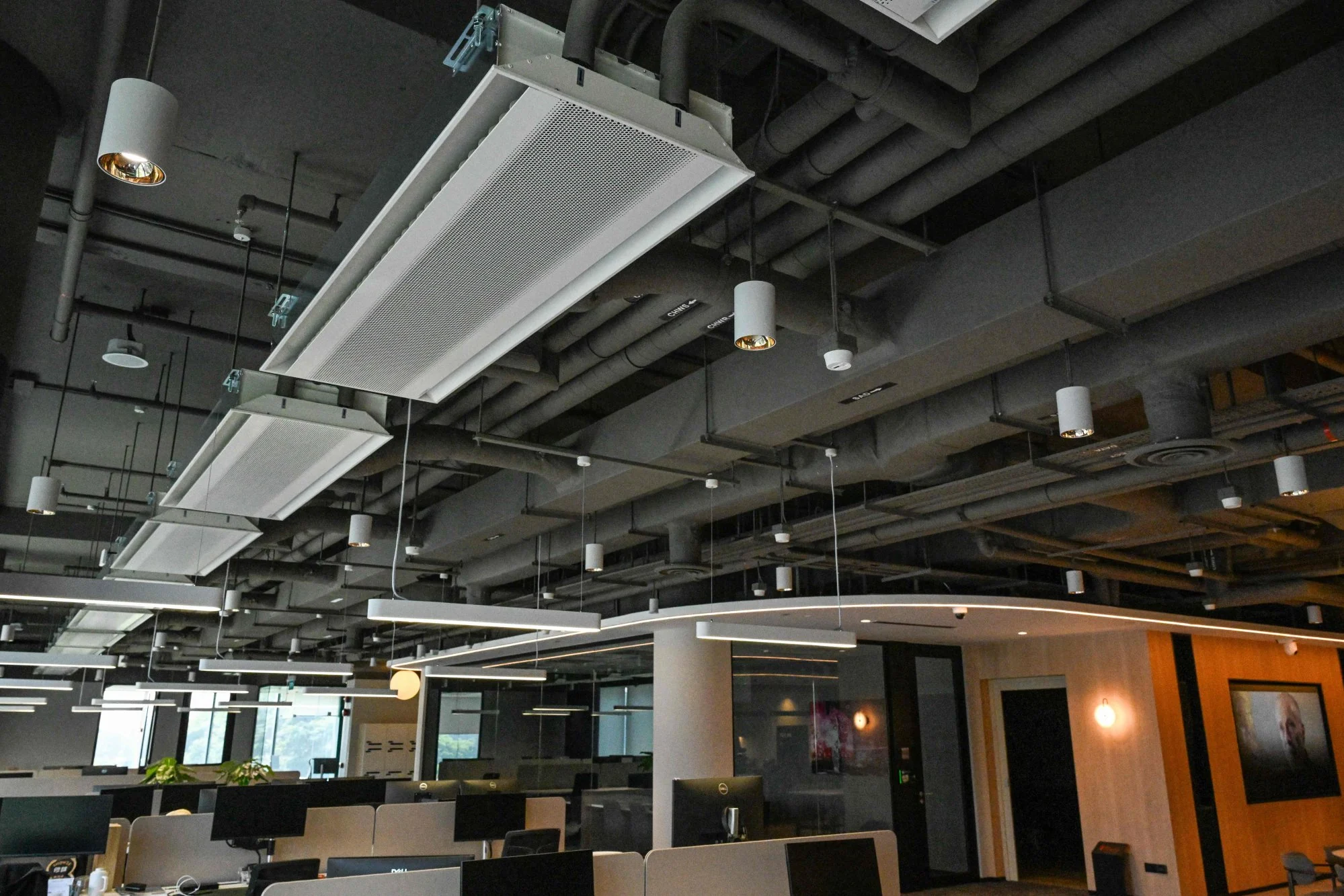
新加坡一些建筑正在探索其他选择,包括主动冷冻梁,这是一种安装在天花板上、带有制冷盘管的穿孔面板。
Some buildings in Singapore are looking at other options, including active chilled beams, which are perforated panels equipped with cooling coils that are mounted on ceilings.
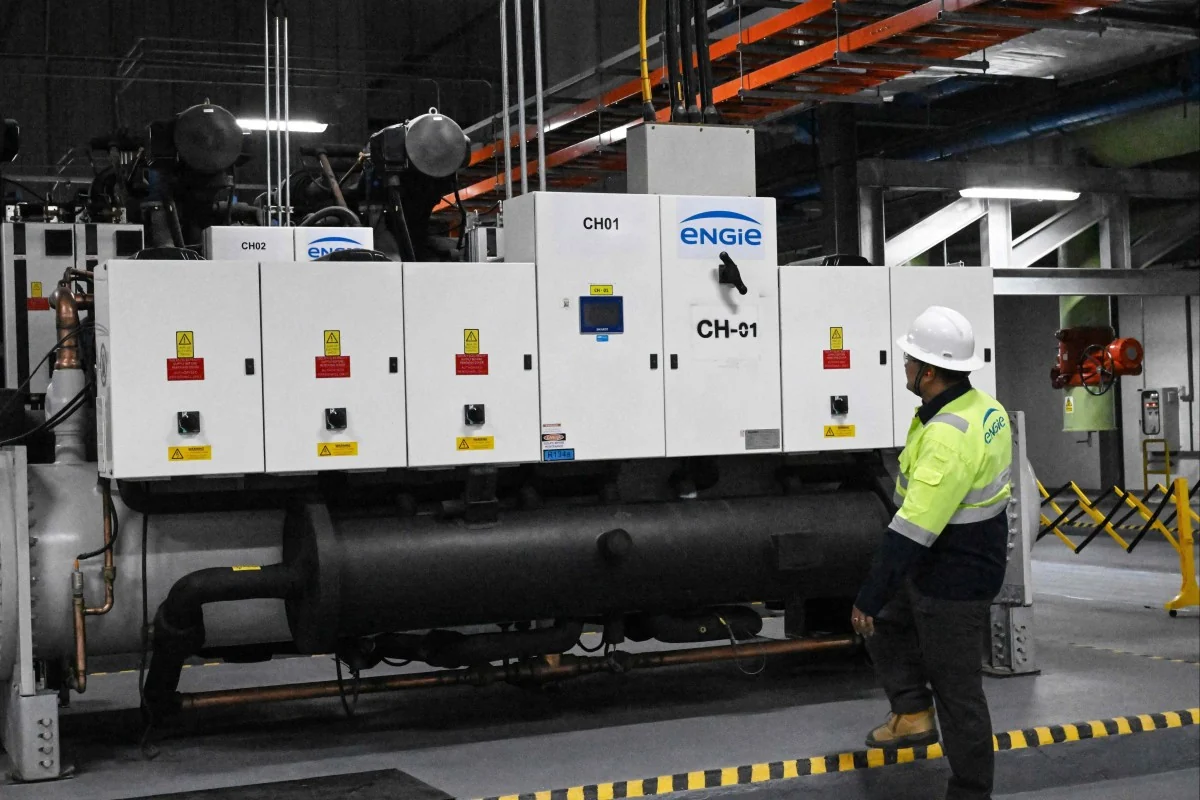
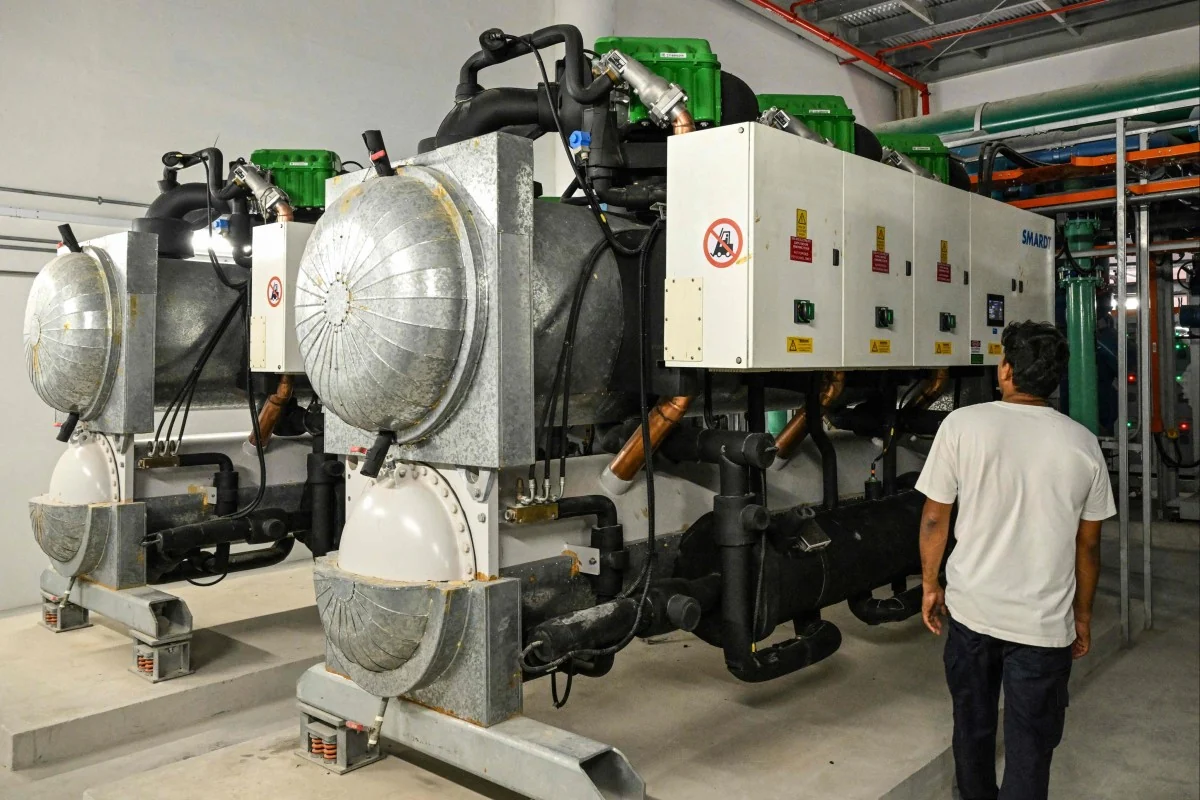
位于建筑顶层的冷冻机房将水冷却至9摄氏度,再将其泵入盘管。同时,空气被高压喷射通过梁内的细小喷嘴。
A chiller plant on the building’s top floor cools water down to 9 degrees, then pumps it into the coils. Simultaneously, air is blasted through small nozzles inside the beams.
气流形成低压区,将室内较暖的空气吸上来经过盘管降温,再循环回室内。
The jets of air create a low-pressure zone that sucks up warmer air from the room below so it passes over the coils and is cooled before recirculating.
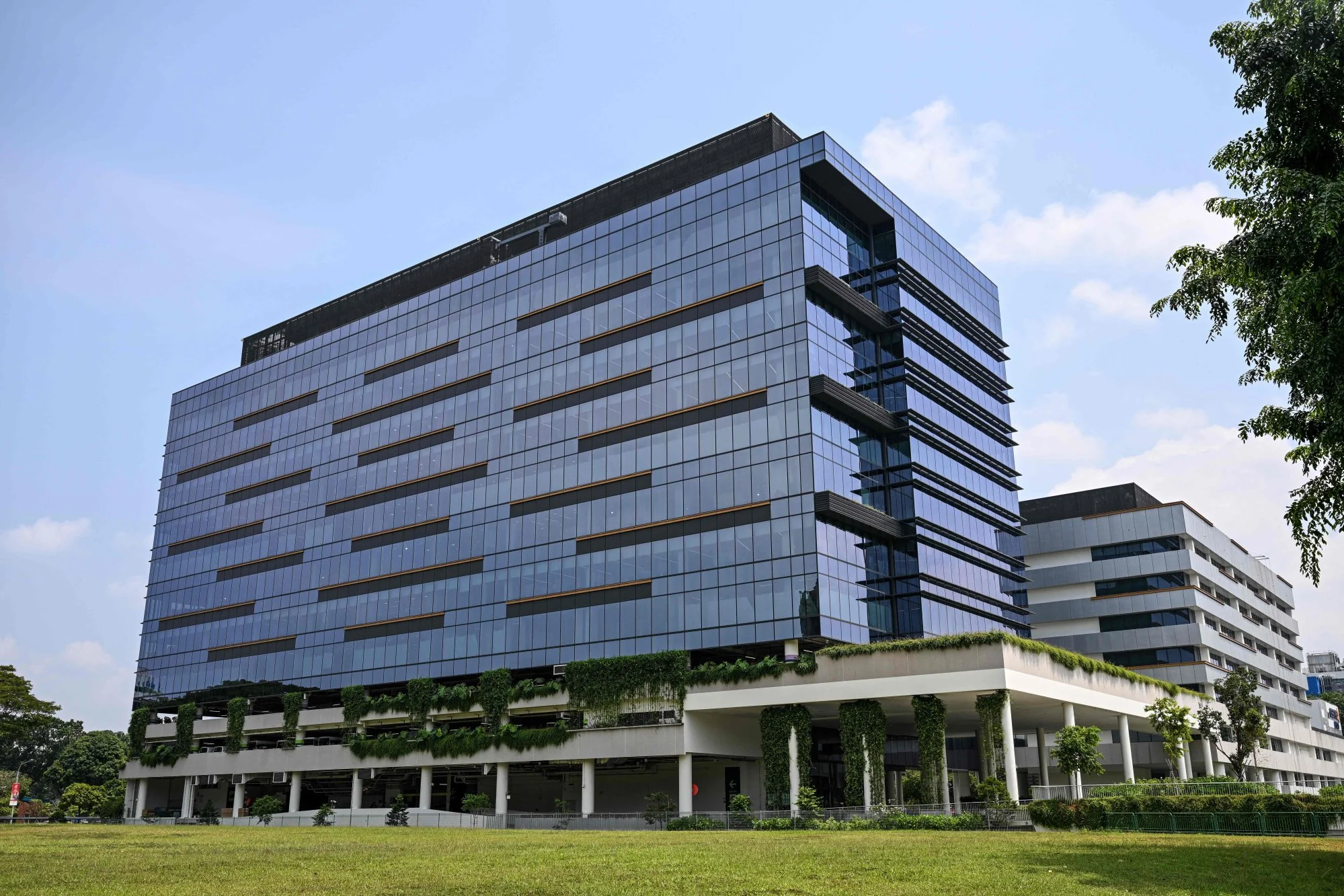
这项技术让位于新加坡东部的八层楼高的巴耶利峇绿色大厦办公室,维持在舒适的24摄氏度。
The technology keeps the offices at the eight-storey Paya Lebar Green building in eastern Singapore at a comfortable 24 degrees.
近日造访时,从这栋被誉为新加坡“最环保”大厦之一的天花板上光洁的白色面板吹出的空气,明显更凉爽。该系统也很安静,没有空调机组持续的嗡嗡声。
During a recent visit, noticeably cooler air flowed from the sleek white panels on the ceiling of the building, described as one of Singapore’s “greenest”. The system is also quiet, without the constant hum of air conditioning units.
当人力资源专业人士 Renuga Shekar 于去年 11 月首次搬入巴耶利峇绿园的办公空间时,这位 30 岁的员工和她的同事们只觉得天花板上裸露的管道和面板是一种“仓库式的外观”。“我们当时并没有多想。没人对此发表过评论,”她说。
When HR professional Renuga Shekar first moved into an office space at Paya Lebar Green last November, the 30-year-old and her colleagues just thought the exposed pipes and panels on the ceiling were a “warehouse kind of look”. “We didn’t really think much about it. No one really commented about it,” she said.
直到几个月后,注意到办公室非常安静,并在维护期间听到技术人员提到“ACB”(主动冷冻梁),她们才意识到这里采用的是主动冷冻梁制冷系统。
It was only months later, after noticing how quiet the office was and hearing technicians mention “ACB” during maintenance, that they realised it was cooled by active chilled beams.
“我们甚至没有意识到空气制冷系统有多么不同,因为它非常无缝衔接,就温度而言,对办公室里的每个人来说都很理想,”她说。
“We didn’t even realise how different the air cooling system is because it was very seamless, and in terms of the temperature, ideal for everybody in the office,” she said.
据建筑设计师 DP Architects 称,这一系统整体上比传统空调节能 30% 以上。新加坡港务局位于西部大士港的维修大楼也采用了类似的系统。
Together, the system cut energy use by more than 30 per cent compared with conventional air conditioning, according to the building’s designers, DP Architects. A similar system is in use at Singapore’s ports authority maintenance building at western Tuas harbour.
该大楼采用置换式自然通风制冷,利用自然气流减少对机械风扇的依赖。
The building uses passive displacement cooling, which taps natural airflow to reduce reliance on mechanical fans.
天花板上的冷却盘管使空气降温,冷空气下沉,随后在变暖后自然上升回盘管。这种持续循环减少了对风扇的需求,从而降低能耗和噪音。
Ceiling cooling coils chill the air, which sinks before naturally rising back to the coils as it warms. This continuous cycle reduces the need for fans, cutting energy use and noise.
另一种替代方案是辐射制冷,温度在 14 至 18 摄氏度之间的冷水流经管道或面板,吸收来自人体或物体的辐射热,以降低环境温度。寻找新制冷方案的推动获得了政府支持。
Another alternative is radiant cooling, where water chilled to between 14 degrees and 18 degrees flows through pipes or panels and absorbs heat radiating from people or objects to reduce ambient temperatures. The push to find new cooling solutions has government backing.
一项 2024 年的政府研究将替代制冷技术(ACTs)确定为一项主要战略,研究发现这些技术可为城市节省高达 48% 的能源。
A 2024 government study identified alternative cooling technologies (ACTs) as a major strategy which found they could save the city up to 48 per cent in energy.
新加坡建筑管理部门表示,到 2026 年中,至少有 33 栋公共建筑和 14 栋私人建筑采用了替代制冷技术。这个城市国家设定了到 2050 年实现碳净零排放的雄心勃勃的目标。
By mid-2026, at least 33 public and 14 private buildings had adopted ACTs, Singapore’s building authorities said. The city state has an ambitious goal to achieve net-zero carbon emissions by 2050.
相关数据仍然相对较小,要让习惯了成熟可靠空调的用户接受替代制冷技术(ACT),颇具挑战性。
The figures are still relatively small, and it can be challenging to find an ACT that is acceptable to users familiar with tried-and-tested air conditioners.
替代系统的支持者承认,其安装成本高于传统空调,但表示随着时间的推移,得益于大幅节能,运行成本大幅降低,足以弥补前期投入。
Supporters of alternative systems acknowledge that they cost more to install than conventional air conditioning, but say they more than make up for it over time with much lower running costs thanks to big energy savings.
目前最受欢迎的替代方案依然是混合制冷——即将空调设定温度调高至 25.5 摄氏度至 27 摄氏度,并配合风扇使用。
The most popular alternative method remains hybrid cooling – simply turning up air conditioning to a higher temperature of 25.5 degrees to 27 degrees, and pairing it with fans.
DP Architects 总监蔡子俊(Chua Zi Jun,音译)表示:“大家更习惯有空调的办公环境,要让他们突然接受 26 摄氏度,我认为这种思维转变尚未达到普遍接受的临界点。”
“Everybody’s more used to having air-conditioned office spaces, so for them to suddenly accept 26 degrees, I think the mindset shift has not reached a threshold where it’s generally accepted yet,” said Chua Zi Jun, director at DP Architects.
随着气候变化推高新加坡及其他地区的气温和湿度,制冷需求只增不减。
Demand for cooling is only increasing as climate change raises temperatures and humidity in Singapore and beyond.
传统空调系统依赖蒸汽压缩,利用制冷剂将热量从一处转移到另一处。
Traditional air-conditioning systems rely on vapour compression, using refrigerants to move heat from one place to another.
替代制冷技术采用相同的基本原理,但要么在输送冷气时耗能更少,要么利用人体对略高温度的适应能力来缩短运行时间。
ACTs use the same basic principle, but either spend less energy moving cool air or reduce run-time by leaning on people’s ability to adapt to slightly higher temperatures.
南洋理工大学制冷技术专家温文彬(Wan Man Pun,音译)表示:“这些技术是朝着正确方向迈出的一步,最终应纳入更复杂的控制系统,包括在房间过热或过冷前调节温度的预测系统。”
“The technologies are a step in the right direction and should eventually incorporate more sophisticated controls, including predictive systems that adjust temperatures before rooms become too hot or cold,” said Wan Man Pun, a cooling tech expert at Nanyang Technological University.
但他也说:“我们仍未找到任何性能系数、即效率高于蒸汽压缩的替代制冷方法。”
But “we still haven’t found any alternative cooling methods that have a higher coefficient of performance, or efficiency, than vapour compression”, Wan said.