林健太郎(Kentaro Hayashi)最初出于对生物的兴趣,开启了作为自然科学家的职业生涯。
Kentaro Hayashi began his career as a natural scientist out of an interest in living things.
但如今,他更多地关注这些生物所栖息的环境,以及化学物质的全球循环(尤其是氮循环)如何对它们产生影响。
But these days, he’s more focused on the environments they inhabit and how the global cycling of chemicals — particularly nitrogen — affects them.
林健太郎是人类与自然研究所的教授,目前领导关于氮循环和可持续氮管理的研究所,在地球努力控制变暖的背景下,这是一个至关重要的研究领域。
Hayashi, a professor at the Research Institute for Humanity and Nature, now leads research on the nitrogen cycle and sustainable nitrogen management — a crucial area of study as the planet struggles to keep warming in check.
20世纪初哈伯-博世法(Haber-Bosch process)的发明,使得从氮气和氢气中工业合成氨成为可能,这改变了我们种植粮食的方式。作为化肥的主要来源,氨支撑了粮食生产的爆发式增长,并伴随着自1900年以来世界人口五倍的增长。
The invention in the early 20th century of the Haber-Bosch process, which made the industrial synthesis of ammonia from nitrogen gas and hydrogen gas possible, has transformed how we grow food. As a primary source of chemical fertilizers, ammonia has supported an explosive growth in food production alongside a fivefold growth in the world’s population since 1900.
虽然氮气是无害的,构成了我们呼吸空气的78%,但人类活动极大地增加了各种形式的活性氮的生产和向环境中的释放——这些是具有化学活性的化合物,对人类健康有着无数的负面影响。
While nitrogen gas is harmless and makes up 78% of the air we breathe, human activities have dramatically increased the production and release into the environment of various forms of reactive nitrogen — chemically active compounds with myriad negative impacts on human health.
过量的活性氮是空气和水污染、酸雨以及富营养化的成因——富营养化是指水体过度富集矿物质和营养物质的术语。
Excess reactive nitrogen is a cause of air and water pollution, acid rain and eutrophication — a term that refers to a body of water that is overly enriched with minerals and nutrients.
从周一开始,林健太郎将在京都主持第十届国际氮素会议。该论坛大约每三年由研究人员举办一次,旨在分享研究成果并将其反映到决策中。
Starting on Monday, Hayashi will chair the 10th International Nitrogen Conference in Kyoto. The forum is held roughly every three years by researchers to share their findings and get them reflected in policymaking.
《日本时报》最近采访了林健太郎,询问了为什么氮如此重要,以及如何应对其过剩所引发的问题。为清晰和简洁起见,访谈内容经过了编辑。是什么吸引你走上氮研究之路的?
The Japan Times recently caught up with Hayashi to ask why nitrogen matters and what can be done about the issues caused by its overabundance. The interview has been edited for clarity and brevity. What drew you to the study of nitrogen?
我热爱生物,所以最初是作为自然科学家起步的。但我意识到,围绕它们的环境同样至关重要。如果环境恶化,自然会对这些生物造成伤害。而人类活动如今正对这种恶化产生极大影响;全球变暖无疑是一个典型例子。
I love living things, so I started out as a natural scientist. But I realized the environment surrounding them is also crucial. If that environment deteriorates, it naturally causes harm to those creatures. And human activity is now having an incredibly large impact on that deterioration; global warming is definitely a prime example.
大约10年前,我参加了日本的南极观测队,但在那之前,我曾在北极的一个岛屿上进行研究。正如预期的那样,海冰正以惊人的速度融化,陆地上的永久冻土也在融化。结果,生物们在环境急剧变化中艰难求生,我一直在思考自己能否做些什么来帮助它们。
I joined Japan’s Antarctic research expedition about 10 years ago, but even before that, I had conducted research on an island in the Arctic. As expected, the sea ice is melting at an incredible rate, and the permafrost on land is thawing as well. As a result, the creatures are struggling to survive amid these rapid changes in the environment, and I’ve been thinking there must be something I can do to help.
提到全球变暖,讨论通常集中在气温上升上,但这也涉及构成生物体的碳的循环,以及二氧化碳和氮。氮是制造蛋白质所必需的。生物生存需要蛋白质,也需要DNA来储存遗传信息。没有氮,这些物质都无法生成。
When it comes to global warming, the discussion usually centers on rising temperatures, but that also involves the cycle of carbon, which makes up living organisms, and carbon dioxide and nitrogen. Nitrogen is essential for producing proteins. Living organisms need protein to survive, and they also need DNA to store genetic information. None of these things can be produced without nitrogen.
我们在小学或初中科学课上学过,空气中大约80%由氮气组成。然而,空气中的氮以一种非常紧密、稳定的键结合在一起,两个原子牢牢粘在一起,无法分开。简单来说,虽然我们可以从空气中吸入任意多的氮,但一旦吸入,它就会原样呼出。因此,我们只能通过吃其他动植物,在体内循环利用,分解其中的蛋白质和氨基酸,再重新组装。
We learn in elementary or middle school science that roughly 80% of the air is made up of nitrogen. However, the nitrogen in the air is bound in a very tight, stable bond, with two atoms stuck together so firmly that they can’t be separated. To put it simply, even though we can breathe in as much nitrogen from the air as we want, once it goes in, it just goes right back out. So instead we eat other living animals and plants, and recycle them inside our bodies and break down the proteins and the amino acids they contain, and then reassemble them.
这就是包括人类在内的所有现存动物的运作方式。我们是这个循环的一部分。所以我意识到氮是多么的不可思议。我开始琢磨,如果人类活动发生变化,氮的流动将会如何变化,以及这将如何影响生态系统。但从这个角度切入该课题的研究人员并不多。哈伯-博施氮肥生产法是如何改变我们的生活的?
That’s how all living animals, including humans, function. We’re part of that cycle. So I realized just how incredibly important nitrogen is. I started wondering how, if human activities change, the flow of nitrogen will change, and how that would affect the ecosystem. But there are not that many researchers approaching the subject from this perspective. How has the Haber-Bosch nitrogen production process changed our lives?
在大约1900年该工艺被研发出来之前,全球人口约为16亿。今天,125年过去了,人口达到了8亿,增加了五倍。我们需要多五倍的食物,而这是由化肥支撑的。当今人类所食用的食物中,大约有一半的氮来自通过哈伯-博施法制造的化肥。如果没有它,世界将只能养活目前大约一半的人口。那么坏处是什么呢?
Before it was developed around 1900, the global population was about 1.6 billion. Today, 125 years later, it is 8 billion, a fivefold increase. We need five times more food, and that is supported by chemical fertilizers. Approximately half of the nitrogen in the food consumed by humanity today comes from fertilizers made in the Haber-Bosch process. Without it, the world could only support about half of the current population. So what are the downsides?
氮是一个典型的“物极必反”的例子。我们现在能够生产大量的食物——量之大,甚至可以为牲畜生产食物。牛过去以草为食,但现在我们给它们喂食人类也能吃的食物,比如玉米,并且我们为它们种植庄稼。
Nitrogen is a classic case of “too much of a good thing.“We are now able to produce a lot of food — so much so that we can even produce food for livestock. Cows used to feed on grass, but now we give them food that humans can eat, like corn, and we grow crops for them.
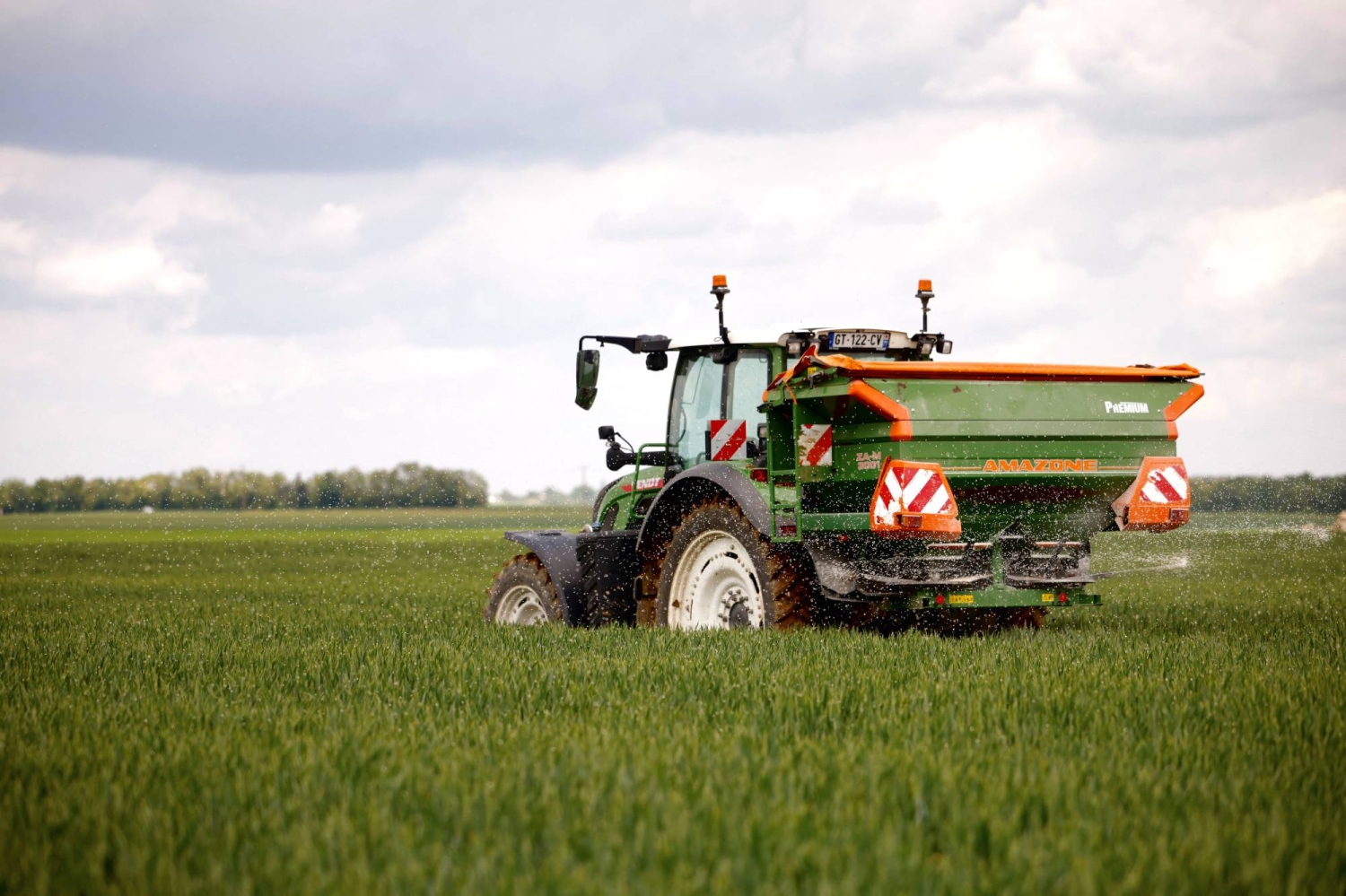
庄稼只能吸收施用于农田的氮肥的大约一半,其余的则渗入空气和水中。此外,饲养牲畜需要大量的饲料作物。大约50%的氮被转化为了农作物。但对于牛肉而言,只有10%的氮被转化成了肉类。
Crops only absorb about half of the nitrogen fertilizers applied to agricultural fields, and the rest leaks into the air and water. Furthermore, raising livestock requires large amounts of feed crops. About 50% of the nitrogen is converted into crops. But with beef, only 10% of nitrogen is converted into meat.
因此,肉类消费会导致高得多的氮排放,而没有多少人意识到这个弊端。为什么氮会成为一个问题?
As a result, meat consumption leads to significantly higher nitrogen emissions, and not many are aware of this downside. Why does nitrogen pose a problem?
广义来讲,氮有两种形态:稳定氮和活性氮。大气中的大部分氮基本不具活性。有一小部分被转化为活性氮化合物,包括氨和硝酸等无机物,以及氨基酸和蛋白质等有机物。
Broadly speaking, there are two forms of nitrogen: stable nitrogen and reactive nitrogen. Most nitrogen in the atmosphere is largely non-reactive. A small portion is converted into reactive nitrogen compounds, including inorganic substances such as ammonia and nitric acid, and organic substances such as amino acids and proteins.
大自然中的微生物也能制造氮化合物,而且它们是在常温常压下完成的。相比之下,工业上的哈伯-博施法需要 400 摄氏度、100 个大气压等极端条件,还消耗大量能源。
Microbes in nature create nitrogen compounds, too, and they do so at room temperature and normal pressure. The industrial Haber-Bosch process, meanwhile, requires extreme conditions like 400 degrees Celsius and 100 atmospheres of pressure, and it also consumes a tremendous amount of energy.
此外,生产氨气需要氢气。在哈伯-博施法中,我们从天然气(一种化石燃料)中提取氢气,再通过加热将其与氮气结合生成氨气。所以我们仍应使用氮,但要明智地使用?
Plus, to produce ammonia, we need hydrogen. In the Haber-Bosche process, we extract hydrogen from natural gas, which is a fossil fuel, and then bind it with nitrogen through heat to produce ammonia. So we should still use nitrogen, but use it wisely?
是的。当活性氮泄漏到环境中时,会导致全球变暖、大气污染、水污染和富营养化。如果饲养牲畜,泄漏量必然会通过粪便增加。理想情况下,我们希望通过堆肥循环利用粪便,再将其作为有机肥料还田。
Yes. When reactive nitrogen leaks into the environment, it causes global warming, air pollution, water pollution and eutrophication. If you raise livestock, the amount that gets leaked inevitably grows through feces. Ideally, we want to recycle the feces through composting, and then return them to the farmland as organic fertilizers.
食物损失也是一个重大问题,因为生产食物需要氮(包括通过化肥),食物被浪费时,用于生产它的氮也随之浪费。过量进食也是一个问题。人也是动物,超出消费限度的部分会以废物形式排出体外。因此我建议将无法食用的食物分给他人,或留到下一餐食用。氮污染如何影响人类健康?
Food loss is also a major issue because producing food requires nitrogen, including through fertilizers, and when that food is wasted, the nitrogen used to produce it is wasted, too. Overeating is also a problem, however. Humans are animals, so what’s beyond our consumption limit passes through our body as waste. So I would recommend giving the food you can’t consume to others, or leave it for your next meal. How does nitrogen pollution affect human health?
最大的问题是大气污染。氮氧化物本身就是大气污染物。它们还促成光化学氧化剂(包括近地面臭氧)的形成,可导致呼吸系统疾病。
The biggest problem is air pollution. Nitrogen oxides themselves are air pollutants. They also contribute to the formation of photochemical oxidants, including ground-level ozone, which can cause respiratory illnesses.
在日本,以氮计,铵和硝酸盐等化合物中的氮占 PM2.5 总质量的 10%-20%。这些细颗粒物可深入肺部,导致呼吸系统和心血管疾病,每年在全球造成数百万人过早死亡。
In Japan, nitrogen contained in compounds such as ammonium and nitrate accounts for 10-20% of the total mass of PM2.5, expressed in terms of nitrogen. These fine particles can penetrate deep into the lungs, contributing to respiratory and cardiovascular diseases and millions of premature deaths globally each year.
在经济层面,据估算,2010 年氮污染在全球造成了 1.2 万亿美元的损失。
Economically, nitrogen pollution caused an estimated $1.2 trillion in global damages in 2010.
由于日本在经济高速发展时期(从20世纪50年代中期到70年代中期)经历了历史性的污染危机并制定了严格的环境管制,如今日本的空气和水质比过去更加洁净。因此,许多日本民众实际上并没有意识到源自氮的空气污染是如何夺去人们生命的。
Japan’s air and water are cleaner today due to strict environmental controls established after historical pollution crises during the high economic development period (from the mid-1950s through the mid-1970s). As a result, so many people in Japan actually don’t get a sense of how nitrogen-derived air pollution kills people.
但与此同时,日本洁净的空气和水质是以高度依赖食品进口为代价的。进口食品实际上将氮污染转嫁给了生产国。未来,食品出口国可能会根据食品生产的环境负担提高产品价格,比如征收环境税,这将把日本逼入困境。因此,从能源和食品安全的角度出发,我强烈支持提高日本的食品自给率。
But at the same time, Japan’s clean air and water have been made possible through its heavy reliance on food imports. Importing food effectively offloads nitrogen pollution to producer countries. In the future, there’s a possibility that food-exporting countries will raise the price of products based on the environmental burdens of food production, like an environmental tax, which would put Japan in a bind. So I strongly support raising Japan’s food self-sufficiency rate from an energy and food security point of view.
除了空气质量之外,氧化亚氮是继二氧化碳和甲烷之后人类活动导致的全球变暖的第三大因素。请跟我们谈谈解决氮问题所做出的国际努力。
Beyond air quality, nitrous oxide is the third largest contributor to human-driven global warming after carbon dioxide and methane. Tell us about international efforts to tackle the nitrogen problem.
国际氮肥会议始于1998年,由研究酸雨和跨国界空气污染的研究人员发起。他们认识到,氮问题已经超出了局部地区,扩展到了区域和全球规模。
The International Nitrogen Conference began in 1998, initiated by researchers studying acid rain and transboundary air pollution. They recognized that nitrogen issues extend beyond local sites to regional and global scales.
然而,氮的问题在于其作用很难被看到和理解。全球变暖的研究始于20世纪70年代,但直到90年代才引起广泛关注。平流层臭氧层的消耗之所以成为一个极其严重的问题,是因为它增加了到达地球的紫外线量,并增加了罹患皮肤癌和白内障的几率。
The problem with nitrogen, however, is that its role is hard to see and understand. Research on global warming started in the 1970s, but it took until the 1990s for it to attract wide attention. The depletion of the stratospheric ozone layer became a huge issue because it increased the amount of ultraviolet rays that reach the Earth and increased the chance of developing skin cancer and cataracts.
相比之下,氮带来的问题并未得到广泛理解,许多人只看到了化肥带来的益处。只有极少数人对过量生产提出了质疑。你们在京都会议上试图达成什么目标?
In contrast, the issues with nitrogen are not widely understood and many only see the benefits with chemical fertilizers. Only a small number of people have raised issues with overproduction. What are you trying to achieve at the Kyoto conference?
核心主题是“为子孙后代实现可持续氮管理”。归根结底,我们今天采取的行动和做出的决定,对子孙后代可能产生决定性影响。因此,无论做什么,都应该思考未来的人们会为此感谢我们,还是为此抱怨我们,而不仅仅考虑自身利益。这就是这一概念背后的基本理念。
The central theme is “Sustainable Nitrogen Management for Future Generations.”Ultimately, the actions we take and the decisions we make today can have a decisive impact on future generations. So, whenever we do something, we should think about whether people in the future will thank us for it or complain about it, rather than just considering our own interests. That’s the basic idea behind this concept.
它旨在为氮管理搭建科学与政策之间的桥梁,以便在保持氮使用效益的同时,减少空气和水污染等威胁。创建单一的国际氮条约困难吗?
It aims to bridge science and policy for nitrogen management, so we can maintain the benefits of nitrogen use while reducing threats such as air and water pollution. Is it difficult to create a single international nitrogen treaty?
氮涉及的问题如此多样,以至于与现有条约相互交叉,例如气候变化(UNFCCC)、生物多样性(CBD)、跨境空气污染条约以及地方水资源管理法规。因此,与其单独为氮制定一项新条约,不如建立一项跨公约协调机制。
Nitrogen touches such diverse issues that it overlaps with existing treaties, like climate change (UNFCCC), biodiversity (CBD), transboundary air pollution treaties and local water management regulations. So instead of creating a new treaty just on nitrogen, we would need an interconvention coordination mechanism.
例如,目前正推动摆脱化石燃料、改用氨作为燃料。日本实际上是氨燃烧技术的世界领先者之一。由于氨由氮和氢组成,燃烧时不会排放二氧化碳,这当然有助于脱碳。然而,生产氨可能会对环境造成影响,氨本身也有毒性,因此其泄漏到环境中可能会带来问题。换句话说,这种转变可能会本身产生其他问题。
For example, there’s currently a push to move away from fossil fuels and use ammonia as a fuel. Japan is actually among the world leaders in ammonia combustion technology. Since ammonia is made up of nitrogen and hydrogen, burning it doesn’t release carbon dioxide. That can certainly help decarbonization. However, producing ammonia can have environmental impacts, and ammonia itself is toxic, so its leaks into the environment could pose problems. In other words, the shift could potentially create other problems of its own.
如果能给予联合国环境规划署(UNEP)更多权力,它可以帮助解决现有条约之间的冲突和权衡,并理想情况下创造积极的协同效应。UNEP将制定框架,但也需要请科学家与其合作。我认为建立这样的机制有助于推进科学与政策的对接,尽管这是一个相当宏大的梦想。
If UNEP (United Nations Environment Programme) could be given a little more authority, it could help resolve conflicts and trade-offs between the existing treaties, and ideally create positive synergies. UNEP would develop the framework, but it would also need to ask scientists to work with it. I think establishing such a mechanism could help advance science-policy engagement, though it’s quite an ambitious dream.
2024年,日本发布了国家可持续氮管理行动计划。你对此有何看法?
In 2024, Japan released its national action plan on sustainable nitrogen management. What is your view on this?
日本实际上是第一个也是唯一一个拥有国家氮管理行动计划的国家。但遗憾的是,日本的计划中没有明确的(数值)目标。我希望在对该行动计划进行评估时能够设定目标。个人在日常生活中可以采取哪些行动来应对氮问题?
Japan is actually the first and only country to have a national nitrogen management action plan. But unfortunately, there are no clear (numerical) targets for Japan’s plan. I hope targets will be set when the action plan is reviewed. What can individuals do to address the nitrogen problem in daily life?
个人能采取的最有效的单一行动就是珍惜食物并消除食物浪费。思考食物的来源并避免暴饮暴食是关键。远离肉类会有所帮助,但彻底改变饮食偏好是很难的。
The single most effective action individuals can take is to value food and eliminate food waste. Thinking about where food comes from and avoiding overeating is key. Staying away from meat would help, but it is difficult to change food preferences drastically.
就我个人而言,我试图通过饮食来减少我的氮足迹,但我也相信在适的时候享受生活。用日本的话来说,这叫“晴”与“常”:特殊场合与日常生活。我大部分时间饮食都很简单,但当我想吃肉时,我会怀着感恩的心情去享用和品味。这样一来,我偶尔吃的肉就会格外美味。
For myself, I try to reduce my nitrogen footprint through my diet, but I also believe in enjoying things when the occasion calls for it. In Japanese terms, it’s called hare and ke: special occasions and everyday life. I eat simply most of the time, but when I feel like having meat, I enjoy it with gratitude and savor it. That way, the meat I eat occasionally tastes all the better.