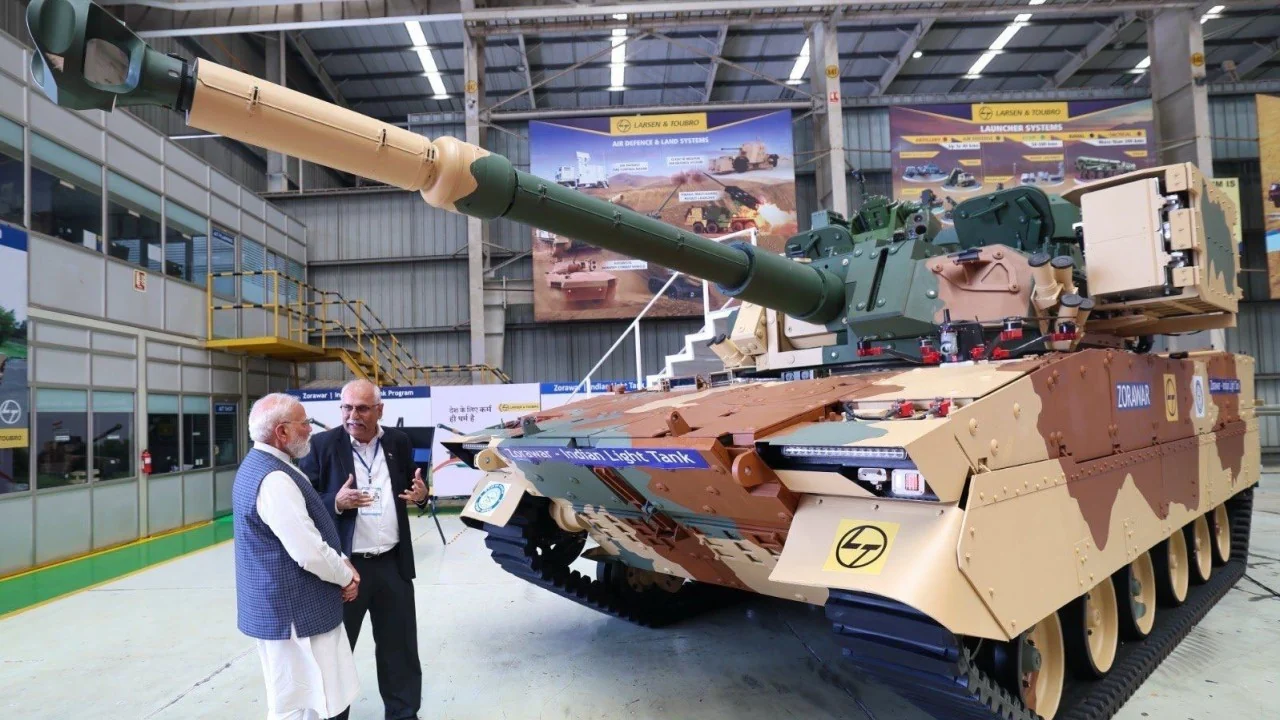
印度的新型高海拔作战坦克旨在前往其较重的装甲战车无法到达的地方:其与中国有争议的边境沿线的稀薄山地空气、狭窄道路和小桥。
India’s new high-altitude combat tank was designed to go where its heavier armoured fighting vehicles cannot: the thin mountain air, narrow roads and small bridges along its disputed border with China.
在其基础配置中,佐拉瓦尔重约25吨——轻到足以被空运至实际控制线全线,但推动其增强到能够抵御大口径自动炮火的程度可能会为该载荷增加额外的7吨。
In its base configuration, the Zorawar weighs some 25 tonnes – light enough to be flown all the way to the Line of Actual Control – but a push to make it strong enough to withstand high-calibre autocannon fire could add an extra seven tonnes to that loadout.
有关印度和中国军队在边境再次发生对峙的报道——包括《印度教徒报》在10月23日刊登的一篇报道——为关于该坦克应该重多少的争论注入了新的紧迫感。
Reports of renewed stand-offs between Indian and Chinese troops at the border, including one carried by The Hindu newspaper on October 23, have injected fresh urgency into the debate surrounding how much the tank should weigh.
印度轻型坦克第一阶段开发性实地射击试验成功进行。实地试验已成功达到在沙漠地形中的预定目标。在试验期间,该坦克在预定目标上展示了所需的精度。@DefenceMinIndia 2024年9月13日在先前的对抗中,印度将其较旧的、俄罗斯血统的T-72和T-90(每辆重45至50吨)空运至拉达克边境领土,它们在那里与中国较轻的、重33至36吨的15式进行了对峙。
First phase of developmental field firing trails of Indian Light Tank successfully conducted. The field trials have successfully met the intended objectives in desert terrain. During trials the tank demonstrated required accuracy on the intended targets. @DefenceMinIndia September 13, 2024 During previous confrontations, India airlifted its older, Russian-origin T-72s and T-90s, which weigh between 45 and 50 tonnes each, to the border territory of Ladakh, where they have faced off against China’s lighter Type 15, weighing 33–36 tonnes.
但印度智库观察家研究基金会在2021年的一份报告中指出,这些较重的主战坦克在喜马拉雅山高海拔地区的零下条件和低氧环境中的表现打上了问号。
But question marks hang over the performance of these heavier main battle tanks in the sub-zero conditions and low-oxygen environment of the high Himalayas, as the Observer Research Foundation, an Indian think tank, noted in a 2021 report.
相比之下,中国的15式在高海拔地区更容易运行和维护,并且自2018年底以来一直服役。
China’s Type 15, by contrast, is easier to run and maintain at altitude and has been in service since the end of 2018.
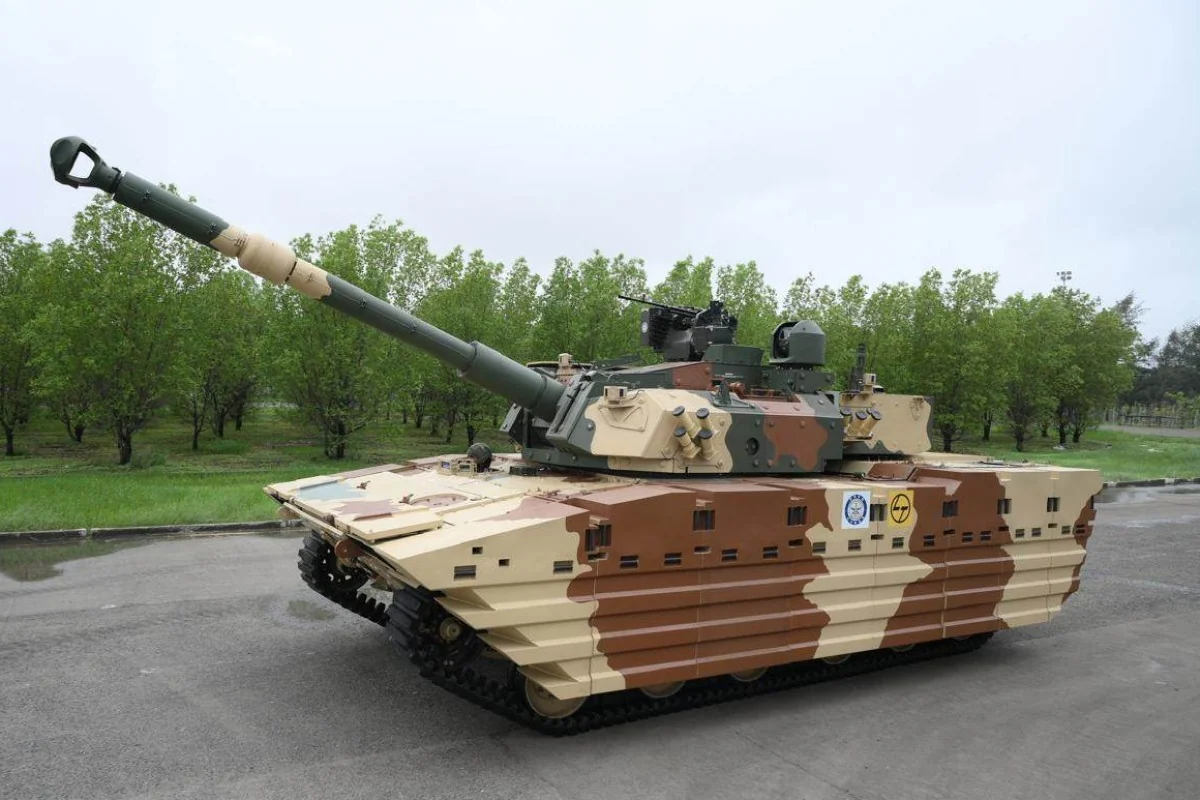
佐拉瓦尔由印度国营的国防研究与发展组织和私营工程集团拉森特博洛在两年时间内共同开发,从2022年3月获得正式批准到2024年原型车首次公开亮相。
The Zorawar was developed by India’s state-run Defence Research and Development Organisation and the private engineering group Larsen & Toubro over a two-year period, from its formal approval in March 2022 to the first public unveiling of a prototype in 2024.
它配备了一门105毫米线膛炮,安装在比利时设计的科克里尔(Cockerill)炮塔——即坦克的旋转上部结构——中,该炮塔经过加固,能够抵御轻武器火力和火炮弹片,但无法抵御旨在击穿金属、由中国机关炮发射的穿甲弹。
It comes equipped with a 105mm rifled gun in a Belgian-designed Cockerill turret – the rotating upper section of the tank – that is hardened against small arms fire and artillery shrapnel, but not the armour-piercing shells designed to punch through metal that are fired by Chinese autocannons.
据报道,印度陆军正极力推动将该坦克的装甲升级至北约最高的弹道防护标准(即STANAG 6级),使其能够承受25毫米和30毫米穿甲弹的攻击。
India’s army is reportedly pushing for the tank’s armour to be upgraded to Nato’s highest standards of ballistic protection, known as STANAG Level 6, able to withstand 25mm and 30mm armour-piercing rounds.
这样做不仅会增加重量,还会迫使设计进行修改,并延长坦克的研发周期。因此,陆军参谋长乌彭德拉·德维迪(Upendra Dwivedi)将军今年早些时候对印度媒体表示,他预计“佐拉瓦尔”(Zorawar)将于2028至2029年服役,晚于最初2027年的目标。
Doing so would not only add weight, but also force redesigns and prolong the tank’s development cycle. As a result, army chief General Upendra Dwivedi told Indian media earlier this year that he expected the Zorawar to enter service in 2028–29, overshooting the original 2027 target.
阿肖克·比姆·希瓦内(Ashok Bhim Shivane)是一名退役中将,曾领导印度陆军机械化部队并指挥过一个打击军——该军是其主要的进攻编队之一——他对这种延迟为何是个问题做出了直言不讳的评估。
Ashok Bhim Shivane, a retired lieutenant general who previously led the Indian Army’s mechanised forces and commanded a strike corps – one of its major offensive formations – delivered a blunt assessment of why such a delay was a problem.
他在接受《亚洲周刊》(This Week in Asia)采访时表示:“这种紧迫感是真实的。对于中型类别的T-90/T-72坦克无法到达或作战的地区,轻型坦克是前天就需要的关键需求。”更重的装甲需要更强大的发动机。希瓦内说,在“佐拉瓦尔”必须作战的海拔4500米(1.5万英尺)以上的地区,较稀薄的空气可能导致发动机功率下降20%,除非将该坦克现有的764马力发动机升级为1000马力的发动机。
“The urgency is real,” he told This Week in Asia. “A light tank for areas where the medium-category T-90/T-72 cannot reach or operate is a critical requirement as of the day before yesterday.”Heavier armour needs a stronger engine. At altitudes above 4,500 metres (15,000 feet), where the Zorawar would have to operate, thinner air could result in a 20 per cent drop in engine power, Shivane said – unless the tank’s current 764-horsepower engine was upgraded to a 1,000-horsepower one.
曾协助为国产轻型坦克论证并一直密切参与其研发的希瓦内表示:“还有一个设计问题。比利时炮塔无法承受更重的装甲。”
“There is also a design question. The Belgian turret cannot take the heavier armour,” said Shivane, who helped build the case for a home-grown light tank and has been closely involved with its development.
他说,附加装甲可能会给坦克增加多达7吨的重量,并主张为了纠正其中一些问题,印度应该进一步提高其设计的本土化程度。他描述称,该设计目前按价值计算的本土化程度在40%至45%之间。
The additional armour could add up to seven tonnes to the tank’s weight, he said, arguing that to rectify some of these issues, India should further localise its design, which he described as currently between 40–45 per cent indigenous by value.
印度计划首先部署59辆“佐拉瓦尔”(Zorawar)坦克,总数则为354辆。希瓦内表示,他希望在2028年之前让首批坦克列装,“具备有据可查的基准、经过仪测的试验以及有资金支持的升级批次”,这意味着设计方案已得到彻底测试和最终确定,并且升级资金已经落实。
India plans to field an initial 59 Zorawars and 354 in total. Shivane said he wanted to see the first batch inducted by 2028 “with a documented baseline, instrumented trials and funded upgrade lots”, meaning a thoroughly tested, finalised design with funding already secured for upgrades.
他提议在生产中采取“螺旋式方法”,分阶段逐步增加作战能力,并采取变通措施来填补可能出现的任何漏洞。
He proposed a “spiral approach” to production that gradually added capability in stages, with stopgap measures to plug any vulnerabilities that should arise.
“不存在的坦克是无法用于训练的。在真实条件下的用户试验教会人们实验室所无法教导的东西,”他说。
“A tank that does not exist cannot be trained on. A user trial under real conditions teaches what no laboratory can,” he said.
印度陆军退休准将桑杰·艾耶尔认同,部署首批已经过试验的“佐拉瓦尔”坦克,要好过等待目前大多只停留在纸面上的更重版本。
Sanjay Iyer, a retired Indian Army brigadier, agreed that fielding the first batch of Zorawar tanks that had already been through trials would be preferable to waiting for a heavier version that so far existed mostly on paper.
“我确实理解陆军的立场。没有任何指挥官愿意把车组人员派往他们并非完全信任的车辆上的实际控制线(LAC),”他在谈到印中争议边界时使用了其官方名称的缩写形式。“尽管如此,这些坦克到达的并非一个空旷的战区。”艾耶尔表示,由T-72和T-90组成、通常在135至150辆坦克之间的装甲旅已经部署在拉达克,“而‘佐拉瓦尔’带来了那些坦克无法轻易提供给你的东西”。
“I do understand where the army is coming from. No commander wants to send crews up to the LAC in a vehicle they don’t fully trust,” he said, referring to the disputed India-China border by the abbreviated form of its official name. “Still, these tanks won’t be arriving in an empty theatre.”An armoured brigade of T-72s and T-90s, typically ranging from 135 to 150 tanks, was already in Ladakh “and the Zorawar brings what those tanks can’t easily give you”, Iyer said.
“它可以被空运进来,可以使用较小的桥梁和狭窄的道路,并且能够到达重达45吨的坦克难以应对的高海拔地区,”他说。“在平坦的地面上与较重的坦克配合使用,哪怕只有59辆,也会给该旅带来大得多的灵活性。”“佐拉瓦尔”是印度装甲部队更广泛全面整修的一部分,其中包括利用苏联时期的俄罗斯工程图纸升级T-72和T-90机群,以及开发本土系统。
“It can be flown in, it can use the smaller bridges and narrow roads, and it can get up to heights where a 45-tonne tank struggles,” he said. “Used alongside the heavier tanks on the flatter ground, even 59 of them would give the brigade a good deal more flexibility.”The Zorawar is part of a broader overhaul of India’s armoured forces, which includes upgrading the T-72 and T-90 fleet using Soviet-era and Russian engineering drawings, alongside developing indigenous systems.
根据美国军事追踪网站“全球火力”汇编的数据,印度拥有世界第五大战车机群,拥有约3900辆主战坦克,而中国拥有最大的战车机群,拥有超过5800辆。
India has the world’s fifth-largest tank fleet with an estimated 3,900 main battle tanks, while China has the largest with more than 5,800 units, according to data compiled by US-based military tracking site Global Firepower.
艾耶尔表示,中国在轻型坦克领域领先印度近十年,并指出中国的15式坦克于八年前推出,配备了一台1000马力的发动机和一门105毫米口径火炮。
Iyer said China was nearly a decade ahead of India in light tanks, noting that its Type 15, launched eight years ago, had a 1,000-horsepower engine and came equipped with a 105mm gun.
他表示:“从纸面上看,基础型的‘佐拉瓦尔’(Zorawar)更轻。”他形容两者的推重比“大致相似”,火炮也“具有可比性”。
“On paper the baseline Zorawar is lighter,” he said, describing the power-to-weight ratio as “broadly similar” and the guns as “comparable”.
但艾耶尔指出,还必须考虑其他因素,包括公路、铁路和空中交通线,以及大规模建造坦克的工业能力。
But other factors must also be taken into account, including road, rail and air links, and the industrial capacity to build tanks at scale, Iyer said.
他说,印度的坦克车队较为老旧,防护技术落后,但并非无可救药——他还进一步指出,为了缩小差距,印度陆军已向拉达克调入了更多T-90和T-72坦克。
India’s tank fleet was older and behind on protection technology, he said, but not hopelessly so – further noting that the army had moved more T-90s and T-72s into Ladakh in a bid to narrow the gap.
艾耶尔表示,“佐拉瓦尔”和15式坦克都尚未经历过实战。他补充道:“印度在适应高原气候的部队和高海拔经验方面拥有的优势是真实的,不应被低估。”
Neither the Zorawar nor the Type 15 had yet seen combat, Iyer said. “The advantage India has in acclimatised troops and high-altitude experience is real and should not be underrated,” he added.