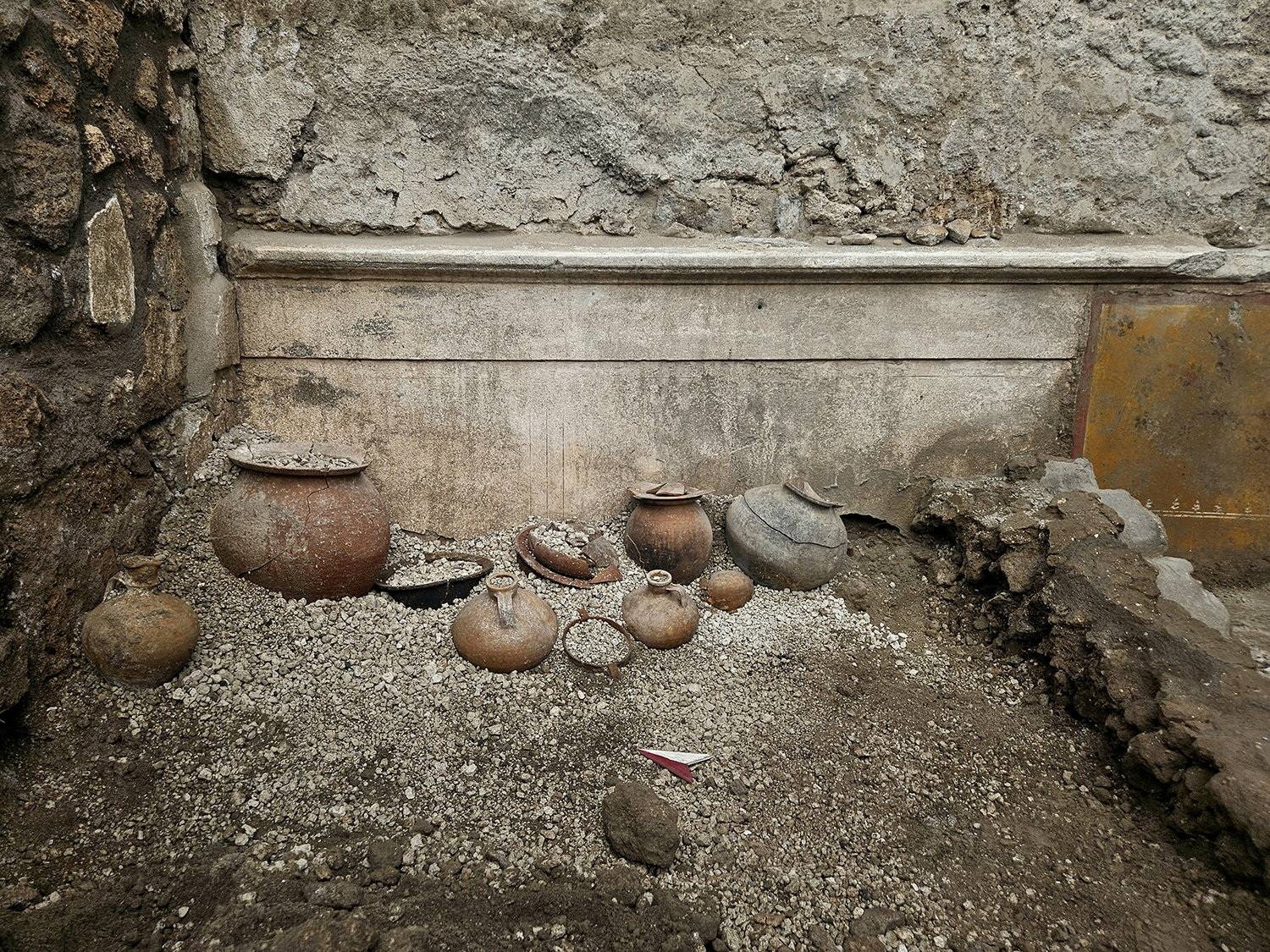
一件在庞贝被密封近2000年的橱柜,出土了该居民在维苏威火山毁灭这座古罗马城市之前的生活细节,包括化妆用具、香水、硬币、炊具和童年护身符。
A cupboard sealed for almost 2,000 years in Pompeii has yielded an intimate snapshot of one resident’s life before Mount Vesuvius destroyed the ancient Roman city, from make-up utensils and perfume to coins, cooking pots and childhood amulets.
这座曾经繁荣的庞贝城,位于那不勒斯附近,于公元79年被火山喷发埋葬,建筑、物品和涂鸦在数米厚的火山灰下得以保存。
The once-thriving city of Pompeii, near Naples, was buried by a volcanic eruption in AD 79, preserving buildings, objects and graffiti under meters of ash.
考古学家根据在Via dell’Abbondanza街上一座房屋中发现的痕迹,拼凑出这件木制橱柜的碎片,Via dell’Abbondanza是古庞贝最繁忙的街道之一,现场在声明中说。
Archaeologists pieced together bits of the wooden cupboard from traces uncovered in a house on Via dell’Abbondanza, one of the busiest streets of ancient Pompeii, the site said in a statement.
“我们无法确定居住在这座房屋的人的身份,但这些碎片让我们更接近他们的日常生活,”现场负责人加布里埃尔·祖克特里格尔说。
“We cannot reconstruct with certainty the identity of whoever lived in the house, but these fragments bring us closer to their daily life,” said site director Gabriel Zuchtriegel.
橱柜内存放的物品之一是一条项链,至少由24件微小的骨制、玻璃膏、陶土和水晶制成的物件组成,包含巴斯神和墨丘利神的形象,以及微型的手、脚、松果和葡萄串。
Among the objects stored inside was a necklace comprising at least 24 tiny objects made of bone, glass paste, earthenware and rock crystal, including images of the gods Bes and Mercury, as well as miniature hands, feet, pine cones and bunches of grapes.
此类项链被称为“crepundia”,传统上作为罗马儿童的护身符和摇铃,摇动时的声音帮助成人辨别孩子的位置。
Such necklaces, known as crepundia, were traditionally given to Roman children both as protective amulets and as rattles whose sounds helped adults keep track of them.
它们有时会被保留至成年,作为童年的纪念品,为这座房屋的未知居住者提供了特别个人化的联系。其他出土物品则讲述了更为平凡的日常生活。
They were sometimes kept into adulthood as mementos of childhood, offering a particularly personal connection to the unknown inhabitant of the house. Other finds tell a more prosaic story of daily life.
其中有镊子、一只小玻璃香水或药膏瓶、一个香炉,以及青铜、玻璃和陶瓷容器和炊具。木箱中的铅砝码表明该屋有人从事贸易。一个小型编织容器中装有38枚青铜硬币。
There were tweezers, a small glass perfume or ointment bottle and an incense burner, alongside bronze, glass and ceramic vessels and cooking pots. Lead weights in a wooden box suggested that someone in the house was involved in trade. A small woven container held 38 bronze coins.
金钱和显然具有情感价值的物品都留在现场,说明火山喷发后屋主没有时间取回它们。
The fact that both money and objects with apparent sentimental value remained behind suggests the owners had no time to retrieve them after Vesuvius erupted.
祖克里格尔说:“庞贝不仅仅是一个拥有伟大艺术品的地方。它也是一个通过最普通的物品恢复过去的人性维度的场所。”
“Pompeii is not just a place of great works of art. It is also a place where the most ordinary objects restore the human dimension of the past,” Zuchtriegel said.
祖克里格尔说:“这一发现的价值在于,它能够将生活的不同痕迹结合起来解读:个人习惯、工作和记忆。”这栋位于庞贝中心区域的房屋,根据在那里发现的碑文,暂定与一名叫科尔内利乌斯·马克西姆斯的男子有关。它的外墙最早于1912年被发掘,但考古学家直到现在才作为更广泛修复项目的一部分,对它背后的一些房间进行了调查。
“The value of this discovery lies in the possibility of reading together the different traces of a life: personal habits, work and memories.”The house, in a central area of Pompeii, is tentatively associated with a man named Cornelius Maximus because of inscriptions discovered there. Its facade was first excavated in 1912, but archaeologists have only now investigated some of the rooms behind it as part of a wider restoration project.
这次发掘还提供了证据,表明城市生活的某些问题在两千年里几乎没有改变,考古学家在一个储藏高台上的一只双耳陶罐里发现了两只幼年小鼠的残缺骨骼。
The excavation also provided evidence that some problems of urban living have changed remarkably little in two millennia, with archaeologists finding the fragmented skeletons of two young mice inside an amphora kept on a raised storage area.
周四发布的这张发放图片中,一件带翅膀的鞋形护身符(即护身符饰物)在意大利庞贝的考古发掘中于一个橱柜的遗迹里被出土。 | 庞贝考古公园 / 西尔维娅·瓦卡 / 路透社
A winged shoe-shaped amulet, or crepundium, after being uncovered in the remains of a cupboard uncovered during archaeological excavations in Pompeii, Italy, in this handout image released on Thursday. | Pompeii Archeological Park / Silvia Vacca / via REUTERS