刚果民主共和国东部的森林是世界上一些最稀有物种的栖息地——但尽管这些地区受到保护,它们仍面临冲突、偷猎和毁林的威胁。本周,全球决策者齐聚联合国第十七届生物多样性大会(Cop17),卡胡齐-比耶加国家公园的护林员埃马纽埃尔·巴哈蒂·卢库表示,野生动物保护一线的人员理应获得更多认可。
The forests of eastern Democratic Republic of Congo are a haven for some of the world's rarest species – but despite being protected areas, they are under threat from conflict, poaching and deforestation. After global decision-makers gathered at the United Nations' Cop17 biodiversity summit this week, Emmanuel Bahati Lukoo, a ranger at Kahuzi-Biega National Park, says people on the frontline of wildlife protection deserve greater recognition.
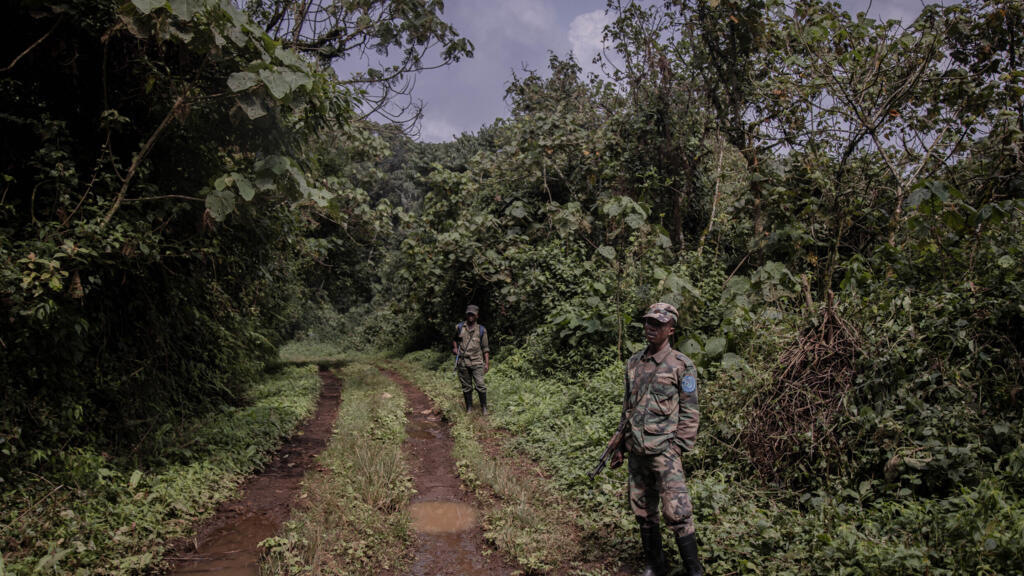
2022年2月13日,导游在刚果民主共和国布卡武市郊外几公里处的卡胡齐-比耶加国家公园森林中带领游客参观。© 法新社 - 盖尔肖姆·恩德博现任卡胡齐-比耶加国家公园助理园区经理的卢库,曾在附近的维龙加国家公园担任护林员,该公园是非洲最古老的国家公园。
Guides lead tours in the forest of Kahuzi-Biega National Park, a few kilometres outside the city of Bukavu in the Democratic Republic of Congo, 13 February 2022. © AFP - GUERCHOM NDEBO Now assistant park manager at Kahuzi-Biega, Lukoo was formerly a ranger at nearby Virunga , the oldest national park in Africa.
从热带森林到死火山,从雪原到沼泽和熔岩平原,该地区拥有种类极其丰富的栖息地。
From tropical forests to extinct volcanoes, snowfields to swamps and lava plains, the region is home to an exceptional range of habitats.
然而,其丰富的自然资源使其容易遭到掠夺,无论是与国家政府作战的武装团体,还是为生存而挣扎的贫困当地社区。
Yet its natural wealth makes it vulnerable to exploitation, whether from armed groups battling the national government or impoverished local communities struggling to survive.
数百名护林员致力于保护公园及其野生动物,有时甚至以牺牲生命为代价。
Hundreds of rangers work to protect the parks and their wildlife, sometimes at risk to their own lives.
卢库还创办了一所足球学院,让年轻人参与保护工作,并撰写回忆录记录自己的经历。他向法广讲述了在冲突地区保护自然面临的挑战——以及他为何希望护林员能获得更多尊重。
Lukoo, who also founded a football academy to engage young people in conservation and has written a memoir about his experiences, told RFI about the challenges of preserving nature in a conflict zone – and why he wishes rangers got more respect.
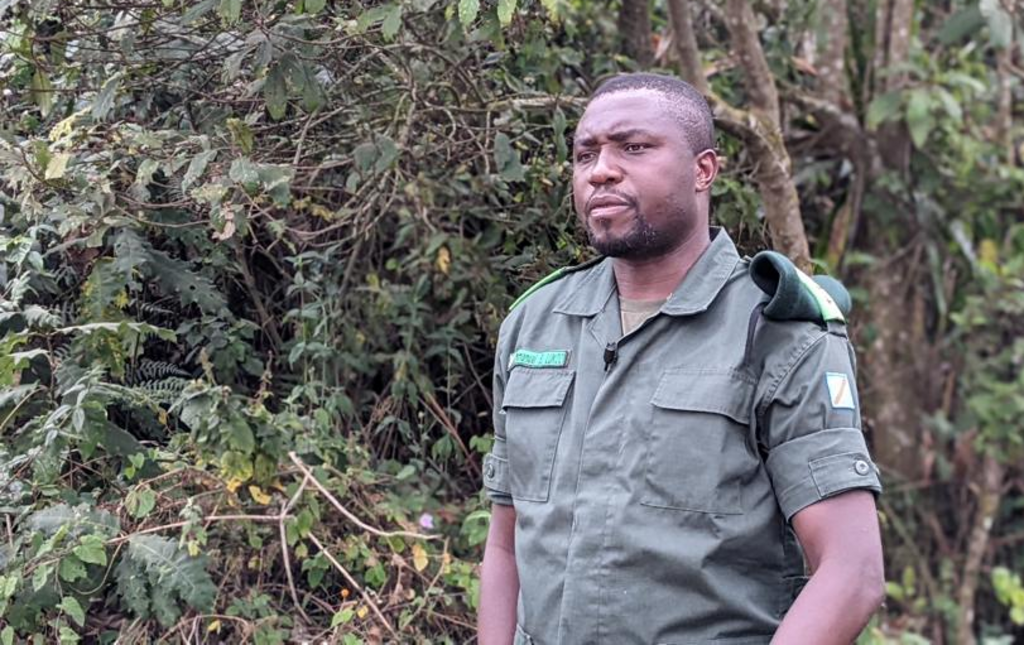
刚果民主共和国卡胡齐-比耶加国家公园护林员兼助理园区经理埃马纽埃尔·巴哈蒂·卢库,摄于今年早些时候。© 埃马纽埃尔·巴哈蒂·卢库提供法广:在您看来,为什么保护工作如此重要?
Emmanuel Bahati Lukoo, ranger and assistant park manager at Kahuzi-Biega National Park in Democratic Republic of Congo, pictured earlier this year. © Courtesy of Emmanuel Bahati Lukoo RFI: Why is conservation work so important in your view?
埃马纽埃尔·巴哈蒂·卢库:这些森林是刚果的遗产,但也属于全世界。我们保护它们不仅是为了自己,也是为了子孙后代——让他们有机会来此体验我们今天所能体验的一切。
Emmanuel Bahati Lukoo: These forests are part of Congolese heritage, but they also belong to the world. We're not just protecting them for ourselves, but for future generations – so they'll have the chance to come and experience the same thing we can.
这也是该国的收入来源:游客前来参观公园,并付费观赏这种生物多样性。资金流入,每个人都受益。
It's also a source of income for the country: tourists come to visit the park and pay to see this biodiversity. Money comes in, and everyone benefits.
气候也在变化。几年前,你不能只穿一件衬衫,还需要穿一件毛衣。现在不再是这样了。我们也看到河流干涸、农业产量下降、山体滑坡。如果我们能呼吸到新鲜空气,那是因为我们正在保护所有这些森林和生物多样性。我们正在保护生态平衡。没有树木,就没有雨水,就没有河流。
The climate is changing too. A few years ago, you couldn't just wear a shirt, you needed a sweater. That's no longer the case. We're also seeing rivers drying up, agricultural production declining, landslides. If we can breathe fresh air, it's because of all these forests and this biodiversity that we're protecting. We're protecting an ecological balance. Without trees there's no rain, no rivers.
保护[刚果民主共和国]的森林,就是保护人们的生命。这是一项巨大的责任。
Protecting the forests in the [DRC] means protecting people's lives. It's a huge responsibility.
法国国际广播电台:在刚果民主共和国,护林员要接受类似于军事新兵的高强度训练。你是否被工作的这一方面所吸引?
RFI: In the DRC, rangers undergo intense training, similar to military recruits. Were you drawn to that aspect of the job? EBL: I didn't start out wanting to be in the military.
埃贝尔:我一开始并不想当军人。我从小就热爱大自然。童子军教会了我如何在森林中生活,与动物为伴。而且我出生在一个保护区旁边。从很小的时候起,我就目睹了保护工作的奇迹。完成人道主义援助学业后,我上了大学,获得了环境管理学位。
I've been passionate about nature ever since I was very young. Being in the Scouts taught me how to live in the forest, alongside animals. And I was born right next to a protected area. From a very young age, I witnessed the wonders of conservation. After completing my studies in humanitarian aid, I went to university and got a degree in environmental management.
在接受护林员培训期间,你会学到很多东西:保护意味着什么,关于你将要工作的保护区的一切,如何在没有指南针的情况下在森林中导航,如何与动物共存,它们是谁,为什么需要保护……但你也会学习如何使用武器。刚果民主共和国东部长期以来一直是冲突地区。反叛组织在保护区寻求庇护。
You learn a lot when you're training to be a ranger: what conservation means, all about the protected area you'll be working in, how to navigate the forest without a compass, how to live alongside animals, who they are, why they need to be protected... But you also learn how to handle weapons. Eastern DRC has been a conflict zone for a long time . Rebel groups take refuge in protected areas.
因此,公园管理人员给护林员提供彻底的准军事训练,以便他们能够对抗武装团体。这种训练非常艰苦。
As a result, park managers give rangers thorough paramilitary training so they can confront armed groups. This training is gruelling.
刚果的自然保护与其他地方不同。对我们来说,这就像在打仗。当你外出巡逻时,你不会想着能否回来……在刚果民主共和国东部当护林员很复杂。但你会学会热爱它。
Nature conservation in the Congo isn't the same as elsewhere. For us, it's like being at war. When you go out on patrol, you don't think about coming back... Being a ranger in the east of the DRC is complicated. But you learn to love it.
RFI:您的职责涵盖从抵御武装团体和偷猎者到追踪大猩猩等各项工作。您的使命核心究竟是什么?
RFI: Your role sees you handle everything from fighting off armed groups and poachers to tracking gorillas. What is ultimately the core of your mission?
EBL:是保护自然保护区的领土完整、栖息地以及所有在那里生活的人,使其免受众多威胁——例如偷猎和野生动物贸易。要抓走一只幼年大猩猩并将其贩卖,首先必须杀死母猩猩。我们的使命不是与武装团体开战,而是在他们攻击时进行防御。
EBL: It's protecting the territorial integrity of the reserve, the habitat and everyone who lives there against numerous threats – for instance, poaching and wildlife trafficking. To take a baby gorilla and traffic it, you first have to kill the mother. Our mission isn't to wage war against armed groups, but to defend when they attack.
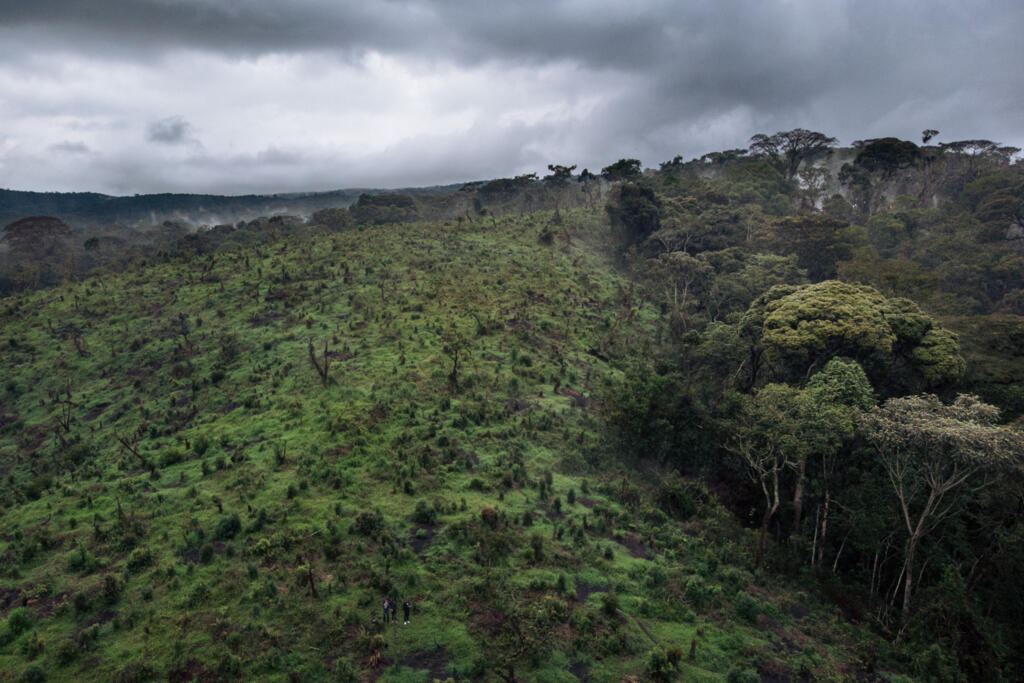
还有森林砍伐和非法伐木。在一些地区,这一问题已达到特别令人震惊的程度。树木被砍伐,用于生产木炭——当地称为“makala”——作为能源,也用于制作家具。其他威胁包括非法占用土地耕种以及牧场扩张,还有非法采矿。
There's also deforestation and illegal logging. In some areas, it has reached a particularly alarming scale. Trees are cut down to produce charcoal – known locally as makala – for energy, but also to make furniture. Other threats include the illegal occupation of land for farming and the expansion of pastures, as well as illegal mining.
这张2019年9月拍摄的空中照片显示,卡胡齐-比埃加国家公园一个因伐木而遭到破坏的区域。© AFP - ALEXIS HUGUET报告发现:全球森林砍伐有所下降,但刚果盆地损失在增加RFI:这些非法活动是如何进行的?
This aerial photograph, taken in September 2019, shows an area in Kahuzi-Biega National Park devastated by logging. © AFP - ALEXIS HUGUET Deforestation falling worldwide but Congo Basin losses grow, report finds RFI: How are these illegal activities carried out?
EBL:并非所有非法进入公园的人都有相同的动机。有些团体追求政治或军事目标,而另一些则试图控制领土或贸易路线,或开采自然资源以资助其活动。然而,另一些人生活在公园边缘的极度贫困中,并依赖这些资源。
EBL: Not everyone who enters a park illegally has the same motives. Some groups are pursuing political or military objectives, while others are seeking to control territories or trade routes, or to exploit natural resources to finance their activities. Others, however, live in extreme poverty on the outskirts of the park and depend on these resources.
武装团体在保护区设立营地,并从这些社区中汲取资源——有时是通过武力。他们常常利用年轻人开采矿物并生产木炭。社区将货物运送到非法市场,并将钱交给剥削他们的团体。
Armed groups set up camp in protected areas and draw from these communities – sometimes by force. Often, they use young people to mine minerals and produce charcoal. The communities transport the goods to illegal markets and hand over the money to the groups exploiting them.
RFI:在您的回忆录中,您写道,刚果民主共和国的政治局势使保护工作复杂化,尤其是腐败问题。在管理国家公园时,这会带来什么问题?
RFI: In your memoir , you write that the political situation in the DRC complicates conservation efforts, notably corruption. What problems does this pose when managing a national park?
EBL:土地纠纷非常多。有些社区认为自然保护区是个问题。某些政客为了当选,支持这些社区从事非法活动。还有人利用武装团体袭击护林员哨所,让护林员无法开展工作。RFI:什么有助于减轻对国家公园的压力?
EBL: There are a lot of land disputes. Some communities see nature reserves as a problem. Certain politicians support these communities in illegal activities in order to get elected. Others use armed groups to attack ranger posts so that the rangers cannot do their jobs. RFI: What could help reduce the pressure on national parks?
EBL:各方都必须尊重保护区的完整性,因为一切都始于对其边界的侵犯。
EBL: All parties must respect the integrity of protected areas, because everything starts with the violation of their boundaries.
但我们必须放眼大局。只要当地社区无法获得负担得起的能源和足够的经济机会,森林很可能仍将面临压力。
But we have to look at the bigger picture. As long as local communities do not have access to affordable energy sources and enough economic opportunities, forests are likely to remain under pressure.
接下来,我们需要保护野生动物护林员。他们面临任意逮捕和袭击。每个人都谈论人权和保护生物多样性,但我从未听到任何人提及护林员的权利。然而,他们日夜工作,90%的时间都在森林里度过,远离家人和朋友。
Next, we need to protect wildlife rangers. They are subject to arbitrary arrests and attacks. Everyone talks about human rights and protecting biodiversity, but I've never heard anyone mention rangers' rights. And yet they work day and night, spending 90 percent of their time in the forest, far from family and friends.
RFI:世界自然保护联盟将维龙加的保护前景评为“极危”。您认同这一评估吗?
RFI: The International Union for Conservation of Nature rates the conservation outlook at Virunga as ' critical '. Do you share that assessment?
EBL:很难说保护区目前的状况如何,因为目前没有进行科学研究。南部和中部等很大一部分地区被占领,已不再受公园控制。这些是护林员不再前往的地区。
EBL: It's hard to say what the state of the protected area is because there's no scientific research being conducted at the moment. A very large portion – the south and the centre – is occupied and is no longer under the park's control. These are areas where rangers no longer go.
今天,这是一个生存问题,保护动物变得非常复杂。战后,我们将不得不进行评估。
Today, it's a matter of survival and protecting the animals has become very complicated. After the war, we'll have to take stock.
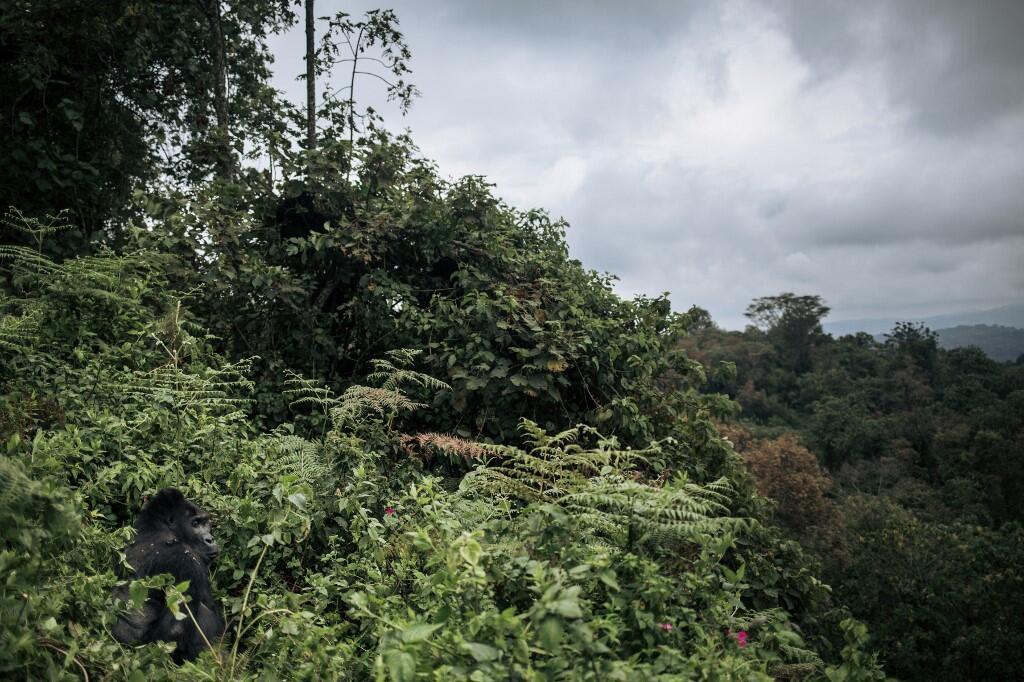
2019年9月,刚果民主共和国卡胡齐-比耶加国家公园森林中一只极危物种格雷戈里大猩猩的雄性个体。© AFP - ALEXIS HUGUET保护东部刚果民主共和国野生动物免受战争影响的挑战RFI:您曾写到这份工作对护林员个人造成的影响。它如何影响了您?
A male Grauer's gorilla, a critically endangered species, in the forest of Kahuzi-Biega National Park in September 2019. © AFP - ALEXIS HUGUET The challenges of protecting wildlife from war in eastern DRC RFI: You've written about the personal toll that the job takes on rangers. How has it affected you?
EBL:护林员积极性高、充满热情,却得不到认可,这让我最为难过。他们的牺牲没有得到承认,甚至在国际上也是如此。他们没有得到应有的重视。这不公平,因为没有森林,世界就不会存在。你看到了这些人的工作成果,却没有给予他们应有的尊重。
EBL: Rangers are motivated and passionate but they don't get recognition, that's what saddens me the most. Their sacrifice isn't acknowledged, even internationally. They aren't valued as they deserve to be. It's not fair because without forests, the world wouldn't exist. You see the results of these people's work, but you don't show them the respect they deserve in return.
我们也需要重新考虑他们的薪酬,在物价高昂的城市,这笔钱不足以维持生计。他们依靠这份薪水支付房租、学费、食物……护林员的孩子最终流落街头,要么是因为父亲没有足够的钱支付他们的教育费用,要么是因为父亲在保护世界遗产时牺牲。RFI:这就是你创办足球学院的原因吗?
We also need to reconsider their pay, which isn't enough to live on in cities where everything costs more. They rely on this salary to cover rent, tuition, food... The children of rangers end up on the streets, either because their father doesn't have enough money to pay for their education or because he died protecting a World Heritage Site. RFI: Is that why you set up your football academy?
EBL:是的。维龙加足球学院源于这样一个事实:居住在公园附近的年轻人与护林员之间存在大量不信任。当我们逮捕其中一些人时,他们的朋友就把我们视为坏人。我们想找到一种与他们建立联系的方式。足球是最简单的方式。
EBL: Yes. The Virunga Football Academy came from the fact there was a lot of mistrust between young people living near the park and the rangers. When we arrest some of them, their friends see us as the bad guys. We wanted to find a way to build a connection with them. Football is the simplest way.
我们于2021年在北基伍省的鲁曼加博开始,当时大约有50名年轻人。随后收到了大量请求,如今我们在戈马、基旺贾、基伦巴和卡辛迪开展工作。学校里大约有400名年轻人。总是有更多人申请,但我们没有资源接纳他们。
We started in 2021 with about 50 young people in Rumangabo in North Kivu province. Then we got lots more requests, and today we work in Goma, Kiwanja, Kirumba and Kasindi... There are around 400 young people in the school. More are always applying, but we don't have the the resources to take them in.
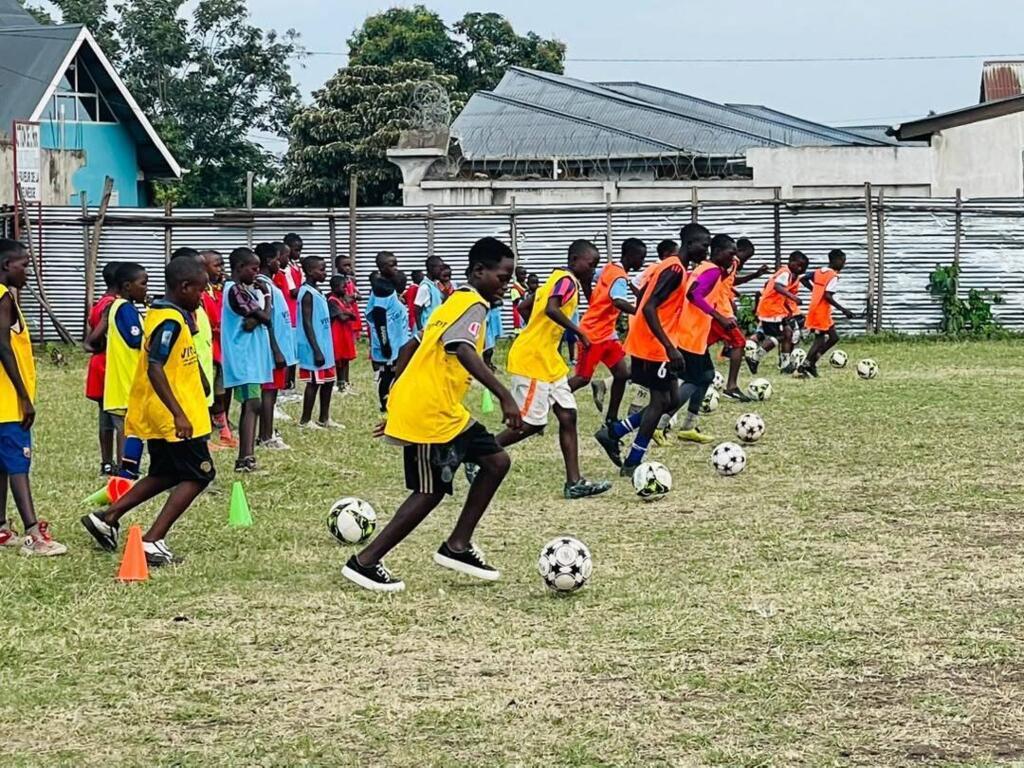
卡辛迪的年轻球员在维龙加足球学院训练,该学院成立旨在促进维龙加国家公园附近社区之间的和平共处。© 多伊·卡内加/维龙加足球学院RFI:它是如何运作的?
Young players in Kasindi train at the Virunga Football Academy, which was founded to promote peaceful coexistence between communities living near Virunga National Park. © Doyi Kanega/Virunga Football Academy RFI: How does it work?
EBL:每周放学后,8至17岁的男孩和女孩前来练习,就像任何其他足球学院一样。当他们一起踢球时,会建立起联系。他们不再想着在公园里惹麻烦。这也促进了他们之间的和平凝聚,尽管该地区存在许多社区间冲突。
EBL: Every week after school, boys and girls aged 8 to 17 come to practice, just like at any other football academy. When they play together, it builds bonds. They stop thinking about getting into trouble in the park. It also fosters peaceful cohesion between them, even though there are many intercommunal conflicts in the area.
此外,我们还组织教育活动,帮助他们了解自然保护区、教育以及共同生活的重要性。
In addition, we organise educational activities to help them understand the importance of nature reserves, education and living together.
在鲁芒加博,年轻人参与非法活动的倾向确实大幅下降。他们忙着踢足球。这远非所有年轻人,而且这些人也是想做点事的人。但我们已经接触到了最脆弱的群体。足球学院为南苏丹青年提供远离帮派生活的替代选择RFI:2018年4月,您和另外五名护林员遭到民兵伏击,您是唯一幸存者。经历那次创伤后,是什么支撑您继续前行?
In Rumangabo, young people's tendency to engage in illegal activities has really gone down. They're busy playing football. It's far from being all young people, and these are also the ones who want to do something. But we've reached the most vulnerable ones. The football academy giving South Sudan's youth an alternative to gang life RFI: In April 2018, you and five other rangers were ambushed by militiamen. You were the only one to survive. What drives you to keep going after the trauma of that experience?
EBL:首先,是为了纪念那些为保护公园而牺牲的朋友们。此后还有其他人。2020年,我们在鲁芒加博失去了13名护林员,他们遭遇了伏击。离开将是极大的懦弱行为。其次,我认为保护自然是帮助社区发展而不破坏公园的一种方式。
EBL: Firstly, to honour the friends who died protecting the park. There have been others since then. We lost 13 rangers in Rumangabo in 2020 to an ambush. It would be a great act of cowardice to leave. Secondly, I see conservation as a way to help communities develop without contributing to the destruction of the park.
作为一名护林员,支撑我继续前行的是希望——即使在危险和武装冲突之中。远非让我气馁,这种情况反而增强了我的决心。尽管心怀恐惧,我仍以勇气和信念捍卫我们国家的自然财富。我依然坚信,我们的使命对本地区的未来以及子孙后代的未来至关重要。
As a ranger, what drives me to keep going is hope – even in the midst of danger and armed conflict. Far from discouraging me, this situation strengthens my resolve. Despite my fear, I continue to defend our country's natural wealth with courage and conviction. I am still convinced our mission is essential for the future of our region, and for the future of generations to come.
本文改编自Géraud Bosman-Delzons的法语采访,已根据篇幅和清晰度进行了轻微编辑。
This article was adapted from an interview in French by Géraud Bosman-Delzons . It has been lightly edited for length and clarity.