阿努潘·纳斯、迪帕·巴拉特,不丹盖莱普——来自不同学派和宗派的佛教大师以及约20万来自世界各地的人们,周日齐聚不丹盖莱普,见证志愿者一天之内竖立108座佛塔。
ANUPAM NATH, DEEPA BHARATH GELEPHU, Bhutan — Buddhist masters from various schools and denominations and about 200,000 people from around the world congregated in Gelephu, Bhutan , on Sunday to witness volunteers erect 108 stupas in a single day.
新竖立的这些神圣建筑,象征着佛陀的觉悟,是盖莱普正念城市的基石。该城市由不丹国王吉格梅·凯萨尔·南姆吉尔·旺楚克构思,由丹麦建筑师设计,正逐步成形,成为一个充满活力的经济中心,将生态可持续性和本国公民的幸福置于商业利润之上。
The newly erected sacred structures, representing Buddha’s enlightenment, anchor Gelephu Mindfulness City. Conceived by Bhutan’s King Jigme Khesar Namgyel Wangchuck and designed by Danish architects, the city is taking shape as a vibrant economic hub that puts the ideals of ecological sustainability and the happiness of the country’s citizens over commercial profit.
该城市目前是一个人口约1万人的小城镇,位于不丹南部,与印度接壤,距离首都廷布约150英里(240公里)。
The city, currently a small town with a population of about 10,000, is in southern Bhutan along the border with India, about 150 miles (240 kilometers) south of Thimphu, the nation’s capital.
面临巨大的经济挑战——从失业率上升和出生率下降,到熟练劳动力大规模外流——不丹人寄望于这座城市能推动经济发展,并提供能够鼓励年轻人留在国内的机会。
Amid massive economic challenges — from rising unemployment and falling birth rates to the mass migration of skilled workers — Bhutanese are pinning their hopes on this city to boost their economy and provide the opportunities that would encourage young people to stay in the country.
不丹的“108项目”是一项倡议,计划在毛楚河沿岸一字排开安装108座佛塔,每座高约50英尺(15米),间距约354英尺(108米),呈现出如同“纪念碑行列”的景象,具体内容见该项目网站。数字108在佛教中是神圣的,佛教在不丹广泛信奉。
Bhutan’s Project 108 is an initiative to install 108 stupas with each standing about 50 feet (15 meters) tall, spaced about 354 feet (108 meters) apart, in a single file along the Mao Chhu river, to appear like a “procession” of monuments, according to the project’s website. The number 108 is sacred in Buddhism, which is widely practiced in Bhutan.
这些佛塔在金刚乘佛教中被称为“江秋却尔”,金刚乘是佛教的一个主要分支,起源于公元前5至7世纪的印度。它旨在帮助修行者在一生之内证得觉悟。
These stupas are known as Jangchub Chortens in Vajrayana Buddhism, a major branch that emerged in India around the 5th and 7th centuries B.C. It aims to help practitioners attain enlightenment within a single lifetime.
“这不仅仅是一项工程壮举,”声明说。“在佛教传统中,建造一座佛塔是一个人所能从事的最具功德的行为之一,它不仅给建造者带来精神利益,也给所有遇见它的人带来精神利益。108项目是献给世界的集体供养。”
“This is not merely an engineering feat,” the statement said. “In the Buddhist tradition, building a chorten is one of the most meritorious acts a person can undertake, a gift of spiritual benefit not just to those who build it, but to everyone who encounters it. Project 108 is a collective offering to the world.”
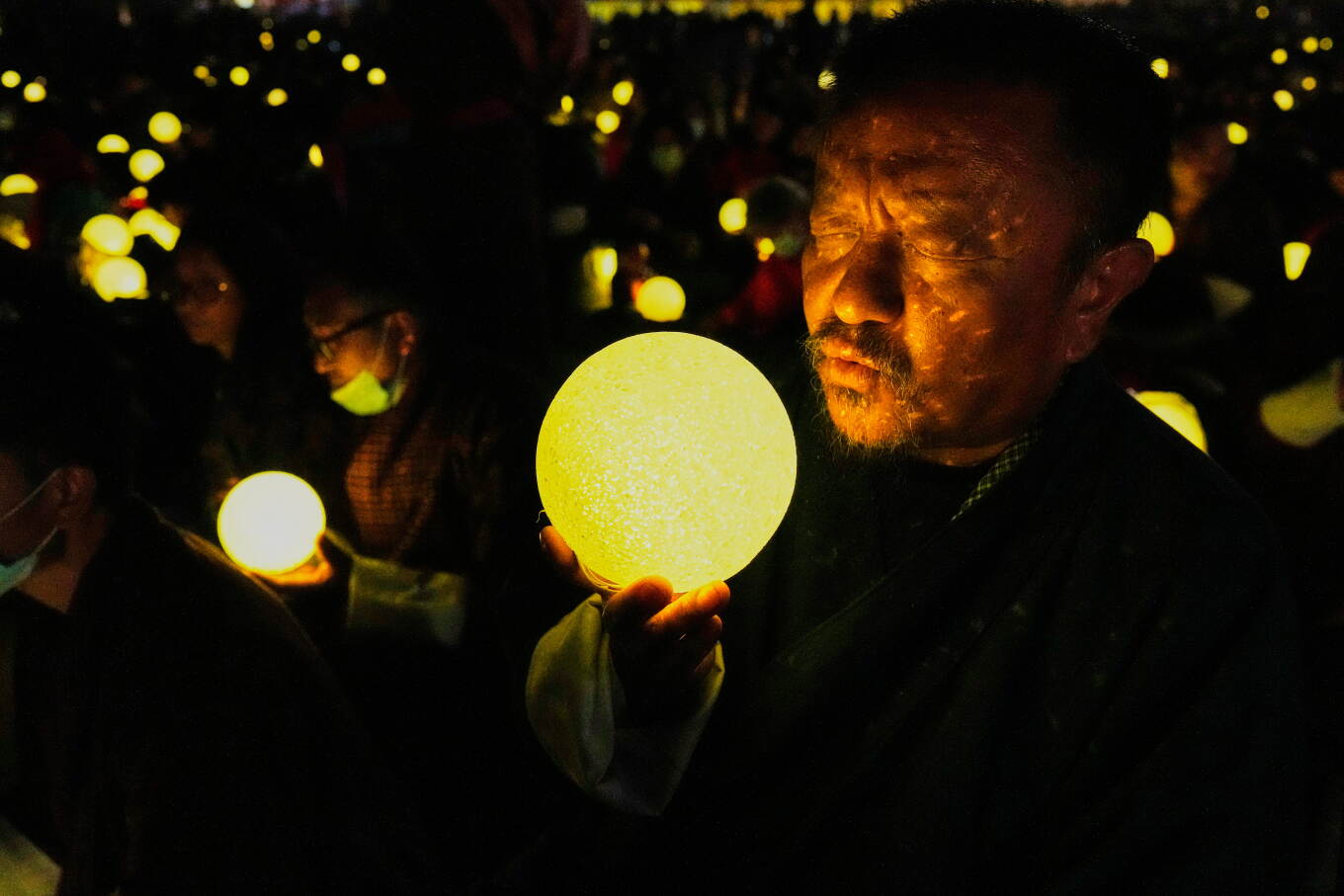
项目官员表示,虽然在约4万名志愿者的帮助下,所有108座佛塔的外部结构已于周日完工,但筹备工作已进行数月。这些封闭的结构将被填入祈祷文、祝福语、舍利和经典,使其成为“一种永久凝固在石头和泥土中的祈祷实体形式”。信徒们在夜间聚集成巨大的人群,手持发光的黄色光球,在佛塔脚下诵经祈祷。
While the external structures of all 108 stupas were completed Sunday with the help of about 40,000 volunteers, the preparations have been underway for months, project officials said. The sealed structures will be filled with prayers, blessings, relics and spiritual texts, making it “a physical form of prayer, made permanent in stone and earth.”Devotees gathered in massive crowds at night, holding glowing yellow light balls, chanting and offering prayers at the foot of the stupas.
不丹是唯一一个将金刚乘佛教不仅写入宪法确立为国教,而且将其深深融入日常治理、文化认同和法律框架的主权国家。例如,不丹的“国民幸福总值”概念,将和平与集体福祉置于纯经济增长之上,这是金刚乘佛教原则的直接、实际应用。该宗教视自然为神圣,并认为精灵栖居于山川河流与森林之中,使得环境保护成为一种精神义务。
Bhutan is the only sovereign nation where Vajrayana Buddhism is not just constitutionally enshrined as the state religion, but also deeply woven into its daily governance, cultural identity and legal frameworks. For example, Bhutan’s concept of Gross National Happiness, which prioritizes peace and collective well-being over pure economic growth, is a direct, practical application of Vajrayana Buddhist principles. The religion views nature as sacred and holds the belief that spirits reside in mountains, rivers and forests, making environmental protection a spiritual duty.
不丹的佛塔传统已有2500多年历史;最早的佛塔是为供奉佛陀圆寂后的舍利而建。
Bhutan’s tradition of chortens is more than 2,500 years old; the earliest of them were built to enshrine relics of the Buddha after he died.
格勒普幸福城市发言人金雷·多吉周日表示,周日的活动对不丹而言是“一件重大的历史性和精神性事件”。他说,这些佛塔将矗立在印度平原升入喜马拉雅山脉的河岸黄金地段。
Kinley Dorji, a spokesperson for Gelephu Mindfulness City, said Sunday’s event was “a big historic and spiritual” event for Bhutan. The stupas will stand on a prime spot along the river where the plains of India rise into the Himalayas, he said.
“我们最初预计有数千人,但现在有10万人聚集在一起,”他说。包括来自世界各地寺院的佛教大师在内的嘉宾,为佛塔带来了珍贵的供品和祝福。
“We were initially expecting thousands, but now we have 100,000 coming together,” he said. Guests, including Buddhist masters from temples and monasteries worldwide, have brought treasured offerings and blessings for the stupas.
其中包括长老帕纳卡拉,一位上座部佛教僧侣,他今年早些时候完成了一次为期108天、长达2300英里(约3700公里)“和平行走”,从得克萨斯州沃思堡的香道内观修行中心一路走到华盛顿特区。代表团还包括他的老师、最尊敬的长老拉塔纳古纳等人。
Among them was the Venerable Pannakara, a Theravada Buddhist monk, who earlier this year completed a 108-day, 2,300-mile Walk for Peace from the Huong Dao Vipassana Bhavana Center in Fort Worth, Texas, to Washington, D.C. The delegation included his teacher, the Most Venerable Ratanaguna, and others.
代表团在社交媒体上发文,称此次前往不丹参加佛塔开光仪式的行程是一次神圣之旅。
The delegation posted on social media calling their trip to Bhutan for the consecration of the stupas a sacred journey.
帕纳卡拉在“和平行走”Facebook专页发布了一段视频,带领观众参观已建成的佛塔。他说,他全程见证了这一过程:志愿者和工人们身穿施工背心、戴着安全帽,组装预制构件,在约12小时内建成了108座佛塔——从凌晨2点开始,到下午2点结束——比原定计划提前了约4小时。
Pannakara posted a video on the Walk for Peace Facebook page taking a tour of the completed stupas. He said he watched the entire endeavor as volunteers and workers donning construction vests and hard hats assembled prefabricated pieces to build the 108 stupas in about 12 hours — starting at 2 a.m. and finishing up at 2 p.m. — about four hours ahead of schedule.
“我们来这里是为了见证、祈祷,并看到成果,”他说。“很高兴看到来自世界各地的20万人来到这里,共同见证这一特别时刻。”巴拉特在洛杉矶发回报道。
“We have come here to witness, to pray and see the results,” he said. “It’s great to see that 200,000 people from all over the world came here to witness this special moment.”Bharath reported from Los Angeles.
美联社宗教新闻报道得到美联社与《对话美国》合作项目的支持,资金由礼来捐赠基金会提供。美联社对该内容拥有唯一责任。
Associated Press religion coverage receives support through the AP’s collaboration with The Conversation US, with funding from Lilly Endowment Inc. The AP is solely responsible for this content.