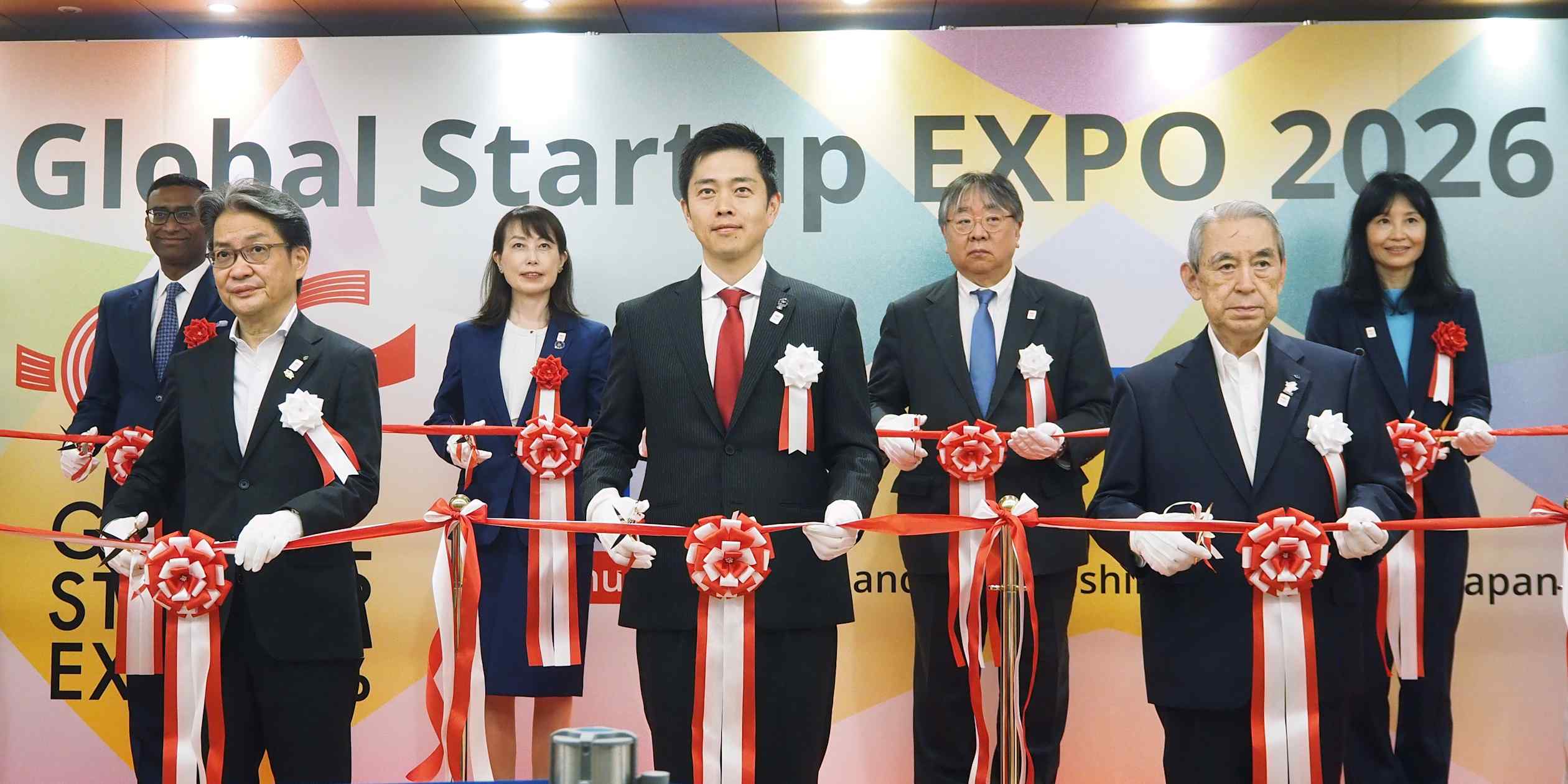
Hinza Asif 是 Asia Web3 Alliance Japan(AWAJ,亚洲 Web3 联盟日本)的创始人兼总裁。上个月在大阪举行的 Global Startup Expo 2026(全球初创企业博览会 2026)现场,我一直在留意现场能听到多少种语言。来自亚洲、中东、欧洲和美洲的创始人,与日本企业高管、投资人及地方政府官员并肩而立,大家都在问同一个问题:我们如何合作?
Hinza Asif is founder and president of Asia Web3 Alliance Japan (AWAJ) Walking through Global Startup Expo 2026 in Osaka last month, I kept noticing how many languages I could hear. Founders from Asia, the Middle East, Europe and the Americas stood beside Japanese executives, investors and local government officials, all asking the same question: How do we work together? I was there as both a participant and an organizer.
我以参与者和组织者的双重身份出席。10 月 5 日,由我领导的 Asia Web3 Alliance Japan(AWAJ)在 Grand Green Osaka(大阪绿地公园)的 Blooming Camp 举办了 VC Connect Session(风投对接会),作为官方合作伙伴配套活动。我们汇聚了日本及国际投资人、初创企业、成熟企业以及正在探索日本市场的企业家。在 AWAJ,我们帮助国际初创企业在日本找到落地平台,同样重要的是,帮助日本初创企业走向全球,并为国际市场定制产品。
On Oct. 5, Asia Web3 Alliance Japan (AWAJ), which I lead, hosted its VC Connect Session at Blooming Camp in Grand Green Osaka, as an official partner-side event. We brought together Japanese and international investors, startups, established companies and entrepreneurs exploring Japan. At AWAJ, we help international startups find a launchpad in Japan and, just as importantly, help Japanese startups expand globally and customize their products for international markets. The conversations went well beyond fundraising.
交流远不止融资话题。一个问题反复出现:国际初创企业究竟如何进入日本并在当地建立业务?
One question kept returning: How can an international startup actually enter Japan and build a business here? Arpha Weeranon, the founder of Precisionize, a Thai company using artificial intelligence to assess cancer risk, said he came "looking for a landing pad to launch our company here in Japan."
泰国公司 Precisionize 的创始人 Arpha Weeranon 表示,他来是“寻找一个落地平台,在日本启动我们的公司”。该公司利用人工智能评估癌症风险。泰国 AI 智能体公司 Botnoi 的代表 Yanitha Nukkan 告诉我,“我们唯一的障碍是语言。”该公司已与日本企业开展合作。Berkeley SkyDeck 的 Ben Fong 欢迎除东京以外的新创新中心涌现,并表示惊讶于大阪并未孵化出更多初创企业。他透露,Berkeley SkyDeck 今年在日本举办了约八期训练营。
Yanitha Nukkan, a representative of Botnoi , a Thai AI-agent company already working with Japanese firms, told me "the only barrier that we have is the language." Ben Fong of Berkeley SkyDeck, which is running about eight boot camps in Japan this year, welcomed new innovation centers beyond Tokyo and said he was surprised Osaka has not produced more startups. The Expo's official message put it well: "Japan is becoming an increasingly attractive destination for international startups and investors, but realizing its full potential requires stronger connections with the global startup ecosystem." I agree with both sides of this statement. The scale of the Expo proves Japan can gather global innovators, investors, governments and corporations. But bringing startups to Japan for an event and helping them build businesses here are two different challenges.
世博会的官方声明说得很好:“日本正日益成为国际初创企业和投资者的极具吸引力的目的地,但要充分发挥其潜力,需要与全球初创企业生态系统建立更紧密的联系。”我同意这一表述的两个方面。世博会的规模证明,日本有能力汇聚全球创新者、投资者、政府和企业。但把初创企业带到日本参加活动,和帮助它们在日本建立业务,是两个完全不同的挑战。
Japan is among the world's most valuable and most distinctive markets. Founders cannot copy the playbook they used in Singapore, Dubai, the U.S. or Europe. They need trusted local relationships, corporate introductions, regulatory understanding, localization, banking and a way to live and work here.
日本是世界上最有价值、最独特的市场之一。创始人不能照搬在新加坡、迪拜、美国或欧洲使用的行事手册。他们需要可信赖的本地关系、大企业引荐、对法规的理解、本地化适配、银行服务,以及在当地生活和工作的途径。投资者通常预期在12到24个月内看到可衡量的进展,因此,如果创始人花费这段时间仅仅是学习如何驾驭市场,就已经落后了。
Investors typically expect measurable progress within 12 to 24 months, so a founder who spends that window simply learning to navigate the market is already behind. Japan has excellent programs, accelerators, investors and corporations. But to an international founder, these can feel fragmented. Each is valuable.
日本拥有优秀的项目、加速器、投资者和企业。但在国际创始人眼中,这些资源可能显得支离破碎。每一项都很有价值,但很少有能串联成一条完整路径的。
Few are connected into one journey. About 15 companies and organizations, including biotech and healthcare startups from Japan's Kansai region, set up booths to introduce their businesses to visitors, including investors and government officials, at Global Start-Up Expo 2026 in Osaka on Oct. 5. But changing immigration conditions are raising the bar for prospective startups.
10月5日,在大阪举行的“2026全球初创企业博览会”上,包括来自日本关西地区的生物技术和医疗健康初创企业在内的约15家公司和组织设立展位,向包括投资者和政府官员在内的参观者介绍业务。但不断变化的移民条件正在提高有意向初创企业的准入门槛。
Rules on Japan's Business Manager visa, a route used by many foreign founders, were tightened on Oct. 16. The capital requirement rose from 5 million yen (about $31,700) to 30 million yen, with stiffer criteria on staffing, management experience and Japanese language ability.
10月16日,日本收紧了“经营管理签证”的规则,这是许多外国创始人使用的途径。资本要求从500万日元(约合3.17万美元)上调至3000万日元,并在人员配置、管理经验和日语能力方面设定了更严格的标准。“创业签证”允许最长两年的准备期,但需通过获批的市町村和组织办理,程序各异,且并非自动通往“经营管理签证”的路径。
The Startup Visa allows up to two years of preparation, but it runs through approved municipalities and organizations, so procedures vary, and it is not an automatic route to Business Manager status. The goal of ensuring applicants are committed to running genuine businesses, creating local jobs and making a meaningful financial investment is reasonable, and I do not argue for lower standards. My question is about the tool.
确保申请人致力于运营真实企业、创造本地就业并进行有意义的财务投资是合理的,我并不主张降低标准。我的问题在于工具。资本门槛衡量的是首日资金,而非产品质量、投资者可信度或其创造就业的潜力。日本能否认可可信的创始人,例如获得知名投资者或加速器支持的创始人,并为其提供更快的通道?如果入境、设立、移民和银行流程过于漫长,创始人可能会选择其他亚洲市场,即使日本是其首选。
A capital threshold measures money on day one, not the quality of a product, the credibility of its investors or its potential to create jobs. Can Japan recognize credible founders, such as those backed by established investors or accelerators, and offer them a faster path? If entry, incorporation, immigration and banking take too long, a founder may choose another Asian market even when Japan was the first choice. Japan's emphasis on trust and long-term relationships is a strength. But long approval cycles can be hard on a startup counting its months of cash.
日本强调信任和长期关系是其优势。但漫长的审批周期会对计算现金周期的初创企业造成困扰。日本无需改变其文化,只需提供让初创企业和企业在适当时能够以初创企业速度运营的机制,尤其是针对试点、概念验证和战略合作伙伴关系。
Japan need not change its culture. It needs mechanisms that let startups and corporations move at startup speed when appropriate, especially for pilots, proofs of concept and strategic partnerships. What is missing is an integrated launchpad that guides a qualified startup from entry to scale: incorporation, immigration, banking, regulation, localization, corporate introductions, investors, pilots and customers.
真正缺失的是一个集成的启动平台,引导符合条件的初创企业从入口到规模化:包括设立、移民、银行、监管、本地化、企业引荐、投资者、试点以及客户。日本应考虑以下六个步骤:1)为符合条件的全球创始人提供更快的入口渠道。2)提供“一站式”支持,涵盖设立、移民、银行、税务和监管。3)加强初创企业与日本企业的匹配,并加快试点进程。4)改善获取日本及国际风险资本的渠道。5)提供更多双语支持。
Japan should consider the following six steps: 1) A faster entry route for qualified global founders. 2) One-window support for incorporation, immigration, banking, tax and regulation. 3) Stronger matching between startups and Japanese corporations, with faster pilots. 4) Better access to Japanese and international venture capital. 5) More bilingual support.
6)制定一个协调的12至24个月市场进入路线图,取代分散的项目。
6) A coordinated 12-to-24-month market-entry roadmap instead of disconnected programs.
全球创业博览会表明日本能够吸引全球创业者。下一个挑战是将这种兴趣转化为公司、投资、就业、合作伙伴关系以及日本境内的长期经济活动。
Global Startup Expo demonstrated that Japan can attract the world's entrepreneurs. The next challenge is converting that interest into companies, investment, jobs, partnerships and long-term economic activity inside Japan.
日本并不缺乏创新、资本、企业或全球关注。如果它能缩短“想进入日本”与“正在日本成功开展业务”之间的距离,它就能成为亚洲最重要的创业中心之一。
Japan does not lack innovation, capital, corporations or global interest. If it can shorten the distance between "I want to enter Japan" and "I am successfully doing business in Japan," it can become one of Asia's most important startup hubs.