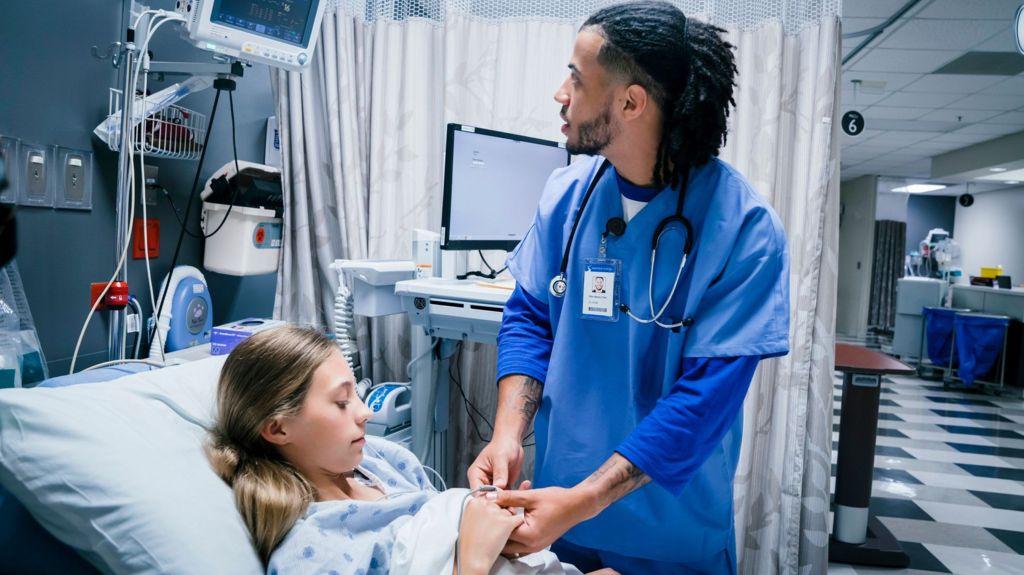
英格兰医院急诊科正在引入一套新的早期预警系统,旨在帮助繁忙的英国国家医疗服务体系(NHS)工作人员识别病情危急恶化的儿童。
A new early warning system is being introduced in hospital emergency departments in England to help busy NHS staff identify sick children who are dangerously deteriorating.
此举是在卫生大臣伊薇特·库珀承诺杜绝因等待病床时间过长而导致的“走廊护理”现象之后推出的。
It comes after Health Secretary Yvette Cooper promised to stop "corridor care" for sick children because of long waits for hospital beds.
这套新的国家儿科早期预警系统(PEWS)要求工作人员检查、记录并分级生命体征,例如血压、心率和血氧水平。
The new National Paediatric Early Warning System (PEWS) asks staff to check, log and grade vital signs, such as blood pressure, heart rate and oxygen levels.
总分较高意味着儿童需要更紧急的关注。工作人员、父母、监护人或儿童本人的担忧将触发护理的即时升级。
A high overall score means a child needs more urgent attention. Concerns from staff, parents, carers or the child themselves will trigger an immediate escalation of care.
该举措旨在冬季来临前挽救生命,届时NHS面临的压力将达到最高点。
The initiative is designed to save lives ahead of winter, when pressure on the NHS is at its highest.

库珀最近在BBC节目《周日与劳拉·昆斯伯格》中谈到了两岁男孩芬利·罗伯茨的案例,他在2024年因在医院走廊等待数小时后出院,随后去世。
On the BBC's Sunday with Laura Kuenssberg, Cooper recently talked about the case of two-year-old Finlay Roberts, who died in 2024 after spending hours in a hospital corridor before being discharged.
库珀代表NHS向芬利的父母道歉,表示:“没有任何儿童应该在走廊接受治疗。没有任何患者应该在走廊接受治疗。”芬利等待治疗的惠灵顿医疗NHS信托基金向家属表示哀悼,并称其继续面临急诊护理需求异常旺盛的时期,有时部分患者可能在临时临床区域(包括走廊)接受护理。
Cooper apologised to Finlay's parents on behalf of the NHS, saying: "No child should be treated in a corridor. No patient should be treated in a corridor." Whittington Health NHS Trust, where Finlay waited for treatment, extended its condolences to the family and said it continued to experience periods of exceptional demand across emergency care and, at times, some patients may receive care in temporary clinical areas, including corridors.
一套用于识别急性病成人(包括败血症患者)的类似“早期预警”系统,已在急诊和普通NHS病房投入使用。
A similar "early warning" system to identify acutely ill adults, including those with sepsis, is already in use in emergency and general NHS hospital wards.
英格兰已有90多家医院在儿科病房使用该预警系统,并针对从婴儿到青少年的不同年龄段提供相应的评估工具。
More than 90 hospitals across England have been using the alert system in children's wards, with different age-appropriate assessments available for babies through to teenagers.
英国国家医疗服务体系(NHS)已经表示,将把“玛莎规则”扩展至英格兰所有医院急诊科。该规则赋予患者、家属和护理人员权利,如果他们担心患者病情恶化且其担忧未得到回应,可以要求进行快速复查。
The NHS has already said it will expand Martha's Rule to all hospital emergency departments in England. The rule gives patients, families and carers the right to request a rapid review if they are worried that a patient's condition is getting worse and their concerns are not being responded to.
这项举措以玛莎·米尔斯命名。2021年,年仅13岁的玛莎在一次骑车事故后住院,因发生血液中毒(即败血症)而去世。
The initiative is named after Martha Mills, who died aged 13 in 2021 after developing blood poisoning, or sepsis, in hospital following a bike accident.
验尸官裁定,她的家属对病情恶化的担忧未被听取,如果能更早转入重症监护室,她大概率本可存活。
A coroner ruled that her family's concerns about her worsening condition were not listened to and she would probably have survived had she been moved to intensive care earlier.
玛莎的父母梅罗普和保罗提出了这项规则的构想,旨在改变导致她死亡的那种文化。
Martha's parents Merope and Paul came up with the idea of the rule in a bid to change the culture that contributed to her death.

急诊科将设立专用电话号码,拨打该号码可触发对患者护理的紧急复查。
A&E units will have a dedicated phone number that can be called to trigger an urgent review of a patient's care.
英格兰首席护理官邓肯·伯顿表示,急诊科新推出的儿童早期预警系统是“改善今冬乃至未来英格兰儿童和青少年护理质量的重要下一步”。
Duncan Burton, chief nursing officer for England, said the new early warning system for children in emergency departments was an "important next step in improving care for children and young people across England for this winter - and beyond".
他补充道:“在节奏快速的急诊科,工作人员需要迅速发现儿童病情恶化的迹象。这种标准化方法将帮助他们识别预警信号、沟通担忧,并在分秒必争时做出及时决策。” 该儿童早期预警系统(PEWS)是英格兰国家医疗服务体系、英国皇家儿科与儿童健康学院以及英国皇家护理学院合作的成果。
He added: "In fast-paced emergency departments, staff need to spot quickly when a child's condition is deteriorating. "This standardised approach will help them recognise the warning signs, communicate concerns, and make timely decisions when every moment matters." The early warning system for children, PEWS, is a collaboration between NHS England and the Royal College of Paediatrics and Child Health and the Royal College of Nursing.