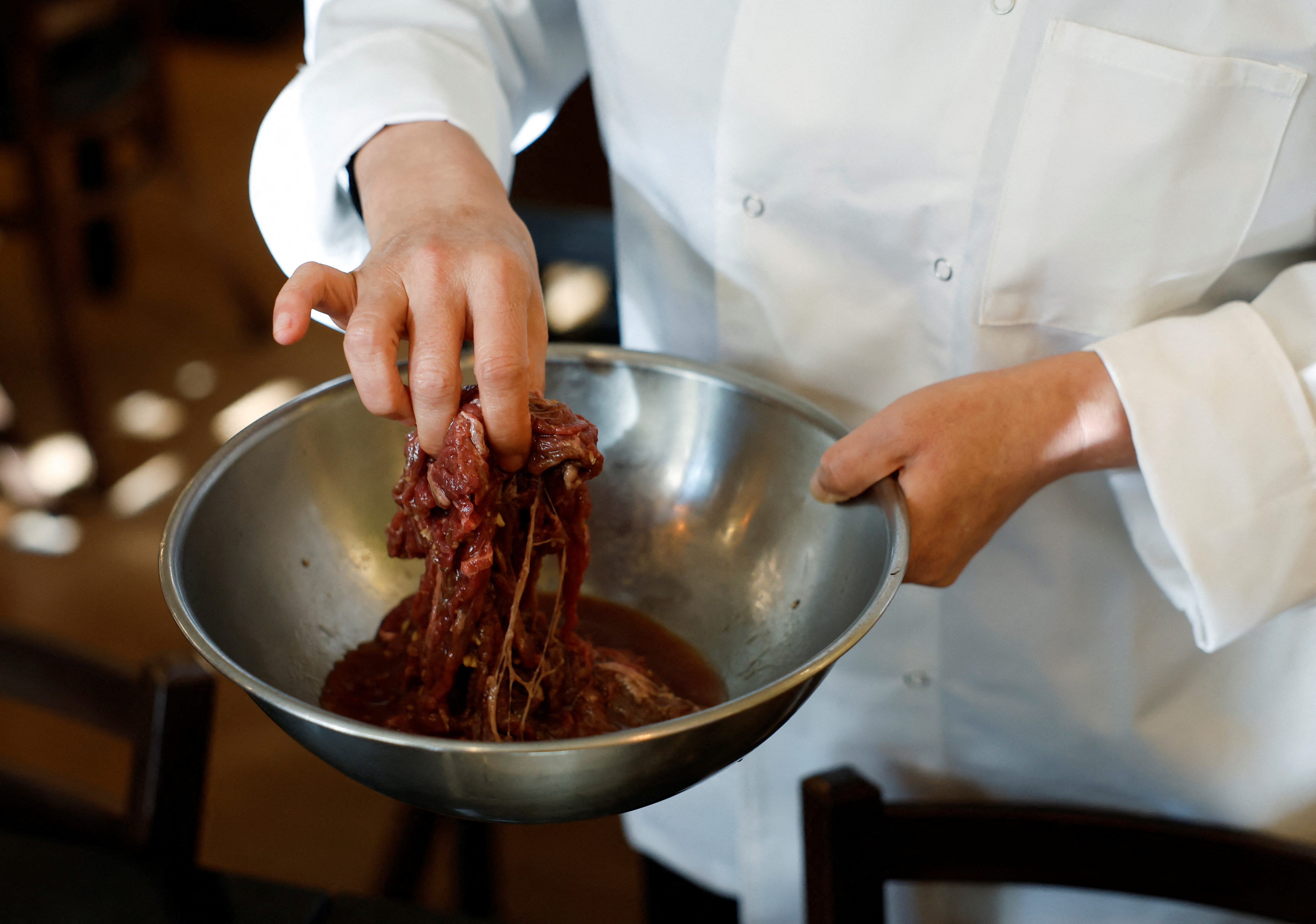
朝鲜正在掀起一场新的美食热潮:多层烧烤餐厅,拥有滨水露台、嵌有烤架的大理石桌面,菜单上还有牛肉、猪肉和鸵鸟肉。
North Korea is projecting a new culinary obsession: multi-story barbecue restaurants with waterside terraces, marble tabletops inlaid with grills, and menus featuring beef, pork, and ostrich.
由 Maggie Grether、Soohyun Jung 撰写。自9月以来,官方媒体已宣布全国开设十多家新的“烤肉”餐厅,这是一个韩语词汇,在朝鲜通常指烤肉。
By Maggie Grether, Soohyun Jung Since September, state media has announced over a dozen new "bulgogi" restaurants nationwide, a Korean word that usually refers to grilled meat in North Korea.
一些人将其视为政府宣传,但这种扩张在一个长期面临养活民众困难的国家中显得引人注目。联合国粮食机构在其最新关于该国的报告中表示,超过五分之二的朝鲜人营养不良。
Dismissed by some as government propaganda, the proliferation is striking in a country that has long struggled to feed its people. The UN food body said in its latest report on the country that more than two out of every five North Koreans were undernourished.
分析人士表示,这些开业反映了领导人金正恩展示全国日益繁荣的努力,尽管怀疑者质疑这些餐厅有多容易进入或会有多繁忙。
Analysts say the openings reflect a push by leader Kim Jong Un to portray a growing prosperity across the country although sceptics wonder how accessible or busy the restaurants will be.
位于中朝边境城市新义州的一家新餐厅有三层楼高。在北部的江界市,顾客可以在鱼缸旁喝生啤酒,而在西海岸城市南浦,开业典礼包括焰火表演。其他餐厅则宣称拥有异常大的面积,可容纳数百人就座。
One new restaurant in Sinuiju, a city on the Chinese border, is three stories tall. In northern Kanggye, patrons can drink draft beer alongside a fish tank, while in the west coast city of Nampo, an opening ceremony included fireworks. Other restaurants tout unusually large floor plans that can seat hundreds.
肉类对政权来说是一个重要象征,让人想起已故领导人、金正恩的祖父金日成曾承诺给人民“白米饭配肉汤”,希伯来大学韩国研究系主任本杰明·卡策夫·西尔伯斯坦表示。
Meat is an important symbol for the regime and recalls the promise of the late Kim Il Sung, a former leader and grandfather of Kim Jong Un, to give his people "white rice with meat soup", said Benjamin Katzeff Silberstein, head of Korean Studies at the Hebrew University of Jerusalem.
这些开业反映了其他休闲举措的蔓延,如水上乐园、咖啡吧和高端商场。虽然金正恩尚未在这些开业活动中被拍到照片,但通常由高级地方官员出席。
The openings mirror the spread of other leisure initiatives like waterparks, coffee bars, and high-end malls. While Kim has not yet been pictured at these openings, they are usually attended by high-level local officials.
“我认为这是一种展示所有这些美好事物……它们也来到了平壤以外的人们身边的方式,”西尔伯斯坦说。
"I think it's a way of showing all these nice things ... they're coming to people outside of Pyongyang, too," Silberstein said.
伦敦大学亚非学院韩国研究教授级研究员海泽尔·史密斯表示,这些餐馆可能进一步证明,一些朝鲜人,特别是从事贸易和建筑行业的人,正从与俄罗斯日益紧密的关系中获益。
The restaurants may be further evidence that some North Koreans, especially in trade and construction, are benefiting from growing ties with Russia, said Hazel Smith, professorial research associate in Korean Studies at University of London's School of Oriental and African Studies.
但她说:“这并不是经济繁荣的迹象——这只是表明,目前有些人能够勉强维持生计,并偶尔负担得起外出吃顿饭。”
But "this is not a sign that you've got a thriving economy—it's a sign that some people at the moment are able to get by and afford to go out and have a meal now and then," she said.
韩国央行7月表示,朝鲜经济2025年增长3.5%,连续第三年保持3%以上增速。
North Korea's economy grew 3.5% in 2025, a third straight year above 3%, South Korea's central bank said in July.
20世纪90年代饥荒期间,国家粮食分配体系崩溃,数十万人死亡,迫使朝鲜人转向私人市场以求生存。
During the 1990s famine, the state's food distribution system collapsed and hundreds of thousands of people died, pushing North Koreans toward private markets to survive.
分析人士称,半私有化市场以及来自中国和俄罗斯的支持此后带来了更多稳定。据联合国商品贸易统计数据库数据,2023年至2025年间,来自中国的肉类进口增长了两倍多,达到近3900万美元。
Semi-private markets and support from China and Russia have since brought more stability, analysts say. Meat imports from China more than quadrupled between 2023 and 2025 to nearly $39 million, according to UN Comtrade data.
韩国政府资助的韩国国家统一研究院朝鲜研究室室长郑恩利(音)表示,进口激增显示国内生产无法满足需求。她说,官方媒体对餐馆开业的报道是一种“强有力的宣传形式”。
Joung Eun-lee, director of the North Korean Research Division at the South Korean government-funded Korea Institute for National Unification, says the rising imports show domestic production can not meet demand. The state media coverage of restaurant openings serves as a "powerful form of propaganda," she said.
金正恩曾敦促干部改善国内畜牧业生产,但据信粮食供应依然脆弱。联合国世界粮食计划署估计,2022年有1070万人,即超过40%的朝鲜人口处于营养不良状态。
Kim has urged cadres to improve domestic livestock production, but food supply is believed to remain precarious. The UN World Food Programme estimated that 10.7 million people, more than 40% of the North Korean population, were undernourished in 2022.
1997年脱北的李爱兰(音)表示,牛肉很难获得,因为奶牛被作为农场劳力动物保留。她记得曾在平壤一家鸭肉烤肉店吃过一次饭,顾客必须用外币支付。
Lee Ae-Ran, who defected from North Korea in 1997, said beef was very hard to obtain because cows were reserved as working animals on farms. She remembers eating once at a Pyongyang duck bulgogi restaurant where patrons had to pay in foreign currency.
李女士目前在首尔经营一家朝鲜餐厅。她表示,这些开业活动很可能是为了宣传繁荣的宣传手段。“在朝鲜,高档餐厅只对特定阶层的人开放,”她说。
Lee now runs a North Korean restaurant in Seoul. She said the openings likely serve as propaganda projecting prosperity. "In North Korea, high-end restaurants are only for special classes of people," she said.