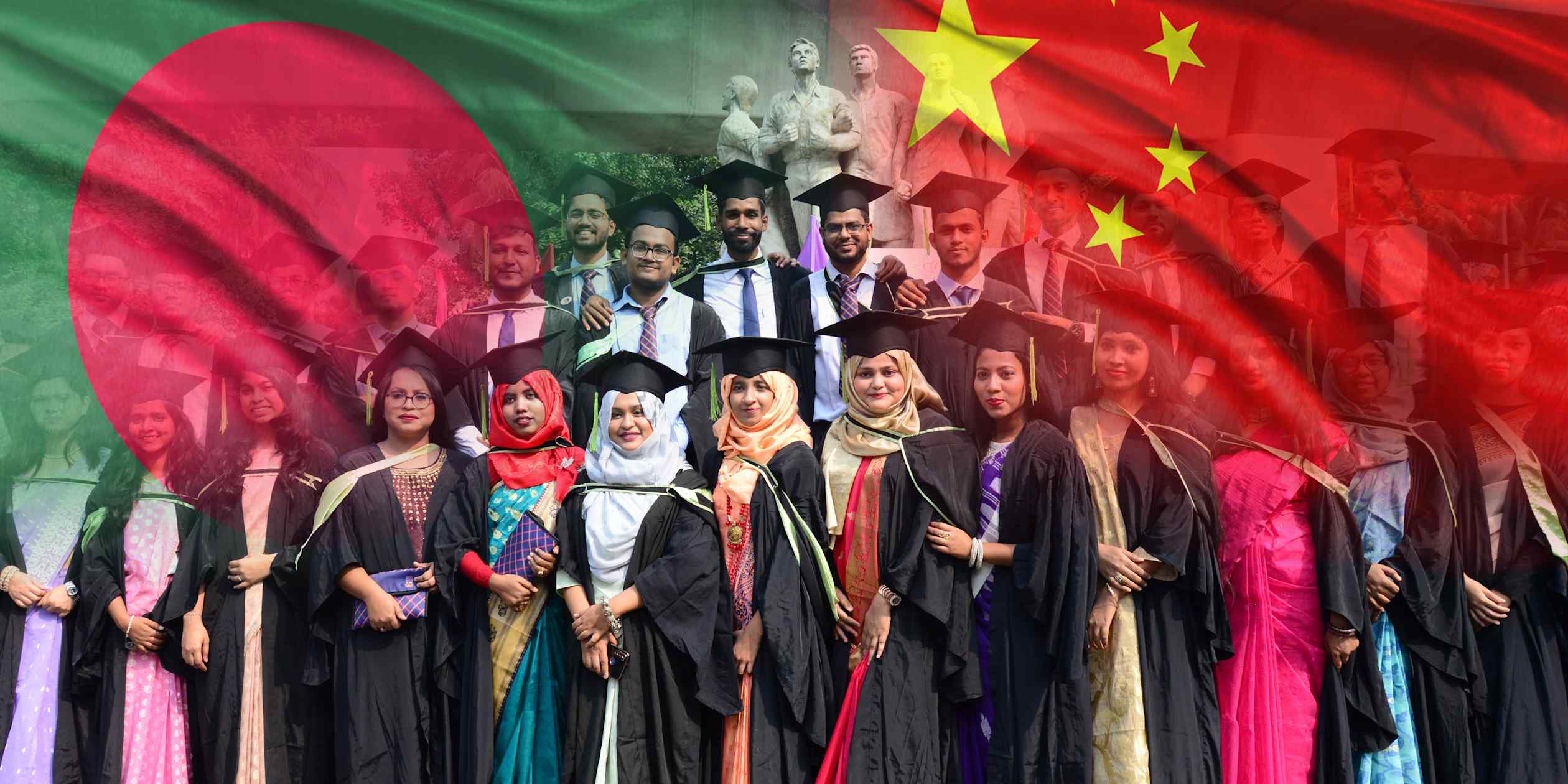
达卡——孟加拉国正加强与中国在技术和职业教育方面的合作,为劳动者提供就业所需技能,因为这个南亚国家成千上万的毕业生在日益竞争激烈的劳动力市场中难以找到工作。
DHAKA -- Bangladesh is stepping up cooperation with China on technical and vocational education to equip workers with job-ready skills as thousands of the South Asian Nation's graduates struggle to find employment in an increasingly competitive labor market.
两国已同意在孟加拉国现代化八所技术教育机构,建立一所联合技术和技术大学,并在10月17日签署的谅解备忘录下推出各种联合培训项目。
The two countries have agreed to modernize eight technical education institutions in Bangladesh, establish a joint technical and technological university, and introduce various joint training programs under a memorandum of understanding signed on Oct. 17.
“政府计划借鉴全球最佳实践,包括中国在产学研结合方面的经验,以加强技术技能、提升机构能力并扩大就业机会,”孟加拉国总理教育顾问马赫迪·阿明对《日经亚洲》表示。“我们当前的首要任务是将协议转化为具体行动,为年轻人创造有意义的就业机会。”多年来,孟加拉国的毕业生就业市场为该国青年提供的希望寥寥无几,助长了导致2024年学生领导的起义的不满情绪,该起义推翻了前总理谢赫·哈西娜的政府。
"The government plans to draw on global best practices, including China's experience in linking industry with academia, to strengthen technical skills, build institutional capacity and expand employment opportunities," Mahdi Amin, the education adviser to the Bangladeshi prime minister, told Nikkei Asia. "Our priority now is to translate the agreement into concrete action and create meaningful employment opportunities for young people." For years, Bangladesh's graduate job market has offered little hope to the country's youth, contributing to the frustrations that led to the student-led uprising of 2024 that brought down former Prime Minister Sheikh Hasina's government.
该国高等教育机构每年培养数十万毕业生,但主要集中在文科、人文学科、社会科学和商业研究领域,而非雇主所寻求的职业领域。孟加拉国统计局2024-25年信息技术调查数据显示,近一半的大学毕业生从未使用过电脑。
The country's higher education institutions produce hundreds of thousands of graduates each year, but predominantly in arts and humanities, social sciences and business studies rather than the vocational fields employers are looking for. Data from the Bangladesh Bureau of Statistics' 2024-25 information technology survey showed that nearly half of university graduates had never used a computer.
许多毕业生难以找到合适的工作,甚至任何工作——据国际货币基金组织称,36%的受教育年轻孟加拉人失业。据Bdjobs.com首席执行官法希姆·马什鲁尔称,每年有超过75万新毕业生进入就业市场,但新增毕业生工作岗位不足20万个。
Many graduates struggle to find appropriate work or even any job at all -- 36% of educated young Bangladeshis are unemployed, according to the International Monetary Fund. Every year, over 750,000 new graduates come into the market, but fewer than 200,000 new graduate jobs are created, according to Fahim Mashroor, CEO of Bdjobs.com.
但对于那些确实上职业学校的人来说,政府数据显示,42%的学习内容集中在基础计算机素养上,尽管这些机构本应在制造、电气工程和汽车服务等领域传授实用、可直接上岗的技术技能。行业向人工智能、自动化和先进数字工具转变,加剧了对教育水平的担忧。
But for those that do attend a vocational school, government data shows that 42% of learning is focused on basic computer literacy, even though such institutions are supposed to impart practical, job-ready technical skills in areas such as manufacturing, electrical engineering and automotive services. Concerns over the level of education have been heightened by industries' moves toward artificial intelligence, automation and advanced digital tools.
孟加拉国发展研究学院的一项研究发现,尽管每年约有1万名IT毕业生进入就业市场,但信息技术领域仍有40%的职位因技能短缺而空缺。
A study by the Bangladesh Institute of Development Studies found that 40% of positions in the information technology sector remain vacant because of skills shortages, despite around 10,000 IT graduates entering the job market each year.
“孟加拉国青年失业危机的根源在于教育与劳动力市场需求长期存在的错位,”政策对话中心杰出研究员法米达·哈图恩表示。“教育体系继续将学术资历置于实用、可直接上岗的技能之上,导致许多毕业生缺乏雇主所需的能力。”
"The roots of Bangladesh's youth unemployment crisis lie in a long-standing mismatch between education and labor market needs," said Fahmida Khatun, distinguished fellow at the Centre for Policy Dialogue. "The education system continues to prioritize academic qualifications over practical, job-ready skills, leaving many graduates without the competencies employers require."
“孟加拉国与中国的合作可以通过实用、数字和基于工作的培训来帮助减少技能错位,”哈图恩继续说道。“现代化这八所机构并引入联合项目,可能有助于毕业生满足雇主的需求。实习和与企业的定期磋商将至关重要。”
"Bangladesh's cooperation with China could help reduce skills mismatches through practical, digital and work-based training," Khatun continued. "Modernizing the eight institutions and introducing joint programs could help graduates meet employers' needs. Internships and regular consultation with businesses will be essential." Hannan Hossain, who completed his master's degree in sociology at Jagannath University in Dhaka three years ago, is among those struggling to secure a foothold in the job market. He now relies on providing private tutoring to make ends meet.
汉南·侯赛因三年前在达卡贾格纳特大学完成社会学硕士学位,是那些在就业市场上难以立足的人之一。他目前依靠提供家教来维持生计。
"Finding a job is extremely difficult in such a competitive market. Thousands of candidates compete for a single government job," he said. "My parents, who live in a village and depend on me, are increasingly disappointed that I have yet to find work. I feel frustrated and uncertain about my future." The Bangladesh China Chamber of Commerce and Industry has proposed that the government add a further 20 technical and polytechnic institutes to the roughly 115 that it already runs. BCCCI President Mohd. Khorshed Alam envisages cooperation with China that could help young people develop skills in manufacturing, from vehicle parts to toys, while also preparing for technological developments in Bangladesh's key garments sector.
“在竞争如此激烈的市场中,找工作极其困难。数千名候选人竞争一个政府职位,”他说。“我的父母住在村里,依赖我,他们对我尚未找到工作感到越来越失望。我对自己的未来感到沮丧和不确定。”孟加拉国中国商会与工业协会提议,政府在已运营的约115所技术和理工学院基础上,再增设20所。该协会主席穆罕默德·科尔舍德·阿拉姆设想与中国合作,帮助年轻人在汽车零部件到玩具等制造业领域发展技能,同时为孟加拉国关键服装行业的技术发展做好准备。
"AI is replacing human workers in fashion and design tasks. In China, around 80% of fashion-related work in the garment industry is being done by AI. Bangladesh is heading in the same direction, so we need to act now," Alam said. "Otherwise, joblessness could rise further in the future." To address these employment challenges, Bangladesh is working to widen students' opportunities for employment and higher education abroad. The government plans to introduce language courses in schools and universities, with Japanese, Arabic and French under consideration. Mandarin Chinese is regarded as a priority, however, as the government aims to establish direct partnerships between Bangladeshi polytechnics and technical institutions and leading Chinese industries to expand practical training, strengthen capacity building and create employment opportunities.
“AI正在取代时尚和设计任务中的人类工人。在中国,服装行业约80%的时尚相关工作正由AI完成。孟加拉国正朝着同一方向发展,所以我们需要立即行动,”阿拉姆说。“否则,未来失业率可能会进一步上升。”为应对这些就业挑战,孟加拉国正努力扩大学生在海外就业和高等教育方面的机会。政府计划在学校和大学开设语言课程,日语、阿拉伯语和法语正在考虑之列。
"China's experience can help Bangladesh address its skills gap and graduate unemployment. However, I think we should send more students to China rather than focus solely on setting up institutions with Chinese assistance," said BDjobs.com's Mashroor. "The cost of providing technical training to a student in Bangladesh is around 300,000 taka ($2,400). With the same amount, a student could be sent to China for two to three years of training."
然而,普通话被视为优先事项,因为政府旨在建立孟加拉国理工学院和技术机构与领先中国工业之间的直接合作伙伴关系,以扩大实践培训、加强能力建设并创造就业机会。
Khatun agreed that the government can't solely focus on domestic educational opportunities.
“中国的经验可以帮助孟加拉国解决技能差距和毕业生失业问题。但是,我认为我们应该派更多学生去中国,而不仅仅是专注于在中方协助下建立机构,”BDjobs.com的马什鲁尔说。“在孟加拉国为一名学生提供技术培训的成本约为30万塔卡(2400美元)。用同样的金额,一名学生可以去中国接受两到三年的培训。”哈图恩同意政府不能只关注国内教育机会。
"Training alone cannot create enough jobs. Bangladesh also needs higher private investment, a predictable business climate, export diversification and growth in manufacturing and modern services," she said.
“仅靠培训无法创造足够的就业机会。孟加拉国还需要更高的私人投资、可预测的商业环境、出口多样化以及制造业和现代服务业的增长,”她说。卡尼兹·法蒂玛是撰稿人。
Kaniz Fatima is a contributing writer.