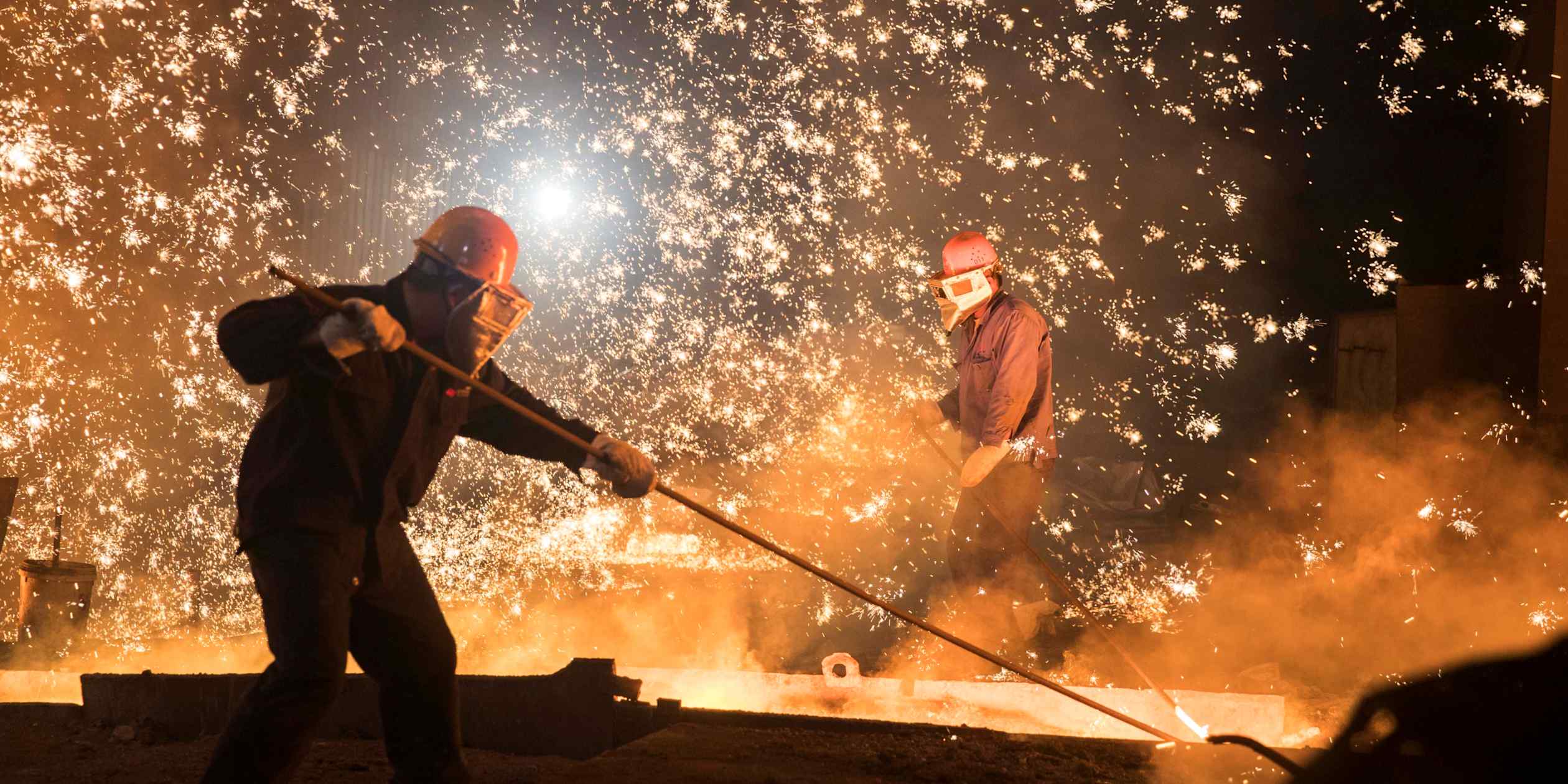
东京讯 中国钢铁行业面临的压力加剧,生产商承受着需求疲软的经济停滞与成本上升的双重打击,尤其是煤炭成本上升,这引发了他们可能将更多产量推向海外市场的预期。这种应对利润缩小的做法,反过来又可能加剧全球贸易紧张局势。
TOKYO -- Pressure on the Chinese steel sector has intensified as producers suffer from demand-sapping economic stagnation coupled with rising costs, especially for coal, raising the prospect that they will push more output abroad. That approach to dealing with diminishing margins, in turn, risks inflaming global trade tensions.
由西北省份甘肃省政府控制、在上海上市的甘肃酒钢宏兴钢铁集团报告称,7月至9月第三季度净亏损8.13亿元人民币(约合1.22亿美元),远比去年同期的6100万元亏损严重。
Gansu Jiu Steel Group Hongxing Iron and Steel, a Shanghai-listed company controlled by the northwestern provincial government of Gansu, reported a net loss of 813 million yuan ($122 million) for the July-September quarter, far worse than the 61 million yuan loss it recorded a year earlier.
第三季度的财务表现也较上半年大幅下滑,上半年净亏损为2.16亿元。第三季度营收同比下降3.4%,降至78亿元,而上半年则是同比增长3.6%,达到161亿元。
The financial performance in the third quarter also marked a sharp drop from the first six months, when the net loss amounted to 216 million yuan. Revenue fell 3.4% year-on-year in the third quarter to 7.8 billion yuan, reversing from a 3.6% increase to 16.1 billion yuan in the first half.
该公司周五晚间披露中描述了一个“供强需弱”的行业局面。它哀叹“房地产和基础设施需求持续萎缩”,并指出“固定资产投资大幅下滑”,部分燃料和材料成本“徘徊在高位”。
In a Friday night disclosure, the company described an industry situation in which "supply is strong but demand is weak." It lamented the "continuous shrinkage of real estate and infrastructure demand" and noted a "drastic slide in fixed-asset investments," along with some fuel and materials costs "hovering at high levels."
甘肃钢铁公司补充称,这些状况已恶化,“尤其是进入第三季度,钢价低迷,而燃料价格波动剧烈”。世界第三大钢铁生产商鞍钢集团的核心上市子公司鞍钢股份报告称,第三季度净亏损19.8亿元,是去年同期8.76亿元亏损的两倍多。仅7月至9月期间的亏损就几乎相当于上半年20.4亿元的净亏损。
The Gansu steel company added that these conditions have worsened, "especially entering the third quarter, as steel prices were depressed while fuel prices exhibited high volatility." Angang Steel, the core listed arm of Ansteel Group -- the world's third-largest steelmaker by volume -- reported a net loss of 1.98 billion yuan for the third quarter, more than double its 876 million yuan loss a year earlier. The red ink in the July-September period alone nearly matched its first half net loss of 2.04 billion yuan.
该公司解释称,钢铁行业正“在低迷周期中运行,市场情绪低迷”,供应过剩压低了价格。
The company explained that the steel industry is "operating in a weak cycle with low sentiment," with a supply glut depressing prices.
另一方面,鞍钢股份表示,焦煤等原材料和燃料价格“继续上涨”。煤炭需求和价格受到因伊朗战争导致的石油供应中断的提振,使煤炭供应商受益。
On the other hand, prices of coking coal and other raw materials and fuels "continued to rise," Angang Steel said. Coal demand and prices have been buoyed by oil supply disruptions stemming from the Iran war, boosting the fortunes of coal suppliers.
鞍钢股份表示,该公司采取了进一步的削减成本措施,但这些措施“仍不足以弥补采购与销售价差缩小所带来的缺口”。在上海宝山钢铁(中国宝武钢铁集团的子公司)举行的政府组织媒体参观活动中,可以看到一家冷轧厂的生产线。
Angang Steel said that it made further cost-cutting measures but that they were "still insufficient to make up for the shortfall brought about by the narrowing of the price spread between procurement and sales." The production line at a cold rolling plant is seen during a government-organized media tour at Baoshan Iron & Steel, a subsidiary of China Baowu Steel Group, in Shanghai.
山东钢铁(全球最大生产商中国宝武钢铁的子公司)第三季度也出现倒退,净亏损1.46亿元人民币,而上半年为2900万元人民币。原因与同行相似,该公司表示,自己正被“两头挤压”,指的是市场价格下跌和材料成本上升。
Shandong Iron and Steel, a unit of top global producer China Baowu Steel, also regressed in the third quarter, taking a net loss of 146 million yuan compared to 29 million yuan during the first half. The reasons were similar to its peers, with the company saying it is being "squeezed from both ends," referring to the fall in market prices and rise in materials costs.
重庆钢铁(另一家上海上市的宝武集团公司)报告第三季度净亏损1.25亿元人民币,较去年同期的8700万元人民币和2026年上半年的1.78亿元人民币有所恶化。
Chongqing Iron and Steel, another Shanghai-listed Baowu group company, reported a third-quarter net loss of 125 million yuan, worsening from 87 million yuan for the same period a year ago and 178 million yuan for the first half of 2026.
马鞍山钢铁是位于内陆省份安徽的宝武旗下公司,该公司去年第三季度录得1.58亿元净利润,而最新季度则转为亏损1.08亿元。该公司援引与其他公司相同的压力表示,鉴于“需求不足、价格承压、竞争加剧”,预计艰难状况将在第四季度持续。
At Maanshan Iron and Steel, a Baowu company based in the inland province of Anhui, a net profit of 158 million yuan logged for the third quarter of last year reversed to a net loss of 108 million yuan for the latest quarter. Citing the same pressures as the others, the company said it expects the tough conditions to persist in the fourth quarter, given that "demand is insufficient, prices are under pressure and competition is intensifying."
新疆八一钢铁在第三季度也陷入亏损,从一年前的1.24亿元净利润转为亏损2.2亿元。这家位于乌鲁木齐的宝武公司表示,鉴于国内严峻现实,将进一步“耕耘”邻近的西藏和海外钢材市场。它承诺“持续扩大出口量,提升在中亚市场的出口市场份额”。谈到出口,宝武核心上市单位宝山钢铁走在前列。它披露,今年前三季度实现出口订单量587万吨,较去年同期增加70.4万吨。
Xinjiang Ba Yi Iron and Steel also slipped into the red in the third period, going from a net profit of 124 million yuan a year earlier to a net loss of 220 million yuan. The Urumqi-based Baowu company said it will further "cultivate" steel product markets in adjacent Tibet and overseas, given the harsh reality at home. It vowed to "continuously expand export volume and boost export market share in the Central Asian market." When it comes to exports, Baoshan Iron and Steel, the core listed unit of Baowu, is leading the way. It disclosed that it achieved an export order volume of 5.87 million metric tons during the first nine months of the year, increasing by 704,000 tons from the same period a year earlier.
由长期产能过剩和国内需求疲弱推动的中国钢材出口,是导致与世界其他地区贸易摩擦的核心问题。为缓解紧张局势,北京从今年初实施了新的出口许可制度,商务部和海关总署共同公布了约300种受控钢材产品清单。
Chinese steel exports fueled by chronic overcapacity and weak domestic demand are a core issue behind trade friction with the rest of the world. To mitigate the tensions, Beijing implemented a new export licensing system from the beginning of the year, with the commerce ministry and the general customs administration jointly announcing a list of about 300 steel products subject to controls.
这似乎产生了一定影响,今年前三季度钢材整体出口量同比下降2.6%。不过,出口量仍然可观,且步伐加快:9月成品钢出口量达到1049万吨,连续第五个月超过1000万吨。
This appears to have had a certain impact, as the overall steel export volume for the first nine months of the year decreased by 2.6% year-on-year. Nevertheless, the volumes remain substantial and the pace has picked up: Exports of finished steel in September reached 10.49 million tons, surpassing 10 million tons for the fifth consecutive month.
2025年7月,中国钢卷在智利瓦尔帕莱索港卸货后堆放。中国钢材出口是贸易紧张局势的关键因素。
Steel rolls from China are stacked after being unloaded at the port of Valparaiso, Chile, in July 2025. Chinese steel exports are a key factor in trade tensions.
法国投行Natixis亚太地区首席经济学家Alicia Garcia-Herrero指出,全球各国政府正警惕中国出口的冲击,钢材与化工产品和电动汽车一道成为焦点。多个亚洲国家已采取防御措施,例如印度对钢材实施为期三年的11%至12%保障措施关税,越南对来自中国的热轧卷钢征收最高27.8%的反倾销税。
Alicia Garcia-Herrero, chief economist for the Asia-Pacific region at French investment bank Natixis, noted that governments worldwide are on guard against the onslaught of Chinese exports, with steel being a focus alongside chemical products and electric vehicles. A number of Asian countries have implemented defensive measures, such as India imposing a three-year safeguard duty of 11%-12%, and Vietnam setting anti-dumping duties of up to 27.8% on hot-rolled coil from China.
“如果欧洲拥有能在数周内限制中国进入其市场整个行业的工具,将改变亚洲的计算,”她表示,因为这会将额外的出口量转移到该地区。
"A European instrument capable of restricting Chinese access to entire sectors of its market within weeks would change the calculus for Asia," she said, as that would shift additional export volumes to the region.
Garcia-Herrero说:“问题是,亚洲国家是否会超越逐产品的补救措施,转向保障措施和进口激增监测,并在欧洲预计首先瞄准的行业预先开展调查,”例如钢材、化工、机械、电池和太阳能。
"The question," Garcia-Herrero said, "is whether Asian countries will move beyond product-by-product remedies, shift towards safeguards and import-surge monitoring, and open investigations pre-emptively in the sectors Europe is expected to target first," such as steel, chemicals, machinery, batteries and solar.