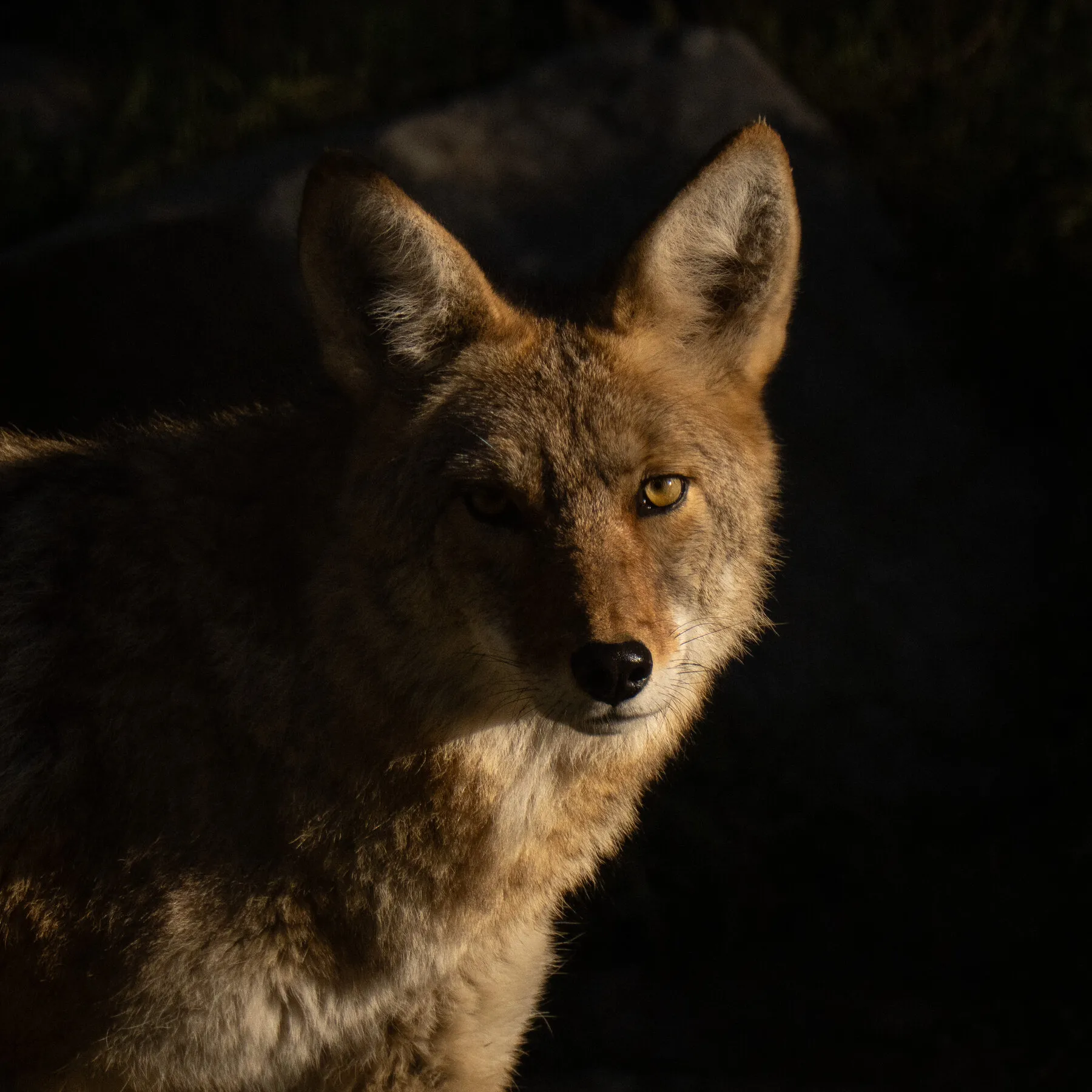
长期以来,人们一直认为存在性丧失的感觉是人类独有的。但对郊狼、凤头鹦鹉等生物的研究,正促使一些科学家重新思考这一观点。
Do Animals Grieve? Supported by The feeling of existential loss was long thought to be uniquely human. But studies of coyotes, cockatoos and other creatures are prompting some scientists to reconsider.
郊狼并非显而易见的浪漫主义者。它们独自在景观中潜行的习性,使其被视为孤独的生物——而且并不特别受欢迎,公众对其的印象从麻烦的害兽到危险的掠食者不等。
Coyotes are not obvious romantics. Their habit of stalking across the landscape alone has earned them a reputation as solitary creatures — and not particularly popular ones, with a public image that ranges from troublesome nuisance to dangerous predator.
但它们是深情忠诚的伴侣。它们与伴侣终生相伴,互相梳理毛发、分享食物、共同抚养幼崽。“基本上,就是直到死亡将我们分开,”犹他州立大学神经科学家萨拉·弗里曼说。
But they are deeply loyal mates. They remain with their partners for life, grooming each other, sharing food and raising pups together. “Basically, until death do us part,” said Sara Freeman, a neuroscientist at Utah State University.
在她位于三楼的明亮实验室里,弗里曼博士正试图了解郊狼伴侣如何建立这些纽带——以及当纽带破裂时会发生什么。
In her airy, third-floor laboratory, Dr. Freeman is trying to understand how coyote couples forge these bonds — and what happens when they are broken.
“这是一只丧偶的大脑,”八月的一个早晨,她说着,从超低温冰箱里取出几个铝箔包裹的包裹。每个包裹里都装着一块脑组织,取自一只活过了配偶的雌性郊狼。
“This is a widowed brain,” she said, pulling a few foil-wrapped packages from an ultracold freezer one morning in August. Each held a block of brain tissue, collected from a female coyote who had outlived her mate.
一名学生开始用小油漆刷的笔尖,将冻结的组织削成纸薄的切片,并将每个半透明的横截面推到玻璃载玻片上。后来,研究人员将检查这些样本,寻找“我们称之为悲伤状态”的神经学迹象,弗里曼博士说。
A student began shaving the frozen tissue into paper-thin slices, using the tip of a small paintbrush to nudge each translucent cross-section onto a glass slide. Later, the researchers would examine the samples, looking for neurological signs of “what we would call a grief state,” Dr. Freeman said.
该研究仍处于早期阶段,可能需要数年才能找到明确答案。但该项目是年轻的比较死亡学领域中的众多项目之一,这是一项跨学科的努力,旨在解读动物如何应对死亡,以及它们可能对死亡有何理解。
The study remains in early stages, and it could take years to find clear answers. But the project is one of many in the young field of comparative thanatology, an interdisciplinary effort to unpack how animals respond to — and what they might understand about — death.
动人的轶事比比皆是。1972年,简·古道尔目睹一只名叫弗林特的黑猩猩在母亲弗洛去世后停止进食和社交;数周后,它死在母亲遗体曾经躺过的地方附近。2003年,非洲大象被发现反复回到一头死去的母系大象遗体旁,不时用鼻子触碰她。2018年,一只名叫塔勒夸的虎鲸至少游了17天,带着死去的幼鲸遗体。
Evocative anecdotes abound. In 1972, Jane Goodall watched as a chimp named Flint stopped eating and socializing after the death of his mother, Flo; he died, weeks later, near the spot where her body had once lain. In 2003, African elephants were seen repeatedly returning to the body of a fallen matriarch, periodically prodding her with their trunks. In 2018, an orca named Tahlequah spent at least 17 days swimming with the body of her dead calf.
但动物是否会体验悲伤——一种对失去的复杂且常常持久的心理和生物反应——仍然是一个悬而未决的问题。“这绝对是那些伟大的谜团之一,”奥克兰大学比较认知心理学家珍妮弗·冯克说。“也是科学家们面临的挑战。”动物死亡往往难以预料且无人目睹,尤其是在野外。而悲伤是一个复杂且带有强烈主观色彩的概念;很容易将人类的经历投射到其他生物身上,也不可能真正进入它们的内心世界。
But whether animals experience grief — a complex, often long-lasting psychological and biological response to loss — remains an open question. “It’s definitely one of those great mysteries,” said Jennifer Vonk, a comparative cognitive psychologist at Oakland University. “And a challenge for scientists.”Animal deaths are often unpredictable and unseen, especially in the wild. And grief is a complex and loaded concept; it’s easy to project our human experiences onto other creatures and impossible to truly get inside their heads.
科学家们仍在尝试。“这个领域正待发展,”印第安纳波利斯动物学会比较认知科学家安德烈·冈萨尔维斯说。“我的意思是,死亡可是件大事,对吧?”克服质疑数十年来,许多科学家认为悲伤是人类独有的。那些敢于提出不同观点、凭借弗林特等动物的轶事进行研究的人,被指控犯下了拟人化之罪——即以人为中心的视角看待动物——并被指超出了现有数据的范围。
Scientists are trying anyway. “The field is ripe for development,” said André Gonçalves, a comparative cognitive scientist at the Indianapolis Zoological Society. “I mean, mortality is kind of a big deal, right?”Overcoming the doubts For decades, many scientists maintained that grief was unique to humans. Researchers who dared to suggest otherwise, armed with anecdotes about animals like Flint, were accused of committing the sin of anthropomorphism — viewing animals through a human-centered lens — and of venturing beyond the available data.
2008年,一只名叫潘西的年迈黑猩猩无意中提供了令人信服的新数据。当她在英国一家野生动物园去世时,两台顶部摄像头记录下了她三只黑猩猩同伴的反应。在潘西去世前的几分钟里,其他黑猩猩轻轻地为她梳理毛发并抚摸她。
In 2008, an elderly chimpanzee named Pansy unwittingly provided compelling new data. When she died at a British wildlife park, two overhead cameras captured the reactions of her three chimpanzee companions. In the minutes before Pansy died, the other chimps gently groomed and caressed her.
潘西临终时,她的女儿在她遗体旁陪了数小时。另一只成年雌性花了异常长的时间梳理自己儿子的毛发。三只黑猩猩当晚都睡得不安稳。醒来后,它们从潘西的遗体上捡掉一些散落的稻草,然后安静地看着饲养员把她抬走。
After Pansy took her last breaths, her daughter spent hours beside her body. The other adult female spent an unusually long time grooming her own son. All three chimps slept fitfully that night. And when they awoke, they picked some stray bits of straw from Pansy’s body, then watched quietly as keepers carried her away.
“黑猩猩似乎知道这是一个重大时刻,”京都大学的灵长类学家詹姆斯·安德森说。
“The chimpanzees seemed to know that this was a momentous event,” said James Anderson, a primatologist at Kyoto University.
2010年,安德森博士和同事们发表了一段详细的录像分析,指出幸存黑猩猩的行为“与人类对平静死亡的反应惊人地相似”。“我们提出,黑猩猩对死亡的意识一直被低估了,”他们补充道。
In 2010, Dr. Anderson and his colleagues published a detailed analysis of the footage, noting that the behaviors of the surviving chimps were “strikingly reminiscent of human responses to peaceful death.”“We propose that chimpanzees’ awareness of death has been underestimated,” they added.
这篇关于潘西的论文似乎鼓舞了其他研究人员,让他们撰写自己对动物对死亡反应的观察。很快,科学家们开始设计新的研究项目,并在不断增长的个案研究堆中寻找规律。
The Pansy paper seemed to embolden other researchers to write up their own observations of animal responses to death. Soon, scientists were designing new research projects and looking for patterns in the growing pile of case studies.
“这事儿开始像雪球一样滚动了,”马德里国立远程教育大学动物心灵哲学家、著有《装死:动物如何理解死亡》的苏萨纳·蒙索说。什么算作悲伤?
“It kind of started snowballing,” said Susana Monsó, a philosopher of animal minds at the National University of Distance Education in Madrid and the author of “Playing Possum: How Animals Understand Death.”What counts as bereavement?
威廉与玛丽学院的人类学家、著有《动物如何悲伤》的芭芭拉·J·金说,没有魔法公式可以判断动物的行为是否符合悲伤的标准。但日常习惯的改变和“物种特有的深切悲伤信号”是动物可能正在哀悼的指标之一,金博士说。
There is no magic formula for determining whether an animal’s behavior qualifies as grief, said Barbara J. King, an anthropologist at William & Mary and the author of “How Animals Grieve.”But changes in daily routines and “species-specific signals of deep sorrow” are among the indicators that animals might be in mourning, Dr. King said.
许多研究记录了似乎符合这一描述的行为。猿、猴子、海豚和鲸鱼有时会携带幼崽的尸体数天或数周。一些丧子的猕猴母亲变得孤僻、退缩,接受的梳理毛发更少,主动拥抱的次数也更少。长颈鹿会守护倒下的幼崽;大象会触摸死去同伴的骨骼。狗、猫和马在动物(或人类)伴侣死亡后,有时似乎会对食物失去兴趣,主人们这样报告说。
Many studies document behaviors that seem to fit the bill. Apes, monkeys, dolphins and whales sometimes carry the corpses of their young for days or weeks. Some bereaved macaque mothers become isolated and withdrawn, receiving less grooming and initiating fewer hugs. Giraffes stand vigil over fallen calves; elephants touch the bones of their dead. Dogs, cats and horses sometimes seem to lose interest in food after the death of animal (or human) companions, owners have reported.
这些行为是否是悲伤的迹象,还有待解释,动物照料者的报告也不总是可靠。(丧宠的主人可能会将自己的悲伤投射到幸存的动物身上。)但金博士认为,可信的报告已经足够多,足以令人信服。“悲伤并非‘人类’行为,我的意思是,它并非人类独有的行为,”她说。
Whether these behaviors are signs of sorrow is open to interpretation, and reports from animal caretakers are not always reliable. (Bereaved pet owners might project their own grief onto their surviving animals.) But to Dr. King, there are more than enough credible reports to be convincing. “Grief is not a ‘human’ behavior, by which I mean it’s not a human-only behavior,” she said.
其他科学家则更为谨慎。“我非常希望能有强有力的悲伤证据,”伦敦大学学院进化人类学家艾莉西亚·卡特说。“但我个人还没有发现太多。”即使是紧贴尸体不放这样的行为,也不一定容易解释。在一项2021年的荟萃分析中,卡特博士和她的同事发现,灵长类母亲更可能携带因“非创伤性”原因(如疾病)死亡的婴儿,而非因事故或袭击死亡的婴儿,后者往往留下更明显的伤痕。这种行为在年轻母亲中也比年长母亲更常见。
Other scientists are more circumspect. “I would really like there to be strong evidence of grief,” said Alecia Carter, an evolutionary anthropologist at University College London. “But I just personally haven’t found very much.”Even a behavior like clinging to a corpse is not necessarily easy to interpret. In a 2021 meta-analysis, Dr. Carter and her colleagues found that primate mothers were more likely to carry infants who had died from “nontraumatic” causes, like disease, than from accidents or attacks, which often leave more obvious injuries. The behavior was also more common among young mothers than older ones.
一种可能的解释是?灵长类母亲最可能在不完全意识到幼崽已经死亡时携带其尸体。这只是一个假设,即使卡特博士也不认为它完全令人信服。但它强调了在得出关于驱动动物行为的因素的结论时需要谨慎。
One possible explanation? Primate mothers are most likely to carry dead infants when they don’t fully recognize that they are dead. That’s just a hypothesis, and even Dr. Carter doesn’t find it to be entirely convincing. But it highlights the need to be cautious when drawing conclusions about what’s driving animal behavior.
失去如何影响大脑 当人类学家和动物学家记录动物行为时,神经科学家正在深入研究大脑。许多人专注于一夫一妻制物种,这些物种会形成牢固的配对纽带,例如草原田鼠和加利福尼亚鼠,研究人员通过永久性地将动物与配偶分离来模拟死亡。
How loss affects the brain While anthropologists and zoologists document animal behavior, neuroscientists are peering into the brain. Many are focused on monogamous species that form strong pair bonds, like prairie voles and California mice, simulating death by permanently separating animals from their mates.
这种浪漫关系的破裂可能会产生焦虑迹象以及科学家所谓的行为绝望。例如,失去配偶的雄性草原田鼠更快放弃逃离装满水的圆柱体的尝试。这种损失还会激活大脑的应激回路,并干扰催产素的信号通路,催产素是一种促进纽带形成的激素。在对三只丧偶郊狼的小型早期分析中,犹他州立大学的弗里曼博士发现,大脑应激通路的变化可能在几天内开始,并持续超过一年。
This kind of romantic rupture can produce signs of anxiety and what scientists call behavioral despair. After losing their partners, male prairie voles are quicker to abandon their attempts to escape from cylinders full of water, for example. Such losses also activate the brain’s stress circuits and disrupts the signaling pathways for oxytocin, a hormone that facilitates bonding. In a small early analysis of three widowed coyotes, Dr. Freeman of Utah State found that changes to the brain’s stress pathways might begin within days and last for over a year.
打破个体纽带可能产生与一般孤立不同的影响。一项最近的研究发现,失去配偶后,加利福尼亚鼠表现出大脑炎症加剧的迹象。而单独饲养的未配对老鼠则没有这种情况。
Breaking individual bonds can have effects distinct from those of general isolation. One recent study found that after losing a mate, California mice showed signs of heightened brain inflammation. Un-bonded mice housed alone did not.
“从未有过伴侣的动物与曾经有过伴侣并失去关系的动物在生物学上是不同的,”俄亥俄州立大学行为神经科学家埃里卡·格拉斯珀说,她领导了这项研究。
“An animal that has never had a partner is biologically different from an animal that had a partner and lost their relationship,” said Erica Glasper, a behavioral neuroscientist at Ohio State University who led the research.
这些发现中有些在人类身上有引人入胜的相似之处。例如,失去配偶似乎会促进人体内的炎症,随着悲伤程度的加剧,这种影响会更加明显。
Some of these findings have tantalizing parallels in humans. For example, losing a spouse seems to promote inflammation in people, an effect that becomes more pronounced as grief severity increases.
不过,格拉斯珀博士不愿说这些老鼠在哀悼。“我们的数据告诉我们,失去对动物很重要,”她说。“但它无法真正告诉我们它们的感受。我们无法问老鼠是否在思念它的伴侣。”这是一个关键问题,科罗拉多大学博尔德分校行为神经科学家佐伊·唐纳尔森说。“渴望是区分悲伤与抑郁的关键,”她说。
Still, Dr. Glasper is reluctant to say that the mice are in mourning. “Our data tell us that the loss does matter to the animal,” she said. “It can’t really tell us how they feel. We can’t ask the mouse whether it’s longing for its partner.”That’s a critical question, said Zoe Donaldson, a behavioral neuroscientist at the University of Colorado Boulder. “Yearning is what differentiates grief from depression,” she said.
一些新兴研究表明,唐纳德森博士等人的研究认为,田鼠可能会思念失去的伴侣。多巴胺在动机中起着关键作用,似乎驱动着田鼠对伴侣的渴望。当田鼠寻找伴侣或期待与伴侣重聚时,这种激素会激增。几项研究表明,五到七天的分离可能会增加田鼠与伴侣重聚的意愿,并增强大脑中的多巴胺信号传递。
Some emerging research, from Dr. Donaldson and others, suggests that voles might yearn for missing mates. Dopamine, which plays a crucial role in motivation, seems to drive a vole’s desire for its partner. The hormone spikes when voles are seeking out their mates or anticipating reuniting with them. And several studies suggest that a five- to seven-day separation may increase a vole’s to reunite with its partner and amplify dopamine signaling in the brain.
唐纳德森博士表示,她最初曾不以为然地认为一夫一妻制的啮齿动物可能会悲伤,但现在她认为草原田鼠会经历“类似悲伤的事情”。虽然科学家往往持谨慎态度,但公众已经接受了动物悲伤的观点。在对1000名澳大利亚成年人的调查中,90%的人表示有些动物可能会悲伤,23%的人表示所有动物都可能会。在认为动物可能会哀悼的人中,18%的人将悲伤归因于蚂蚁,10%的人归因于虾。
Dr. Donaldson, who said she had initially been dismissive of the idea that the monogamous rodents could mourn, now believes that prairie voles experience “something akin to grief.”While scientists tend to be cautious, the public has embraced the idea of animal grief. In a survey of 1,000 Australian adults, 90 percent said that some animals could grieve and 23 percent said that all of them could. Among those who believed that animals could mourn, 18 percent attributed grief to ants; 10 percent to prawns.
“当我谈论我的研究时,人们对此有着极其强烈的情感,”唐纳德森博士说。“比如,‘我简直不敢相信你在夺走它们的伴侣。’”‘更丰富的生活体验’一些专家认为,动物不需要理解非存在等抽象概念,也能了解关于死亡的某些重要事情。
“People have incredibly intense emotions around this when I talk about my research,” Dr. Donaldson said. “Like, ‘I can’t believe you’re taking away their partners.’”‘A richer lived experience’Animals don’t need to understand abstract concepts like nonexistence in order to know something important about death, some experts argue.
动物心灵哲学家蒙索博士提出了“死亡的最小概念”,该概念只需要理解两个基本概念:非功能性,即死动物不做活动物所做的事情,以及不可逆性,“即与睡着的个体不同,死个体不会重新开始做事情,”她说。
Dr. Monsó, the philosopher of animal minds, has outlined a “minimal concept of death,” which requires understanding just two essential concepts: nonfunctionality, or the idea that dead animals don’t do things that living ones do, and irreversibility, “which is the idea that unlike asleep individuals, dead individuals don’t go back to doing things,” she said.
在一项新研究中,蒙索博士和她的同事发现,戈芬鹦鹉——这些聪明的鸟类以擅长使用工具而闻名——能够区分永久损坏或“死亡”的工具和仅暂时无法使用的工具。
In a new study, Dr. Monsó and her colleagues found that Goffin’s cockatoos, brainy birds that are known to be talented tool users, could distinguish between permanently broken, or “dead,” tools and those that were only temporarily out of commission.
蒙索博士表示,研究结果表明,这些鸟类可能具备“理解死亡的一些认知前提”。但她补充说,即使它们不具备,动物也不一定需要理解死亡才能感到悲伤。
The findings suggest that the birds may have “some of the cognitive prerequisites” for understanding death, Dr. Monsó said. But even if they don’t, she added, animals don’t necessarily need to understand death in order to feel grief.
印第安纳波利斯动物学会的冈萨尔维斯博士表示同意。他指出,三岁的孩子并不完全理解死亡,但很少有人会质疑他们是否有能力为已故的父母哀悼。“我们很容易认为他们有悲伤,”他说。
Dr. Gonçalves of the Indianapolis Zoological Society agreed. Three-year-olds don’t fully comprehend death, he noted, but few people would question whether they’re capable of mourning a dead parent. “We readily attribute them with grief,” he said.
在某种程度上,关于动物悲伤的争论已成为一场语义争论。科学家们一致认为,失去亲密的同伴会给动物带来情感上的痛苦。争议在于,这种痛苦能否被称为悲伤。
In some ways, the debate over animal grief has become a semantic one. The loss of a close companion can cause emotional distress in animals, scientists agreed. At issue was whether that distress could be called grief.
“作为一名动物行为学家,我内心有一部分确实有点犹豫,”弗里曼博士说。“你不能只是说动物会悲伤,然后就不拿数据来支持。”
“There’s part of me, as an animal behaviorist, that definitely hesitates a little bit,” Dr. Freeman said. “You can’t just say animals grieve and then not stand behind it with data.”
但她说,有充分的理由相信动物可以哀悼,随着数据的不断涌现,她宁愿倾向于认为它们的悲伤是真实的:“这或许给了我们一个机会,承认野生动物拥有比我们通常认为的更丰富的生活体验。”
But there’s plenty of reason to believe that animals can mourn, she said, and as the data come in, she would rather err in the direction of assuming that their sorrow is real: “It offers the opportunity to give them credit, perhaps, for a richer lived experience than we often ascribe to wild animals.”
艾米丽·安西斯是一名科学记者,主要撰写关于动物健康和科学的文章。她还报道了新冠疫情。
Emily Anthes is a science reporter, writing primarily about animal health and science. She also covered the coronavirus pandemic.