安东尼奥·卡斯凯斯 2026年11月2日 埃塞俄比亚经济正在强劲增长。但这金砖成员国北部爆发的新一轮战斗可能会阻碍投资、紧张公共财政并推高生活成本。
Antonio Cascais November 2, 2026 Ethiopia's economy is growing strongly. But renewed fighting in the north of the BRICS member state could deter investment, strain public finances and push up the cost of living.
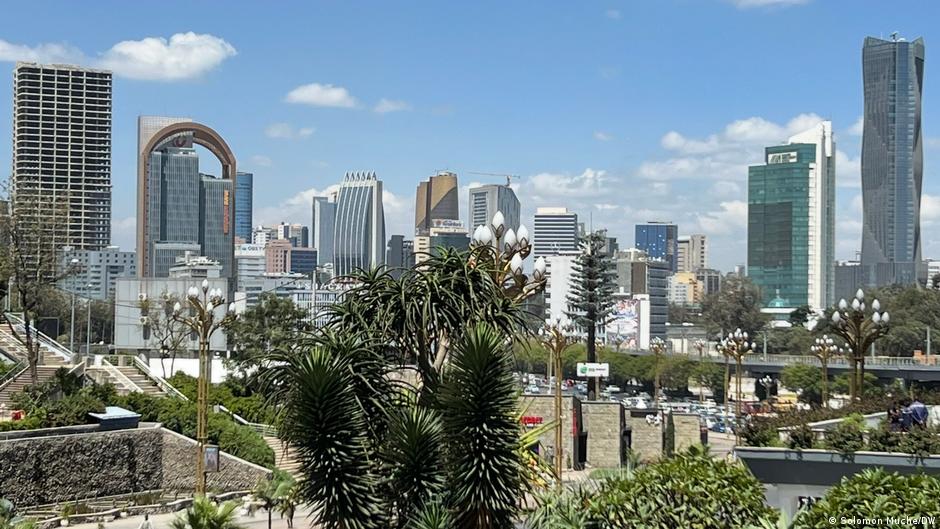
服务业和金融部门的增长改变了亚的斯亚贝巴的天际线。新冲突会叫停这场繁荣吗?
Prefer DW on Google Service and financial sector growth has transformed Addis Ababa's skyline. Could the new conflict halt the boom?
埃塞俄比亚经济正在强劲增长。国际货币基金组织(IMF)预测,2025-26财年实际增长率将达到9.2%。但北部重燃战火、高昂的重建成本以及气候相关的农作物问题,正威胁着该国的经济复苏。
Ethiopia 's economy is growing strongly. The International Monetary Fund (IMF) forecasts real growth of 9.2% for the 2025–26 fiscal year. But renewed fighting in the north high reconstruction costs and climate-related crop problems are threatening the country's economic recovery.
总部位于伦敦的金融分析师阿卜杜勒梅南·穆罕默德警告称,冲突再度升级将带来严重后果。“如果发生大规模冲突[……]目前的经济增长将不可持续,”他对德国之声表示。
London-based financial analyst Abdulmenan Mohammed warns of the consequences of a renewed escalation "If there is a major conflict [...] the current economic growth will not be sustainable," he told DW.
埃塞俄比亚总理阿比·艾哈迈德于2025年8月视察锡达马地区首府哈瓦萨的一个工业园 蒂格雷战争的高昂遗留代价 2020年至2022年间在蒂格雷及埃塞俄比亚其他地区肆虐的战争造成了大面积破坏。基础设施被毁,企业失去生产能力,部分地区农田无法耕种。
Ethiopia's PM Abiy Ahmed visits an industrial park in Hawassa, the capital of the Sidama region, in August 2025 The costly legacy of the Tigray war war that raged in Tigray and other parts of Ethiopia between 2020 and 2022 left extensive damage. Infrastructure was destroyed, businesses lost production capacity and agricultural land could no longer be cultivated in some areas.
世界银行支持的一份损失与需求评估显示,2020年11月至2021年12月间埃塞俄比亚发生的多起冲突造成的损失超过226亿美元(约202亿欧元)。经济损失约为60亿美元。重建和经济复苏所需的资金估计约为197亿美元。这一数字代表总资金需求,而非年度成本或当前升级造成的损失。
A World Bank-backed damage and needs assessment puts the damage caused by several conflicts in Ethiopia between November 2020 and December 2021 at more than $22.6 billion (€20.2 billion). Economic losses amounted to around $6 billion. The estimated funding required for reconstruction and economic recovery stands at approximately $19.7 billion. This figure represents the total funding requirement, not annual costs or damage caused by the current escalation.
一项重建计划覆盖2023年至2028年期间。然而,该项工作能否在该时间框架内获得全额资助并完成,仍不确定。
A reconstruction plan covered the period from 2023 to 2028. However, it remains uncertain whether the work can be fully funded and completed within that timeframe.
金融分析师阿卜杜勒梅南·穆罕默德认为,提格雷战争的经济后果甚至更为严重。除了直接破坏外,他指出当时还出现了经济产出损失、高通胀和外汇短缺。国际贸易条件也恶化了:2022年,埃塞俄比亚失去了美国《非洲增长与机会法案》(AGOA)赋予的优惠待遇,该法案曾允许特定非洲出口产品免关税进入美国市场。
Financial analyst Abdulmenan Mohammed believes the economic consequences of the Tigray war were even more severe. In addition to the direct destruction, he points to lost economic output, high inflation and foreign currency shortages at the time. International trade conditions also deteriorated: in 2022, Ethiopia lost its benefits under the US African Growth and Opportunity Act (AGOA) which had allowed certain African exports to enter the US market duty-free.
危机中的增长 2022年11月《比勒陀利亚和平协议》签署后,经济开始复苏。据国际货币基金组织(IMF)数据,2022-2023财年经济增长7.2%,2023-2024财年增长8.1%。该组织预计2024-2025财年增长9.2%,并预测2025-2026财年将进一步增长9.2%。农业、采矿业和发电业是推动这一增长的主要动力。
Growth despite the crisis Following the Pretoria peace agreement in November 2022, the economy began to recover. According to the IMF it grew by 7.2% in 2022–23 and 8.1% in 2023–24. The organization puts growth at 9.2% for 2024–25 and forecasts a further 9.2% for 2025–26. Agriculture, mining and electricity generation are among the main drivers of this growth.
这并不与战争造成的经济损害相矛盾。国内生产总值(GDP)衡量的是一个国家的经济总产出。如果受冲突影响地区以外的主要部门继续扩张,整体经济仍可增长,即使个别地区仍在承受暴力冲突的后果。
This does not contradict the economic damage caused by the war. Gross domestic product (GDP) measures the total economic output of a country. If major sectors outside conflict-affected areas continue to expand, the overall economy can grow even while individual regions are still suffering the consequences of violence.
然而,高增长率并不意味着该国的经济问题已得到解决。重建仍是一大挑战,通胀持续给家庭带来压力,政府还需偿还债务。2023年底,埃塞俄比亚因未能支付一笔欧洲债券利息而违约。2024年启动的国际货币基金组织支持的改革计划旨在解决经济结构性弱点。
However, high growth rates do not mean that the country's economic problems have been resolved. Reconstruction remains a major challenge, inflation continues to put pressure on households and the government has to service its debt. In late 2023, Ethiopia defaulted after missing an interest payment on a Eurobond. Reforms supported by an IMF program launched in 2024 are intended to address structural weaknesses in the economy.
更高的军费开支、更少的发展资金可能给公共财政带来额外压力。政府将不得不在军事人员、装备和后勤上投入更多资金。同时,受影响地区的经济活动以及随之而来的税收收入可能会下降。
Higher military spending, less money for development could put additional pressure on public finances. The government would have to spend more on military personnel, equipment and logistics. At the same time, economic activity and, consequently, tax revenues could decline in the affected regions.
“政府资源的很大一部分将被军费开支占用,而这些资源本可用于基础设施、教育和社会服务,”阿卜杜勒梅南·穆罕默德警告说。这种影响的程度将取决于任何重燃冲突的规模和持续时间。
"A substantial share of government resources would be tied up in military spending that would otherwise be available for infrastructure, education and social services," warned Abdulmenan Mohammed. The extent of this impact would depend on the scale and duration of any renewed conflict.
金融分析师阿卜杜勒梅南·穆罕默德警告重燃冲突升级的经济后果,长期战争还可能促使企业推迟投资。国际贷款方和捐助方可能变得更加谨慎,而政府将需要额外资金用于安全和人道主义援助。这可能导致可用于道路、能源基础设施和其他发展项目的资金减少。
Financial analyst Abdulmenan Mohammed warns of the economic consequences of a renewed escalation prolonged war could also prompt businesses to postpone investments. International lenders and donors might become more cautious, while the government would need additional funds for security and humanitarian assistance. This could leave less money available for roads, energy infrastructure and other development projects.
通胀与外汇短缺 国际货币基金组织预测,2025-26财年平均通胀率为11.7%。因此预计物价将继续上涨,尽管涨幅将慢于前几年。
Inflation and foreign currency shortages The IMF forecasts an average inflation rate of 11.7% for 2025–26. Prices are therefore expected to continue rising, although at a slower pace than in previous years.
阿卜杜勒梅南·穆罕默德预计,冲突进一步升级将加剧通胀压力。“如果冲突进一步升级,通胀很可能会上升,”他说。为给额外开支融资,政府可能诉诸更多国内借贷。这可能通过增加私营企业获取信贷和融资投资的难度,挤出私营企业。
Abdulmenan Mohammed expects a further escalation to intensify inflationary pressures. "If the conflict escalates further, inflation is likely to rise," he said. To finance additional spending, the government might resort to more domestic borrowing. This could crowd out private businesses by making it harder for them to access credit and finance investments.
军方还需要外汇从国外采购装备。如果这种需求增加,可供私营企业进口使用的外汇储备可能减少。这将给比尔汇率带来进一步压力,并推高进口商品、燃料和工业投入品的成本。
The military also needs foreign currency to purchase equipment from abroad. If this demand increases, fewer foreign exchange reserves could be available to private businesses for imports. This would put further pressure on the birr exchange rate and drive up the cost of imported goods, fuel and industrial inputs.
这些影响对该金砖国家成员国的程度,还将取决于出口收入、货币政策和国际市场发展。因此,通胀再次飙升是一种风险,但不是升级的必然后果。物价上涨与收入不确定的组合,对贫困家庭将构成特别困难。
The extent of these effects on the BRICS member state would also depend on export earnings, monetary policy and developments in international markets. A new surge in inflation is therefore a risk, but not an inevitable consequence of the escalation. A combination of rising prices and uncertain incomes would be particularly difficult for poorer households.
埃塞俄比亚约有 75 万人因提格雷冲突仍处于境内流离失所状态 农业与旅游业尤为脆弱阿卜杜勒梅南·穆罕默德认为,农业以及旅游和酒店业尤为脆弱。他说:“农业尤其暴露在风险中,因为大部分战斗发生在农民工作的农村地区。”
Around 750,000 people in Ethiopia remain internally displaced as a result of the Tigray conflict Agriculture and tourism particularly vulnerable Abdulmenan Mohammed sees agriculture, as well as the tourism and hospitality sectors, as particularly vulnerable. "Agriculture is especially exposed because much of the fighting takes place in rural areas where farmers work," he said.
农田周边的不安全局势、运输路线中断以及农资短缺可能削弱生产。与此同时,该国部分地区正经历降雨不足和收成前景不佳的情况。收成失败会减少农民收入,而粮食供应减少可能进一步推高物价。
Insecurity around farmland, disrupted transport routes and shortages of agricultural inputs can undermine production. At the same time, parts of the country are experiencing insufficient rainfall and poor harvest prospects. Failed harvests reduce farmers' incomes, while lower food supplies can push prices even higher.
旅游业也对安全风险高度敏感。旅行警示和战斗报道可能阻碍游客前来,减少酒店和旅行社的收入。邻国能否从危机中获益?
Tourism is also highly sensitive to security risks. Travel advisories and reports of fighting can deter visitors, reducing revenues for hotels and tour operators. Could neighboring countries benefit from the crisis?
国际投资者在做出投资决策时,不仅考虑市场规模,还考虑政治稳定性、安全性以及国家机构的可靠性。局势进一步升级因此可能推迟投资决策,或促使企业考虑替代地点。
When making investment decisions, international investors consider not only market size but also political stability, security and the reliability of state institutions. A further escalation could therefore delay investment decisions or prompt companies to consider alternative locations.
然而,目前没有确凿证据表明,企业已因战斗而从埃塞俄比亚撤资并将投资转移至肯尼亚等邻国。阿卜杜勒梅南·穆罕默德也认为,就目前而言,肯尼亚并无显著的经济优势。除了安全因素,税务管理、公共服务和治理等因素也起决定性作用。为何埃塞俄比亚北部再次出现暴力升级
However, there is currently no concrete evidence that companies are already withdrawing investments from Ethiopia because of the fighting and relocating them to neighboring countries such as Kenya. Abdulmenan Mohammed also sees no demonstrable economic advantage for Kenya at this stage. Beyond security, factors such as tax administration, public services and governance also play a decisive role. Why northern Ethiopia is seeing growing violence once again