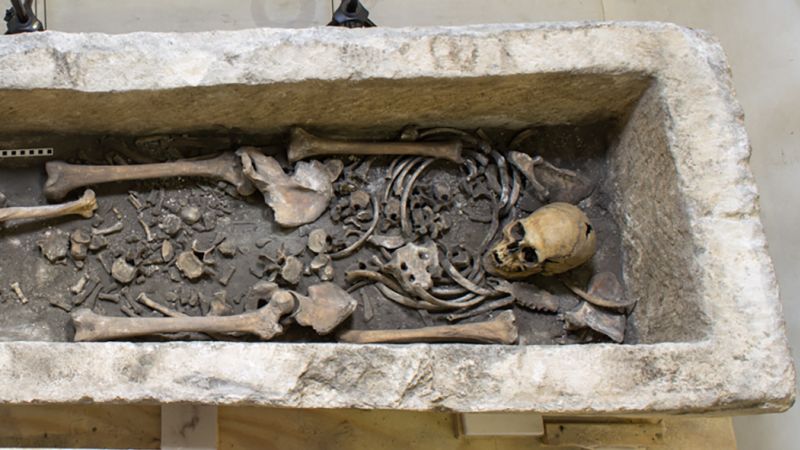
150多年前在伦敦威斯敏斯特教堂发现的一座数百年历史的石棺,引发了一个延续至今的疑问:棺中是谁?如今,考古学家有了线索,指向一位受人尊敬的中世纪人物,而他并非该墓葬的原始埋葬者。
A centuries-old stone coffin discovered more than 150 years ago at London’s Westminster Abbey sparked a question that has endured ever since: Who’s inside? Now, archaeologists have clues that point to a respected medieval figure who was not the burial’s original occupant.
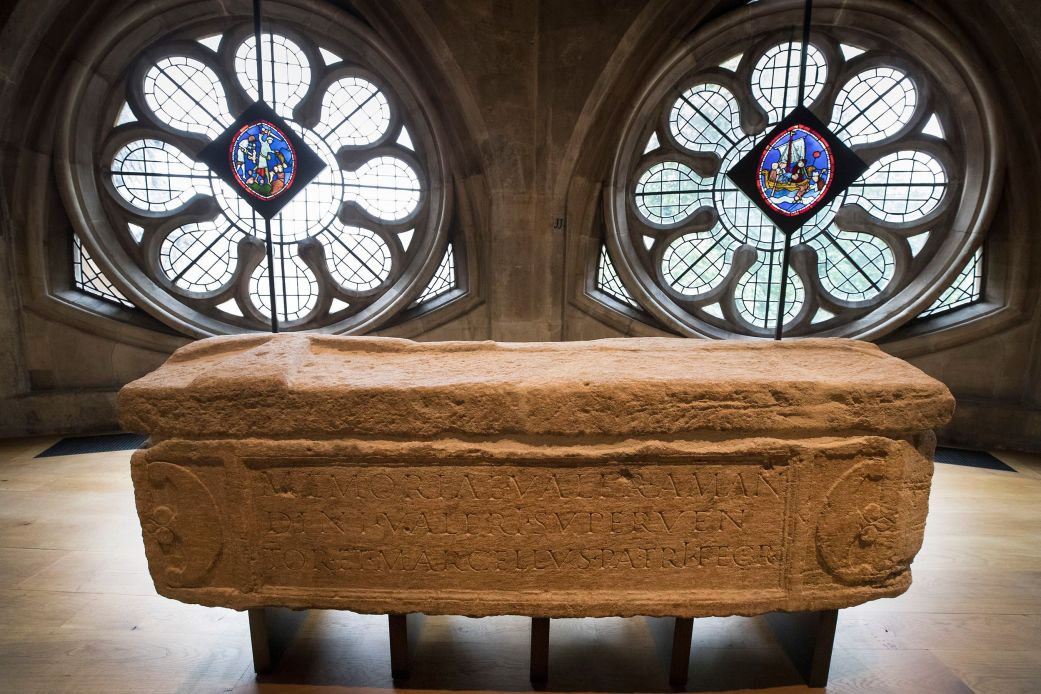
此前研究已确定,该石棺可追溯至罗马时期,大约是四世纪,并刻有三行拉丁文铭文,以“纪念瓦莱里乌斯·阿曼迪努斯”为题。鉴于石棺的高质量,阿曼迪努斯可能是伦敦的一位重要居民,但关于他的生平和事迹一无所知。
Prior research had determined that the sarcophagus dated to the Roman period, around the fourth century, and a three-line Latin inscription dedicated it “to the memory of Valerius Amandinus.”Given the coffin’s high quality, Amandinus was probably an important resident of London, but nothing is known about his life and deeds.
然而,石棺盖上刻有一个晚期盎格鲁-撒克逊风格的十字架,长5.9英尺(1.8米),很可能是在至少600年后才刻上去的。威斯敏斯特教堂的顾问考古学家沃威克·罗德韦尔表示,该符号的存在引发了对棺内骸骨的年代和身份的怀疑。
However, a cross of a late Anglo-Saxon style carved on the sarcophagus lid and measuring 5.9 feet (1.8 meters) long was likely made at least 600 years later. The symbol’s presence sowed doubts about the age and identity of the skeleton inside, according to Warwick Rodwell, a consultant archaeologist at Westminster Abbey.
他对遗骸进行了新的分析,发现棺中埋葬者很可能是威斯敏斯特的一位中世纪僧侣或修道院长。罗德韦尔于10月20日在《英国考古学协会杂志》上报告了他的研究结果。
He conducted a new analysis of the remains and found the coffin’s occupant was likely a medieval monk or abbot of Westminster. Rodwell reported his findings October 20 in the Journal of the British Archaeological Association.
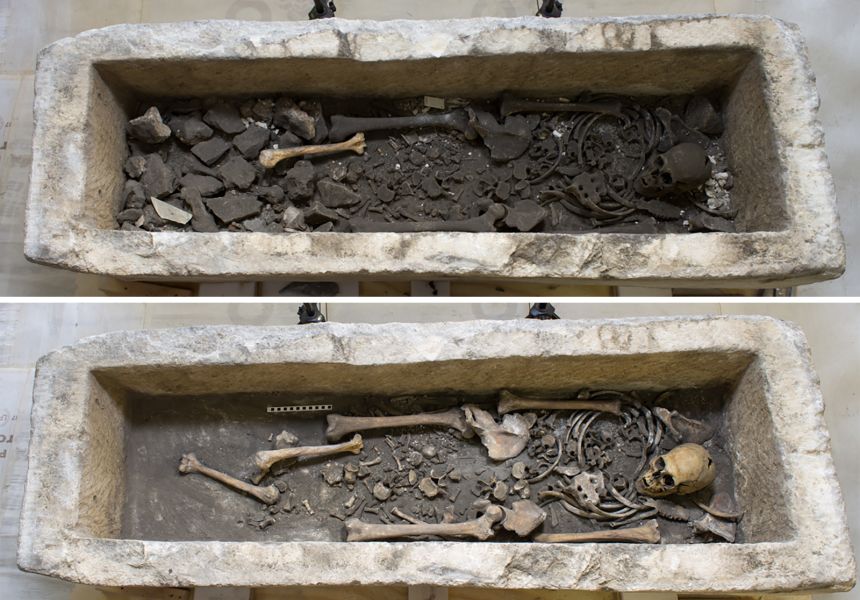
工人于1820年首次在教堂发现该墓葬。发掘过程中,他们将棺盖砸成六块,粗暴的处理损坏了头骨。骨骼被扫成一堆,凌乱地留在那里,或许在棺盖打开期间被盗墓者扰动。随后,棺材及其内容物在未经编目或研究的情况下被重新埋葬。
Workers first discovered the burial at the abbey in 1820. During its excavation, they broke the lid into six pieces, and their rough handling damaged the skull. The bones were swept into a pile and left in disarray, perhaps disturbed by looters while the lid was open. Then, the coffin and its contents were reburied without being catalogued or studied.
该石棺在1869年一项翻修工程中被“再次发现”,并从教堂的北绿地带移至东回廊。(据该研究称,著名小说家查尔斯·狄更斯的长子查尔斯·狄更斯小于1879年曾写下在教堂看到该石棺的经历。)后来,它又被迁至教堂西北塔楼底部,由于棺材重量巨大,这项任务耗时超过36小时。
The sarcophagus was “found” a second time in 1869 during a renovation project, and it was moved from the abbey’s North Green region to the East Cloister. (Charles Dickens Jr., eldest son of the famous novelist, wrote about seeing the sarcophagus at the abbey in 1879, according to the study.) It was later relocated to the base of the abbey’s northwest tower, a task that took more than 36 hours due to the coffin’s weight.
罗德韦尔于2009年首次得知这具棺材的历史。当他得知这具石棺计划于2016年进行清洁和修复,以便在修道院内新建的展厅中展出时,他抓住了这个难得的机会,重新审视这座神秘的墓葬。
Rodwell first learned of the coffin’s history in 2009. When he found out that the sarcophagus was scheduled for cleaning and conservation in 2016, in preparation for display in new galleries that were being constructed in the abbey, he seized the rare chance to revisit the mysterious burial.
“我将此视为一个机会,可以重新审视它,看看里面有什么——如果有的话——在封存了150年之后,”他对CNN表示。罗德韦尔发现,棺材内部的骨骼仍然杂乱地堆放在一起,这具棺材由一整块石灰岩凿成,长约7英尺(2米),墙壁平均厚约4英寸(10厘米)。骨骼大约完整90%,头骨在1869年棺材上次打开时已被重建,他在研究中写道。
“I saw this as an opportunity to take a fresh look at it, and to see what was inside — if anything — after 150 years of being sealed up,” he told CNN in an Rodwell found the bones were still jumbled together inside the coffin, which was hewn from a single block of limestone and measured about 7 feet (2 meters) long, with walls about 4 inches (10 centimeters) thick on average. The skeleton was about 90% complete, and the skull had been reconstructed when the coffin was last opened in 1869, he wrote in the study.
骨骼分析表明,这是一名在35至49岁之间去世的男子,骨骼的碳14测定显示他生于公元987年至1052年之间。他的牙齿状况良好。虽然一些骨骼显示出愈合的骨折、骨关节炎和痛风的迹象,但没有发现可能导致该男子死亡的严重疾病或伤害的迹象。
Skeletal analysis hinted that this was a man who died between the ages of 35 and 49 years, and radiocarbon dating of the bones placed him between A.D. 987 and 1052. His teeth were in good condition. And while some bones showed evidence of healed fractures, osteoarthritis and gout, there was no sign of serious disease or injury that might have caused the man’s death.
当研究人员移走骨骼,并清理棺材中的土壤和碎石时,他们惊讶地发现了一块矩形的石灰斑块。石灰是一种被认为能加速腐烂并捕捉“瘴气”(即被错误地与疾病联系在一起的所谓有毒蒸气)的化合物。石灰斑块的形状表明,遗体曾置于一个矩形木棺中,然后在木棺中填满石灰,再将其放入石棺,罗德韦尔表示。“此前未曾料到,木棺已完全腐烂。”他补充说,在中世纪,用石灰覆盖遗体的做法很少见,通常仅用于高身份的埋葬。
When the researchers removed the skeleton and cleared the coffin of soil and rubble, they were surprised to find a rectangular patch of lime, a compound thought to accelerate decay and trap “miasmas,” so-called toxic vapors that were erroneously linked to disease. The shape of the lime patch suggested that the body had been inside a rectangular wooden coffin that was then filled with lime before being placed in the sarcophagus, Rodwell said. “This had not been suspected, and the timber coffin had totally rotted away.”The practice of covering a body in lime was rare in the Middle Ages and typically reserved for high-status burials, he added.
那条线索和棺材上的十字架让研究人员推断,这具骸骨很可能属于一位重要人物,最可能是威斯敏斯特的修道院长。对于那个时期,有两位历史上被确认的候选人:Ælfwig,他在公元993年至约1020年间担任修道院长,以及1020年成为修道院长的Wulfnoth。根据这项研究,Ælfwig的可能性略大一些,因为他已知在成为修道院长之前曾是威斯敏斯特的一名僧侣,因此可能与该教堂有更清晰的联系。
That clue and the cross on the coffin led the researchers to reason that the skeleton probably belonged to an important man, most likely the abbot of Westminster. Two historically identified candidates arose for that period: Ælfwig, abbot from A.D. 993 to around 1020, and Wulfnoth, who became abbot in 1020. Ælfwig is a slightly stronger contender, according to the study, as he was known to have been a monk at Westminster before becoming abbot and may therefore have had a clearer connection to the church.
“没有单一线索能最终确定此事,”罗德韦尔说。“这是一个收集并权衡所有证据线索的过程。”但一座声望卓著教堂的修道院长,为何会被埋葬在一口二手罗马棺材中?罗德韦尔说,这实际上可能是对他崇高地位的一种致敬。
“No single clue clinched the matter,” Rodwell said. “It was a case of assembling and weighing all the strands of evidence.”But why would the abbot of a prestigious church be buried in a used Roman coffin? Rodwell said this could actually be a tribute to his elevated status.
“在晚期撒克逊时期,石棺难以寻觅——制作石棺的行业已经消亡,”他说。“获得一口二手石棺被视为一种‘珍宝’。”他补充说,这些石棺如此珍贵,以至于七世纪时,来自伊利修道院的英国僧侣曾前往剑桥的一处罗马墓地,挖出一口石棺带回,用于安葬她们已故的女修道院长Æthelthryth。
“In the late Saxon period stone coffins were hard to come by — the industry for making them had died out,” he said. “Acquiring a secondhand stone coffin was considered a ‘prize.’”So valued were these coffins, he added, that in the seventh century, British monks from an abbey in Ely traveled to a Roman cemetery in Cambridge and dug up a stone coffin to take back with them for their deceased abbess, Æthelthryth.
英国温彻斯特大学中世纪考古学读者西蒙·罗菲博士表示,另一例被重新利用的石棺是目前收藏于梵蒂冈博物馆的精美四世纪石棺,传闻中安放着君士坦丁大帝之母海伦娜的遗骸。这口棺材上雕刻着罗马士兵践踏蛮族的军事场景,原本可能是为一名男子制作的。
Another example of a repurposed stone coffin is the elaborate fourth century sarcophagus currently in the Vatican Museums that is rumored to hold the remains of Helena, mother of the emperor Constantine the Great, said Dr. Simon Roffey, a reader in medieval archaeology at the University of Winchester in the UK. Carved with a military scene of Roman soldiers trampling barbarians, the coffin was likely intended for a man.
不过,罗菲在一封电子邮件中告诉CNN,要充分解释中世纪基督教时期重新利用异教墓穴和石棺的动机和理由,仍需进一步研究。他并未参与这项新研究。
Still, further research is needed to fully explain the motives and rationale behind the reuse of pagan tombs and sarcophagi during the medieval Christian period, Roffey told CNN in an email. He was not involved in the new research.
尽管修道院院长Ælfwig并非公众想象中广为人知的人物,但这一发现仍然解开了一个自1869年以来困扰学者的谜团,并填补了威斯敏斯特大教堂盎格鲁-撒克逊历史上的一个重大空白。罗德威尔说,威斯敏斯特大教堂是“英国最重要的教堂”。
While Ælfwig the abbot isn’t exactly a well-known figure who looms large in the public imagination, this discovery nonetheless untangled a mystery that has stymied academics since 1869 and fills a significant gap in the Anglo-Saxon history of Westminster Abbey, “the most important church in Britain,” Rodwell said.
明迪·魏斯伯格是一名科学作家和媒体制作人,其作品曾发表于《生活科学》、《科学美国人》和《它是如何运作的》杂志。她是《僵尸虫崛起:寄生虫精神控制的惊人科学》(霍普金斯出版社出版)的作者。。探索宇宙,了解引人入胜的发现、科学进步等新闻。
Mindy Weisberger is a science writer and media producer whose work has appeared in Live Science, Scientific American and How It Works magazine. She is the author of “Rise of the Zombie Bugs: The Surprising Science of Parasitic Mind-Control” (Hopkins Press). . Explore the universe with news on fascinating discoveries, scientific advancements and more.