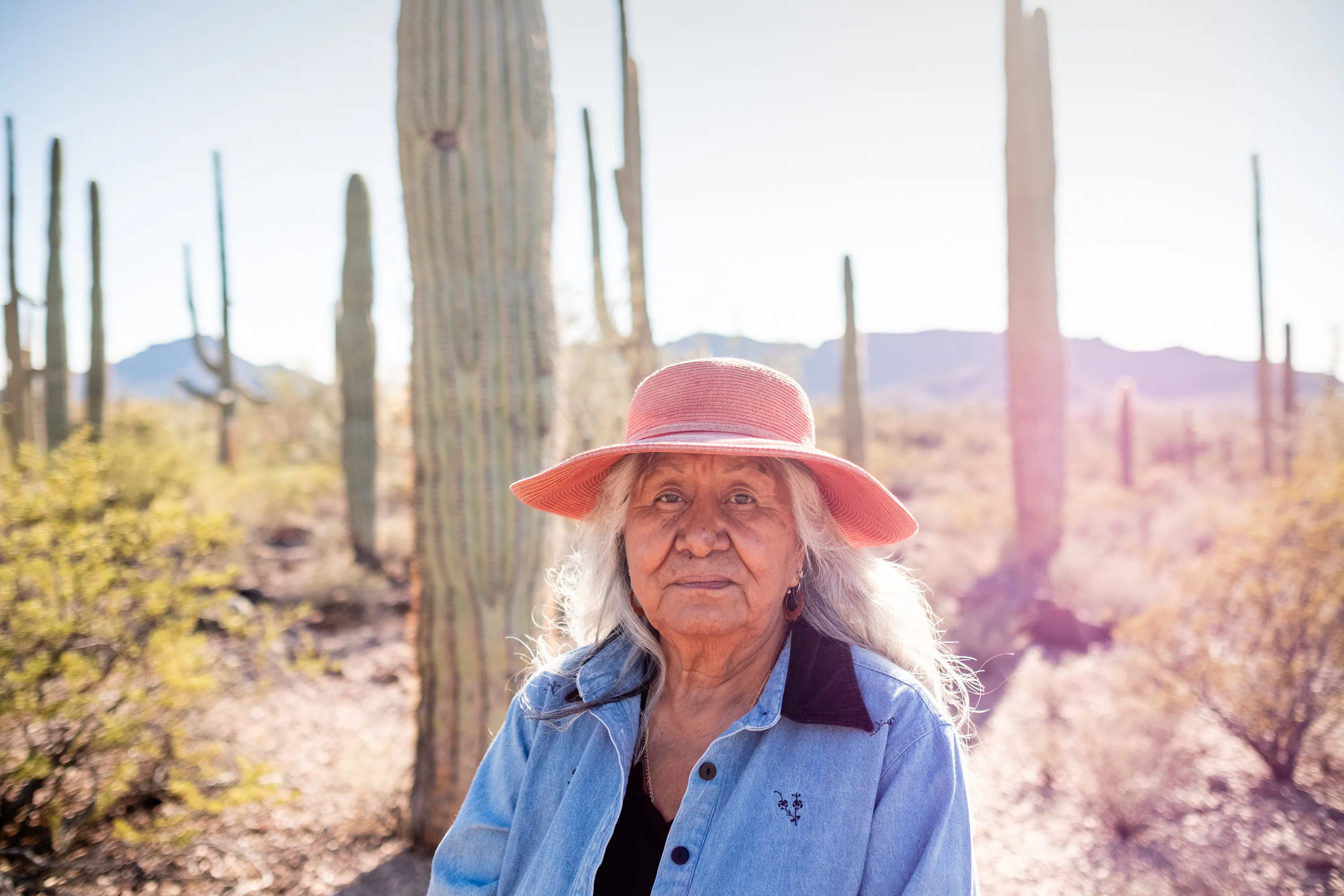
洛琳·艾勒站在炽热的八月阳光下,身边围满了记者,发出警告。特朗普政府正在图森西南部的器官管仙人掌国家纪念碑上加紧修建第二道边境墙。她说,如果推土机来了,必定会打扰她家族和希亚-塞德奥德姆部落祖先的安息之地。“人们过去曾住在这里,”这位89岁的老人说。十五天后,她的担忧成真。
Lorraine Eiler stood in the blazing August sun, surrounded by reporters, to offer a warning. The Trump administration was racing to erect a second border wall across Organ Pipe Cactus National Monument, southwest of Tucson. If the bulldozers came, she said, they were bound to disturb the final resting places of her family and Hia-Ced O’odham tribal ancestors. “People used to live here,” the 89-year-old said. Fifteen days later, her fears were realized.
《公共广播公司新闻》证实,在边境墙承包商翻动的土壤中,器官管仙人掌国家纪念碑内挖出了美洲原住民遗骸。
ProPublica has confirmed that Native American remains were unearthed in Organ Pipe amid soil overturned by border wall contractors.
国家公园管理局在一份声明中表示,这一此前未报道的发现发生在9月8日。“按照既定程序,亚利桑那大学进行了评估,并确认这些遗骸为人类遗骸,且符合部落火葬习俗,”该机构表示。
The discovery, unreported until now, was made on Sept. 8, the National Park Service said in a statement. “Following established protocols, the University of Arizona conducted an assessment and confirmed that the remains are human and align with tribal cremation practices,” the agency said.
《美洲原住民墓葬保护与遣返法》规定了联邦土地上意外发现美洲原住民遗骸后机构必须采取的步骤。这些步骤包括,在与部落社区协商之前,停止任何导致发现的活动。
The Native American Graves Protection and Repatriation Act governs the steps agencies must take following an inadvertent discovery of Native American remains on federal land. Those steps include halting any activity that contributed to the discovery until tribal communities are consulted.
“国家公园管理局致力于尊重部落的权利和传统,”该机构继续表示,并补充说,它正“努力工作,以确定文化上有关联的部落,并确保遗骸得到尊重的归还,以便该部落可以举行其宗教和文化仪式。”艾勒是通过托诺奥德姆民族的一位文化事务专家得知这一发现的,该部落规模更大,其保留地位于器官管仙人掌国家纪念碑以东,随后又通过器官管仙人掌国家纪念碑主管办公室得知。
“The National Park Service is committed to respecting tribal rights and traditions,” the agency went on to say, adding that it was “working diligently to identify the culturally affiliated tribe and ensure the respectful return of the remains, so the tribe may observe their religious and cultural practices.”Eiler was alerted to the discovery by a cultural affairs specialist with the Tohono O’odham Nation, a larger tribe whose reservation is east of Organ Pipe, and later by the Organ Pipe superintendent’s office.
她的家人讨论了下一步该怎么做。最终,他们决定在该地区施工停止之前,暂不重新安葬新挖出的遗骸,担心施工会扰乱更多遗址。
Her family discussed what to do next. Ultimately, they decided to hold off on reburying the newly unearthed remains until construction in the area stops, fearing the work will disturb more sites.
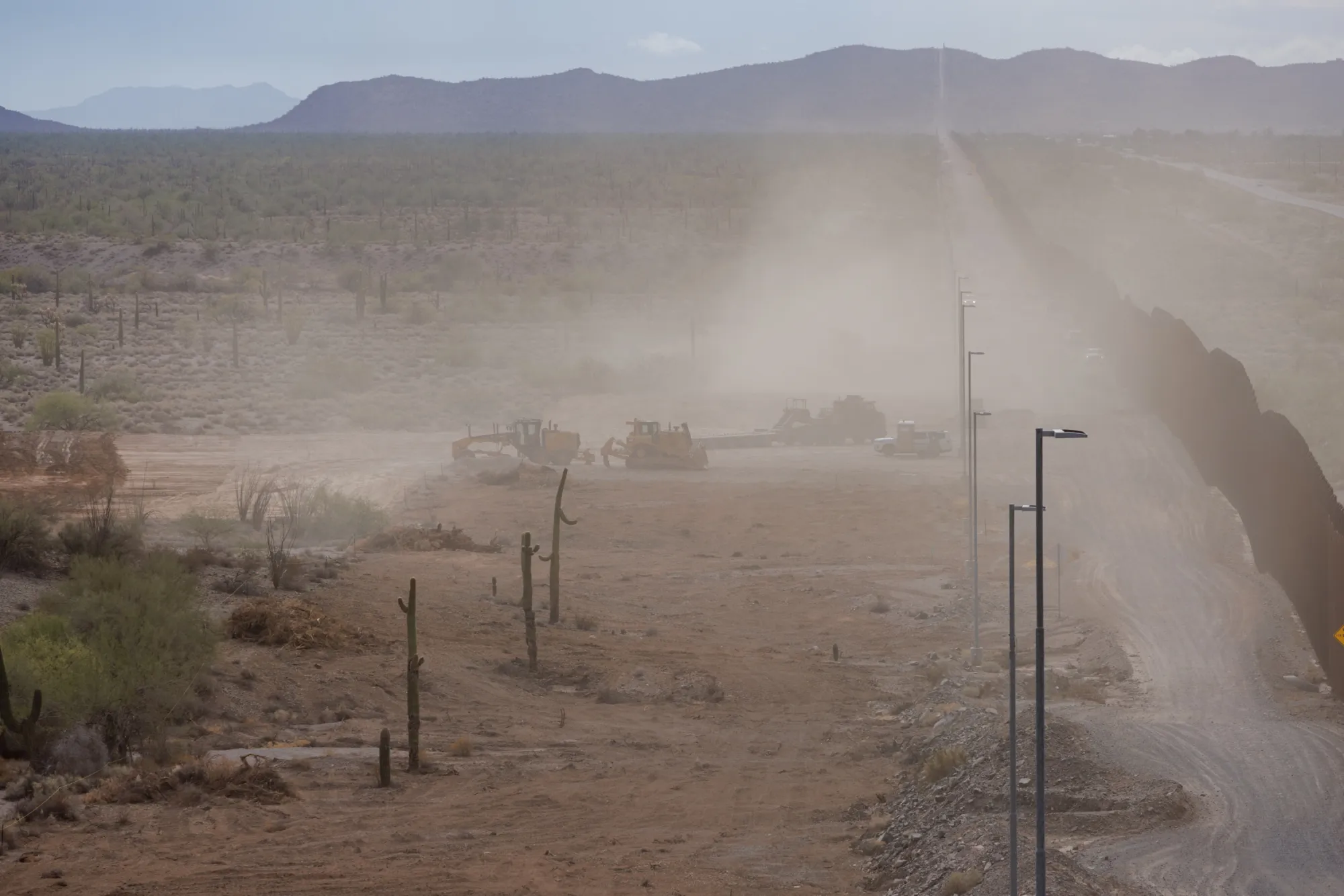
“谁知道还会发现什么,”埃勒在一次采访中说。“他们无论在哪里挖掘,都会找到遗骸。”海关与边境保护局的承包商已在国际边界线平行的一大片区域推平了植被。该机构通过砍伐、连根拔起并试图移植纪念碑内特定本土植物,为重型设备腾出了停放区域。埃勒获悉,这些遗骸由一名公园管理局考古学家在一棵仍然矗立的巨人柱仙人掌底部附近发现。
“Who knows what more will come up,” Eiler said in an interview. “They’re going to find remains wherever they dig.”Customs and Border Protection contractors have bulldozed a wide swath of vegetation parallel to the international divide. The agency has fashioned staging areas for heavy equipment by knocking down, uprooting and attempting to transplant select specimens of the monument’s native plants. Eiler was told the remains were found by a park service archaeologist near the base of a saguaro cactus that was still standing.
在一份声明中,CBP表示,它是在发现后第六天才获悉这一发现,其文化资源专家对该地区进行了检查,未发现其他遗骸,并且“迄今为止,该地点未发生额外施工”。
In a statement, CBP said it was advised of the discovery six days after it was made, that its cultural resource specialists examined the area and found no other remains, and that “no additional construction has occurred at this location to date.”
这一发现发生在国土安全部与索诺兰沙漠部落社区之间紧张关系之际。四月份,边境墙承包商推平了一处大型且标记清晰的土质地画,即拉斯普拉亚斯因塔格略,该地画被认为至少有6500年历史。(CBP称该事件是意外。)此后不久,该部门授予了一份价值13亿美元的合同,用于在托诺奥德汉民族全境修建一段长达62英里的边境墙。
The discovery comes amid tensions between the Department of Homeland Security and tribal communities in the Sonoran Desert. In April, border wall contractors bulldozed through a large, well-marked earthen etching, known as the Las Playas Intaglio, that was believed to be at least 6,500 years old. (CBP said the incident was accidental.) Soon after, the department awarded a $1.3 billion contract for construction of a 62-mile border wall across the entirety of the Tohono O’odham Nation.
该部落正在联邦法院对该项目提起诉讼,并在其土地上竖立了“禁止闯入”标志,以阻止边境墙承包商进入。正如《公共广播公司》近期报道的那样,国土安全部通过部署戴面具的联邦特工作为工作人员的护送,并对部落成员进行空中监控来回应。CBP负责人将该保留地描述为“西南边境最危险的走私和贩运通道之一”,以此证明修建墙壁的必要性。
The tribe is fighting the project in federal court and has erected “no trespassing” signs to keep border wall contractors off its land. As ProPublica recently reported, DHS has responded by deploying masked federal agents as escorts for its work crews and conducting aerial surveillance of tribal members. The head of CBP has justified the need for a wall by describing the reservation as “one of the most dangerous smuggling and trafficking corridors on the Southwest border.”
该部落主席弗隆·M·何塞表示,感谢公园管理局通知了他办公室这一发现,但对这一发现本身的必要性感到哀痛。
Verlon M. Jose, the tribe’s chairman, expressed gratitude that the park service had notified his office of the discovery, but mourned the fact that it was necessary.
“当大规模破坏和扰动土地发生在明显存在神圣遗址、墓地及其他文化重要区域时,这类发现势必会发生,”何塞在一份声明中表示。“每次发生这种情况,都会刺伤所有托诺奥德姆族成员的心——这些是我们的祖先、我们的家人——他们的遗骸正在被亵渎。”
“When you have mass destruction and disturbance of land taking place where there are clearly sacred sites, cemeteries and other areas of cultural importance, these types of discoveries are bound to happen,” Jose said in a statement. “Every time this happens it is a wound to the heart of all members of the Tohono O’odham Nation — these are our ancestors, our family members — whose remains are being desecrated.”
出席八月新闻发布会的美国众议员阿德莉塔·格里哈尔瓦与埃勒和主席一同出席,她抨击政府未能听取他们的警告。“部落领袖和长者已向国土安全部警告,推土机在其祖先土地上横冲直撞将带来毁灭性后果,始于拉斯普拉亚斯因塔格里奥的破坏,”她在一份声明中表示。“数月来,这些警告一直被置若罔闻。现在,我们正看到他们所担心的一切:神圣遗址被毁,祖先的墓地被亵渎。”
U.S. Rep. Adelita Grijalva, who appeared with Eiler and the chairman at the August news conference, blasted the government for failing to heed their warnings. “Tribal leaders and elders have warned DHS about the devastating consequences of bulldozing through their ancestral lands, beginning with the destruction of the Las Playas Intaglio,” she said in a statement. “For months, those warnings have fallen on deaf ears. Now, we are seeing exactly what they feared: sacred sites destroyed and ancestral burial grounds desecrated.”
亚利桑那大学亚利桑那州立博物馆生物考古学馆长詹姆斯·T·沃森在现场分析了在器官管道国家纪念碑发现的遗骸。
James T. Watson, curator of bioarcheology in the Arizona State Museum at the University of Arizona, analyzed the remains recovered in Organ Pipe in the field.
虽然未经国家公园管理局批准,他无权讨论其发现的细节,但沃森在一封电子邮件中表示,他已确认这些遗骸为人类。证据表明,这些遗骸的火化方式与该地区可追溯至1500年前的前殖民时期习俗一致,他写道。
While he was not authorized to discuss the details of his findings without park service approval, Watson said in an email that he confirmed the remains were human. The evidence suggested they were cremated in a manner consistent with precolonial practices in the region dating back 1,500 years, he wrote.
根据《原住民美国人墓葬保护法》(NAGPRA),在公园管理局土地上意外发现的原住民遗骸必须立即被妥善保管,沃森解释道,管辖区的主管必须通知“所有相关直系后裔”,这些后裔与该土地存在“潜在的文化关联或祖先联系”。
Under NAGPRA, the graves protection act, Native American remains inadvertently uncovered on park service lands must be immediately secured, Watson explained, and the superintendent of the jurisdiction must notify “all relevant lineal descendants” with “potential cultural affiliation or ancestral ties to the land.”
他写道,“在发现现场附近的工作必须至少暂停30个日历天”,在此期间公园管理局将与部落代表协商,“以确定遗骸的处置方式和物理处理方式”。在美国西南部这样一个考古遗址丰富的地区,对原住民遗骸的意外扰动时有发生。让奥尔甘派普的发现与众不同的是,国土安全部拥有加速边境地区围墙建设的非凡权力。
“Work in the immediate discovery area must remain suspended for at least 30 calendar days,” he wrote, while the park service consults with tribal representatives “to determine the disposition and physical treatment of the remains.”In a region as rich with archaeological sites as the American Southwest, the inadvertent disturbance of Native American remains occurs with some regularity. What sets the discovery in Organ Pipe apart are the extraordinary powers the Department of Homeland Security wields to expedite wall construction in the borderlands.
在2001年9月11日恐怖袭击事件之后,国会通过了《真实身份法案》,其中包含一项条款,授权国土安全部长豁免任何可能减缓边境围墙建设的法律。在过去二十年中,国土安全部已66次援引该权力,其中60次发生在唐纳德·特朗普总统的两个任期内。
Following the Sept. 11, 2001, terrorist attacks, Congress passed the Real ID Act, which included a provision empowering the secretary of DHS to waive any law that might slow border wall construction. In the two decades since, DHS has invoked its powers 66 times, with 60 of those instances occurring under President Donald Trump’s two administrations.
当国土安全部使用这一权力时,通常会一次性豁免数十项法律。2019年,该部门将目光投向奥尔甘派普时,情况正是如此。时任代理部长凯文·K·麦克利南签发的一项豁免令搁置了美国40多项最严格的环境和文化资源保护法律,包括《国家环境政策法》、《濒危物种法案》、《清洁水法》等。该名单上还包括《原住民美国人墓葬保护与遣返法》,这是1990年的里程碑式法律,承认了美国长期亵渎原住民墓葬的历史,并要求将祖先遗骸和文化物品归还给部落。
When DHS uses this authority, it typically waives dozens of laws at a time. That was the case in 2019 when the department set its sights on Organ Pipe. A waiver issued by then-acting Secretary Kevin K. McAleenan set aside more than 40 of the nation’s most stringent environmental and cultural resource protection laws, including the National Environmental Policy Act, the Endangered Species Act, the Clean Water Act and others. Also on that list was the Native American Graves Protection and Repatriation Act, the landmark 1990 law that acknowledged the nation’s long history of desecrating Native American burials and required that ancestral remains and cultural objects be returned to tribes.
《华盛顿邮报》获得的一份2019年内部报告显示,国家公园管理局官员认定,奥尔甘管道仙人掌国家纪念碑内近二十处考古遗址面临政府承包商造成损毁或彻底毁坏的风险。
In an internal 2019 report obtained by The Washington Post, park service officials identified nearly two dozen archaeological sites in Organ Pipe as at risk of damage or total destruction by government contractors.
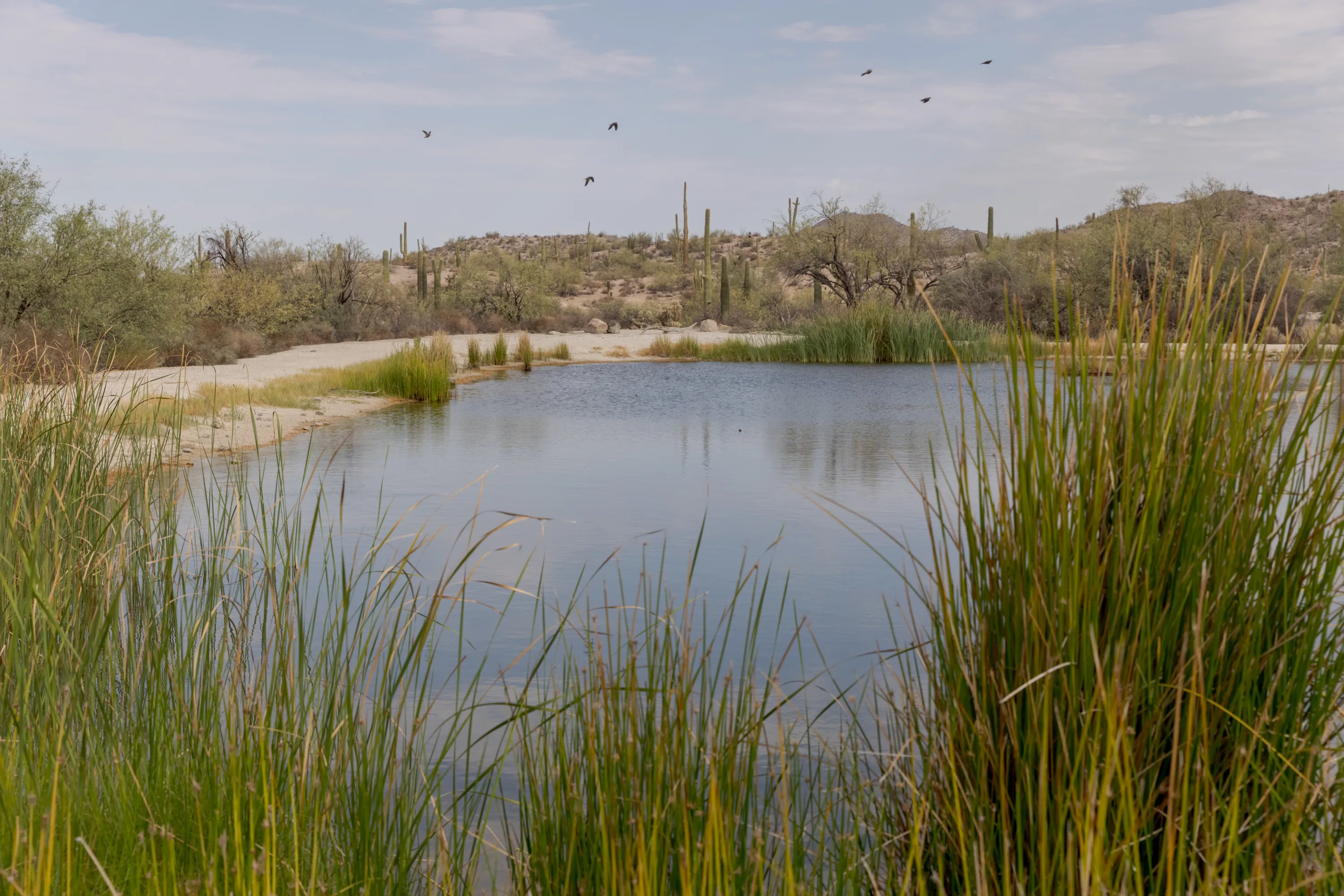
特别值得注意的是名为奎托巴基托泉的沙漠绿洲。该泉距离国际边界不到200英尺,是方圆数英里内为数不多的可靠地下水和遮荫来源之一,长期以来一直是奥德姆家族的聚会地点、放牧地和家园。
Of particular significance is a desert oasis known as Quitobaquito Springs. Less than 200 feet from the international border, the springs provide one of the only reliable sources of groundwater and shade for miles around, and they were a longtime gathering place, grazing site and home for O’odham families.
调查发现,“奎托巴基托的人类存在考古证据可追溯到数千年前,至少可追溯到古古代时期”,并补充称,该泉代表了“美国境内唯一已知的希亚塞德奥德姆村落遗址”。国家公园管理局2024年的一份报告指出,奎托巴基托的一个墓地安葬着至少两个家族(包括埃勒家族)的遗骸,共34座坟墓。据ProPublica的NAGPRA数据库显示,整个地区共有5500名被迁移祖先的遗骸可供托诺奥德姆民族领回。
“Archaeological evidence of human presence at Quitobaquito extends back thousands of years, at least to Archaic times,” the survey found, adding that the springs represent the “only known Hia C-ed O’odham village site in the United States.”A park service report in 2024 noted that a cemetery at Quitobaquito holds the remains of at least two families, including Eiler’s, and 34 graves. Throughout the region, remains of 5,500 ancestors that were displaced have been made available for return to the Tohono O’odham Nation, according to ProPublica’s NAGPRA database.
“此类事件在我们的家园中多次发生,每次从奥德姆人的角度听到此类案例,总是令人震惊,”亚利桑那大学美国印第安人与跨境研究教授、希亚塞德奥德姆和阿基梅尔奥德姆部落成员以及吉拉河印第安社区成员大卫·马丁内斯说。
“This sort of incident has happened numerous times across our homeland, and it’s always alarming to hear about a case from an O’odham point of view,” said David Martínez, a professor of American Indian and transborder studies at the University of Arizona and a member of the Hia-Ced O’odham and Akimel O’odham tribes, as well as the Gila River Indian Community.
“这些遗骸本就不该在最初被打扰,”他说。“虽然现在有相关程序来妥善处理这些遗骸,但归根结底,无论政府还是企业界在追求什么建设,我们知道,在某个时点,施工都会继续,而且这总会让我们感到,我想,有点空虚。”如今,奎托巴奎托位于特朗普第一任期内修建的边境墙阴影之下。该墙的建设需要在国家纪念碑内引爆炸药,炸毁一个名为纪念碑山的区域,激怒了部落领袖。据埃勒说,九月份找回的遗骸并非在泉水处发现,尽管政府工作队正在该遗址附近开展工作。
“Those remains shouldn’t have been disturbed in the first place,” he said. “While there are protocols existing today to properly care for these remains, ultimately, whatever either the government or the corporate world is pursuing to build, we know that at some juncture that construction will continue, and it always leaves us feeling, I think, a little hollow.”Today, Quitobaquito lies in the shadow of the border wall erected during Trump’s first term. Its construction required detonating explosives in the national monument, blasting apart an area called Monument Hill and outraging tribal leaders. According to Eiler, the remains recovered in September were not found at the springs, though government work crews are working in close proximity to the site.
今年,国土安全部聘请了位于亚利桑那州的桑德特建筑公司,在纪念碑内修建第二道围墙。这份4.43亿美元的合同于5月最终敲定。(桑德特将关于其工地发现人类遗骸的问题转交给了美国海关与边境保护局。)据美国海关与边境保护局称,2019年针对有机管道国家纪念碑的豁免令至今仍然有效,尽管促使该豁免令的项目早已完成多年。另一项豁免令,使国土安全部免于遵守许多相同法律,并适用于该国家纪念碑以及西部的一处野生动物保护区,由国土安全部时任部长克里斯蒂·诺姆去年签发。
This year, DHS hired Sundt Construction, an Arizona-based company, to build a second wall in the monument. The $443 million contract was finalized in May. (Sundt directed questions concerning the discovery of human remains on its job site to CBP.) According to CBP, the 2019 waiver for Organ Pipe is still in effect, years after completion of the project that prompted it. A second waiver, exempting DHS from many of the same laws and applying to the national monument as well as a wildlife refuge to the west, was issued by Homeland Security’s then-Secretary Kristi Noem last year.
“遗憾的是,这些豁免的有效期没有结束日期,”图森律师迪娜·贝尔说。她在民主党和共和党政府任期内,曾在白宫环境质量委员会担任高级律师25年。她补充道,“更重要的是,法律条文中没有任何内容将豁免与特定项目挂钩。”国土安全部的豁免权一直是一场备受关注的法律斗争的核心,该部门试图在得克萨斯州西部的大弯曲国家公园修建边境墙,负责审理此案的联邦法官近日下令暂停该项目。
“Unfortunately, there is no end date to the effectiveness of the waivers,” said Dinah Bear, a Tucson-based lawyer who served for 25 years as a senior attorney in the White House’s Council on Environmental Quality under both Democratic and Republican administrations. What’s more, she added, “there’s nothing in the statutory language that ties the waivers to a particular project.”The Department of Homeland Security’s waiver powers have been central to a high-profile legal fight over the department’s efforts to build a border wall through Big Bend National Park in West Texas, with a federal judge overseeing the case recently ordering a temporary halt to the project.
亚利桑那州的边境地区倡导者希望出现类似的干预。在国会,格里哈尔瓦正在起草立法,以废除现有的豁免,这些豁免曾允许国土安全部无视旨在保护部落主权、神圣场所和环境敏感土地的法律。
Borderlands advocates in Arizona are hoping for similar interventions. In Congress, Grijalva is preparing legislation to void existing waivers that have allowed DHS to disregard laws designed to protect tribal sovereignty, sacred sites and environmentally sensitive lands.
与此同时,边境建设仍在继续。对埃勒来说,令人担忧的不仅是奥尔甘派普的破坏。她认为,边境墙建设导致的部落墓地被扰动,反映出边境两侧更广泛的破坏模式。
In the meantime, construction on the border continues. For Eiler, it’s not just the destruction in Organ Pipe that’s troubling. She sees the disturbance of tribal graves resulting from wall construction as reflective of a wider pattern of destruction across the border.
“令人难过的是,这不仅发生在那边,”她说,“这正在美国各地发生,而几乎没人对此多说。”
“It’s sad because it’s not only happening down there,” she said. “It’s happening all over the United States, and nobody’s saying much about it.”