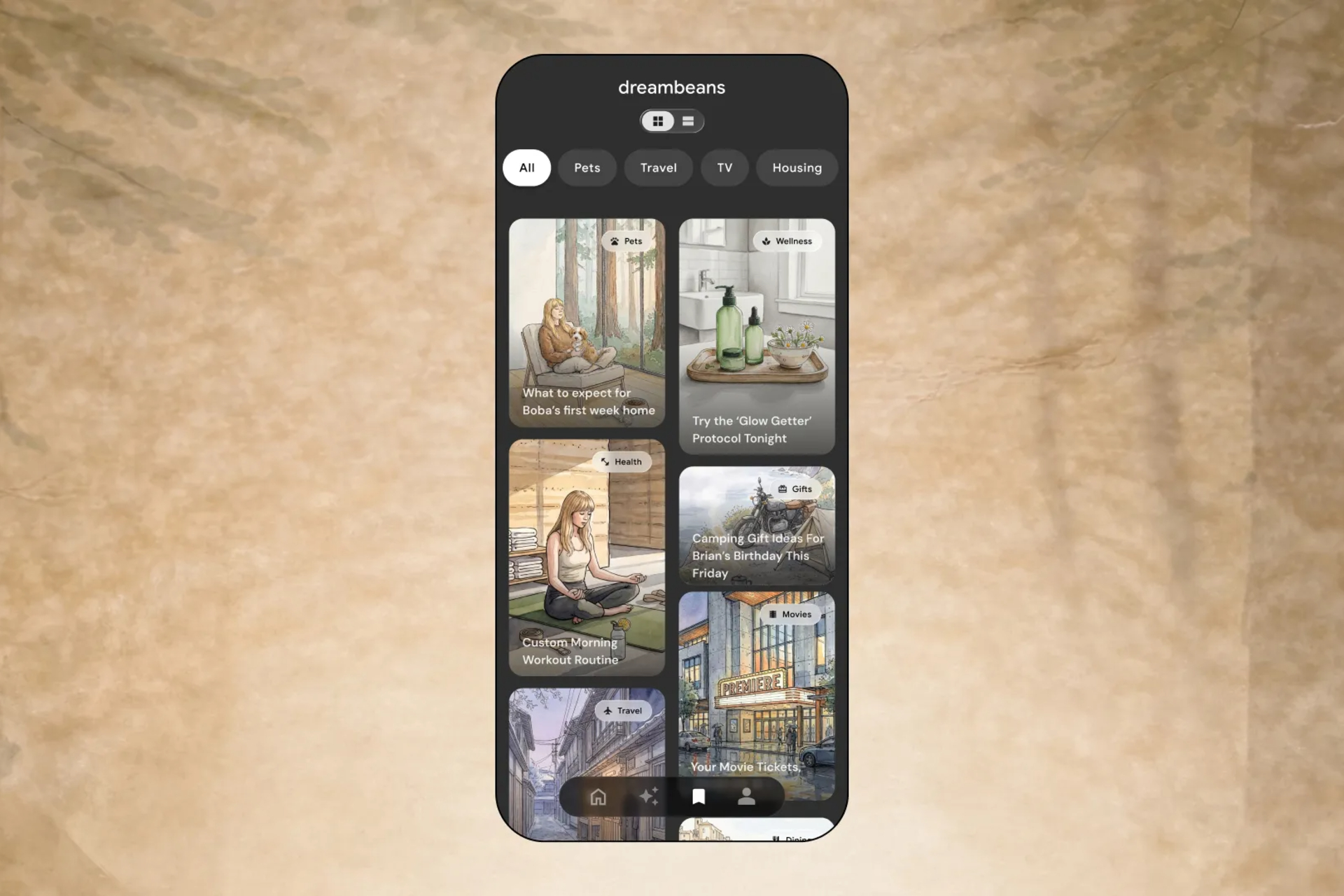
Google 已在印度推出其实验性 AI 应用 Dreambeans,这是该应用在美国以外的首个市场,旨在利用全球第二大互联网市场,将基于用户数字活动生成的个性化视觉故事带给更广泛的受众。
Google has launched its experimental AI app Dreambeans in India, its first market outside the U.S., as the company looks to tap the world’s second-largest internet market to bring personalized visual stories drawn from users’ digital activity to a broader audience.
周一,Google 将 Dreambeans 扩展至印度,该应用现已在 Android 和 iOS 平台上提供,支持包括印地语、旁遮普语、泰米尔语、泰卢固语和孟加拉语在内的 13 种当地语言,以及英语。此次发布距离 Google 向美国所有 18 岁及以上合格用户开放该应用不足两个月。
On Monday, Google expanded Dreambeans, available on Android and iOS, to India with support for 13 local languages, including Hindi, Punjabi, Tamil, Telugu, and Bengali, alongside English. The launch comes less than two months after Google made the app available to all eligible U.S. users aged 18 and older.
Dreambeans 于 6 月推出,它利用连接的 Google 服务(包括 Calendar、Gemini、Gmail、Photos、Search 和 YouTube)中的信息,主动生成关于用户兴趣和日常生活的个性化插画故事,无需用户输入提示词。该应用最初仅提供静态的 AI 生成插画,但 Google 近期新增了一项功能,利用其 Veo 视频生成模型为精选故事中的图片制作动画。
Introduced in June, Google’s Dreambeans uses information from connected Google services, including Calendar, Gemini, Gmail, Photos, Search, and YouTube, to proactively generate personalized, illustrated stories about users’ interests and everyday lives, without requiring them to enter a prompt. The app initially featured static, AI-generated illustrations, but Google recently added a feature that uses its Veo video-generation model to even animate images in select stories.
Google 表示,之所以选择印度作为 Dreambeans 的首个国际市场,是因为印度用户表现出强烈的使用意愿,且 Google 服务在该国普及度极高。Google 产品经理 Gozde Oznur 在新闻发布会上表示,印度的突出之处在于 Gemini、Gmail 和 Google Photos 的用户重叠度很高。
Google said it chose India as Dreambeans’ first international market because of strong interest from Indian users seeking access to the app and the widespread use of its services in the country. India stood out for its high overlap of users across Gemini, Gmail, and Google Photos, Google product manager Gozde Oznur said during a press briefing.
根据市场情报公司 Sensor Tower 向 TechCrunch 提供的估算数据,自 6 月首次亮相以来,Dreambeans 在美国的下载量已接近 5.5 万次。其中约 63% 的下载发生在 9 月,当时 Google 向美国所有 18 岁及以上的合格用户开放了该应用。然而,10 月的下载量环比暴跌 84%,降至约 5500 次。
Dreambeans has recorded nearly 55,000 downloads in the U.S. since its June debut, according to estimates from market intelligence firm Sensor Tower shared with TechCrunch. About 63% of those downloads came in September, when Google opened the app to all eligible U.S. users aged 18 and older. However, downloads dropped 84% month over month to about 5,500 in October.
据 Sensor Tower 估算,在 Google 向所有符合条件的美国用户开放 Dreambeans 的前 30 天里,该应用录得约 2.9 万次下载;同期对比数据显示,Meta 的 Muse 为 740 万次、ChatGPT 为 280 万次、Grok Bot 为 36.2 万次、Claude 为 15.5 万次。不过,与那些通用型 AI 应用不同,Dreambeans 专注于生成个性化故事,而非回应广泛的用户查询。
In the first 30 days after Google opened Dreambeans to all eligible U.S. users, the app recorded an estimated 29,000 downloads, compared with 7.4 million for Meta’s Muse, 2.8 million for ChatGPT, 362,000 for Grok Bot, and 155,000 for Claude during their respective first 30 days after launch, Sensor Tower estimates show. However, unlike those general-purpose AI apps, Dreambeans focuses on generating personalized stories instead of responding to a broad range of user queries.
尽管 Dreambeans 支持多种广泛使用的印度语言,但用户一次只能为生成的故事选择一种语言。Oznur 在简报会上表示,该应用可以跨多种语言调用 Google 服务中的信息,但目前无法生成混合语言的故事。
Even though Dreambeans supports many widely spoken Indian languages, users can select only one language at a time for their generated stories. The app can draw on information across Google services in multiple languages, but it cannot currently generate stories that mix languages, Oznur said during the briefing.
这可能会限制 Dreambeans 在印度的吸引力,因为印度许多人经常在不同语言之间切换,包括印地语和英语,并常将两者混用,这种混合形式通常被称为 “Hinglish”(印式英语)。
That could limit Dreambeans’ appeal in India, where many people regularly switch between languages, including Hindi and English, often mixing the two in what is commonly known as Hinglish.
Dreambeans 依赖用户 Google 账户中的信息,也引发了关于隐私和数据访问的疑虑。该应用利用 Google 的 “Personal Intelligence”(个人智能)技术,调用关联服务以实现 AI 生成故事的个性化。这些服务可能包含敏感个人信息,部分用户可能不愿仅为获得个性化内容就与 AI 应用共享这些信息。
Dreambeans’ dependence on information from users’ Google accounts also raises questions about privacy and data access. The app uses Google’s Personal Intelligence technology to draw on connected services and personalize its AI-generated stories. Those services can contain sensitive personal information that some users may not want to share with an AI app just to receive personalized content.
Oznur 表示,用户可以选择将哪些 Google 服务连接到 Dreambeans,并可随时断开连接。他们还可以在应用内删除自己的 Dreambeans 数据。此外,Oznur 断言,从底层关联服务中删除的信息,也会从 Dreambeans 的个性化系统中移除。
Users can choose which Google services to connect to Dreambeans and disconnect them at any time, Oznur said. They can also delete their Dreambeans data from within the app. Moreover, Oznur asserted that information deleted from the underlying connected services is also removed from Dreambeans’ personalization system.
奥兹努尔表示,用户可以要求Dreambeans避开某些主题,包括与商业相关的信息,该应用会相应调整其故事。她补充说,Dreambeans仅面向个人Gmail账户持有者开放,不面向企业用户,且生成的故事仅对账户持有者可见。
Users, Oznur said, can tell Dreambeans to avoid certain subjects, including business-related information, and the app will try to adjust its stories accordingly. She added that Dreambeans is available only to personal Gmail account holders, not enterprise users, and that generated stories are visible only to the account holder.
Dreambeans的主动方式也存在可能浮现用户感到不安的记忆的风险。奥兹努尔承认,例如,Dreambeans可能会生成涉及已故人士的故事。她说,用户可以要求应用停止显示某些主题,并将该功能比作Google照片中允许用户限制哪些记忆出现的控制功能。
Dreambeans’ proactive approach also carries the risk of surfacing memories that users may find upsetting. Oznur acknowledged that Dreambeans could generate stories involving people who have died, for instance. She said users can tell the app to stop showing certain subjects, comparing the feature to controls in Google Photos that let users limit which memories appear.
奥兹努尔告诉记者,Google正在探索让Dreambeans更具可操作性的方法,超越个性化故事和推荐,帮助用户采取行动,落实该应用的建议。
Oznur told reporters that Google is exploring ways to make Dreambeans more actionable, moving beyond personalized stories and recommendations to help users act on the app’s suggestions.