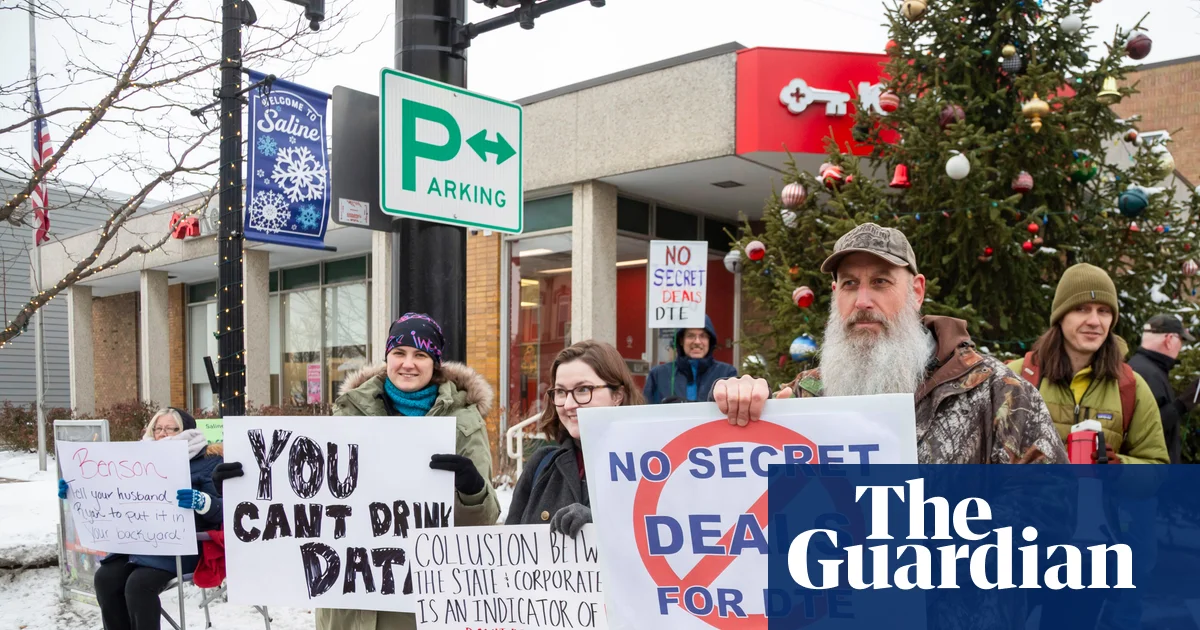
两项由公民发起的投票倡议旨在限制密歇根州强大的电力公用事业公司,因为居民认为政客未能解决围绕有争议的数据中心、高昂的能源费率和糟糕的供电可靠性等紧迫问题。
Two citizen-led ballot initiatives seek to rein in Michigan’s powerful electric utilities as residents say politicians have failed to address pressing issues around controversial datacenters, high energy rates and poor electric reliability.
周二,全州选民将考虑一项全国领先的禁令,禁止该州备受反感的受监管公用事业公司进行政治捐款。与此同时,该州最大城市之一安娜堡的组织者提议通过市政化电网来驱逐公用事业巨头DTE Energy。这将建立一家公共电力公司来输送能源。
On Tuesday, voters statewide will consider a nation-leading ban on political donations by the state’s deeply unpopular regulated utilities. At the same time, organizers in Ann Arbor, one the state’s largest cities, are proposing to banish utility giant DTE Energy by municipalizing the grid. It would establish a public power company to deliver energy.
这两项倡议并未协调一致,但都源于人们对能源输送和数据中心日益增长的不满。组织者表示,这些由公民发起的运动代表了测试案例,有助于衡量美国公众对国家政治势力强大的公用事业行业进行结构性变革的意愿,以及什么在法律上是可行的。
The two initiatives are not coordinated, but are borne out of increasing frustration over energy delivery and datacenters. The citizen-led campaigns represent test cases that could help gauge the US public’s appetite for structural change in the nation’s politically powerful utility industry, and what is legally possible, organizers say.
DTE和Consumers Energy是全美最大的公用事业公司之一,服务于密歇根州约80%的客户。它们支持暗钱非营利组织、政治行动委员会(PAC)和前台组织来攻击这些提案,而安娜堡市领导层中与公用事业公司结盟的盟友则提起了最后一刻的诉讼,试图阻止公共电力倡议。
DTE and Consumers Energy are among the nation’s largest utilities, and serve about 80% of Michigan’s customers. They have supported dark money non-profits, Pacs and front groups to attack the proposals, while their allies among city of Ann Arbor leadership have filed a last minute lawsuit to stop the public power initiative.
如果选民批准任一提案,一场激烈的法律斗争几乎是板上钉钉。反对政治支出禁令的公用事业结盟团体“保护密歇根言论自由”声称,该倡议违反了“联合公民诉联邦选举委员会案”裁决确立的言论自由保护,该裁决推翻了对公司向候选人捐款的限制。但该提案的设计者表示,他们已找到绕过“联合公民案”裁决的方法。
If voters approve either proposal, a bitter legal fight is virtually guaranteed. The utility-aligned group opposing the political spending ban, Protect MI Free Speech, has claimed the initiative violates free speech protections under the Citizens United ruling that struck down limits on companies’ donations to candidates. But the proposal’s architects say they have figured out a way around Citizens United.
无论如何,这些倡议凸显了公众对全国许多大型公用事业公司日益增长的不满,公用事业行业监督机构“能源与政策研究所”的研究员卡莉·温曼表示。
Regardless, the initiatives underscore the broader, growing discontent with many of the nation’s large utilities, said Karlee Weinmann, a researcher with the utility industry watchdog, Energy and Policy Institute.
“我们在多个层面看到,公众对高额账单、服务差劲和缺乏问责的愤怒,正在让公用事业公司的政治影响力运作开始瓦解,我认为这两项倡议各自都反映了这一点,”温曼说。
“What we’re seeing on a number of levels is the utilities’ political influence operations begin to break down under the weight of this public outrage over high bills, poor service, and lack of accountability, and I think both initiatives are reflective of that in their own ways,” Weinmann said.
联邦数据显示,密歇根州在停电频率和时长方面,长期位列全美最差之列。每年,DTE和消费者能源公司都会提议大幅涨价,它们与不受欢迎的数据中心结盟,因为这些耗能大户需要化石燃料资源,而这对公用事业公司来说利润丰厚。
Michigan consistently ranks among the nation’s worst in terms of frequency and length of outages, federal data shows. Each year, DTE and Consumers propose steep rate hikes, and they ally themselves with unpopular datacenters because the energy-hungry facilities demand fossil fuel resources that are profitable to utilities.
“密歇根州的问题‘是全国的一个缩影’,”“让金钱退出密歇根政治”组织执行董事会联合主席克里斯蒂·麦吉尔弗雷说。她表示,选民明白政治支出是问题的根源——在最近一个立法会期中,93%的立法者收受了公用事业行业的资金。
The problems in Michigan “are a microcosm of the nation”, said Christy McGillivray, the Michiganders for Money Out of Politics executive board co-chair. She said voters understand that political spending is a root cause of the problems – 93% of legislators took utility industry money in a recent session.
随着安娜堡公共电力倡议似乎已获得势头,且近期民调发现全州范围内对禁止政治支出的提案存在广泛的两党支持,71%的受访者表示支持,乐观情绪高涨。
Optimism is high as the Ann Arbor public power initiative appears to have momentum, and recent polling found broad bi-partisan support statewide for the political spending ban, with 71% of respondents backing it.
“背后有如此多的能量和势头,”麦吉尔弗雷说。“金钱政治让民选官员无法真正解决选民真正想要的东西,即生活成本和公用事业账单的真正解决方案,如果公用事业公司继续为他们的竞选活动提供资金,他们就不会这么做。” 州提案2将禁止受监管的燃气和电力公用事业公司,或拥有超过25万美元政府合同的公司进行政治捐款。它还将禁止这些公司的高管及其直系亲属,以及与这些公司有密切关系的其他人进行捐款。
“There’s so much energy and momentum behind this,” McGillivray said. “Pay-to-play politics keeps elected officials from actually tackling what voters really want, which is real solutions to the cost of living and utility bills, and they won’t if utilities keep bankrolling their campaigns.”State Proposition 2 would prohibit regulated gas and electric utilities, or companies with more than $250,000 in government contracts, from making political contributions. It would also block executives and their immediate family members, as well as other people with close connections to the companies, from making donations.
在安娜堡,提案E将设立一个新董事会,负责指导和管理建立市属电力公用事业公司。该公用事业公司在第二次投票后,将取代DTE能源公司成为该市的电力供应商。
In Ann Arbor, Proposal E would establish a new board to direct and manage the establishment of a city-owned electric utility. That utility, after a second vote, would replace DTE Energy as the city’s electric supplier.
安娜堡公共电力组织执行主任布莱恩·盖林格表示,DTE在安娜堡不受欢迎,原因包括服务不可靠、总体上抵制清洁能源以及缺乏问责制。他说,公共事业模式的吸引力在于对一项基本服务拥有直接的民主控制权。“究竟是一家私营的股东公司,还是你作为一部分的公共所有实体,掌控着你的电力供应——这是当下一个极其深刻的问题,”盖林格说。
Brian Geiringer, the executive director of Ann Arbor for Public Power, said that DTE is unpopular in Ann Arbor because of, among other reasons, the unreliable service, general resistance to clean energy and a lack of accountability. The appeal in the public utility model lies in the direct, democratic control over an essential service, he said. “The question of whether a private, shareholder corporation or publicly owned entity that you’re a part of is in control of your electricity – that is an extremely poignant question at this moment,” Gerringer said.
在给《卫报》的一份声明中,消费者能源公司发言人凯蒂·凯里指出,反对公用事业支出的运动及其环保非营利组织盟友,同样接受“黑钱”资助。
In a statement to the Guardian, Katie Carey, a Consumers Energy spokesperson, noted that the campaign against utility spending and their environmental nonprofit allies, also take dark money.
凯里写道:“该提案‘不会消除金钱在政治中的影响——它只会将影响力从密歇根州的公司转移给富有的全国性捐赠者和特殊利益集团,这类似于他们投票提案背后的黑钱资助者’。与此同时,当地雇主及其员工面临被边缘化的风险。”
The proposal “won’t eliminate money in politics – it will simply shift influence away from Michigan companies and toward wealthy national donors and special interests, similar to the dark money funders of their ballot proposal”, Carey wrote. “Meanwhile, local employers and their employees risk being sidelined.”
DTE及其关联的反2号提案组织“保护密歇根投票”未回应置评请求。但“保护密歇根投票”对《底特律新闻报》表示:“这在11月3日不会结束。我们认为……这将持续数年。而且保护人们的第一修正案自由将花费大量资金。”多重挫败感的交汇DTE和消费者能源是“受监管的垄断企业”,完全控制其服务领地,但它们的宏观业务决策——如涨价、电网维护决策和清洁能源规划——必须经州监管机构批准。
DTE and Protect MI Vote, its affiliated anti-Proposal 2 group, did not respond to requests for comment. But Protect MI Vote told the Detroit News: “This is not over on November 3. We believe … this is going to go on for years. And it’s going to cost a lot of money to protect people’s first amendment freedoms.”A confluence of frustrations DTE and Consumers are “regulated monopolies” with full control over their service territories, but their broad level business decisions, such as rate increases, decisions about grid maintenance and clean energy plans, must be approved by state regulators.
消费者权益团体指控,由州长任命人领导、负责监管公用事业的密歇根州公共服务委员会,在很大程度上允许这些公司将股东和行业利益置于居民客户需求之上。
Consumer advocacy groups allege that the Michigan public services commission, which regulates the utilities and is led by governor appointees, has largely allowed the companies to prioritize shareholder and industry interests over residential customers’ needs.
据业内专家称,DTE 数十年来未能充分跟进老旧设备更换、树木修剪维护及其他电网维护工作。这使得电网在强风暴面前极为脆弱。
DTE for decades failed to adequately keep up with replacing ageing equipment, tree trimming maintenance and other grid maintenance, industry experts have said. That left the grid vulnerable to strong storms.
许多问题源于共和党执政时期,2023 年民主党时隔 40 年首次全面控制州政府,带来了该党将约束公用事业公司的新希望。但这并未发生。
Many of the problems originated under GOP leadership, and in 2023 Democrats took full control of the state government for the first time in 40 years, ushering in new hope that the party would rein in the utilities. That did not happen.
州长格雷琴·惠特默及民主党领导层收到了来自 DTE 和 Consumers 的巨额捐款,公用事业公司反对的每一项立法提案均告夭折。
GretchenWhitmer, the state governor, and Democratic leadership received huge amounts of donations from DTE and Consumers, and every piece of legislation opposed by the utilities died.
麦吉尔夫雷表示,居民已对两党能否解决这些问题失去信心。她今年早些时候分别参加了州共和党的提名大会和一场“反国王”集会,在两个场合得到的反应相同。“他们对此感到兴奋,想了解更多,”麦吉尔夫雷说,“这给了我希望。” 建制派民主党人和共和党人对一系列数据中心提案的支持,使两党对公用事业公司的反对立场更加明确。
Residents have lost confidence that either party can solve these issues, McGillivray said. She spent a day earlier this year at the state Republican party’s nominating convention and a No Kings rally, and got the same response at each. “They were excited about it, they wanted to learn more,” McGillivray said. “It gives me hope.”Establishment Democrat and Republican political support for an onslaught of datacenter proposals helped crystallize the bi-partisan opposition to the utilities.
去年,在围绕一座由惠特默和唐纳德·特朗普共同支持、建在安娜堡郊外的数据中心展开激烈争斗之际,州长似乎对一位甲骨文高管说:“我们习惯了人们对我们说不,然后照做不误。” 此言论引发愤怒。
As an intense battle raged last year over a Whitmer- and Donald Trump-backed datacenter being built just outside Ann Arbor, the governor appeared to tell an Oracle executive: “We’re used to people telling us no and doing it anyway.”That drew outrage.
未来的法律斗争 在安娜堡,该市近十年来一直反对公共电力提案,转而实施了可持续能源公用事业(SEU)。该计划允许市民安装屋顶太阳能或发展社区清洁能源。但 DTE 仍拥有并维护电网、制定电价,公共电力倡导者认为这才是核心问题。
The legal battles ahead In Ann Arbor, the city has for nearly a decade opposed the public power proposal, and instead implemented a Sustainable Energy Utility (SEU). It allows the city residents to generate rooftop solar or community clean energy. But DTE still owns and maintains the grid and sets the rates, which public power advocates say are main problems.
该市还安插了一名前DTE高管来执掌市政电力公司,此举引发了清洁能源倡导者的质疑。该市本周提起的诉讼声称,“安娜堡公共电力”组织提出的是城市宪章修正案,而实际上新建一家公用事业公司需要的是全面的宪章修订。
The city also installed a former DTE executive to run the SEU, which drew questions from clean energy advocates. The city’s lawsuit filed this week claims that Ann Arbor for Public Power has proposed a city charter amendment, when a new utility actually requires a full charter revision.
“我们一定是快赢了,”格里林格在得知诉讼后对当地媒体表示。他说,密歇根州总检察长已经认定,他们的提案只需要宪章修正案,而非全面修订。
“We must be winning,” Gerringer told local media when he learned of the lawsuit. He said that Michigan’s attorney general has already found that their proposal only requires a charter amendment, not a full revision.
与此同时,对公用事业公司政治支出的禁令是刻意设计的,目的是经受住援引“联合公民”案的法律挑战。该禁令仿照了其他州的法律,那些法律禁止与政府有合同关系或与政府密切合作的公司进行政治捐款。新提案并未单独针对公用事业公司,而是将目标对准所有持有至少25万美元州合同的公司。
Meanwhile, the ban on utility political spending was intentionally designed to survive a legal challenge that invokes Citizens United. It is modeled after state laws elsewhere that prohibit companies that have government contracts, or which work closely with governments, from making political contributions. Instead of singling out utilities, the new proposal targets all companies with at least $250,000 in state contracts.