
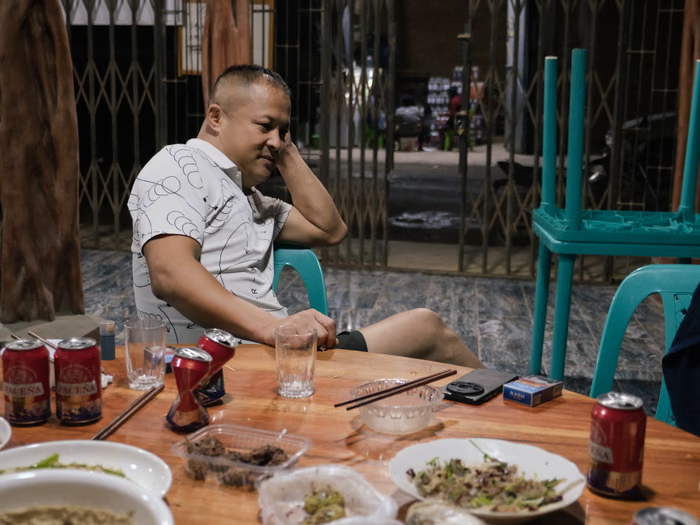
五花肉下锅发出滋滋声,浓郁的酱油与焦糖香气弥漫厨房。来自中国黑龙江省的中年男子张长春(音),正在玻利维亚亚马孙地区的小镇马亚亚一个温暖的夜晚,为朋友们烹制晚餐。
The pork belly hits the oil with a sizzle, and a rich aroma of soy sauce and caramelising sugar fills the kitchen. Zhang Changchun, a middle-aged man from China’s Heilongjiang province, is cooking dinner for his friends on a warm evening in Mayaya, a small town in the Bolivian Amazon.
“玻利维亚是我的快乐之地,”他用普通话说道,将菜肴端上已摆满猪蹄、鸭翅和红烧鱼的餐桌。在这家小餐馆里,六七名中国男子大多夜晚聚在此处吃喝打麻将。
“Bolivia is my happy place,” he says in Mandarin as he adds the dish to a table overflowing with pork trotters, duck wings and braised fish. In this small restaurant, a group of half a dozen Chinese men gathers most nights to eat, drink and play mahjong.
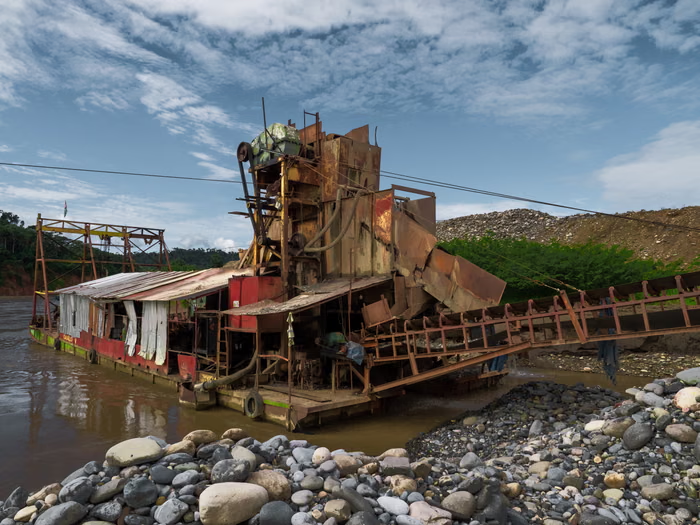
每个人在小镇蓬勃发展的淘金生意中都扮演着关键角色。有的做投资人或矿工;有的负责进口物资设备。他们共同经营着小镇大部分采矿业务:约20座露天矿和12艘挖泥船,雇佣约2000名玻利维亚工人和200名中国工人。
Each man plays a critical role in the town’s booming gold business. Some work as investors or miners; others import supplies and equipment. Together, they run most of the town’s mining operations: about 20 open-pit mines and 12 dredge boats, operated by about 2,000 Bolivian and 200 Chinese workers.
餐桌旁气氛热烈,男子们抽着高档中国烟、喝着玻利维亚啤酒,为下午的麻将局争论不休。几乎所有谈话都围绕着钱。
The table gets rowdy as the men debate their afternoon games over high-end Chinese cigarettes and Bolivian beer. Almost every conversation revolves around money.
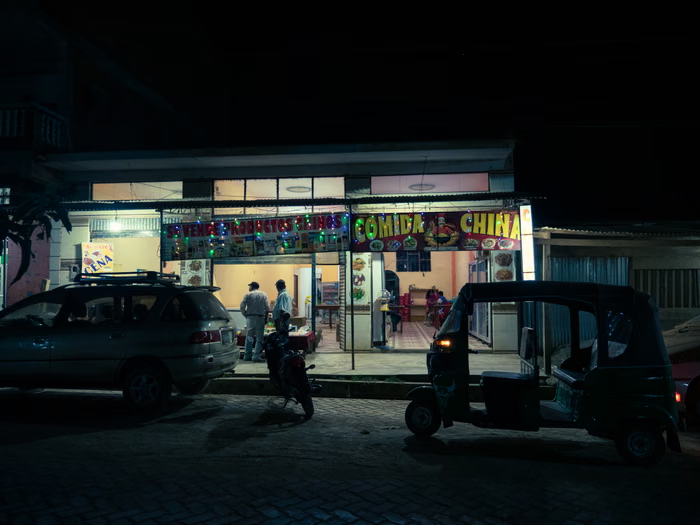
不到十年,中国私营矿企将这座曾经偏远的亚马孙小镇变成了淘金投机中心。主街两旁林立着矿山设备店、酒店和中餐馆。
In less than a decade, private Chinese mining companies have turned this once-remote Amazonian town into a hub of gold speculation. Mining equipment stores, hotels and Chinese restaurants now line the main street.
“我们开发了这个小镇,”张长春大口喝啤酒、啃猪肉间隙说道,“没有中国人,就没有今天的马亚亚。” 随着创纪录的金价推动亚马孙森林砍伐和暴力冲突,这些小规模私营采矿业务正收紧中国对世界黄金储备的掌控。《卫报》记者与中国矿工、投资人和贸易商共同度过了五天。
“We developed this town,” Zhang says between gulps of beer and bites of pork. “Without the Chinese, there would be no Mayaya today.”As record gold prices drive Amazonian deforestation and violent conflict, these small-scale, private mining operations are tightening China’s grip on the world’s gold reserves. The Guardian spent five days with Chinese miners, investors and traders.
玻利维亚亚马孙地区长期吸引外资,从橡胶、木材产业到20世纪50年代的北美矿企。但如今,中国采矿业正定义着一个新的开采时代,一个由商品、机械和劳动力构成的全球网络,往往在玻利维亚法律之外非法繁荣。
The Bolivian Amazon has long attracted foreign capital, from rubber and timber industries to North American mining companies in the 1950s. But now, Chinese mining is defining a new era of extraction, as a global network of goods, machinery and labour often thrives illegally under Bolivian law.
2014年的一项国家法律将采矿权限制在合作社和个体矿工、国家控股企业以及国内外私营公司范围内。此类外国公司必须在玻利维亚设有注册办事处,并以自身名义经营。国家允许外国公司与本国公司之间建立合资企业、租赁和风险共担协议,但只能通过公私合同进行,且国家须在其中持股。
A 2014 national law limits mining rights to cooperatives and independent miners, state-controlled firms and domestic and foreign private companies. Such foreign firms must have a registered Bolivian office and operate in their own name. The state permits joint ventures, leases and risk-sharing agreements between foreign and national firms, but only through public-private contracts, in which the state is a shareholder.
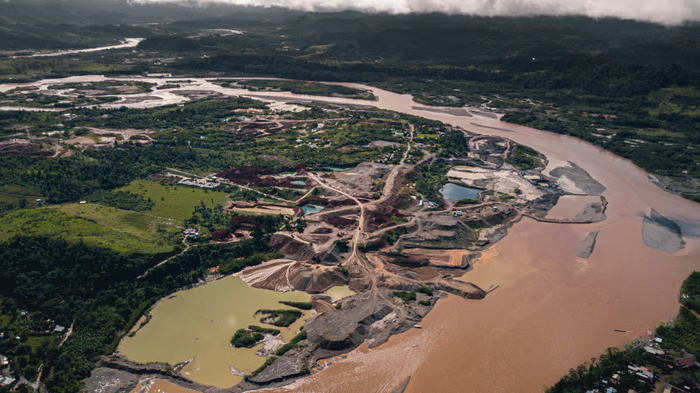
在此框架之外经营的中国矿业公司属于违法经营。根据2016年的一项法律,合作社若与外国公司签订合同、租赁或共担采矿特许权风险,也可能面临被征收的风险。
Chinese mining firms operating outside this framework act unlawfully. Under a 2016 law, cooperatives also risk expropriation if they contract, lease or share mining-concession risks with foreign firms.
中国金矿开采者于2005年首次抵达马亚亚,但大规模移民潮出现在2017年,此前中国国家发展和改革委员会以环境和国防方面的担忧为由,禁止了国内的小规模金矿开采。这场整治行动促使许多矿工和投资者到全球各地寻找工作,并推动数家公司从国内已关闭的矿山招募工人,前往玻利维亚新开设的矿场工作。
Chinese goldminers first arrived in Mayaya in 2005, but it was in 2017 that a major wave of immigration took place, after China’s national development and reform commission banned domestic small-scale gold mining, citing environmental and national defence concerns. The crackdown sent many miners and investors searching for work globally, and spurred several companies to hire workers from mines closed back home to work at newly opened operations in Bolivia.
其中之一是深圳维克斯塔进出口公司,该公司至少在2011年就已在玻利维亚经营。按照官方说法,该公司并不从事采矿作业,在供应商名录中仅列出印刷材料和制造业。
One of those firms is Shenzhen Vicstar Import and Export, which has operated in Bolivia since at least 2011. Officially, the firm does not carry out mining operations, listing only print materials and manufacturing in a supplier directory.
活动人士称,这些公司规避法律,“躲在”合作社背后在玻利维亚采矿业经营。表面上看,外国投资者与当地合作社签订服务合同,提供资金和机械。但环境智库Cedla的矿业研究员阿尔弗雷多·萨科内塔表示,实际上他们从头到尾控制着矿山——选择矿址、雇用工人、提供机械、出口黄金,并拿走75%至80%的利润。
Campaigners say these companies skirt the law, “hiding behind” cooperatives to operate in Bolivia’s mining industry. On paper, foreign investors sign service contracts with local cooperatives, provide capital and machinery. In reality, they control the mines end to end, selecting sites, hiring workers, providing machinery, exporting gold and taking 75% to 80% of profits, says Alfredo Zaconeta, a mining researcher at environmental thinktank Cedla.
扎科内塔补充道,在这些合同背后,中国投资者逃避法律责任,因为国家缺乏资源和政治意愿来监管采矿游说团体。他说,国家极少(甚至从不)执行现有的所有权和许可证规定。
Behind these contracts, Zaconeta adds, Chinese investors evade legal responsibilities as the state lacks the resources and political will to oversee the mining lobby. He says it rarely, if ever, enforces existing ownership and permit rules.
结果,在玻利维亚,一整套为这种移民服务的经济体系应运而生,从拉巴斯专门办理中国工作签证的律师,到一家兼作非正式银行、兑换玻利维亚诺和人民币的当地电话店。在一些地区,中国矿工招募亲朋好友,形成致力于当地采矿业的同乡聚落。
As a result, in Bolivia, an entire economy has emerged to serve this migration, from La Paz lawyers specialising in Chinese work visas to a local phone store that doubles as an informal bank for exchanging bolivianos and renminbi. In some regions, Chinese miners recruit friends and family, forming home town clusters dedicated to the local mining industry.
在马亚亚的主街上,商店出售各种中国商品——从瓶装茶、香烟到猪大肠。中国投资者杨燕斌说:“只要你有钱投资,这个国家就欢迎你。我们把所有钱直接装进自己口袋。”常乐全(音)是另一位在马亚亚的中国投资者,这位终身矿工从十几岁起就在中俄边境开采黄金。2017年,在核实了马亚亚的金矿品质后,他从中国订购了120个集装箱并开始组装机械。
Along Mayaya’s main street, shops sell all things Chinese – from bottled tea and cigarettes to pork intestines. Yang Yanbin, a Chinese investor, says: “As long as you have money to invest, this country welcomes you. We stuff all the money straight into our pockets.”Chang Yuequan, a lifelong miner who has mined gold along the China-Russia border since his teens, is another Chinese investor in Mayaya. In 2017, after verifying Mayaya’s gold quality, he ordered 120 shipping containers from China and began assembling machinery.
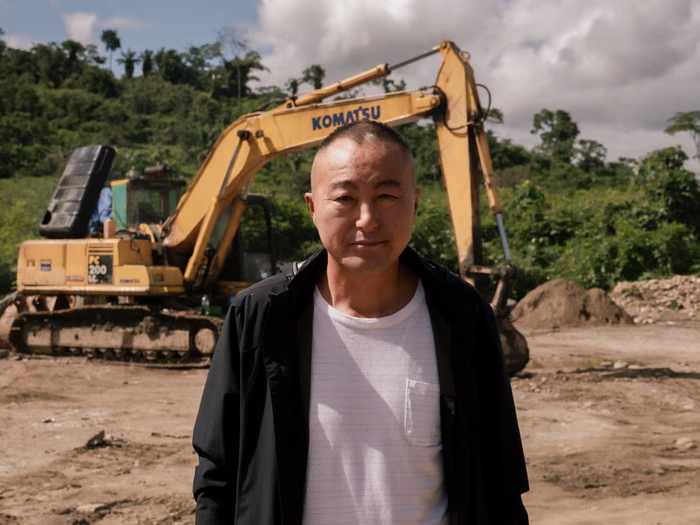
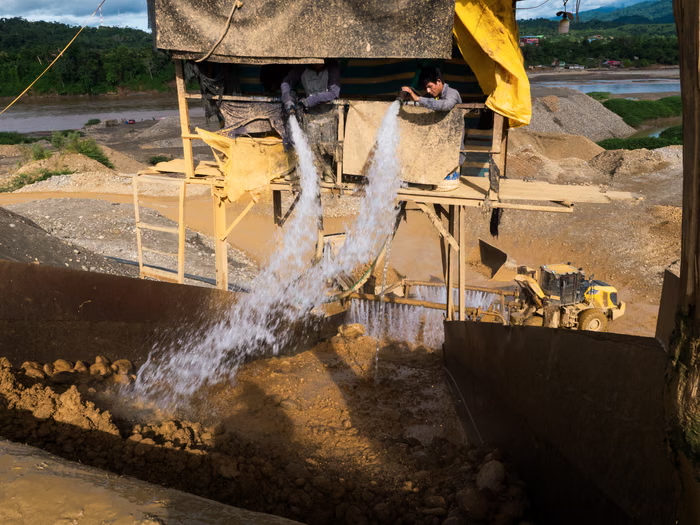
2025年,他在卡卡河旁开设了最新的矿山,并以西班牙语将其命名为“百香果”,指的是覆盖山坡的野生藤蔓。在一次定期视察中,常乐全和一名中国员工看着一台挖掘机在一个巨大的坑里抓取泥土装入装载机,随后玻利维亚工人用高压水枪冲刷。
In 2025, he opened his newest mine next to the Kaka River, which he named “Passion Fruit” in Spanish, referencing the wild vines covering the hillside. On one of his periodic visits, Chang and a Chinese employee watched an excavator in a huge pit claw soil into a loader before Bolivian workers blasted it with high-pressure hoses.
张(Chang)说,工人们随后将矿浆与汞混合,再烧毁以生产最终产品:巨大、块状的金块。转身对着矿场的中国经理,张指着山坡绿色的那一半说:“这整座山都是我们的。那边也挖。”
Chang says the workers then mix the slurry with mercury, then burn it to produce the final product: large, lumpy gold nuggets. Turning to the mine’s Chinese manager, Chang points to the green half of the hill and says: “This whole mountain is ours. Excavate that too.”
张的朋友兼同事何子健(He Zijian)在金价飙升时将黄金从马亚亚(Mayaya)运往拉巴斯(La Paz),他证实了中国在该地区的影响力。他说:“所有东西——哪怕是最微小的螺丝——都是从中国进口的。”这笔贸易利润极高。马亚亚的大部分黄金通过非法出口最终流向迪拜。据何子健称,中国中间商将金条带到玻利维亚首都拉巴斯,再走私到海湾国家。他说,在那里,黄金在迪拜最大的黄金市场穆尔希德市场(Murshid Bazar)出售。
Chang’s friend and colleague, He Zijian, who ships gold from Mayaya to La Paz during price surges, confirms the Chinese influence in the region. He says: “Everything – down to the tiniest screws – is imported from China.”The trade can be highly lucrative. Much of the gold from Mayaya ends up in Dubai via illegal exports. According to He, Chinese middlemen bring the bullion to Bolivia’s capital, La Paz, before smuggling it to the Gulf state. There, he says, the metal is sold at Murshid Bazar, Dubai’s largest gold market.
迪拜的黄金常被进一步运往瑞士,在那里被“洗白”进入合法供应链,并销往西方市场。7月,警方在玻利维亚圣克鲁斯(Santa Cruz)逮捕了一名准备飞往迪拜的玻利维亚男子。他四个手提箱据称装有189.5公斤(418磅)高纯度黄金,价值约1850万英镑。
Gold in Dubai is often shipped further to Switzerland, where it is laundered into legal supply chains and sold in western markets. In July, police arrested a Bolivian man set to depart to Dubai from Santa Cruz, Bolivia. His four suitcases allegedly contained 189.5kg (418lb) of high-purity gold worth roughly £18.5m.
虽然被捕男子可能与中国矿企无关,但当局表示,他的被捕凸显了该国非法出口黄金的巨大数量。
While the man arrested may not have links to Chinese mining companies, authorities say his arrest highlights the vast quantities of gold illegally exported from the country.
玻利维亚矿业监管机构Ajam主任哈伊梅·萨纳布里亚(Jaime Sanabria)估计,虽然玻利维亚每年生产约100吨黄金,但只有约10%合法出售,导致玻利维亚政府和民众损失数十亿(美元)收入。
Jaime Sanabria, director of Bolivia’s mining regulator, Ajam, estimates that while Bolivia produces about 100 tonnes of gold a year, only about 10% is sold legally, costing the Bolivian government and the country’s people billions in lost revenue.
除了非法出口,淘金热还带来了恶劣的劳动条件和快速的环境退化。据两名挖泥船矿工称,玻利维亚工人从事相同工作的报酬通常只有中国工人的四分之一。
Alongside illegal exports, the gold-mining boom has brought poor labour conditions and rapid environmental degradation. According to two dredge-boat miners, Bolivian workers are routinely paid a quarter of what Chinese workers doing the same jobs earn.
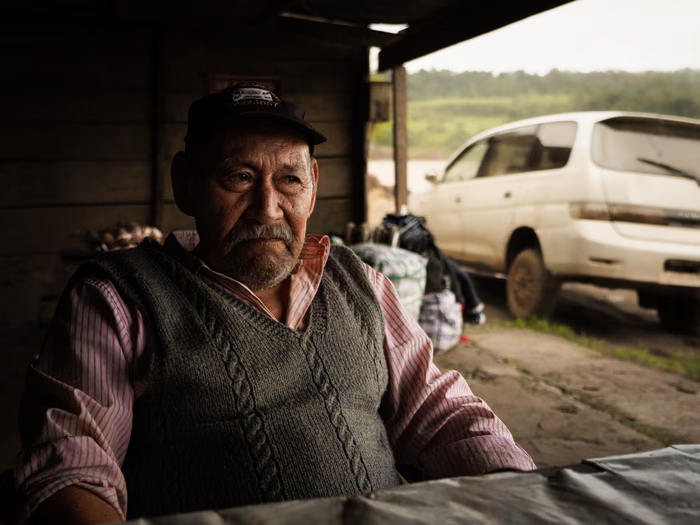
“他们什么都没给我们留下,”终身居住在马亚亚的维克托里亚诺·皮洛伊说。“钱不留在这里——这就是我们贫穷的原因。”在周边的原住民社区,汞中毒变得日益普遍。在已经深受气候危机、森林砍伐和野火重创的情况下,居民往往难以通过农业和渔业维持生计。
“They’ve left nothing for us,” says lifelong Mayaya resident Victoriano Piloy. “The money doesn’t stay here – that’s why we’re poor.”In surrounding Indigenous communities, mercury poisoning has become increasingly common. Already hit hard by the climate crisis, deforestation and wildfires, residents often struggle to make a living through agriculture and fishing.
许多人最终转向采矿,加剧了汞污染。随着中国公司控制了河流,玻利维亚的手工作业矿工越来越多地进入马迪迪国家公园,这是世界上生物多样性最丰富的地区之一。由此产生了紧张局势。8月,马亚亚以南一个农村村庄的居民扣押并焚烧了据称属于一家中国公司的采矿机械,谴责其造成的环境危害。附近的市镇也已禁止金矿开采。
Many ultimately turn to mining, compounding mercury pollution. With Chinese companies controlling the river, Bolivian artisanal miners increasingly enter Madidi national park, one of the world’s most biodiverse. There have been tensions. In August, residents of a rural village south of Mayaya seized and burned mining machinery allegedly owned by a Chinese company, denouncing their environmental harms. Nearby municipalities have also banned gold mining.
“环境影响是毁灭性的,因为没有人进行检查或执行规则,”矿业监管官萨纳布里亚说,并补充称全国约80%的采矿活动是非法的。
“The environmental impact is devastating because no one is inspecting or enforcing the rules,” says Sanabria, the mining regulator, adding that about 80% of mining in the country is illegal.
虽然政府每年都进行环境审计,但萨科内塔表示,中国投资者通常会提前收到通知,并在检查前进行清理。玻利维亚金矿开采的分散性质,全国有3117个合作社,使得国家监管变得复杂。
While the government conducts environmental audits every year, Zaconeta says Chinese investors commonly receive advance notice and clean up before inspections. The decentralised nature of gold mining in Bolivia, with 3,117 cooperatives nationwide, complicates state regulation.
“这只是一份善意声明;无法核实。大家都知道他们在违法,”萨科内塔说。
“It’s just a good faith declaration; it can’t be verified. Everyone knows they are breaking the law,” Zaconeta says.
矿业冶金部未回复置评请求。深圳市维斯达进出口有限公司和玻利维亚全国金矿合作社联合会也被征求了意见。
The Ministry of Mining and Metallurgy did not respond to requests for comment. Shenzhen Vicstar Import and Export Co and the Regional Federation of Gold Mining Cooperatives of Bolivia were also approached for comments.
尽管采矿业面临批评,但在该国新任保守派总统罗德里戈·帕斯的领导下,趋势正朝着更宽松的政策发展。5月,帕斯与采矿合作社签署了一项协议,降低了在保护区和原住民领地采矿的门槛。
Despite the criticism directed at the mining industry, under the country’s new conservative president, Rodrigo Paz, the trend is toward even more permissive policies. In May, Paz signed an agreement with mining cooperatives that reduces barriers to mining in protected areas and Indigenous territories.
然而,政府的激励措施可能不足以确保外资企业在玻利维亚矿区的长期存在。Mayaya早期的中国投资者之一常岳全毕生追寻世界上最优质的黄金,从俄罗斯到西藏,再到朝鲜,最终进入玻利维亚亚马逊地区。十二年过去,他已知道Mayaya的黄金正在枯竭。他预计在五六年后——当他的船只停止运营时——会转向下一个目的地。
Yet, government incentives may not be enough to ensure foreign companies’ long-term presence in Bolivia’s mines. Chang Yuequan, one of Mayaya’s early Chinese investors, has spent his life chasing the world’s best gold from Russia to Tibet and North Korea, and finally into the Bolivian Amazon. Twelve years in, he knows Mayaya’s gold is depleting. He expects to move on to his next destination in five or six years – once his boats stop operating.
在一次中国投资者常聚的晚宴上,喝了至少十二瓶啤酒后,一位投资者总结了他们的全球影响力:“你会在世界的每个角落遇到中国人。”随后他的朋友笑着说:“我们就这么强大——我们可以征服世界!”
At least a dozen beers into one of the Chinese investors’ frequent dinners, one investor sums up their worldwide reach: “You’ll encounter Chinese people in every corner of the world.”Then his friend jokes: “We are just powerful like that – we could conquer the world!”