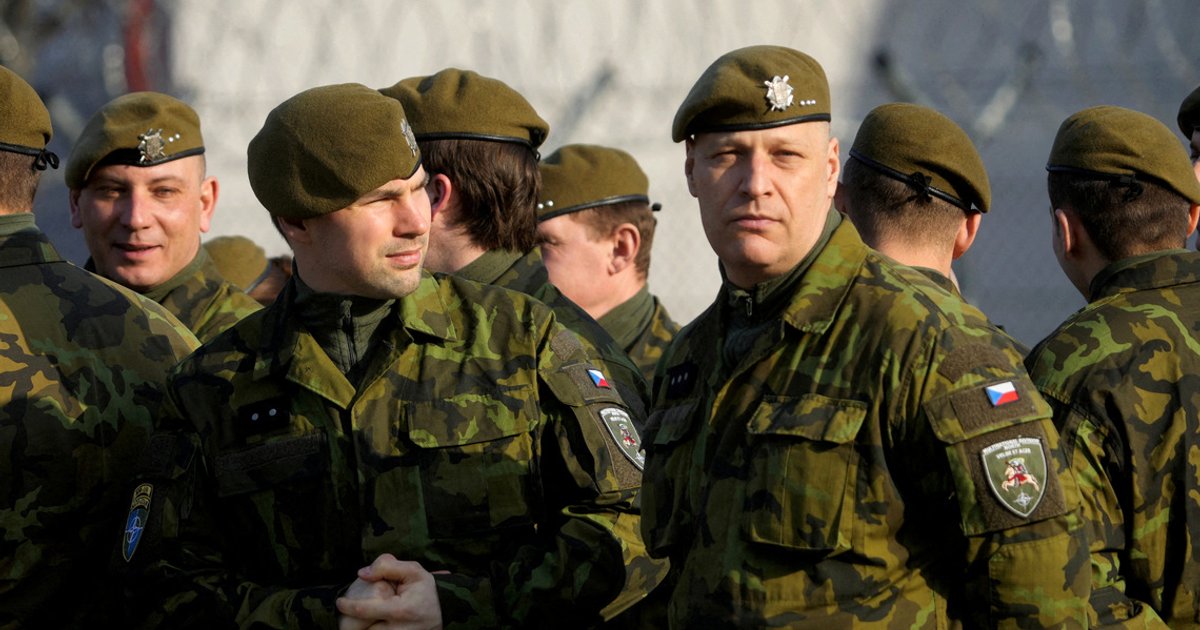
布拉格,11月3日电 据周二发布的一份新的军队发展战略显示,捷克军队未能达到北约能力目标,人员和物资短缺,尽管安全环境正在恶化,但未来几年的改善将缓慢。
PRAGUE, Nov 3 - The Czech army is not meeting NATO capability targets, is short of personnel and materials, and improvement in the coming years will be slow despite a worsening security environment, a new army development strategy released on Tuesday showed.
近年来,捷克共和国的国防开支一直低于北约规定的国内生产总值(GDP)2%的最低标准,现任政府在2027年至2029年期间不计划将开支增加到2%以上。
The Czech Republic has been spending under the NATO minimum of 2% of gross domestic product on defence in recent years, and the current government does not plan any increase beyond the 2% level in 2027-2029.
捷克的做法与波罗的海国家、波兰或德国等北约国家形成对比,这些国家为应对俄罗斯在乌克兰的战争,一直在增加国防开支。该战略称,俄罗斯对北约和欧盟国家发动攻击的可能性日益增加。
The Czech approach is in contrast to NATO countries such as the Baltic states, Poland or Germany, which have been beefing up defence spending in response to Russia's war in Ukraine. The strategy said an attack by Russia on NATO and EU countries was increasingly likely.
该战略于周一获政府批准,文件指出:“捷克共和国未能满足70%的北约能力建设目标,而在最需要资源的领域,落后了5到10年。”文件称:“这一赤字限制了捷克军队履行集体防御任务的能力。”
"The Czech Republic is not meeting 70% of NATO capability targets buildup, while in those that require the most resources it lags by 5 to 10 years," said the strategy, approved by the government on Monday. "This deficit limits the Czech army's ability to meet collective defence tasks," it said.
加速开支在后期 该战略列出了增加人员的需求,尽管仅计划到2030年增至3.2万人,而目前约为2.6万人;扩充防空和反无人机防御;加快技术适应;并加强领土防御能力。
ACCELERATED SPENDING LATER The strategy spelled out needs to beef up personnel, though just to 32,000 by 2030 from the current around 26,000, expand air and anti-drone defence, speed up technological adaptation and strengthen the ability to defend territory.
北约去年同意将成员国在核心国防上的年支出提高至GDP的3.5%,并额外增加1.5%用于基础设施建设,目标年限为2035年,但捷克政府的计划直到其任期结束的2029年都未体现增支,并预计增至3.5%将只在2030年至2035年间实现。
NATO agreed last year to raise annual spending by members on core defence to 3.5% of GDP, plus an additional 1.5% on infrastructure by 2035, but the Czech government's plan does not reflect increases until the end of its term in 2029, and foresees the rise to 3.5% to come only in 2030-2035.
该战略称,直到2030年,资金几乎将完全用于已批准的项目,如采购24架F-35战机、“豹”式坦克和近程至中程防空系统,这将减缓中型旅、无人系统和反无人机防御的建设。
Until 2030, funding would go almost exclusively to already approved projects such as purchases of 24 F-35 fighters, Leopard tanks and short- to medium-range air defence, slowing the buildup of a medium brigade, unmanned systems and anti-drone defence, the strategy said.
总理安德烈·巴比什的政府自上台以来,因国防开支问题面临批评,批评者包括美国驻北约大使马修·惠特克,他在9月表示,未看到更多进展令人失望。前将军兼北约官员、总统彼得·帕维尔批评该前景不足。
Prime Minister Andrej Babis' government has faced criticism on defence spending since taking power, including from the US ambassador to NATO, Matthew Whitaker, who said in September it was disappointing not to see more progress. President Petr Pavel, a former general and NATO official, criticised the outlook as insufficient.
帕维尔周一在电视直播记者会上对记者说:“该战略……即使在这一相对较长的时间跨度内,也未能达到这些根本目标。”
"The strategy ... does not meet these fundamental aims even in this relatively long horizon," Pavel told reporters in a live television briefing on Monday.
总理安德烈·巴比什周一表示,对他来说关键在于更快招募部队,并专注于空中和反无人机防御。
Prime Minister Andrej Babis said on Monday that the key for him was recruiting troops faster and focusing on air and anti-drone defence.