这种被称为“产妇产床垫”的装置,正在帮助解决世界上最棘手的健康问题之一。
The maternal drape, as it is called, is helping to solve one of the world’s most intractable health problems.
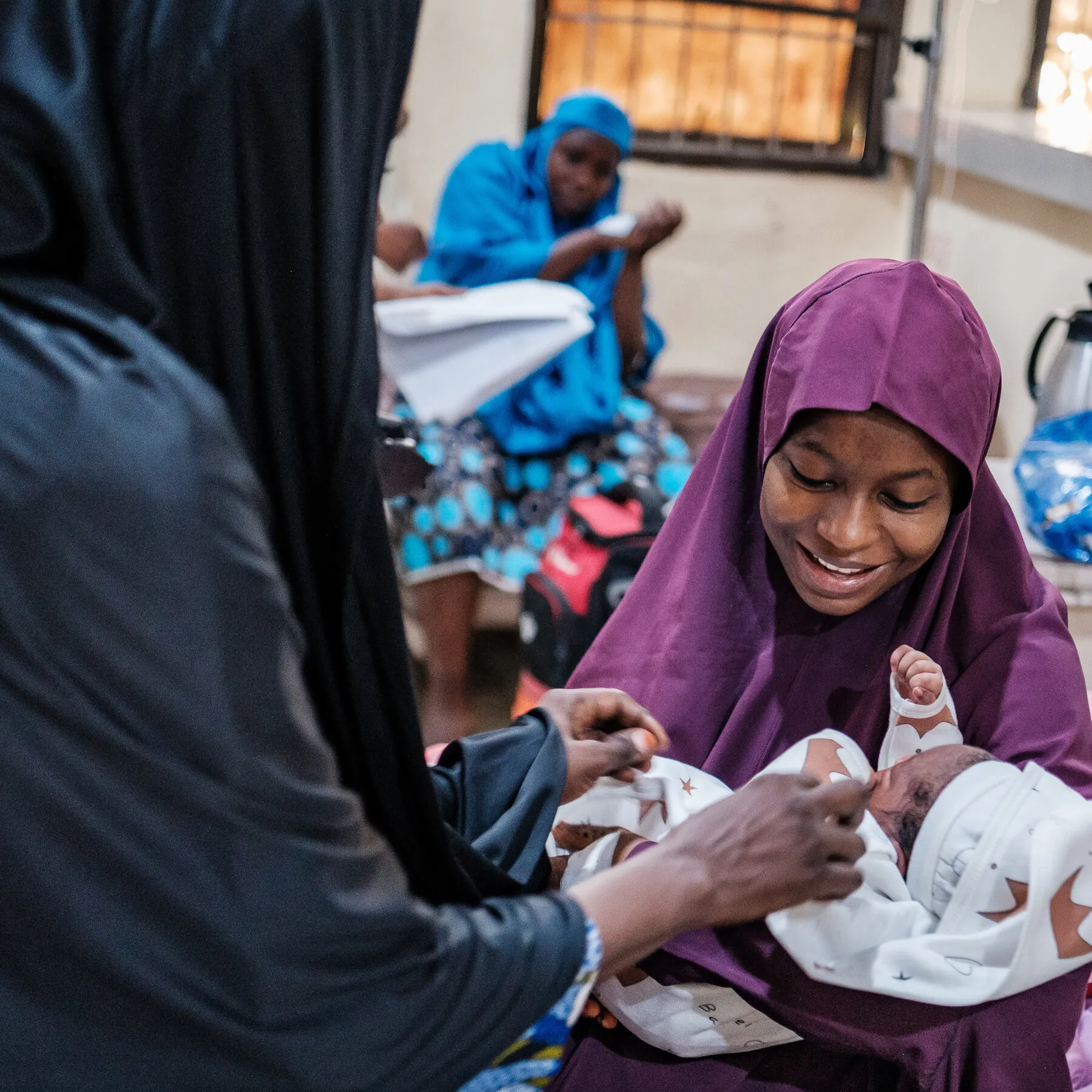
2024年9月,在尼日利亚北部城市卡诺的阿米努·卡诺教学医院产房里,胡赛娜·巴拉拉贝抱着新生儿阿比德,向姐妹们展示这个长着红润脸颊的男孩。几个小时前,她差点因大出血丧命,此刻却平静地躺在嘈杂的病房床上,浑然不知自己刚刚经历了一场生死劫难。
Husaina Balarabe with her newborn, Aabid, in the maternity ward at the Aminu Kano Teaching Hospital in Kano, Nigeria, in September. Credit...Taiwo Aina for The New York Times Supported by A few hours after she nearly bled to death, Husaina Balarabe was serenely unaware that her life had been in peril.
现年26岁的验光师巴拉拉贝女士经历了产后出血,这是分娩的一种并发症,也是全球孕产妇死亡的首要原因。
She cuddled her newborn baby, a lush-cheeked boy she had named Aabid, and showed him off to her sisters from her bed in a noisy hospital delivery ward in the northern Nigerian city of Kano.
她之所以没死,是因为接生助产士使用了一种低成本、低技术含量的干预手段。这种手段最早是在尼日利亚及其他非洲最贫困地区的产房中开创应用的,如今正在整个非洲大陆挽救生命。
Ms. Balarabe, a 26-year-old optometrist, had experienced a postpartum hemorrhage, a side effect of childbirth that is the leading cause of maternal death around the world. She did not die because her midwife used a low-cost, low-tech intervention that was pioneered here and in other maternity wards in some of Africa’s poorest places, and that is now saving lives across the continent.
这种装置是一片薄薄的绿色塑料,大小如饼干烤盘,末端带有一个收集袋,被称为“产妇产床垫”。分娩时它垫在巴拉拉贝女士身下,收集袋垂在床尾。接生婴儿阿比德的助产士看到血液流入收集袋,并迅速达到并超过了危险线——300毫升(约合10盎司),这是收集袋上标记所指示的数值。护士迅速抓过停放在拥挤产房中央的急救推车,呼叫援助并立即展开抢救。
The device was a piece of thin, green plastic the size of a cookie sheet with a pouch at its end, called a maternal drape. It lay beneath Ms. Balarabe as she delivered, and the pouch hung off the end of the bed. The midwife who caught baby Aabid saw blood running into the pouch and quickly reaching and surpassing the danger level — 300 milliliters (or 10 ounces), indicated by a mark on the pouch The nurse swiftly grabbed a cart stationed in the middle of the packed maternity ward, called for help and went to work.
从推车上,她取出一支催产素注射剂,通过静脉注射促使巴拉拉贝女士的子宫收缩。她又加用了一剂氨甲环酸,以促进凝血。她按摩巴拉拉贝女士的腹部,进一步促进子宫收缩,同时另一名护士开始输注静脉液体以恢复血容量。出血逐渐减缓,几分钟后彻底停止。
From the cart, she took a syringe of the drug oxytocin and injected it through an IV to get Ms. Balarabe’s uterus to contract. She added a dose of tranexamic acid, to prompt clotting. She massaged Ms. Balarabe’s abdomen, encouraging more uterine contractions, while another nurse started IV fluids to restore her blood volume. The bleeding slowed, and after a couple of minutes, it stopped altogether.
一切发生得如此迅速而顺利,以至于这位新妈妈根本不知道有什么值得担心的。
It was all so swift and smooth that the new mother had no idea there was cause for alarm.
每10位分娩的女性中就有1位会经历产后出血,每年至少有7万名女性因此丧生。几乎所有这些女性都身处低收入国家;因分娩死亡的女性在尼日利亚比在任何其他国家都多。
One in every 10 women who give birth experiences postpartum hemorrhage, and at least 70,000 women die from it each year. Almost all of those women are in low-income countries; more women die giving birth in Nigeria than in any other country.
产妇死亡率是全球卫生领域最棘手的问题之一,因为——直到最近——主要解决方案都需要熟练的医护人员来识别高危产妇,并在分娩突然变得危险时迅速干预。但没有廉价或简单的方法来培养助产士和产科医生,也没有办法说服他们留在医疗资源匮乏的农村地区,而不去城市或其他收入更高的国家。
Maternal mortality is one of the most bedeviling problems in global health because — until recently — the main solutions have required skilled health care personnel to identify women at risk and to intervene swiftly when a delivery suddenly becomes dangerous. But there is no cheap or simple way to produce midwives and obstetricians, or to convince them to stay in underserved rural areas when they could earn more in cities or other countries.
产后出血发生在婴儿出生后,当胎盘从母亲体内剥离,留下数百条敞开并喷涌着血液的血管。在正常分娩中,子宫会迅速收缩,压力使这些血管闭合。但如果这种收缩没有发生、发生得太慢,或者胎盘残留体内,血液就会不停地流出,女性可能在短短10分钟内死亡。
Postpartum hemorrhage occurs after a baby is born, when the placenta separates from the mother’s body, leaving hundreds of blood vessels open and pumping blood. In a normal delivery, the uterus quickly contracts, and the pressure closes those vessels. But if that contraction doesn’t occur or happens too slowly, or if pieces of the placenta are left behind, blood pours out without stopping, and the woman can die in as little as 10 minutes.
分娩时有些出血是正常的。许多女性死亡的原因在于,判断某人是否失血过多竟然出奇地困难。研究发现,即使是接生过数百个婴儿的助产士和医生,也始终低估女性的失血量。
Some bleeding is normal in childbirth. The reason many women die is that it is surprisingly difficult to tell if someone is losing too much blood. Research found that even midwives and doctors who have delivered hundreds of babies consistently underestimate how much blood a woman has lost.
“沙发上、地板上、垫子上、我的衣服上、她的衣服上,到底有多少血?是300毫升、500毫升还是1000毫升?”卡诺拜耶罗大学产科与妇科教授哈迪扎·加拉丹奇问道,她主导了尼日利亚关于该集血囊使用情况的研究。“很多时候,我们没有意识到产妇失血了多少,因为我们靠目测评估,而这非常、非常主观。”等到接生人员决定该采取行动时,往往为时已晚。
“The amount of blood on the couch, on the floor, on the pads, on my clothes, on her clothes, is it 300 or 500 or 1000 milliliters ?” asked Dr. Hadiza Galadanci, a professor of obstetrics and gynecology at Bayero University in Kano who oversaw the Nigerian research into use of the drape. “A lot of times, we don’t realize the amount of blood that a woman has lost because we make a visual assessment and it’s very, very subjective.”By the time those delivering a baby decide it’s time to act, it’s often too late.
这种集血囊目前正在尼日利亚全面推广。但它只是挽救巴拉拉贝生命的干预措施的第一步。接下来是当集血囊装满血液、情况危急后的一系列治疗。这些步骤单独看都不新鲜,但几年前,研究人员测试了如果将它们同时、迅速实施会发生什么——按摩、催产素、氨甲环酸、静脉输液——发现连同集血囊一起,这些干预措施使医院内产后出血死亡率降低了约三分之二。
The drape is now being rolled out across Nigeria. But it was only the first part of the intervention that saved Ms. Balarabe. Next came the series of treatments after the pouch became dangerously full of blood. None of those steps are new, but a few years ago, researchers tested what happened when they were all done at once — massage, oxytocin, tranexamic acid, IV fluids — and quickly. They found that, together with the drape, these interventions cut deaths from postpartum hemorrhage in hospitals by about two-thirds.
过去,医护人员受训后的应对方式是:先尝试按摩,然后等待20分钟观察出血是否停止。如果没停,再用一种药,又等20分钟。
Previously, health workers had been trained to respond by first trying massage and then waiting 20 minutes to see if bleeding stopped. If it didn’t, they tried a drug and waited 20 more.
当所有干预措施作为一个“组合包”同时实施时,大多数产妇的出血会迅速停止。“就像关掉了水龙头,”加拉丹奇说。
When all the interventions are done together, in what is called a “bundle,” bleeding stops quickly in most women. “It’s like turning off a tap,” Dr. Galadanci said.
如果出血仍不止,最后一步是升级处理:将产妇送入手术室,或转诊至有能力通过手术止血的医疗机构。
If it doesn’t stop, the last step is escalation: getting the woman into an operating room or transferring her to a facility that has staff who can stop the bleeding surgically.
“自从我们开始实施这套方案以来,没有发生过一例产后出血死亡病例,”宾塔·加尔巴说,她在阿米努·卡诺教学医院产房担任护士长已有七年。
“We have not had one death from postpartum hemorrhage since we started this,” said Binta Garba, who has been the head nurse in the labor ward at Aminu Kano Teaching Hospital for seven years.
每周八九次,她的护士之一会发现一个装有超过300毫升血液的收集袋,并大喊:“拿产后出血急救包来!”离推车最近的人将其推到床边。“大家一起帮忙,在很短的时间内,出血就止住了,”加尔巴女士说。
Eight or nine times each week, one of her nurses will spot a pouch with blood past the 300-millileter mark and shout, “Bring the bundle!”The person closest to the trolley wheels it to the bedside. “Everybody helps, and in a short period, the bleeding stops,” Ms. Garba said.
五年前,当加拉丹奇医生被招募参与这项研究时,她持怀疑态度:一张薄薄的塑料布和治疗流程的一个微小改动,怎么可能挽救女性的生命?研究说服了她——随后她开展了一场运动,说服尼日利亚卫生部长将其定为国家标准诊疗规范。
When Dr. Galadanci was recruited to be part of this research five years ago, she was skeptical: How could a flimsy sheet of plastic and a small procedural change in treatment save women’s lives? The research convinced her — and she went on a campaign to persuade Nigeria’s health minister to make this the national standard of care.
如今,成对的助产士培训师正走遍全国各地的产房,推广这种产后出血量测量布和急救包。通常,她们面对的也是同样的怀疑。
Now, pairs of midwife-trainers are visiting labor wards across the country to introduce the drape and the bundle. Often, they’re greeted with the same skepticism.
“当时我想,我们已经在使用催产素和氨甲环酸了,女性依然会死亡——你浪费我的时间来讲我们已经在做的事情,”库尔西娅·舒艾布是培训师之一,她回忆初次听说这个新流程时说。后来她使用了这个方法,挽救了一名女性的生命。“把急救包里的措施打包实施,简直神了!”产后出血在高收入国家也会发生,但女性死亡的可能性要小得多。她们通常能获得助产士或护士的一对一护理,以及可及早发现问题的生命体征电子监测,且输血用血供应随时可得。
“I thought, We already give oxytocin and tranexamic acid, women still die — you’re wasting my time telling me about something we already do,” Kursiyya Shuaibu, one of the trainers, said of the first time she heard about the new procedure. Then she used it, and saved a woman’s life. “When you bundle it, it’s magic!”Postpartum hemorrhage also occurs in high-income countries, but women are much less likely to die. They typically have one-on-one care from a midwife or nurse, as well as electronic monitoring of vital signs that can flag a problem early, and blood supply for transfusion is readily available.
尼日利亚严重产后出血发生率高,因为其基层医疗薄弱。60%的女性患有贫血,且难以获得避孕措施。北部地区的女性平均生育七个孩子,每增加一次妊娠,她们的出血风险就会上升。
Nigeria has high rates of severe postpartum hemorrhage because it has weak primary care. Sixty percent of women are anemic, and there is limited access to birth control. The average woman in the north has seven children, and her risk of hemorrhage rises with each pregnancy.
四分之一的尼日利亚女性在孕期从未接受过任何产前检查;不足一半的人能完成四次检查。整个医疗系统严重缺乏卫生工作者,从本可筛查高危妊娠的助产士,到本可安全接生的产科医生,无一不缺。
A quarter of Nigerian women never receive any prenatal care during pregnancy; less than half manage four visits. There is a critical shortage of health care workers throughout the system, from midwives who might screen for high-risk pregnancies to obstetricians who could safely deliver them.
加拉丹奇博士语速极快,走路更快,对改善女性医疗护理充满了急切之情。她认为,解决这些基本问题的办法必须同样简单。
Dr. Galadanci talks fast, walks faster and bristles with impatience to improve the care women receive. She believes the solutions to these basic problems have to be equally simple.
“这个产床单不是什么人工智能技术——它完全相反:这是一个简单到不能再简单的干预手段,却能解决我们的问题,”她说。“你不需要外科医生来挽救女性的生命。也不需要教你某种必须从国外购买器械的技术。不。你只需要一张带刻度的塑料产床单,再备好药物。这就完事了。”当然,产床单的作用有限:严重的人手短缺依然让女性面临风险。
“The drape is not an A.I. thing — it’s the absolute opposite: It’s a simple, simple, intervention that can solve our problems,” she said. “You don’t need a surgeon to come and save a woman. Or to teach you how to do a technique with something you have to buy from outside the country. No. You just need a plastic calibrated drape, and you have your drugs. And it’s done.”The drape can only do so much, of course: The critical levels of understaffing still put women at risk.
在教学医院产科病房的一个下午——这是卡诺最好的公立医院——一名女性在没人干预的情况下流失了600毫升血液。另一名女性生完孩子后,她的产床单近45分钟无人查看。
On a recent afternoon in the maternity ward at the teaching hospital — the best public hospital in Kano — one woman lost 600 milliliters of blood before anyone intervened. Another woman’s drape went unchecked for nearly 45 minutes after her baby was born.
研究中使用的产床单从印度进口,每张约3美元。这超出了国家卫生预算的承受范围。
The drapes used for the research in Nigeria were imported from India, and cost about $3 each. That was more than the national health budget could afford.
卫生部长穆罕默德·阿里·帕特博士希望尼日利亚能自产更多所需物资。于是加拉丹奇博士及其团队联系上了卡诺一家家族经营的塑料制造厂,该厂生产盘子、叉子和装植物油等物品的容器。加拉丹奇博士给厂里的总工程师看了一张产床单:你们能做这个吗?
Dr. Muhammad Ali Pate, the health minister, wants Nigeria to make more of what it needs. So Dr. Galdanaci and her team got in touch with a family-run plastic manufacturer in Kano that made plates, forks and containers for things like vegetable oil. Dr. Galdanaci showed the chief engineer a drape: Could they make that?
该公司制作了一个原型,但很明显,任何大规模生产都需要定制的机器,而这些机器需要从台湾进口。曾协助资助产垫研究的盖茨基金会渴望扩大产垫的使用,并提供了一笔60万美元的拨款。(该基金会还支持肯尼亚和南非的公司制造产垫,产垫曾在这两国进行过测试。)作为交换,Systs Engineering公司同意以每个70美分的价格向国家卫生系统出售产垫。此后,伊朗战争推高了原材料成本,因此如今产垫成本为80美分。该公司正为尼日利亚全国生产产垫,并已开始向一些邻国出口。
The company made a prototype, but it was clear that any significant production would require custom-built machinery, which it would need to import from Taiwan. The Gates Foundation, which had helped fund the drape research, was eager to scale up the drape’s use, and offered a $600,000 grant. (The foundation has also backed companies in Kenya and South Africa, where the drape was tested, to manufacture them.) In exchange, the company, Systs Engineering, agreed to sell the drapes for 70 cents each to the national health system. The war in Iran has since pushed up the cost of raw materials, so these days, the drapes cost 80 cents. The company is making them for all of Nigeria, and it has started to export to some neighboring countries.
加拉丹奇医生现已转向下一个问题:产垫和“组合疗法”在医院效果良好,但尼日利亚60%的女性在家分娩。她的研究团队正在测试一个供社区卫生工作者在家庭分娩时使用的工具包。工具包内含一块吸水垫,当吸水垫四角浸透时,表明产妇已无法再失血,必须送往医院。工具包还含有米索前列醇,这种药物能促使子宫收缩,帮助止血,为将产妇送往医疗机构争取时间。
Dr. Galadanci has now moved on to the next problem: The drape and the bundle are working well in hospitals, but 60 percent of Nigerian women give birth at home. Her research team is testing a kit for community health workers who attend home births. It has an absorbent mat, and when that fills to the corners, it’s a sign a woman cannot lose any more blood and must be taken to a hospital. The kit also contains the drug misoprostol, which causes the uterus to contract, helping to stop bleeding long enough to get a woman to medical care.
尽管如此,医院依然捉襟见肘。近日清晨,在卡诺市中心一家产科诊所,七名女性在短短几小时内先后分娩。唯一的产科医生哈利马·易卜拉欣医生有三例紧急剖宫产病例等待处理,仅有一名助产士负责监管产房。一名女性正在经历第11次分娩的阵痛呻吟,而在角落里,几名学生护士借着手机手电筒的光为另一名女性缝合会阴侧切伤口。
Still, the hospitals are strained. On a recent morning at a maternity clinic in the center of Kano, seven women gave birth in the space of a couple of hours. The lone obstetrician, Dr. Halima Ibrahim, had three urgent cases waiting for cesareans, and a lone midwife oversaw the delivery ward. One woman was whimpering through the contractions of her 11th delivery, while in the corner, a couple of student nurses used the flashlight from a phone to stitch another woman’s episiotomy.
但产垫有帮助。“过去我们每个月都会失去一名产妇:你手里抱着婴儿,母亲却没了,”易卜拉欣医生说,“现在不再这样了。”
But the drape helps. “It used to be that we lost a woman every month: You are left holding the baby, and the mother is gone,” Dr. Ibrahim said. “Not any more.”