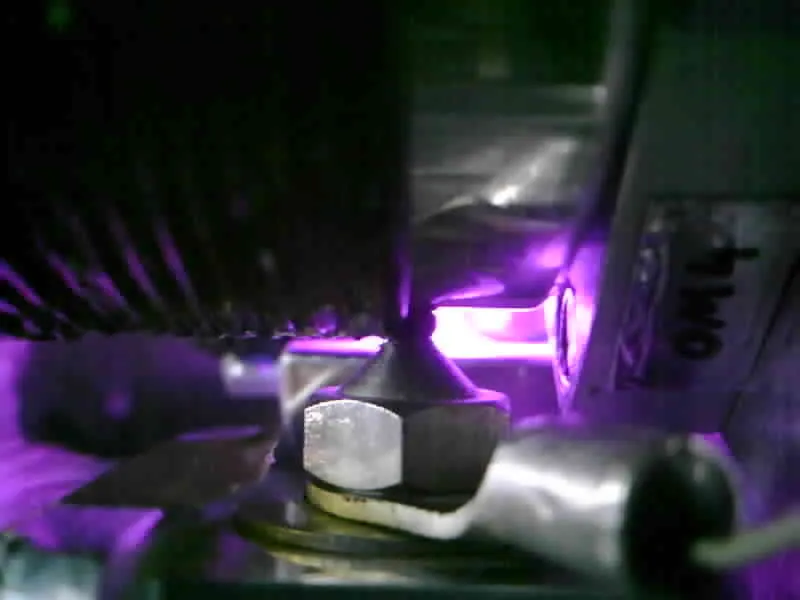
德国初创公司Orbital Matter制造的一颗卫星在轨道上利用一种定制塑料材料3D打印出了一根长半米的梁,公司高管称这是自由飞行航天器在轨道上实现此类操作的首例,也是在太空建造大型结构的重要一步。
A satellite built by the German startup Orbital Matter satellite 3D printed a half-meter long beam out of a custom plastic material, in what executives called a first for a free-flying spacecraft in orbit, and a step toward constructing large structures in space.
该公司的小型卫星“复制者2号”今年夏天搭乘SpaceX的拼车任务发射升空,卫星上搭载了公司研发的四台3D打印机。每台打印机都能通过挤出树脂线圈并利用紫外光固化,制造出一根刚性圆柱形梁,公司将这一过程比作水泥与水的结合。
The company’s small satellite, Replicator-2, was launched on a SpaceX rideshare mission this summer, with four of the company’s 3D printers onboard. Each printer can create a rigid, cylindrical beam by extruding coils of resin that are cured by an ultraviolet light, which the company analogizes to cement and water.
这项技术至关重要,因为未来的航天器将需要产生更多电力,并向太空真空环境中散发更多热量,特别是如果它们要作为轨道数据中心运行的话。同时,航天器仍需塞进运载火箭顶部整流罩狭小的空间内。如果航天器能在轨道上建造设备,电力和散热难题可能会迎刃而解。
This technology matters because future spacecraft will need to generate a lot more electrical power and radiate a lot more heat into the vacuum of space, particularly if they’re going to serve as orbital data centers. They’ll also still need to fit into the tight confines of the fairing on top of the rocket that carries them into orbit. If spacecraft are able to construct their equipment in orbit, the power and heat-dissipation challenges may get a lot easier to solve.
Orbital Matter首席执行官兼联合创始人雅库布·斯托耶克表示:“‘复制者2号’首次证明了我们可以直接在太空中建造阵列,尺寸可根据任务需求任意确定。”该公司正与欧洲航天局及欧洲领先卫星制造商泰雷兹·阿莱尼亚航天公司合作,双方曾在“复制者2号”项目上协作。
“Replicator 2 is the first proof that we can simply build the array in space, at whatever size the mission demands,” said Jakub Stojek, CEO and co-founder of Orbital Matter. The company is partnering with the European Space Agency and Thales Alenia, a leading European satellite builder, which it collborated with on Replicator 2.
如今,太空中的大型结构都是“折纸工程”——大型太阳能电池阵列或望远镜镜面被折叠收纳,进入轨道后再展开。这是一项棘手的工程挑战,因此在太空中制造和组装这些结构的想法颇具吸引力。美国国家航空航天局(NASA)曾资助过相关尝试,其中最著名的是与Redwire公司合作的任务,该公司2023年曾在真空舱内3D打印出结构梁,但从未实现发射入轨。
Today’s large structures in space are origami projects—large solar arrays or telescope mirrors are folded up and then deployed on orbit. That’s a tricky engineering project, and so the idea of making and assembling those structures in space is appealing. NASA has funded some efforts at the idea, notably a mission with the company Redwire that 3D-printed structural beams in a vacuum chamber in 2023 but never got off the ground.
Orbital Matter 的两台打印机旨在展开一套柔性太阳能阵列,但因异常情况导致其中一台打印机失效。尽管如此,成功制造出的伸展臂仍顺利展开了太阳能阵列,这构成了重要的概念验证。此前,微重力环境下的 3D 打印尝试仅限于国际空间站内部的加压环境中。
Two of Orbital Matter’s printers are designed to deploy a flexible solar array, but an anomaly led one of the printers to fail. Still, the boom that was created successfully deployed the solar array, and is an important proof of concept. Previous 3D-printing efforts in microgravity were limited to the pressurized environment onboard the International Space Station.
“这就是我们把这么多台打印机装在一颗卫星上的原因。我们宁愿在轨道上学习、按需调整软件,也不愿花费数年时间在地面测试每一种可能性,”Orbital Matter 首席技术官 Robert Ihnatisin 对 TechCrunch 表示。
“That’s why we put so many printers on this single satellite. We preferred to learn in orbit and adapt the software as needed rather than waste years testing every possibility on the ground,” Orbital Matters CTO Robert Ihnatisin told TechCrunch.
伸展臂的长度受限于卫星携带的树脂量,公司工程师认为制造 100 米长的伸展臂是可行的。作为对比,SpaceX 的星链 V2 Mini 卫星 —— 目前轨道上最强大的量产卫星之一 —— 使用的太阳能阵列长度为 20 米。
The boom’s length is limited by the amount of resin carried onboard the satellite, and the company’s engineers believe that 100 meter booms are feasible. For comparison, SpaceX’s Starlink V2 Mini satellites — among the most powerful mass-produced satellites in orbit — uses solar arrays that are 20 meters long.
Orbital Matter 由 Ihnatsin 与 Stojek 于 2022 年共同创立,Ihnatsin 此前曾在 3D 打印公司 FormLabs 工作,公司已完成 300 万美元种子轮融资。
Orbital Matter was co-founded in 2022 by Ihnatsin, who previously worked at 3D printing company FormLabs, and Stojek, and raised a $3 million seed round.
目前,Orbital Matter 正在筹备另一项演示任务,计划于 2028 年发射,将在一颗更大的卫星上测试其打印机的大型版本,公司希望借此部署一套可产生 5 千瓦电力的太阳能阵列。这将成为迈向更大规模部署的“垫脚石”,目标是到 2030 年实现每翼 100 千瓦以上的发电能力。
Now, Orbital Matter is working on another demonstration mission, scheduled for launch in 2028, that will test a larger version of its printer on a bigger satellite that the company hopes will deploy a solar array that can generate 5 kw of power. That will be a “stepping stone” toward larger deployments of 100+ KW per wing by 2030.
该公司还在与卫星制造商合作,后者正考虑将其 PADS(打印机辅助展开系统)集成到航天器中,以延伸太阳能电池板、天线或其他组件。
The company is also collaborating with satellite builders that are considering incorporating its PADS (printer-assisted deployment system) into their spacecraft to extend solar panels, antennas, or other components.