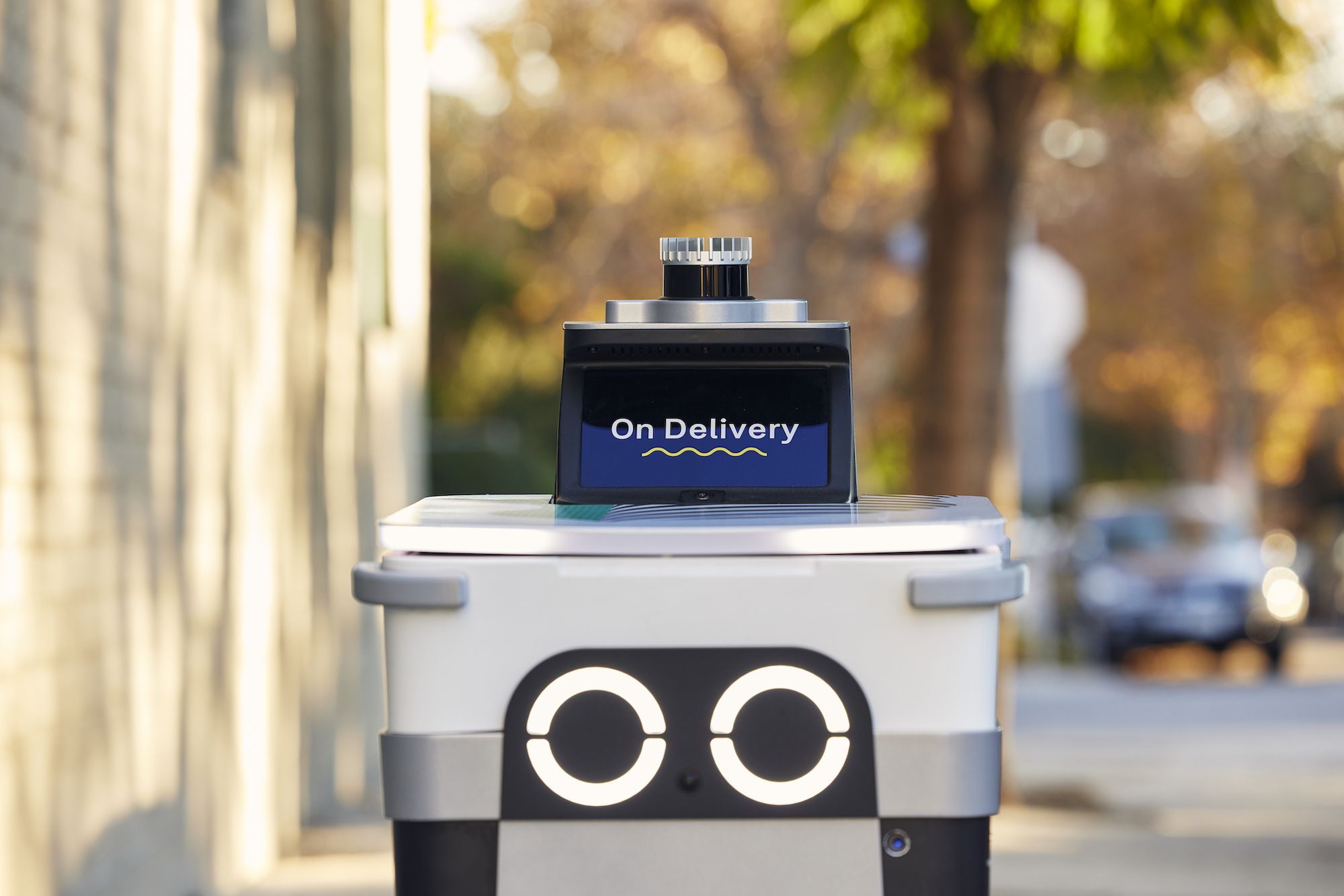
制造自动驾驶人行道配送机器人的Serve Robotics公司正将业务拓展至其自动配送运营之外,力图成为其他机器人制造公司的技术供应商。
Serve Robotics, a maker of self-driving sidewalk delivery robots, is expanding beyond its autonomous delivery operations in a bid to become a technology supplier to other companies building robots.
该公司于2021年从优步收购Postmates的交易中分拆出来,并于2024年上市。公司周四表示,将推出一条名为“物理AI服务”的新业务线。
The company, which spun out of Uber’s acquisition of Postmates in 2021 and went public in 2024, said Thursday it will launch a new business line called Physical AI Services.
具体而言,Serve Robotics将向客户提供其连接和数据工具。据Serve称,为建筑设备开发自动驾驶系统的初创公司Bedrock Robotics是其客户。Serve周四在公布第三季度财报的同时还宣布,正在与T-Mobile合作,将AI算力推向更靠近机器人的位置。
Specifically, Serve Robotics will offer customers its connectivity and data tools. Bedrock Robotics, a startup developing self-driving systems for construction equipment, is a customer, according to Serve. It’s also working with T-Mobile to bring AI computing power closer to robots, Serve announced alongside its third-quarter earnings on Thursday.
“我们正在解决机器人在人类空间中运行的问题,”Serve Robotics首席执行官兼联合创始人Ai Kashani对TechCrunch表示。
“We are solving the problem of robots in human spaces,” Serve Robotics CEO and co-founder Ai Kashani told TechCrunch.
Serve Robotics目前已经生产两种机器人:一种是有着可爱凸眼的人行道配送机器人,另一种是通过收购Diligent Robotics获得的、专为医院设计的机器人。
Serve Robotics already makes two kinds of robots, the cute googly-eyed sidewalk delivery robot and one designed for hospitals that it got through its acquisition of Diligent Robotics.
Kashani在最近的一次采访中强调,这些业务不会消失。相反,他表示,有机会将公司为自家机器人开发的技术出售给其他为农场、仓库和其他非受控环境开发机器人的公司。
Those businesses are not going away, Kashani emphasized in a recent interview. Instead, he said there is opportunity to sell the technology it developed for its own robots to other companies developing robots for farms, warehouses, and other uncontrolled environments.
“我有点把它看作是AWS时刻——我们把自己为自己打造的技术开放出来,让更多人在上面构建,”他说,并补充说,如果没有开发自己的机器人车队,这不可能实现。
“I kind of think of it as the AWS moment where we are taking the technology we’ve built for us, and we’re opening it up for more people to build on,” he said, adding this wouldn’t have been possible without developing its own robot fleet.
此次扩张之际,Serve的人行道配送业务正在扩大,但正从优步转向其他合作伙伴,包括DoorDash和Wonder。
The expansion comes as Serve’s sidewalk delivery business expands, but is shifting away from Uber and towards other partners, including DoorDash and Wonder.
其新的“物理AI服务”业务线将提供三款产品。Serve Link帮助将现场机器人与运行在数据中心的AI系统连接起来,这将使企业有可能接入更强大的AI模型,而无需将所有算力都放在机器人上。
Its new Physical AI Services business line will offer three products. Serve Link helps connect robots in the field to AI systems running in data centers, which would allow companies to potentially tap into more powerful AI models without having to put all that computing power onboard.
卡沙尼表示:“任何机器人应用通常都需要将机器人与某种离线智能连接起来,无论是为了收集数据、处理异常情况还是其他什么。”“连接部分必须真正具备高性能。你需要能够管理非常不可靠的网络,同时仍然可靠地建立连接,而这正是我们解决的问题。”该公司还推出了一款数据整理工具,帮助企业在机器人收集的大量真实世界数据中找到边缘案例,这些数据随后可以被反馈到训练模型中以提高性能。
“Any robotic application generally needs to connect the robots to some offline intelligence, whether it’s to collect data or do exception handling or whatever,” said Kashani. “It’s the connectivity piece that has to be really high performance. You need to be able to manage really unreliable networks and still reliably connect, and that’s what we solve.”It’s also launching a data curator tool that helps companies find edge cases in the reams of real-world data a robot collects, which can then be fed back into a training model to improve performance.
其第三款产品是一个基于真实世界的基础模型数据目录,由Serve自家的在人行道上运行的机器人构建而成,可以教会AI模型如何理解复杂的人类环境。
Its third product is a real-world, foundation-model data catalog built from Serve’s own sidewalk robots that can teach AI models how to understand complex human environments.
卡沙尼说,这个想法——一套他从亚马逊学到的打法——他已经思考了好几年。
Kashani said he’s been thinking about this idea — a playbook he learned from Amazon — for years.
他说:“当技术还如此不成熟时,你必须构建端到端的应用,因为这是你知道该构建什么的唯一途径;但随着时间的推移,随着技术变得更加先进,会有更多人想要构建类似的东西。”“而你要做的就是开放你的技术,让其他人在你的平台上与你一起构建。”
“When the technology is so nascent, you have got to build the end-to-end application because that’s the only way you know what to build, but then over time, as the technology gets more advanced, a lot more people are going to be wanting to build similar things,” he said. “And what you want to do is to open your technology so others build with you and on your platform.”