尽管人们常说没有什么能取代硅谷作为科技中心的地位,但事实证明,纽约的科技圈发展速度比旧金山更快。
For all the talk about how nothing can displace Silicon Valley as the epicenter of tech, it turns out New York’s tech scene is growing faster than San Francisco’s.
根据 Tech:NYC 首次向 Semafor 共享的一份新报告,过去十年科技岗位增长了 32%。这一增速是湾区的两倍多。
Tech jobs are up 32% in the last decade, according to a new report from Tech:NYC shared first with Semafor. That’s more than twice the rate of the Bay Area.
Tech:NYC 总裁兼首席执行官朱莉·塞缪尔斯表示:“科技正日益融入这座城市经济的方方面面。”只要坐一次地铁就能亲眼目睹:科技初创公司向银行、律师事务所和保险公司推销 AI 工具的广告激增。Thinking Machines Lab 和 Cohere 今年在纽约开设了首个办公室,Anthropic 则租下了一栋 16 层的 Hudson Square 大楼。
“Increasingly, tech is just woven into everything about the city’s economy,” said Julie Samuels, Tech:NYC’s president and CEO. All it takes is one subway ride to see that firsthand: Ads from tech startups offering AI tools to banks, law firms, and insurers have shot up. Thinking Machines Lab and Cohere opened their first New York offices this year, and Anthropic leased a 16-story Hudson Square building.
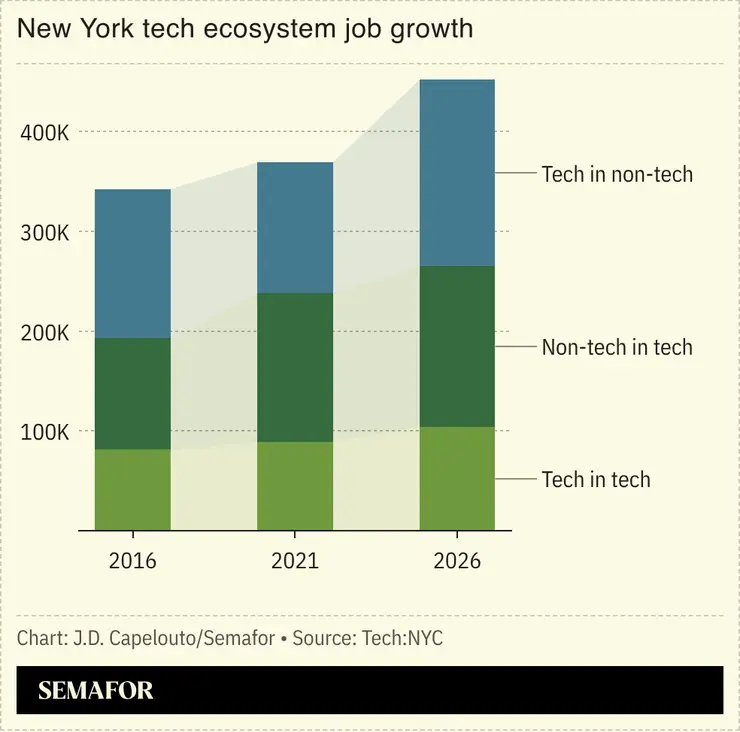
软件开发人员在非科技公司新增科技岗位中占比最大,这表明我们仍然需要工程师,还无法仅靠“氛围编程”通往 AI 未来。
Software developers accounted for the most new tech jobs at non-tech companies, a sign we still need engineers and can’t yet vibe code our way to an AI future.
拥有 45.2 万个岗位,纽约的科技劳动力规模仍远小于湾区的 80.4 万,但其更多元的经济结构使其更能抵御硅谷所经历的繁荣-萧条周期,塞缪尔斯说。
With 452,000 jobs, New York’s tech workforce remains far smaller than the Bay Area’s 804,000, but its more diverse economy makes it more insulated from the boom-and-bust cycles that have hit Silicon Valley, Samuels said.
她补充道:“当我和谷地的朋友交流时……他们一直在谈论 AI 安全以及这项技术带来的各种风险。”而在纽约,“对话更多集中在技术的落地应用上。谁在用?谁在买单?它如何改变企业?”
“When I spend time talking to my friends in the Valley… they are talking about AI safety and some of the risks associated with this technology all the time,” she added. In New York, “the conversation is much more about implementation of the technology. Who’s using it? Who’s paying for it? How is it changing businesses?”