库尔德地区政府(KRG)两大主要政党——库尔德民主党(KDP)和库尔德爱国联盟(PUK)之间的政治紧张正进入一个新阶段。2024年10月20日举行选举后,由于两党未能就如何分配内阁职位达成一致,议会两年来一直无法开会。
Political tensions between the two main parties in the Kurdish Regional Government (KRG), the KDP and the PUK, are entering a new phase. Following the Oct. 20, 2024 elections, the parliament has been unable to meet for two years because the two parties failed to agree on how to share cabinet posts.
然而,11月4日,应库尔德民主党的号召,议会自选举以来首次召开会议。除了较小政党和少数派代表外,一些来自库尔德爱国联盟、新一代运动和哈勒韦斯特运动的议员也出席了会议,尽管他们所属的政党决定抵制此次会议。结果,在100个席位的议会中,拥有39个席位的库尔德民主党在52名议员参与的情况下成功选出了议会领导层。乍看之下,这一步让人觉得“库尔德地区政府为期两年的议会危机已经结束”,但实际上,它正在使地区危机进一步加深。
On Nov. 4, however, the parliament met for the first time since the elections, at the KDP's call. Along with smaller parties and minority representatives, some lawmakers from the PUK, the New Generation Movement, and the Halwest Movement also attended the session, despite their parties' decision to boycott it. As a result, the KDP, which holds 39 seats, managed to elect the parliamentary leadership with the participation of 52 lawmakers in the 100-seat chamber. At first glance, this step makes it look like the "KRG's two-year parliamentary crisis is over," but in reality, it is making the regional crisis even deeper.
库尔德斯坦民主党(KDP)与库尔德斯坦爱国联盟(PUK)之间的争端,这两个主导伊拉克库尔德政治的主要政党,既不局限于库尔德斯坦地区政府(KRG)内部政治,也并非新近出现。库尔德政治至今仍由这两个政党塑造,其根源可追溯至20世纪70年代。
The disputes between the KDP and the PUK, the two main parties driving Kurdish politics in Iraq, are neither limited to the KRG's internal politics nor new. The reason Kurdish politics is still shaped by these two parties goes back to the 1970s.
1961年,在库尔德斯坦民主党和穆斯塔法·巴尔扎尼穆拉率领下,在美伊两国支持下,伊拉克库尔德人发起了针对伊拉克政权的起义。1970年,他们与复兴党政权签署协议,获得了自治权。然而,1975年伊拉克与伊朗签署《阿尔及尔协议》后,伊朗切断了对伊拉克库尔德人的支持。这导致库尔德抵抗运动瓦解。库尔德人不仅失去了自治权,穆斯塔法·巴尔扎尼穆拉还决定将部队撤回伊朗,终结了始于“革命”的运动。
In 1961, Iraqi Kurds, led by the KDP and Mullah Mustafa Barzani and backed by the US and Iran, started an uprising against the Iraqi regime. In 1970, they signed an agreement with the Baath regime and gained autonomy. However, after Iraq and Iran signed the Algiers Agreement in 1975, Iran cut off its support for the Kurds in Iraq. This broke the Kurdish resistance. Not only did the Kurds lose their autonomy, but Mullah Mustafa Barzani also decided to pull his forces back to Iran, ending the movement that had started as a "revolution."
在库尔德政治史上被称为“阿什贝塔尔”(意为闲置或损坏的磨坊)的这次崩溃,是库尔德民族斗争的重大转折点。在巴尔扎尼做出决定后,约三个月,库尔德重要人物易卜拉欣·艾哈迈德和贾拉勒·塔拉巴尼离开库尔德斯坦民主党,创立了库尔德斯坦爱国联盟。
Known in Kurdish political history as "Ashbetal" (meaning an idle or broken mill), this collapse was a major turning point in the Kurdish national struggle. Following Barzani's decision, about three months after the agreement, leading Kurdish figures Ibrahim Ahmad and Jalal Talabani left the KDP and founded the PUK.
这一分裂最终导致20世纪90年代爆发内战,并形成两个独立的地区行政机构。然而,2003年萨达姆·侯赛因政权倒台后,伊拉克库尔德人基本搁置了政治竞争,取得了共同利益。2005年宪法确立库尔德斯坦地区政府的联邦地位,是漫长斗争后建立正式政治、行政、地理和法律结构的重要一步。尽管如此,库尔德斯坦民主党与库尔德斯坦爱国联盟之间的竞争与分裂从未彻底解决。
This split eventually led to a civil war in the 1990s and the creation of two separate regional administrations. Yet after the fall of Saddam Hussein's regime in 2003, Iraqi Kurds largely put aside their political rivalry and achieved shared gains. Winning federal status for the KRG in the 2005 Constitution was an important step toward building an official political, administrative, geographic, and legal structure after a long struggle. Still, the rivalry and division between the KDP and the PUK have never been fully resolved.
然而,11月4日至6日的事件重新引发了关于这种联合政府模式前景的辩论。在未与库爱盟达成协议的情况下,库民党让议会领导层当选。作为回应,库爱盟退出了现任政府,并威胁要建立自己的治理机构。这表明,两党之间的竞争可能再次演变为正式分裂。过去两年里,库民党和库爱盟不仅在库区政府内部政治和巴格达失去了和谐,还成了公开的对手。
However, the events of Nov. 4–6 have reopened the debate over the future of this joint government model. The KDP had the parliament's leadership elected without reaching a deal with the PUK. In response, the PUK pulled out of the current government and threatened to set up its own governing bodies. This shows that the rivalry between the two parties could once again turn into an official split. Over the past two years, the KDP and the PUK have not only lost their harmony in both internal KRG politics and in Baghdad, but have also become open rivals.
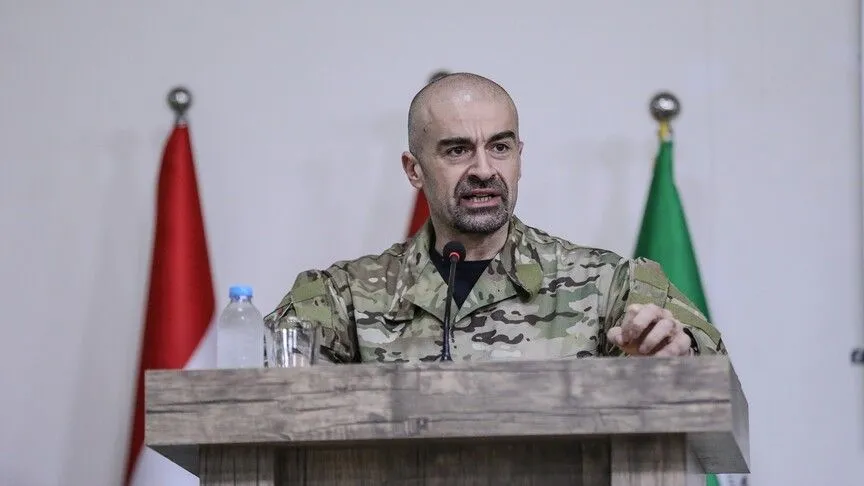
这一点在伊拉克最近两次总统选举中表现得尤为明显。事实上,库爱盟领导人巴费尔·塔拉巴尼11月5日的言论直接显示了库爱盟与库民党之间的分裂有多深。他特别警告说:“如果你们在埃尔比勒任命一位总统,我们将在苏莱曼尼亚任命一位。如果你们选出一位总理,我们也将选出一位。”换句话说,他在说:“要么平等合伙,要么回到两个独立的行政管理。”
This was clearly seen in Iraq's last two presidential elections. In fact, PUK leader Bafel Talabani's comments on Nov. 5 directly showed how deep the split between the PUK and the KDP has become. His warning stood out in particular: "If you appoint a president in Erbil, we will appoint one in Sulaymaniyah. If you elect a prime minister, we will elect one too." In other words, he is saying: "Either equal partnership or a return to two separate administrations."
乍看之下,巴费尔·塔拉巴尼的声明可被解读为分裂该地区的威胁。然而,这也显示了挫败感和对解决方案的寻求。他的声明并不令人意外。库爱盟正通过一个无法组建政府的议会向库民党施压,而其可能在苏莱曼尼亚建立独立行政管理的信息,是其施压中的最强王牌。
At first glance, Bafel Talabani's statement can be read as a threat to divide the region. However, it also shows frustration and a search for a solution. His statement is not surprising. The PUK is pressuring the KDP through a parliament that cannot form a government, and its message that it could set up a separate administration in Sulaymaniyah is its strongest card in this pressure.
然而,将这种决裂纯粹解读为分离意愿是错误的。这一过程同样可能是可控张力战略的一部分,即双方各自摆出立场以对抗对方。如果两党真的分裂,那就意味着他们已打光了所有牌。具有讽刺意味的是,分离看似最可能的时刻,也可能是和平触手可及的时刻。
It would be wrong, however, to read the rupture purely as a desire to separate. The process may just as well be part of a strategy of controlled tension, in which each side stakes out its position against the other. If the parties were to go through with a split, it would mean they had run out of cards to play. Paradoxically, the moment when separation seems most likely may also be the moment when peace is within closest reach.
尽管如此,库民党和库爱盟在未来数月仍可能采取更激进的举措,危机也可能进一步加深。这场争端已不再只是组建政府或分配政治职位的问题。但考虑到过去的冲突代价高昂,谈论内战并不现实。今天库尔德地区面临的真正危险不是武装冲突,而是其政治和行政统一的逐步侵蚀,甚至可能崩溃。若出现这种情况,可能会形成两个各自为政的行政当局,一个以埃尔比勒和杜胡克为中心,另一个以苏莱曼尼亚和哈拉卜贾为中心。
Still, the KDP and the PUK could take more radical steps in the months ahead, and the crisis could deepen. The dispute is no longer only about forming a government or sharing out political posts. Yet talk of civil war would be unrealistic, given how costly past conflicts proved to be. The real danger for the Kurdistan Region today is not armed conflict but the gradual erosion, and perhaps the collapse, of its political and administrative unity. In that case, two separate administrations could emerge, one centered on Erbil and Duhok and the other on Sulaymaniyah and Halabja.
这将使当前事实上的分离转变为正式的法律和政治现实,并终结库尔德地区政府目前的存在形态,使该地区在政治和行政上都陷入分裂。
This would turn the current de facto separation into a formal legal and political reality and bring an end to the KRG as it exists today, leaving the region divided both politically and administratively.
要使这一切具有法律约束力,需要经过宪法程序,而这并非易事。尽管如此,如果该地区在实践上出现政治和行政分裂,库爱盟很可能试图为这种分裂提供宪法依据。据报道,该党已经成立或即将成立一个委员会,寻求法律途径,将苏莱曼尼亚、哈拉卜贾、拉帕林和加尔米扬直接置于巴格达管辖之下。
For any of this to become legally binding, a constitutional process would be needed, and that would not be easy. Still, if the region splits politically and administratively in practice, the PUK may well try to give that split a constitutional footing. It is reported that the party has set up, or is about to set up, a committee to seek a legal path for bringing Sulaymaniyah, Halabja, Raparin, and Garmiyan directly under Baghdad's authority.
然而,在将苏莱曼尼亚从埃尔比勒分离出去的威胁付诸行动之前,似乎仍有一段时间。没有哪位领导人愿意被铭记为分裂库尔德人和库尔德地区的人,公众舆论也仍然强烈反对正式分裂。库爱盟当然可以在其控制区内塑造政治叙事,但分裂将在整个库尔德世界留下深深的失望情绪。
There still appears to be some time, however, before the threat to break Sulaymaniyah away from Erbil is acted upon. No leader wants to be remembered as the one who divided the Kurds and their region, and public opinion remains strongly opposed to a formal split. The PUK could certainly shape the political narrative in the areas under its control, but a division would leave a deep sense of disappointment across the wider Kurdish world.
库尔德斯坦爱国联盟并非唯一应受指责的一方。库尔德民主党不愿妥协,同样是严重的问题。从理性角度看,库尔德民主党有充分理由避免通过在总统职位和政府问题上的举动,将巴费尔·塔拉巴尼推向更激烈的行动,因为该党显然也不希望看到地区正式分裂。然而,该党在与巴格达和基尔库克的交往中长期行事远非理性,这使得任何有把握的预测都难以作出。
The PUK is not the only party to blame. The KDP's unwillingness to compromise is just as serious a problem. In rational terms, the KDP has good reason not to push Bafel Talabani toward more drastic action through its moves on the presidency and the government, since it plainly has no wish to see the region formally divided either. Yet its long record of acting far from rationally in its dealings with Baghdad and Kirkuk makes any confident prediction difficult.
在这一切之中,华盛顿的沉默格外引人注目。美国驻安卡拉大使兼叙利亚和伊拉克问题特使汤姆·巴拉克在巴费尔·塔拉巴尼发表声明的当天正在伊拉克,并会见了伊拉克总理阿里·扎伊迪。然而他对这场危机只字未提,反而谈论伊拉克的主权。美国、尤其是巴拉克,此前曾致力于重启地区议会、打破政治僵局。然而,自库尔德民主党在未获库尔德斯坦爱国联盟同意的情况下召开议会以来,华盛顿一直未就这一新的分裂表明明确立场。
Amid all this, Washington's silence stands out. Tom Barrack, the US ambassador to Ankara and special envoy for Syria and Iraq, was in Iraq on the day Bafel Talabani made his statement and met with Iraqi Prime Minister Ali al-Zaidi. Yet he said nothing about the crisis and spoke instead of Iraq's sovereignty. The United States, and Barrack in particular, had earlier worked to revive the regional parliament and break the political deadlock. Since the KDP convened parliament without the PUK's agreement, however, Washington has offered no clear position on the new divide.
有报道称,特朗普政府对调解库尔德各党派之间的事务兴趣不大,考虑到这一点,这种沉默就更加意味深长,它甚至可能反映出华盛顿的一种有意选择——如今的华盛顿急于加强巴格达的地位。
This silence becomes more telling in light of reports that the Trump administration has little appetite for mediating between the Kurdish parties, and it may even reflect a conscious choice by a Washington now keen to strengthen Baghdad.
因此,由安卡拉牵头,调解方必须介入以缓和紧张局势。任何其他结果都将损害整个地区的政治,包括土耳其的利益。一个平衡的库尔德地区对安卡拉而言同样是最明智的选择,这一进程的未来不应交到巴格达和德黑兰手中。
It is therefore vital that mediators, with Ankara in the lead, step in to calm tensions. Any other outcome would damage the politics of the region as a whole, including Türkiye's interests. A balanced Kurdistan Region remains the most sensible option for Ankara as well, and the future of the process should not be left in the hands of Baghdad and Tehran.
当前的危机让人想起阿什贝塔尔这座“停摆的磨坊”。1975年库尔德民族运动瓦解时,这座磨坊陷入了沉寂;随后几年,随着新的政治和行政机构逐渐成形,它又重新开始转动。如今,随着支撑这些机构的共同意志逐渐消退,爱国联盟(PUK)的一次新分裂举动可能让磨坊再次停摆。然而,这一次的危险有所不同。1975年,库尔德人面临的是一次失败的起义和一个分裂的运动;而今天,他们冒着因自身内部分歧而导致其为之奋斗的宪法和制度地位失去意义、甚至瓦解的风险。
The current crisis brings to mind the memory of Ashbetal, the "stopped mill." The mill that fell silent when the Kurdish national movement collapsed in 1975 started turning again as new political and administrative institutions took shape in the years that followed. Today, as the shared political will behind those institutions weakens, a new break by the PUK could bring the mill to a halt once more. This time, however, the danger is different. In 1975 the Kurds faced a failed uprising and a divided movement, whereas today they risk seeing the constitutional and institutional status they fought for lose its meaning, or even fall apart, because of their own internal divisions.
各方可能都会以各自的方式从这种结果中获益或受损。但几乎可以肯定的是,伊拉克库尔德人将失去迄今为止可能是他们最大的成就,无论从地缘政治、政治、行政、领土还是法律角度来衡量。分裂还将在更广泛的库尔德世界留下深刻的政治和心理创伤。在相互不信任和被动应对式政治如今定下基调的情况下,妥协希望的消逝令人深感忧虑。
Each party might gain or lose in its own way from such an outcome. What seems almost certain, though, is that the Iraqi Kurds would lose what may be their greatest achievement so far, whether measured in geopolitical, political, administrative, territorial, or legal terms. A split would also leave deep political and psychological scars across the wider Kurdish world. With mutual distrust and reactive politics now setting the tone, the fading hope of compromise is deeply worrying.
平息局势需要库尔德民主党(KDP)承担责任,展现真诚的政治意愿,采取更具包容性的做法,并与爱国联盟重启对话。如果不出现这种遏制日益加剧的政治、行政、制度和经济衰退的意愿,防止分裂将非常困难。
Calming the situation will require the KDP to take responsibility, show genuine political will, take a more inclusive approach, and reopen talks with the PUK. If no such will emerges to halt the growing political, administrative, institutional, and economic decline, preventing a split will prove very difficult.