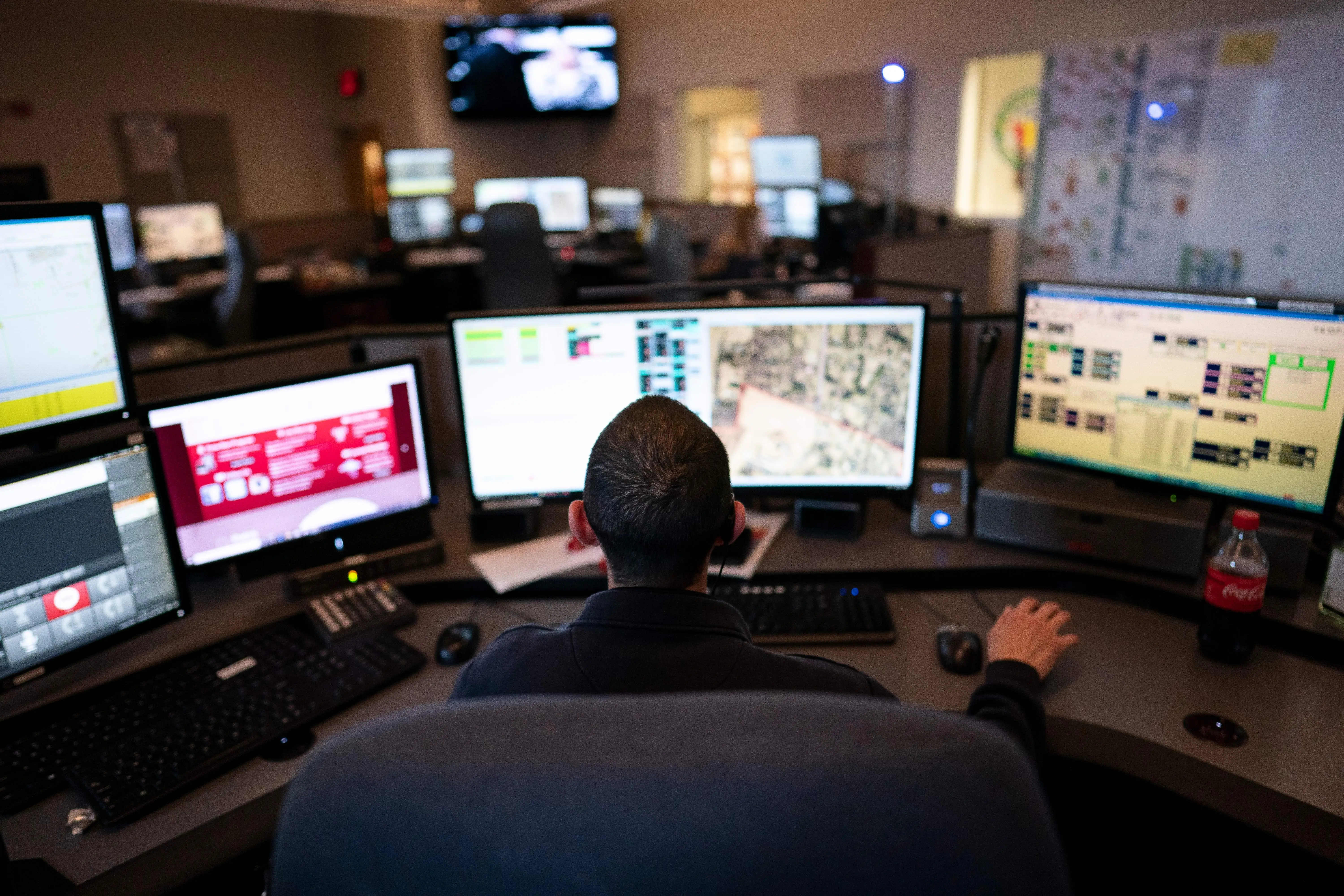
2020年,马里兰州格伦伯尼,安妮阿伦德尔县消防局的一名调度员在该部门的调度中心接听911紧急电话。长期以来,911调度员一直在应对“恶意报警”电话,来电者谎报炸弹威胁、大规模枪击或其他危及生命的紧急情况,意图引发大规模紧急响应。如今,AI生成的语音电话构成了新的挑战。
A dispatcher with Anne Arundel County Fire Department answers a 911 emergency call from their department dispatch center in Glen Burnie, Md., in 2020. 911 dispatchers have long dealt with swatting calls, where callers report a bomb threat, mass shooting or some other kind of life-threatening emergency with the intention of initiating a massive emergency response. Now, AI-generated voice calls are posing a new challenge.
亚历克斯·埃德尔曼/法新社/盖蒂图片社 8月,一名来电者向加利福尼亚州尤巴县的惠特兰联合高中发出炸弹威胁。警方通夜响应,学校停课。并无炸弹,也无人员受伤。
Alex Edelman/AFP via Getty Images In August, a caller made a bomb threat to Wheatland Union High School in Yuba County, Calif. Police responded overnight and classes were canceled. There was no bomb and no one was hurt.
当局称,这是暑期全美多所学校接连遭遇的恶作剧电话——即“恶意报警”——的一部分。
Authorities said it was part of a series of hoax calls — also called swatting — made to schools across the country over the summer.
根据联邦调查局的说法,“恶意报警”电话可打往911或警察局,来电者谎报炸弹威胁、大规模枪击或其他危及生命的紧急情况,意图引发大规模紧急响应。911调度员长期以来一直在应对这一问题。但尤巴县的这起事件不同:来电使用的是AI生成的语音,这给紧急响应人员带来了新的、日益增长的挑战。
Swatting calls can be made to 911 or police departments, with callers reporting a bomb threat, mass shooting or some other kind of life-threatening emergency with the intention of initiating a massive emergency response, according to the FBI 911 dispatchers have long dealt with this problem. But the incident in Yuba County was different: The call was made by an AI-generated voice, a new and growing challenge for emergency responders. "Those voices [of swatting callers] used to be pretty easy to recognize, but now they're natural sounding. They can insert pauses.
“以往那些[恶意报警来电者的]声音很容易辨认,但现在听起来很自然。它们能插入停顿,能用‘呃’、‘也许、嗯、让我想想’之类的词。听起来非常自然,”APCO International(公共安全通信官员协会)首席执行官兼执行主任梅尔·迈耶说。
They can use words like, 'uh', or 'maybe, um, let me think about it.' And it sounds very natural," says Mel Maier, the CEO and executive director of APCO International, the Association of Public Safety Communication Officials.
“恶意报警”电话的目的是骚扰或报复呼叫目标——如公职人员。它们通常会引发警方大规模、混乱的响应,挤占本应用于真实紧急情况的公共安全资源。迈耶指出,人们也曾在“恶意报警”袭击中丧生或受伤。
The goal of swatting calls is to harass or retaliate against the targets of the calls — like a public official. They usually trigger a big, chaotic response from police, redirecting public safety resources from real emergencies. People also have been killed and injured in swatting attacks, Maier notes.
使用 AI 生成的声音或背景音进行“恶作剧报警”(swatting)电话,使得这些虚假报警听起来更加逼真,也更难辨别真伪。
Swatting calls made by people using AI-generated voices or background sounds are making these hoax calls sound even more realistic, and harder to determine what's real and what isn't.
代表 911 调度员的 APCO(国际公共安全通信官员协会)和 NENA:9-1-1 协会表示,尤巴县发生的此类事件反映出他们日益担忧:不法分子可能利用 AI 技术实施犯罪。
APCO and NENA: The 9-1-1 Association, which both represent 911 dispatchers, say incidents like the one in Yuba County reflect their growing worries over how AI could be used by bad actors.
APCO 和公共安全威胁联盟(一个信息共享和网络安全组织)调查了“恶作剧报警”针对 911 呼叫中心的普遍程度。他们于 6 月发布了调查结果,基于 766 名公共安全通信专业人员的回复。约 14% 的调度员表示曾成为使用 AI 工具的攻击目标。Maier 认为,随着工具日益先进,这一比例将继续上升。
“恶作剧报警”电话的迹象据佛罗里达理工学院法医心理学助理教授 Brandon May 介绍,像 ElevenLabs 这样创建合成语音软件的人工智能公司,提供的 AI 工具价格极其低廉且触手可及。
APCO and the Public Safety Threat Alliance, an information-sharing and cybersecurity group, looked into the prevalence of swatting to 911 call centers. They published their findings in June based on 766 responses from public safety communications professionals. About 14% of dispatchers said they were targeted using AI tools. Maier says he thinks that number is going to keep going up with increasingly advanced tools Signs of a swatting call Companies like ElevenLabs, an artificial intelligence company creating synthetic voice software, offer AI tools that are incredibly cheap and readily available, according to Brandon May, an assistant professor of forensic psychology at the Florida Institute of Technology.
他说:“我在 ElevenLabs 上克隆自己的声音花费不到 20 美元,还能调整语调、音调高低以及停顿。”这使得任何人都难以识别这些 AI 伪造品。
"I'm able to clone my voice on ElevenLabs for less than $20, and I can change the intonations. I can change how deep or high-pitch my voice is. I can change the pauses," he says. And this makes it hard for anyone to detect these AI fakes.
他说:“仅凭看一张图片、听一段视频或听一个声音,再判断‘这是 AI’,已不再那么简单。人们经常被骗。”
"It is no longer simple to just look at an image or hear a video or hear a voice and go, 'That is AI.' People are duped by this all the time," he says.
May 表示,利用 AI 聊天机器人实施精心设计的诈骗电话,甚至骗取人们毕生积蓄。
Elaborate fraud callers using AI chatbots are even tricking people into handing over their life savings, May says.
他说,这些伪造声音和音效日益逼真,让紧急调度员在 May 所谓的“高风险、后果严重”的通话中,极难判断真伪。“几乎不可能检测出来,”他说。
And the increasing sophistication of these fake voices and sound effects makes it especially difficult for emergency dispatchers to deduce what is real or not during what May calls "high-stakes, high-consequence" calls. "It is going to be nearly impossible to detect," he says.
尽管难度很大,APCO 和 NENA 正在开发培训方法,帮助会员应对这些新威胁。
Despite the difficulty, APCO and NENA are developing ways to train their members to deal with these new threats.
美国国家紧急号码协会(NENA)副主席兼911运营主管艾普里尔·海因茨表示,恶意报警电话(swatting call)有一些典型特征。例如,大多数恶意报警者不会直接拨打911。
April Heinze, NENA's vice president and chief of 911 operations, says there are some hallmarks of a swatting call. For example, most swatters do not dial 911 directly. "The reason being is 911 provides location. It provides a callback number.
她说:“原因在于911能提供位置信息、回拨号码、电话持有人姓名,还能提供大量额外数据,在911上伪造位置几乎是不可能的。”
It provides the name of the person who owns the phone. It provides a lot of extra data, and it's really impossible to spoof your location on 911," she says.
海因茨解释说,恶意报警电话通常打给警察局或法院,这些来电随后会被转接至911中心,因此要追踪这些电话源头是不可能的。
Swatting calls are usually made to police departments or courthouses, Heinze explains. These callers are then ultimately transferred into the 911 centers. So trying to trace those calls is impossible, she says.
培训升级应对AI新威胁 海因茨和迈尔均拒绝透露识别潜在AI恶意报警电话的具体培训细节。他们表示,可获取的信息越多,未来训练AI欺骗接线员就越容易。
Training evolves to address new AI threat Both Heinze and Maier decline to describe the specifics of training to identify potential AI swatting calls. The more information available, they say, the easier it will be to train AI to fool dispatchers going forward.
迈尔确实提到一个培训思路。美国公共安全通讯官员协会(APCO)正在制定关于来电人询问的培训标准,要求接线员向来电人提问,问题颗粒度要细到“AI无法从公共数据库获取该信息,无法从社交媒体帖子捕获该信息,也无法单纯靠猜测得出”,他说。
Maier does note one idea for training. APCO is working to create training criteria on caller interrogations where the dispatcher asks the caller specific questions at "such granular level that an AI cannot scoop that information from a public database, cannot capture it from a social media post, or simply make guesses," he says.
尽管对AI被滥用的担忧日益增加,迈尔和海因茨都强调,接线员始终会假设报告危及生命情况的电话是真实的,并将继续向任何求助电话派遣应急资源。
Despite the growing concerns about the use of AI, both Maier and Heinze emphasize that dispatchers will always assume calls reporting a life-threatening situation are real — and will continue sending emergency resources to any call for help.
海因茨说:“重要的是要明白,无论发生什么,公共安全部门都会做出非常强有力的反应。即使有迹象表明这是恶意报警事件。他们报告的始终是生死攸关的情况,如果是生死攸关的情况,绝不能拿此事冒险。”
"It's important to understand that no matter what, public safety is going to have a very strong response," Heinze says. "Even if there are indicators that it is a swatting incident. They are always reporting a life-or-death situation, and if it's a life-or-death situation, you cannot ever take chances on that."