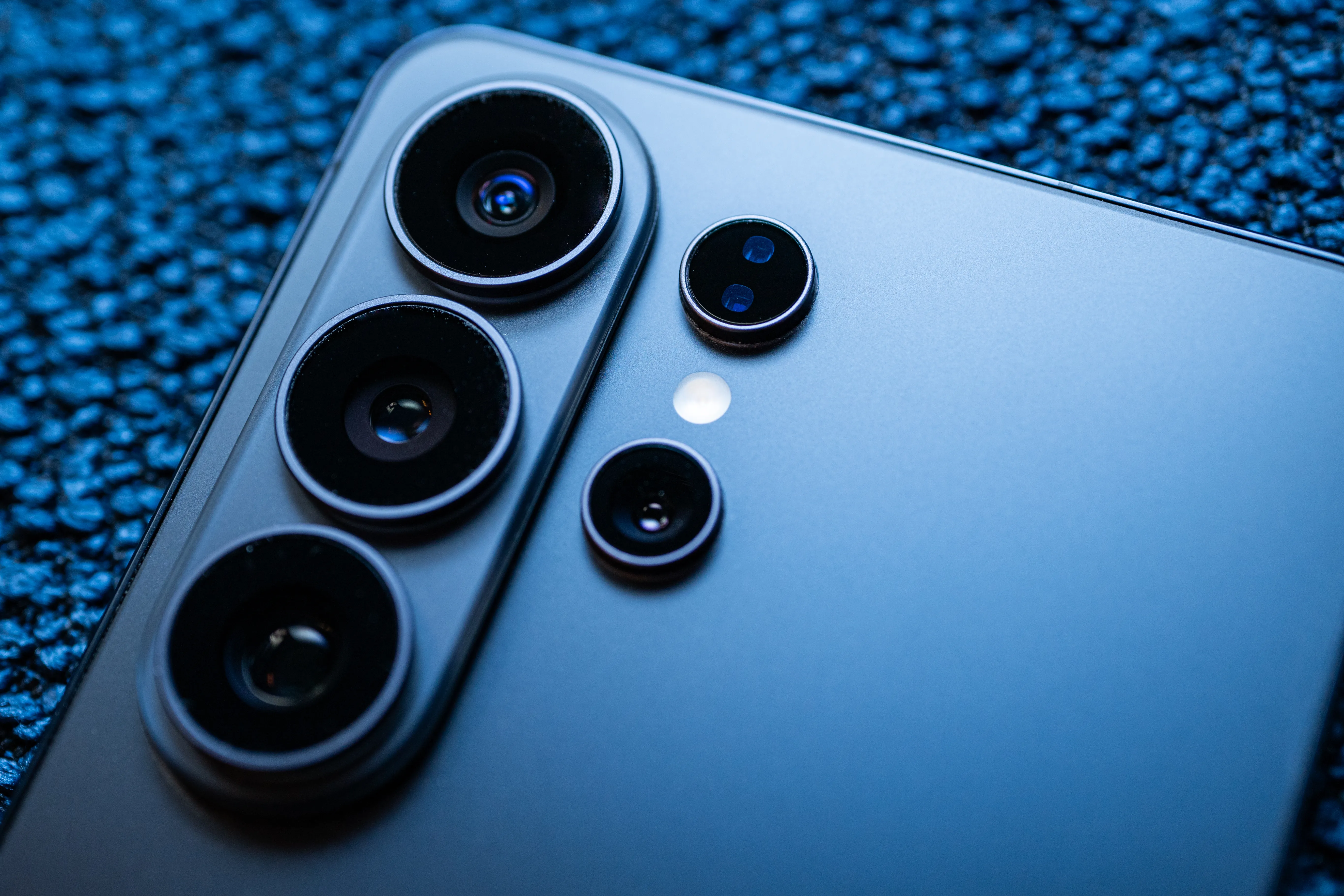
让手机相机工作的最关键技术之一诞生于1974年,此后几乎没有变化。
One of the most essential pieces of technology that makes your phone’s camera work was created in 1974, and it hasn’t changed much since.
当你用智能手机拍照时,相机捕捉光线并将其转换为电信号,从而构建数字图像。但位于传感器上方、为图像添加颜色的拜尔滤镜——由红、绿、蓝三层组成——会在光线到达传感器之前吸收并浪费大约60%的光线。要制造一个红色像素,滤镜会阻挡并丢弃蓝光和绿光。
When you snap a photo with your smartphone, the camera captures light and converts it into electrical signals to build a digital image. But the Bayer filter—a red, green, and blue layer that sits above the sensor and adds color to your images—absorbs and wastes around 60 percent of that light before it can reach the sensor. To make a red pixel, the filter blocks and throws away blue and green light.
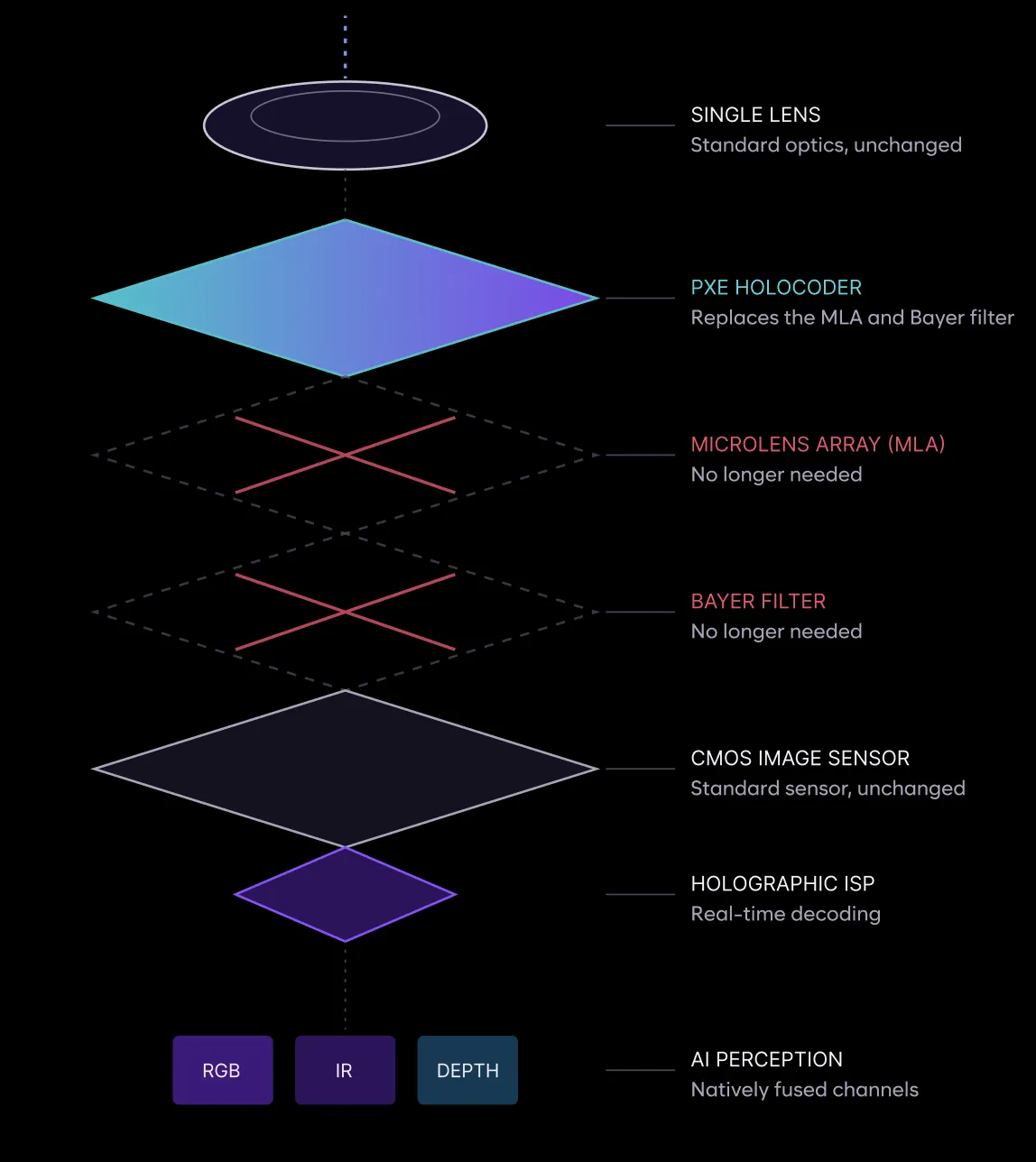
现在,波士顿公司Metalenz收购了以色列初创公司PxE Holographic Imaging,该公司开发了一种名为HoloCoder的新光学层。这种微观结构直接位于图像传感器之上,通过衍射光线来弯曲光波,而不是吸收光线。
Now, the Boston company Metalenz has acquired an Israeli startup called PxE Holographic Imaging, which has developed a new optical layer called a HoloCoder. This microscopic structure sits directly on top of the image sensor and diffracts light, bending the light waves rather than absorbing them.
借助HoloCoder将光波引导至传感器像素,而非阻挡它们,相机传感器可以收集多达声称的2.5倍更多的光线。这种集光能力的飞跃可能会大幅提升智能手机的低光摄影和动态范围。
With the HoloCoder redirecting the light waves toward the sensor’s pixels instead of blocking them, the camera sensor can collect up to a claimed 2.5 times more light. Such a leap in light-gathering ability could dramatically improve a smartphone's low-light photography and dynamic range.
还有一个令人惊讶的次要好处:HoloCoder技术可以同时捕捉3D深度信息。大多数智能手机使用辅助摄像头、专用深度传感器或AI推测来判断相机与拍摄对象之间的距离,以确定人像模式等功能中应显示多少深度。通过将光线感知和深度感知合并为一层,HoloCoder有望简化智能手机背面的电子元件,节省空间和处理能力。
There's a surprising secondary benefit too: HoloCoder technology can capture 3D depth information at the same time. Most smartphones use secondary cameras, dedicated depth sensors, or AI guesswork to figure out the distance between the camera and the subject in order to judge how much depth should be shown in features like portrait mode. By merging light sensing and depth sensing into one layer, the HoloCoder promises to simplify the electronics on the back of your smartphone, saving space and processing power.
PxE的收购——交易细节未披露——对Metalenz来说很有意义。该公司于2021年正式推出,率先实现了超表面的商业化。超表面是一种带有纳米结构的平面透镜系统,能够弯曲光线,减少摄像头传感器上多个透镜元件的需求,同时捕捉更多光线。至今,该公司已向消费设备交付超过3亿个超表面光学器件。
The acquisition of PxE—details of which were not disclosed—makes sense for Metalenz. The company launched publicly in 2021 and pioneered the commercialization of metasurfaces, a flat-lens system with nanostructures that bend light, reducing the need for multiple lens elements over the camera sensor while also capturing more light. The company has shipped more than 300 million of these metasurface optics to consumer devices today.
该技术还可以捕捉偏振数据,Metalenz正与高通合作,为Android打造一款名为Polar ID的更有效、更安全的面部生物识别认证系统,以与苹果的Face ID竞争,预计将于2027年底登陆消费设备。
The technology can also capture polarization data, and Metalenz is working with Qualcomm to create a more effective, secure facial biometric authentication system for Android called Polar ID to rival Apple's Face ID, expected to arrive on consumer devices at the end of 2027.
Metalenz首席执行官兼联合创始人罗布·德夫林(Rob Devlin)告诉《连线》杂志,PxE的方法与他公司的做法相似,即在图像传感器上直接图案化微观结构,以解锁传统相机系统会丢弃的光线数据。
Rob Devlin, Metalenz CEO and cofounder, tells WIRED that PxE's approach mirrors his own company's by patterning microscopic structures directly onto an image sensor to unlock light data that conventional camera systems throw away.
“苹果、三星、谷歌——每个人都在每年努力改进可见光相机,对吧?”德夫林说。“他们做的很多事情是投入数亿美元用于软件,试图以某种方式改进它,但缺点在于,一旦在吸收所有光线时信息丢失,你就无法真正买回来,即使你把全世界的软件都投入进去。”借助HoloCoder系统,低光摄影和夜间视频拍摄可能会出现显著改善。在高对比度场景中——例如在明亮窗户前拍摄自拍——传感器可以捕捉更多光线,更好地重现场景,而不会过度曝光高光部分,也不会让阴影被噪声淹没。
“Apple, Samsung, Google—everyone is fighting to improve the visible camera every year, right?" Devlin says. "A lot of what they're doing is investing hundreds of millions of dollars into software to try to somehow improve it, but the downside of that is that once information is lost when you're absorbing all of that light, you can't really buy it back, even if you're throwing all of the software into the world at it.”Low-light photography and night-time video capture could see dramatic improvements with the HoloCoder system. In high-contrast scenes—like taking a selfie in front of a bright window—the sensor can capture more light and better re-create the scene without blowing out highlights or drowning shadows in noise.
PxE的技术尚未上市,但由于Metalenz已经建立了供应链、处理了图像流程,并针对如何利用这些新数据流建立了机器学习算法,Devlin认为PxE的HoloCoder能够完美融入其平台,并“完全颠覆”可见光感应市场。虽然HoloCoder作为衍射光学元件而非真正的超表面运作,Devlin表示Metalenz已经在实验室里使用其自身的超表面光学技术复制了该技术。
PxE's technology isn't on the market yet, but as Metalenz has already developed a supply chain, processed an image pipeline, and set up machine learning algorithms on how to take advantage of these new data streams, Devlin thinks PxE's HoloCoder will be able to fit neatly into its platform and “completely disrupt" the visible sensing market. While the HoloCoder functions as a diffractive optic rather than a true metasurface, Devlin says Metalenz has already replicated the technology in the lab using its own metasurface optics.
“然后真正通过单一方式将所有这些信息整合在一起,”Devlin说。“我们会进行超表面设计,现在从单一图像传感器,你就能获得光中包含的所有信息:你能获得偏振,你能获得无需滤波的颜色,你还能获得这个深度通道。这就像‘一个传感器统治一切’。”目前,Devlin表示这两种技术将作为面向不同市场的独立产品,但长期来看,它们可能融合为一个Metalenz系统。他预计,最早可能在2027年底或2028年初,就能在消费电子产品中看到PxE的HoloCoder被使用。
“It's really then bringing all of that information together through a single approach," Devlin says. "We would do a metasurface design where now from a single image sensor, you're getting all of the information that is in light: You're getting polarization, you're getting color without filtering, and you're getting this depth channel. It's like the one sensor to rule them all.”For now, Devlin says the two technologies will be separate products for different markets, but in the long term they could fuse into one Metalenz system. He expects we could see PxE's HoloCoder used in consumer electronics as early as late 2027 or early 2028.
利用超表面光学技术简化和缩小硬件只是该公司的第一阶段——真正的目标始终是解锁那个新的信息通道,Devlin认为这对自主机器人和自主车辆等其他类别可能具有变革性。与依赖带有多个传感器和计算成本高昂的芯片的大型模块来实时对齐所有空间数据不同,单传感器系统可以在更小、更便宜的设计中完成工作,同时使用更少的计算能力。
Simplifying and shrinking the hardware with metasurface optics was just the first phase for the company—the real goal has always been to unlock that new information channel, which Devlin thinks can be transformational for other categories, like autonomous robots and autonomous vehicles. Instead of relying on large modules with multiple sensors and computationally expensive chips to align all that spatial data in real time, a single-sensor system could do the job in a smaller, cheaper design while using less computing power.
“这在实际意义上是个真问题,因为在彩色滤光片中,你会损失大量光线,”华盛顿大学低能光电子学研究人员阿卡·马朱姆达尔说。他指出,包括三星和一家名为Eyeo的初创公司在内的其他行业巨头,一直在积极研究他们自己对拜耳滤光片的替代方案,称为“色彩路由器”。虽然他同意去掉滤光片可以显著改善智能手机在低光环境下的摄影,但他怀疑它是否能彻底改变机器人和自动驾驶汽车等类别。
“It is a real problem in the sense that, in the color filter, you lose a lot of light,” says Arka Majumdar, who researches low-energy opto-electronics at the University of Washington. He points out that other industry heavyweights, including Samsung and a startup called Eyeo, have been actively researching their own alternatives to Bayer filters, called “color routers.”While he agrees that ditching the filter can meaningfully improve smartphone photography in low light, he is skeptical that it can revolutionize categories like robotics and self-driving cars.
与手机不同,汽车有足够的空间安装立体摄像头或激光雷达。瓶颈不是低光或图像清晰度,而是做出瞬间决策所需的计算能力。“事实上,可以说,如果你获得更好的数据,反而更糟,”他说。
Unlike phones, vehicles have plenty of space to mount stereo cameras or lidar. The bottleneck isn't low light or image clarity, but the computational power needed to make split-second decisions. “In fact, arguably, if you get better data, it's actually worse,” he says.