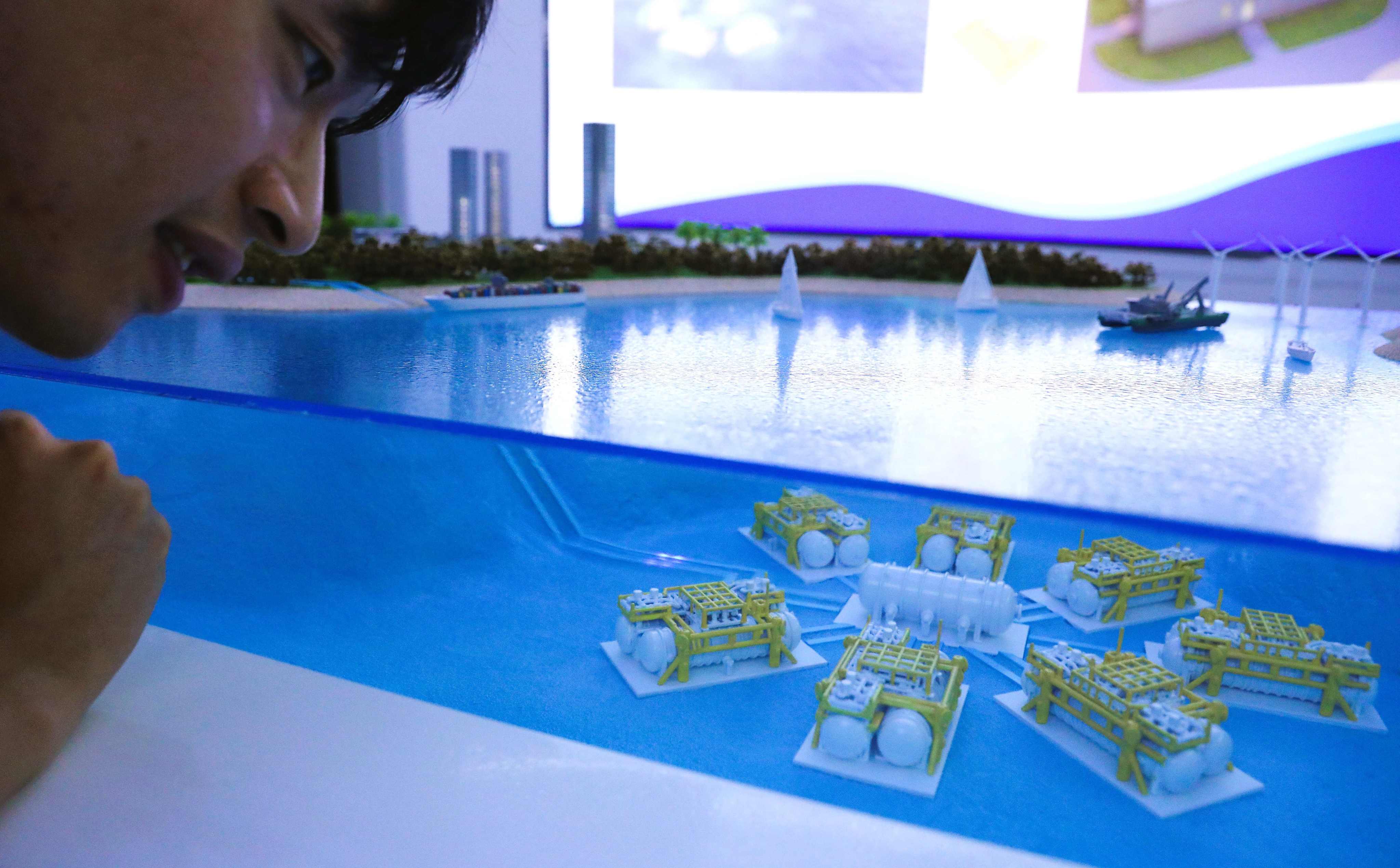
一项对全球水下数据中心领域专利长达二十年的研究显示,中国拥有全球80%的水下数据中心专利,在关键技术上占据决定性领先地位。
China owns 80 per cent of the world’s underwater data centre patents, giving it a decisive lead in critical technologies, according to a two-decade study of global patents in the field.
研究结果揭示,在建设未来绿色计算基础设施的竞赛中,重心正从西方转移,中国已从早期的跟随者转变为海底数据技术的主导力量。
The findings reveal a shift away from the West in the race to build future green computing infrastructure, as China transforms from an early follower into the dominant force in subsea data technologies.
“中国在模块化建造和原位维护等工程导向型技术上具有竞争优势,而海外研发则更侧重于生态友好型设计和跨区域组网,”中国研究人员写道。
“China holds competitive edges in engineering-oriented technologies such as modular construction and in situ maintenance, while overseas research and development focuses more on eco-friendly design and cross-regional networking,” the Chinese researchers wrote.
中国专利的激增正值关键时刻,全球正努力应对数据中心和人工智能日益增长的能源需求。
China’s surge comes at a critical time as the world grapples with growing energy demands for data centres and artificial intelligence.
水下数据中心利用海水作为天然冷源来散热。相比之下,陆上数据中心消耗的电力最多可达全球总用电量的3%,仅空调一项就占其中三分之一。
Underwater data centres use seawater as a natural cold source to dissipate heat. By comparison, land-based data centres consume up to 3 per cent of total global electricity, with air conditioning alone accounting for a third of that power.
海底设施大幅削减了能源开支和冷却所需的水资源,同时避免占用稀缺土地,为高耗能应用提供了一种可持续的供能方式。
Subsea facilities slash energy bills and water needed for cooling, while avoiding the use of scarce land, offering a sustainable way to power energy-hungry applications.
来自专利审查协作中心和位于天津的国家海洋信息中心的两名研究人员分析了2006年至2026年间与水下数据中心相关的168项专利,以梳理该领域的发展脉络。他们的论文于本月早些时候发表在中文学术期刊《海洋信息技术与应用》上。
Two researchers – from the Patent Examination Cooperation Centre and the National Marine Data and Information Service, both in Tianjin – analysed 168 patents related to underwater data centres between 2006 and 2026 to map out how the field had evolved. Their paper was published in the Chinese-language Journal of Marine Information Technology and Application earlier this month.
论文指出,2014年之前,早期开发主要由美国、挪威和加拿大的海洋工程公司和研究机构主导,重点在于建造耐压舱和水下基座。当时,每年的专利申请量不足三项。
Before 2014, early development was led mostly by marine engineering firms and research institutes in the United States, Norway and Canada that focused on building pressure-proof capsules and underwater foundations, according to the paper. At the time, there were fewer than three patent applications per year.
2015年至2020年间,专利申请数量有所增长,主要集中在优化胶囊结构、开发热管理解决方案和搭建供电系统方面。技术目标从测试可行性转向可靠性,以确认长期水下作业的技术可行性。
Between 2015 and 2020, patent applications grew, focusing on optimising the capsule structure, developing thermal management solutions and setting up power supply systems. The technical objective shifted from testing feasibility to reliability, to confirm the technical viability of long-term underwater operations.
例如,美国科技巨头微软表示,其“纳蒂克项目”于2018年起在苏格兰沿海部署的服务器运行了两年,“故障率仅为陆上对照组的八分之一”。
For example, the American tech giant Microsoft said servers deployed off the coast of Scotland through its Project Natick for two years from 2018 “showed a failure rate one-eighth that of the land-based control group”.
自2021年以来,中国已成为该领域的增长引擎,在研究分析的168项专利中,约占全球专利的80%。
Since 2021, China has emerged as a growth engine of the sector, accounting for around 80 per cent of global patents out of the 168 analysed in the study.
研究人员写道:“技术创新已从孤立验证转向系统集成和工程实施。”
“Technological innovation has shifted from isolated validation towards system integration and engineering implementation,” the researchers wrote.
“模块化集群、原位维护、多能互补以及智能运维等技术有助于降低成本、提高质量、提升效率,支撑大规模商业运营。”韩国以17项专利位居第二,差距较大,主要集中在数据舱部署和结构设备开发方面。
“Technologies including modular clustering, in situ maintenance, multi-energy complementarity and intelligent operations and maintenance help reduce costs, improve quality and enhance efficiency, supporting large-scale commercial operations.”South Korea comes a distant second with 17 patents, focusing mainly on data pod deployment and structural equipment development.
美国拥有8项专利,涉及系统架构、供电和本地数据处理;包括挪威和英国在内的欧洲国家拥有6项专利,涉及海底生产控制、供电和自动化运维。
The US has eight patents – in system architecture, power supply and local data processing – while European countries including Norway and Britain hold six patents in subsea production control, power supply and automated operations and maintenance.
研究人员写道:“在数字经济和减碳目标的推动下,中国的水下数据中心产业……将逐步从近海扩展到深海,并从孤立的计算设施转变为海洋经济的节点。”
“Driven by the digital economy and carbon reduction goals, China’s underwater data centre sector … will gradually expand from nearshore into the deep sea and transition from isolated computing facilities into nodes for the marine economy,” the researchers wrote.
他们表示,未来的研究可以探讨如何将海上风电与水下数据中心相结合,并评估其长期生态影响。
They said future research could look into how to integrate offshore wind power with underwater data centres and evaluate their long-term ecological impacts.