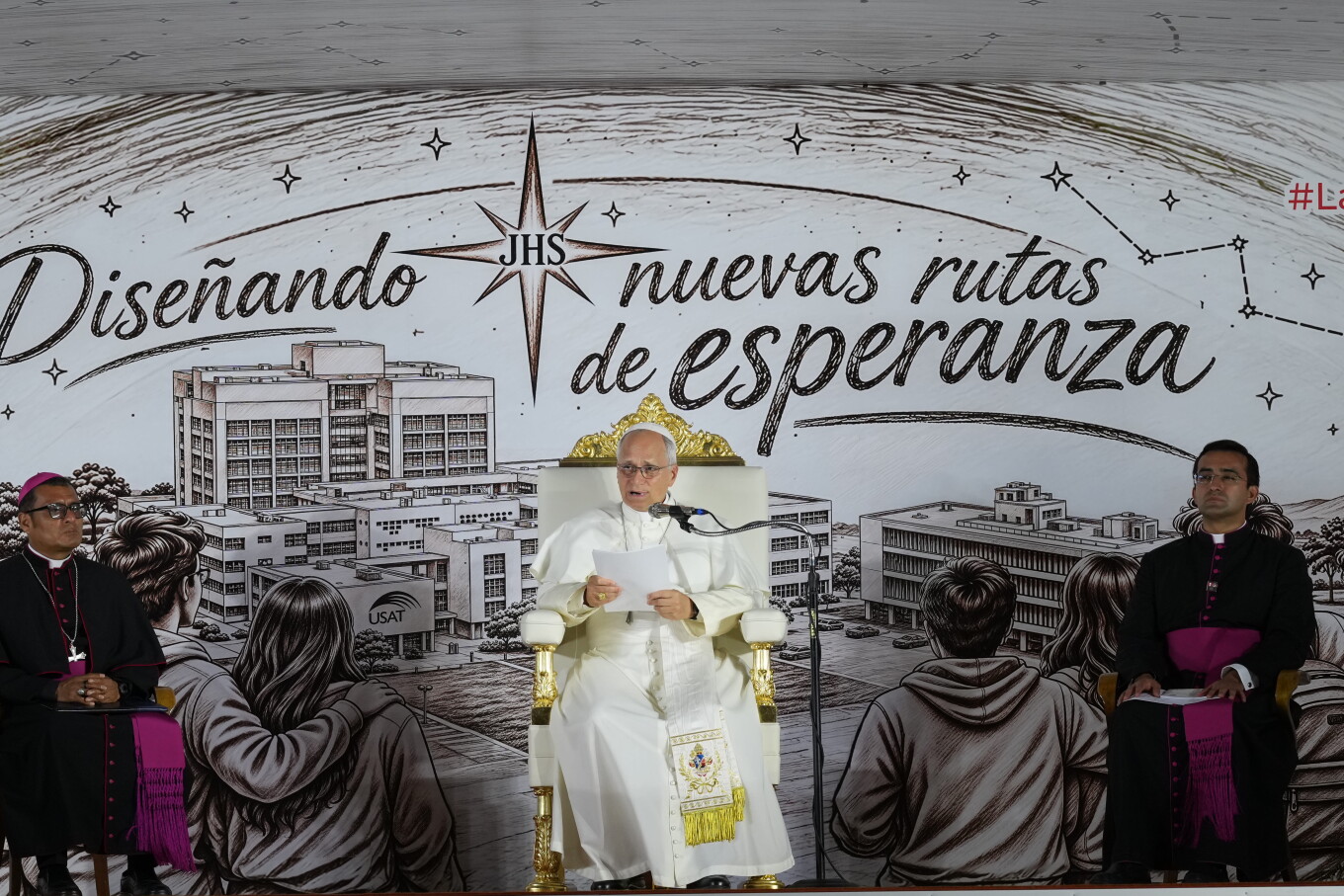
路易斯·安德烈斯·埃纳奥,妮科尔·温菲尔德 扎尼亚,秘鲁 —— 当拉丁格莱美奖得主、非裔秘鲁歌手苏珊娜·巴卡在教皇利奥十四世抵达秘鲁时为其献唱,这标志着此次访问将为源于该国非洲奴隶贸易的文化提供前所未有的聚光灯。
LUIS ANDRES HENAO, NICOLE WINFIELD ZAÑA, Peru — When Susana Baca, the Latin Grammy-winning Afro-Peruvian singer, serenaded Pope Leo XIV upon his arrival in Peru , it was a sign that the visit would provide an unparalleled spotlight on the culture that grew out of the African slave trade in this country.
巴卡也是秘鲁首位黑人内阁部长,她成为了旨在终结长期以来将黑人秘鲁人和秘鲁原住民视为二等公民的歧视运动的领军人物。
Baca was also Peru’s first Black Cabinet minister, and she became a leading figure in the campaign to end the discrimination that has long made second-class citizens of Black Peruvians and Peru’s Indigenous peoples.
出生于美国的利奥,其自身家族谱系中既有被奴役者也有奴隶主,预计将在周六访问扎尼亚市这一非裔秘鲁文化中心时,重点关注秘鲁的非裔后裔群体。
The U.S.-born Leo, whose own family tree includes enslaved people and slave owners, is expected to highlight Peru’s African-descended community when he visits the hub of Afro-Peruvian culture on Saturday in the city of Zaña.
利奥将在扎尼亚的圣托里比奥·德·莫格罗韦霍圣殿主持一场祈祷会,他在担任附近奇克拉约主教期间常去那里祈祷。
Leo will lead a prayer meeting at the sanctuary of St. Turibius of Mogrovejo in Zaña, where he often visited to pray while he was bishop of nearby Chiclayo .
16世纪,莫格罗韦霍是利马首任总主教。他捍卫原住民和被奴役者的权利,并因坚认了美洲首位黑人圣人、种族和谐、社会正义及多种族背景人群的主保圣人圣马丁·德·波雷斯而闻名。
In the 16th century, Mogrovejo was the first archbishop of Lima. He defended the rights of Indigenous and enslaved people and was known for having confirmed St. Martin de Porres, the first Black saint of the Americas and the patron saint of racial harmony, social justice and people of multiracial backgrounds.
在其首部通谕《宏伟的人性》中,利奥就历任教皇在使奴隶制合法化以及数个世纪未予谴责中的角色,作出了全面道歉。这指的是梵蒂冈在15世纪发布的一系列指令,授权欧洲君主征服非洲和美洲并奴役非基督徒。
In his first encyclical, “Magnificent Humanity,” Leo made a sweeping apology for the role of past popes in legitimizing slavery and failing to condemn it for centuries. It was a reference to the series of 15th-century directives from the Vatican that authorized European sovereigns to conquer Africa and the Americas and enslave non-Christians.
“当人们想到如此多的人所遭受的巨大痛苦与羞辱,与他们作为受主无限眷爱之人所拥有的不可估量的尊严形成鲜明对比时,不可能不感到深切的悲痛,”利奥写道。“为此,我以教会的名义,真诚地请求宽恕。” 据估计,在西班牙征服者抵达秘鲁后,约有 10 万非洲奴隶被带到秘鲁,他们在甘蔗种植园和银矿中劳作,其中一些人成为城市手工业者。一度,他们及其后裔占利马人口的 40% 以上。
“It is impossible not to feel deep sorrow when contemplating the immense suffering and humiliation endured by so many in stark contrast to their immeasurable dignity as persons infinitely loved by the Lord,” Leo wrote. “For this, in the name of the church, I sincerely ask for pardon.”The estimated 100,000 African slaves brought to Peru after the arrival of Spanish conquistadores toiled in sugar plantations and silver mines, with some becoming urban artisans. At one point, they and their descendants were more than 40% of Lima’s population.
如今,黑人仅占秘鲁 3500 万人口的一小部分。但在解放 170 多年来,他们一直在为进步而奋斗。
Blacks now are a small fraction of Peru’s 35 million people. But they have struggled to advance in the more than 170 years since emancipation.
2017 年全国人口普查显示,扎尼亚有 1311 名居民自认是非裔秘鲁人,而在整个兰巴耶克大区,这一数字为 78639 人。
The national census in 2017 reported that 1,311 people residing in Zaña identify as Afro-Peruvian, while in the entire Lambayeque region, the figure was 78,639.
巴卡告诉美联社记者,她之所以感到与教皇相连,是因为教皇高度重视为不公正请求宽恕。
Baca told The Associated Press that she felt connected to the pope because of the importance he has placed in asking forgiveness for injustices.
“我认为,非裔秘鲁人历史上最重要的事情之一,就是尽管我们有过苦难的历史,却没有沉沦,”她说。“我们是一个学会了宽恕的非裔秘鲁民族。”
“I believe that one of the most important things in the history of Afro-Peruvians is that we did not remain submerged despite our history of suffering,” she said. “We are an Afro-Peruvian people who have learned to forgive.”
“也许这正是在良知上将我与教皇连接在一起的东西。我觉得在他的所有讲道和教导中,教皇都强调请求宽恕和宽恕他人的重要性——如果我们有能力宽恕并被宽恕,历史上许多时刻的不公正就不那么痛苦了。” 她说之所以选择向教皇演唱《信仰之歌》和《如果一切都被夺走》,是因为这些歌曲体现了利奥所共有的信仰观念。
“And perhaps this is what connects me, in my conscience, to the pope. I feel that in all his homilies and teachings, the pope emphasizes the importance of asking for forgiveness and forgiving — that the injustices of many moments in history are less painful if we have the capacity to forgive and to be forgiven.”She said she chose to sing “Canción de Fe” (“Song of Faith”) and “Si me quitaran totalmente todo” (“If Everything Were Taken From Me”) to the pope because they embody the same notion of faith that Leo shares.
秘鲁北部历史名镇萨尼亚位于奇克拉约省,2017年被联合国教科文组织认定为“奴役记忆与非洲文化遗产遗址”。秘鲁政府表示,这是秘鲁非裔后裔社区或南美太平洋沿岸同类社区首次获得此类认定。
Zaña, a historic town of northern Peru located in the Chiclayo province, was recognized by UNESCO in 2017 as a “site of memory of slavery and African cultural heritage.”Peru’s government says the recognition is the first of its kind granted to a Peruvian Afro-descendant community or comparable communities along South America’s Pacific Coast.
“有一些社区能够承受任何打击——即使是七次‘厄尔尼诺’天气现象,甚至是人性最阴暗一面造成的更残酷、更邪恶的打击,比如奴役制度,”前文化部长萨尔瓦多·德尔索拉尔在萨尼亚主广场举行的仪式上说。
“There are communities capable of withstanding any blow — even seven ‘El Niño’ weather phenomena, or the even harsher, more perverse blows dealt by the darkest side of humanity, such as slavery,” former Culture Minister Salvador del Solar said during a ceremony in Zaña’s main square.
“像萨尼亚这样的社区真可以说,没有任何打击足以将他们彻底击垮;他们继续以自豪的心情重申自己的非裔后裔身份。”非裔后裔社区正在庆祝他们前任主教利奥的回归,并为巴卡在首位拥有黑人血统的教皇面前的表现感到特别自豪。
“Communities like Zaña can truly say that no blow has ever been strong enough to break them completely; they continue to reaffirm their Afro-descendant identity with pride.”The Afro-descendant community is celebrating the return of Leo, their former bishop, and is particularly proud of Baca’s performance before the first pope with Black roots.
“看到一位非裔秘鲁人向教皇献唱,并知道他的血管里流淌着黑人的血液,我感到非常自豪,”当地厨师兼诗人费利佩·古铁雷斯说,他也被称为弗龙塔多。
“I’m so proud to see an Afro-Peruvian person singing to the pope, and to know that Black blood courses through his veins,” said Felipe Gutierrez, a local chef and a poet known as Frontado.
“教皇拥有非裔后裔血统,对萨尼亚来说也是一种自豪,因为萨尼亚认同非裔群体,”古铁雷斯说,他创作并即兴表演秘鲁艺术形式“德西马斯”。根据19世纪人口普查记录,利奥的四位外曾祖父母均为路易斯安那州的“自由有色人种”。作为法国、西班牙、非洲和美洲原住民文化熔炉的一部分,教皇的外祖先会被视为克里奥尔人。
“That the pope has Afro-descendant blood is also a source of pride for Zaña because Zaña identifies with the Afros,” said Gutierrez, who writes and improvises the Peruvian art form known as “decimas.”All four of Leo’s maternal great-grandparents were “free people of color” in Louisiana based on 19th-century census records. As part of the melting pot of French, Spanish, African and Native American cultures in Louisiana, the pope’s maternal ancestors would be considered Creole.
萨尼亚拥有一座非裔秘鲁博物馆,馆藏丰富的历史照片、种植园手推车,以及来自秘鲁、古巴和巴西的非洲起源打击乐器。馆内还保存着被奴役者的文件和一些用于束缚他们的镣铐。
Zaña is home to an Afro-Peruvian museum, which features a rich collection of historical photographs, plantation carts and percussion musical instruments of African origin from Peru, Cuba and Brazil. It also stores documents of enslaved people and some of the shackles used to restrain them.
其中一面墙上挂着利奥担任主教期间访问该镇时的照片。墙上还挂着美国首位黑人总统巴拉克·奥巴马以及南非反种族隔离领袖纳尔逊·曼德拉的大幅装裱照片。
One of its walls has photos of Leo during visits to the town when he was bishop. There are also large framed photographs of Barack Obama, the first Black president of the United States, as well as South African anti-apartheid leader Nelson Mandela.
“我们在这里向他们致敬,”古铁雷斯在最近一次参观博物馆时说道,身穿一件印有迈克尔·乔丹标志性23号的芝加哥公牛队球衣。芝加哥是利奥的出生地。
“We pay homage to them here in Zaña,” Gutierrez said during a recent visit to the museum, wearing a Chicago Bulls shirt with Michael Jordan’s iconic number 23 on the back. Chicago is where Leo was born.
“他们向我们展示了,一个像我们扎尼亚人一样的黑人也能成为总统,我们为此感到自豪,因为我们都应享有同等权利,”古铁雷斯说。“黑人、原住民,我们所有人在上帝眼中都是平等的。”温菲尔德在秘鲁奇克拉约采写了本报道。
“They show us how someone who is Black as we are in Zaña became a president and we’re proud because we all deserve the same rights,” Gutierrez said. “Black, Indigenous, all of us are equal in the eyes of God.”Winfield contributed from Chiclayo, Peru.
美联社宗教新闻报道得到美联社与《对话美国》合作项目的支持,资金由礼来捐赠基金会提供。美联社对本内容承担全部责任。
Associated Press religion coverage receives support through the AP’s collaboration with The Conversation US, with funding from Lilly Endowment Inc. The AP is solely responsible for this content.