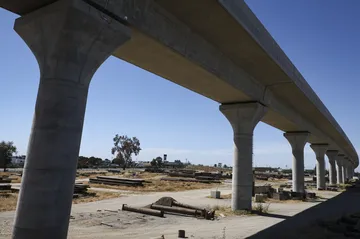
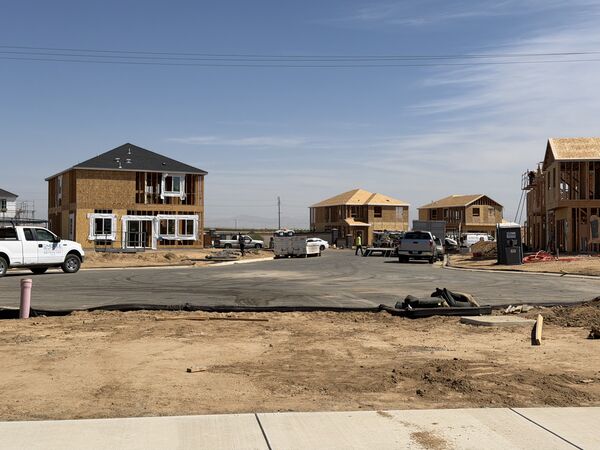
9月下旬的一个正午,在加利福尼亚州沙夫特市郊外的“Gossamer Grove”住宅区边缘,附近的“金州高速公路”车流声中夹杂着钉枪的嘶嘶声和爆裂声。施工队正忙着为环绕空旷环形路末端的几十栋住宅搭建框架——这是全美住宅建筑巨头Lennar Corp.(莱纳公司)的一个新住宅开发项目。
At noon on a late September day on the edge of Gossamer Grove, an expanding subdivision in Shafter, California, the hum of traffic on the nearby Golden State Highway was punctuated by the hiss and pop of nail guns. Work crews were busy framing a few dozen homes arrayed around empty cul de sacs — a new housing development by the national homebuilding powerhouse Lennar Corp.
在加利福尼亚中央谷地,这算是相当典型的场景,像贝克斯菲尔德这样相对宜居的城市如今领跑全州的住房建设和人口增长。只是这些两层楼的住宅正建在加利福尼亚高速铁路线的必经之路上。
It’s a fairly typical scene in California’s Central Valley, where comparatively affordable cities like Bakersfield now lead the state in housing construction and population growth. Except that these two-story homes are being built atop land that is directly in the path of the California High-Speed Rail line.
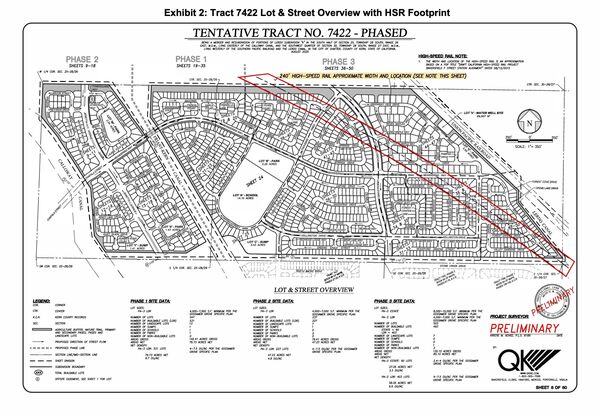
据负责子弹头列车项目的管理局称,两条铁轨将穿过这处正在建设约100套住宅的工地,以及一块相邻地块,Lennar正在那里平整土地,准备再建1200套新房。
According to the authority in charge of the bullet train project, two tracks are set to slice through the site of this ongoing construction of roughly 100 homes as well as an adjacent parcel, where Lennar is in the process of grading land to build 1,200 new homes.
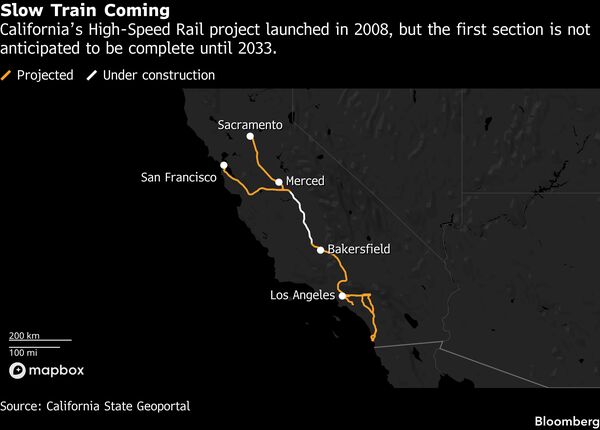
这一局面反映了Lennar(该公司拒绝公开置评)与加利福尼亚高速铁路管理局之间长期存在的分歧,后者是负责推动连接洛杉矶和旧金山、最高时速可达220英里(约354公里)的先进子弹头列车项目的州级机构。该项目于2008年启动,原计划2020年通车,预算330亿美元。铁路管理局现在预测,首个运营段——一条长119英里(约191公里)的中央谷地路段,连接小城市马德拉和贝克斯菲尔德与沙夫特以北的某个地点——将于2033年完工,全程洛杉矶至旧金山线路将在2040年后某个时候完工,成本高达2310亿美元。
The situation reflects a longstanding disagreement between Lennar (which declined to comment on the record) and the California High-Speed Rail Authority, the state agency helming the effort to connect Los Angeles and San Francisco with an advanced bullet train capable of reaching 220 miles per hour. That project launched in 2008 and was projected to open in 2020, with a $33 billion cost estimate. The rail authority now predicts that the first operating segment, a 119-mile Central Valley section running between the small city of Madera and a point somewhere north of Bakersfield and Shafter, will be complete by 2033, and the entire LA-to-SF line will finish sometime after 2040, at a cost of up to $231 billion.
这一大型项目在成本上严重超支,一个主要原因正是沙夫特郊外正在上演的这类土地利用纠纷和争端。
One big reason why the megaproject went off the rails, cost-wise? Land-use complications and disputes like the one unfolding outside Shafter.
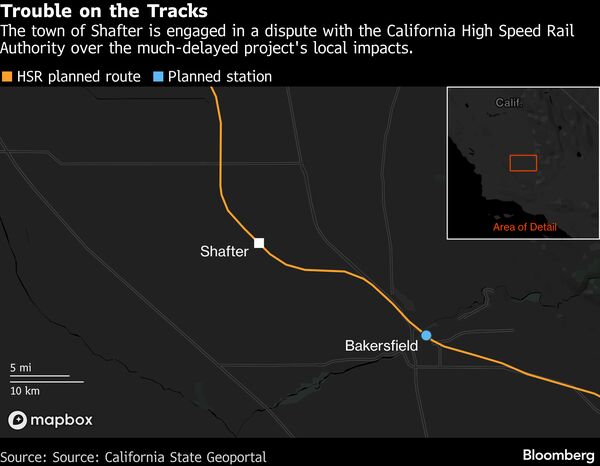
“问题在于,高铁项目在这个地块上搁置了这么久,却一直没有进行谈判购买,”沙夫特市市政经理兰斯·利平科特说道,当时他正带领参观这个正在开发的社区。他解释说,莱纳公司开发该地块的计划已有二十年,市政府原本预期铁路管理局会购买其修建铁路线所需的这块土地。但虽然高铁管理局获得了该土地所需的环境审批,却并未取得土地本身。“从市政府角度来看,我们以为他们早就买下了,所以我们实际上并没有规划其周边的基础设施等一切配套,”利平科特说。
“Problem is, high-speed rail has sat on this property for so long and hasn’t negotiated for it,” said Lance Lippincott, the city manager of Shafter, who was providing a tour of the neighborhood in development. He explained that Lennar’s plans to develop the site go back two decades, and the city expected the rail authority to purchase the tract it would need for the train line. But while the HSRA obtained the necessary environmental approvals for the land, it didn’t obtain the property itself. “From the city side, we thought they would have bought it already, so we really haven’t planned on infrastructure and everything around it,” Lippincott said.
今年5月,市政府批准了莱纳公司在该地块开始建设住宅的计划——市政府官员表示,部分原因是加州一项旨在阻止“邻避效应”(NIMBYism)的法律,禁止市政府拖延合法住房项目。
In May, the city greenlit Lennar’s plan to begin home construction on the site — in part, city officials say, because of a California law designed to thwart NIMBYism that prohibits municipalities from delaying legal housing projects.
关于如何以及在何处安置列车基础设施,这种相互冲突的设想,让该项目在中央谷地的推进过程绝非一帆风顺。
Such dueling visions about how and where to site the train’s infrastructure have made the project’s progress through the Central Valley anything but smooth.
“这里,”利平科特指着本应是高铁线路的一段路基,如今却填满了正在施工的房屋建设者,“本应是项目最容易的路段。”莱纳公司最早于2005年申请在该地块的建设权,并于2006年初收购了该地产,计划建造约1200套住宅,打造一个也包含学校和公园的社区。两年后,加州选民通过法案决定修建高铁线路;当时新成立的州管理局负责监督环境和规划工作,直至2014年。
“This,” said Lippincott, pointing to the stretch of what was supposed to be a high-speed rail line, and was now filled with homebuilders at work, “was supposed to be the easy portion of the project.”Lennar first requested the rights to build at the site in 2005 and acquired the property in early 2006, with plans to build roughly 1,200 homes for a community that would also include a school and parks. Two years later, California voters passed a bill to build the high-speed rail line; the then-new state authority in charge oversaw environmental and planning work through 2014.
最初,列车计划从旧金山直达洛杉矶,走一条更直接的路线——沿着5号州际公路形成的走廊,经由连接大洛杉矶地区与加州广阔中央谷地的特洪山口。那是工程师1999年推荐的路线。
Initially, the trains were meant to travel from San Francisco to Los Angeles on a more direct route — following the corridor created by Interstate 5, the state’s main north-south highway, via the Tejon Pass, which links greater Los Angeles to the state’s vast Central Valley. That’s the route engineers recommended in 1999.
相反,妥协和政治压力改变了路线,让列车的路径穿过另一个山口,从而经过中央谷地东部边缘的多个人口中心。连接更多城市可能有利于客流量并带来经济提振,但也使建设过程更加复杂。环境审查工作在本应成为线路中段的广大区域展开,由于成本预备费和超支,该中段被选为首个完工路段 —— 实际上为这一庞大基础设施项目的走向打下了标记。
Instead, compromises and political pressure shifted the route, threading the train’s path through another mountain pass that would take it past population centers along the Central Valley’s eastern edge. Connecting more cities could benefit ridership and deliver an economic boost, but it complicated the construction process. Environmental review efforts took place across a wide swath of what was meant to become the central portion of the line, which, due to cost contingencies and overruns, was picked to be the first completed leg — putting down markers, in effect, about where this expansive infrastructure project was going.
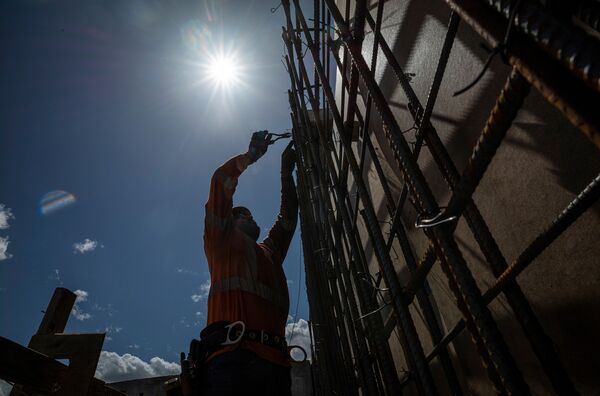
但资金现实、延误以及对轨道走向和车站选址的争论,意味着高铁局并未获得所有必需的土地地块。尽管穿越中央谷地、长 119 英里的初始路段绝大部分土地已购入,但重要缺口依然存在。例如,莱纳的地块位于沙夫特和贝克斯菲尔德之间的南部路段,因资金缺口,该路段可能落在项目首个运营区段之外。
But funding realities, delays and debates over track alignment and station locations meant that HSRA didn’t secure all the necessary parcels of land. Even though a vast portion of the 119-mile initial leg through the Central Valley is purchased, important gaps remain. Lennar’s parcel, for example, is part of a southern section between Shafter and Bakersfield that could end up outside the project’s first operating segment, because of a funding shortfall.
莱纳于 2015 年 8 月开始与高铁局会面,预期该局会着手谈判购买落在高铁线路范围内的地块部分。但铁路局推迟了收购。与此同时,莱纳在开发 Gossamer Grove 其他部分时,一直在为该地块缴纳财产税。今年,这家房屋建造商提交了一张地图,规划了该分区最后一块未开发土地上的住宅和街道。“这是原始土地;我们拥有它;我们计划开发它,”莱纳资质总监沃尔特·戴蒙德在 4 月的规划委员会公开听证会上表示。
Lennar started meeting with HSRA in August 2015, with the expectation that the authority would begin negotiating to purchase the portions of the tract that fall within the HSR alignment. But the rail authority held off on buying. Meanwhile, Lennar has been paying property taxes on the site as it developed other parts of Gossamer Grove. This year the homebuilder submitted a map laying out homes and streets on the final undeveloped portion of the subdivision. “It’s raw land; we own it; we plan to develop it,” Lennar’s director of entitlements, Walter Diamond, said at an April planning commission public hearing.
在那次会议上,Shafter 市律师 Marco Martinez 解释说,该市几乎别无选择,只能批准建筑商的计划,因为“拒绝该地图会让我们在住房要求方面陷入麻烦”。加利福尼亚州的《住房问责法》限制了地方政府否决住房项目的能力,而对这部 1982 年法律的最新修正案加强了执法力度。“几乎不可能否决一个住房项目,”Martinez 在 4 月的听证会上说。
At that meeting, Shafter city attorney Marco Martinez explained that the city would have little choice but to approve the builder’s plan, since a “denial of the map would put us in trouble with the housing requirements.”California’s Housing Accountability Act limits local governments’ ability to disapprove housing projects, and recent amendments to the 1982 law have boosted enforcement. “It’s almost impossible to deny a housing project,” Martinez said in the April hearing.
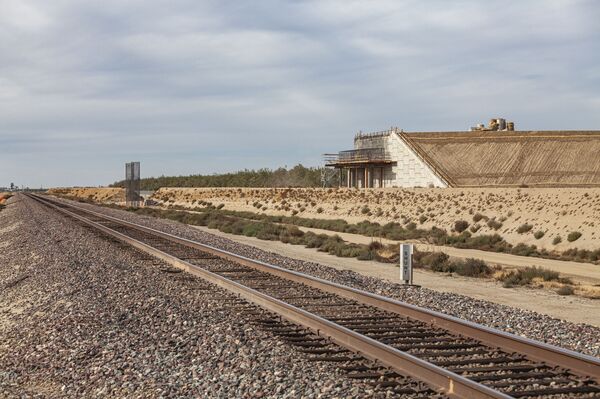
“所以我们有点进退维谷。”与此同时,高铁 Merced 至 Bakersfield 段的建设一直在进行:数十座立交桥和地下通道已建成,Wasco 的一个铁路枢纽中心也已完工,用于组织未来的施工。目前的估计显示,这条初始 119 英里(约 191.5 公里)路段的铺轨工程将在 2027 年底前完成。
“So we were kind of caught between a rock and a hard place.”Meanwhile, construction for the Merced-to-Bakersfield section of the high-speed line has been ongoing: Dozens of overpasses and underpasses are completed, as well as a railhead hub in Wasco to stage future construction. Current estimates suggest tracklaying for this initial 119-mile section will be completed by the end of 2027.
Shafter 的僵局出现在高铁管理局面临特别艰难时期之际,该局首席执行官 Ian Choudri 于 10 月下旬辞职,此前一份报告发现顾问挪用纳税人资金用于开支。许多旨在加快高铁建设的立法提案在最近的州立法会议上停滞不前,而高铁管理局利用铁路沿线半英里范围内的销售税和财产税收入的提案,今年早些时候被地方政府驳回。
The impasse in Shafter arrives during a particularly challenging time for the rail authority, whose chief executive, Ian Choudri, resigned in late October after a report found consultants had misused taxpayer money for expenses. Many legislative proposals to help accelerate rail building were stalled out in the latest state legislative session, and an HSRA proposal to utilize sales and property tax revenue within a half-mile of the rail line was rebuffed by local governments earlier this year.
在唐纳德·特朗普总统的交通部于 2025 年 7 月撤回 40 亿美元联邦拨款后,加州选民以一项法案的形式为这个备受困扰的项目提供了一条生路,该法案每年拨付 10 亿美元的碳排放市场拍卖收益。但新提出的气候规则可能会将这笔收入来源减半。
After President Donald Trump’s Transportation Department rescinded $4 billion in federal funding in July 2025, California voters handed a lifeline to the beleaguered project, in the form of a bill allocating $1 billion a year of carbon market auction proceeds. But newly proposed climate rules may cut that revenue stream in half.
沙夫特的故事处于持续困扰加利福尼亚州的基础设施挑战的交汇点,住房与交通需求在此争夺资金与支持。在洛杉矶,一个规模小得多的列车项目也一直在制造新闻与挫败感:洛杉矶国际机场的自动化“Skylink”旅客捷运系统,原本旨在在航站楼与附近的交通中心之间摆渡乘客,却错过了预计的 2023 年开通时间,成本膨胀至 33 亿美元;目前预计将于 2027 年开始运行。
The Shafter story sits at the intersection of the infrastructure challenges that continue to bedevil California, where housing and transportation needs vie for funding and support. In Los Angeles, a much smaller train project has also been generating headlines and exasperation: The automated Skylink people mover, designed to shuttle passengers at Los Angeles International Airport between terminals and a nearby transit center, missed its anticipated 2023 opening and saw costs swell to $3.3 billion; it’s now expected to begin running in 2027.
土地征收几乎从高铁项目一开始就被认定为一个问题;一度铁路局拥有近 500 英亩正在耕种的农田,因为必须购买整块地块,只为获得铁路线路所需的一个角落。
Land acquisition was recognized as a problem almost from the beginning of the high-speed rail project; atone point the rail authority owned nearly 500 acres of active farmland, after having to purchase entire parcels just to get one corner needed for the rail alignment.
“依我看,很难相信他们的时间表,”克恩县政府理事会执行主任杰伊·施洛瑟说,该组织是一个区域规划机构。“记录不太好看。” 沙夫特的冲突不止于莱纳住宅。居民长期反对列车的线路走向,该走向与穿过市中心的现有货运铁路平行。沙夫特建立在铁路历史之上:20 世纪初,该镇始于旧金山和圣华金谷铁路(现为 BNSF 铁路公司)的一个车站。
“It’s kind of tough to believe their timelines, in my opinion,” said Jay Schlosser, executive director of the Kern Council of Governments, a regional planning group. “Not a good track record.”The conflicts in Shafter don’t end with the Lennar houses. Residents have long objected to the train’s alignment, which parallels existing freight tracks that bisect downtown. Shafter is built on railroad history: The town began as a stop on the San Francisco and San Joaquin Valley Railroad — now BNSF Railway — at the turn of the 20th century.
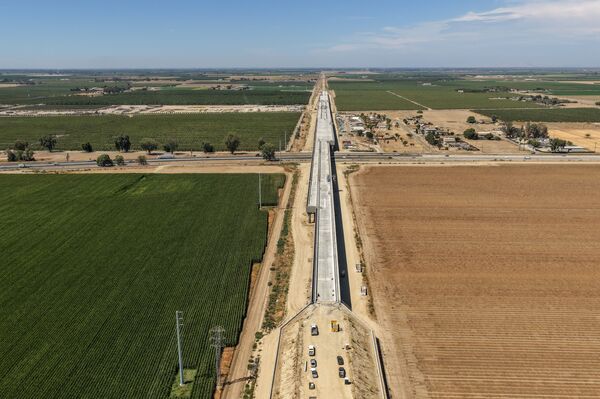
2018 年,铁路局就列车的环境影响与该市达成诉讼和解,同意修改轨道结构,并将穿过城市的相邻 BNSF 铁路升高。但围绕设计变更的冲突持续存在,2025 年该市要求高铁局完全绕行市中心。
In 2018, the rail authority settled a lawsuit from the city over the train’s environmental impacts, agreeing to modify the track structure and also elevate the adjoining BNSF tracks as they pass through the city. But conflicts over design changes have persisted, and in 2025 the city asked HRSA to bypass downtown entirely.
据利平科特称,铁路路线中段的三块市有地块仍未被铁路管理局收购:市政府曾多次进入谈判,但谈判均被中止。利平科特还抱怨称,由于高铁管理局不断更换顾问,机构记忆频繁丧失,导致双方不得不重头再来。9月16日,高铁管理局对沙夫特的另外三块地块提起了征用权索赔,这些地块目前由海伦娜化学公司所有。
According to Lippincott, three city-owned parcels in the middle of the train’s alignment still haven’t been purchased by the rail authority: City officials entered into negotiations multiple times only to have them suspended. Lippincott also complained that, because HSRA cycles through different consultants, there’s a frequent loss of institutional memory and the parties find themselves back at square one. On Sept. 16, HSRA filed an eminent domain claim for three other parcels in Shafter, currently owned by Helena Chemical. (Lippincott doesn’t understand why they skipped over other properties.)
(利平科特不明白为何他们跳过了其他地产。)随着进程拖延,成本不断上升。利平科特对土地价值的粗略估算反映了高铁管理局面临的成本攀升。一英亩闲置土地可能售价3.5万美元。但如果地上有住宅,价格标签会攀升至至少那个数额的10倍。曾经作为乡村前哨的沙夫特,如今已成为商业中心和距离30英里外贝克斯菲尔德的卧城:大约有1.3万套住宅正在建设中,预期价格在40万至60万美元区间。
As the process drags on, costs go up. Lippincott’s rough estimate of land values speaks to the cost esclation the HSRA faces. An acre of unused land might cost $35,000. But with homes on the property, the price tag climbs at least 10 times that amount. Once a rural outpost, Shafter is now a business hub and bedroom community for Bakersfield, 30 miles away: Roughly 13,000 homes are in production, with prices expected to be in the range of $400,000 to $600,000.
高铁管理局每拖延一年谈判和收购,意味着更高的房屋价值、更多已完工建筑,以及更多纳税人税款被用于购买并拆除拟建铁路线路径上正在建设的住宅。
Every year the HSRA delays negotiations and a buyout means higher home values, more finished buildings, and more taxpayer dollars spent buying and breaking down a home being built in the path of a proposed rail line.
利平科特预测,如果北侧地块的住宅建设继续推进,成本将进一步膨胀。一旦高铁建成,那些住宅将被孤立,无法在铁路两侧铺设基础设施或道路。莱纳公司可能会主张,他们应获得所有工程的补偿,而不仅限于直接受影响的住宅。
If the buildout of homes in the more northern parcel continues, cost will inflate further, Lippincott predicts. Those homes would be stranded by a completed high-speed rail line, without any way to get infrastructure or roads across the tracks. Lennar could argue that they would need to be compensated for all their work, not just the immediate impacted homes.
高铁管理局确实可以选择通过征用权强行收回有争议地块,但这很可能意味着数年的诉讼。高铁管理局此前的征用权行动进展缓慢、效率低下,令失去财产者深感沮丧。
The HSRA does have the option of seizing disputed parcels via eminent domain, but that would likely mean years of litigation. Previous eminent domain actions by the HSRA have been slow, inefficient and frustrating for those losing property.
沙夫特并非唯一面临类似规划问题的城市。在东南方向约60英里(约合96公里)处,高铁局已为穿越特哈查皮的线路完成了环境许可,其中包括满足该州令人生畏的《加州环境质量法》(CEQA)环境审查要求。随后,由于优先推进其他路段,高铁局并未购买该地段土地,导致地主陷入困境。施洛瑟表示,因为潜在出售时必须披露高铁局规划,地主感到被困住了,无法推进后续事宜。
Shafter isn’t the only city having similar planning issues. Sixty miles to the southeast, the HSRA did environmental clearances for the alignment through Tehachapi, which included satisfying the state’s feared CEQA environmental review legislation. Then the authority didn’t buy the land, since it’s prioritizing other segments, leaving property owners in limbo. Since they would have to disclose HSRA plans during potential sales, owners feel trapped and unable to move forward, said Schlosser.
“高铁对待当地人的方式非常糟糕,”利平科特说。“他们极少保持透明。”
“High-speed rail treats the locals very poorly,” said Lippincott. “They very rarely are transparent.”
据纽约大学马龙城市管理研究所的研究小组“交通成本项目”称,此类土地纠纷反映了美国高铁建设面临的一项根本性挑战。一个常被引述的问题在于:与欧洲和日本不同,美国缺乏管理此类项目的经验和专业知识。该小组在2024年的一份报告中总结称:“加州高铁管理局的一个关键教训是,创建一个新组织来规划和建设一条新的高铁线路是困难的。”
Such land disputes reflect a fundamental challenge for America’s high-speed rail efforts, according to the Transit Costs Project, a research group at New York University’s Marron Institute of Urban Management. One oft-cited issue: Unlike Europe and Japan, the US lacks experience and expertise in managing these projects. In a 2024 report, the group concluded that “one of the key lessons from the California High-Speed Rail Authority is that creating a new organization to plan and deliver a new high-speed rail line is difficult.”
报告还特别指出了沙夫特市2018年与加州高铁管理局达成的和解协议——根据该协议,铁路管理局同意将一条现有的货运铁路架高——作为诉讼风险推高成本的一个例证:“在没有州法律规定、联邦管辖权,或来自城市、州政府、公用事业公司和货运铁路公司的财务承诺的情况下,大型基础设施项目将始终为市政当局、公用事业公司、货运铁路公司和其他第三方提供机会,让它们可以毫无顾忌地榨取升级和改进项目。”
The report also singles out Shafter’s 2018 settlement with the HSRA, in which the rail authority agreed to elevate an existing freight track, as an example of how the risk of litigation drives up costs: “Without state laws in place, federal jurisdiction, or financial commitments from cities, states, utilities, and freight railroads, large infrastructure projects will always provide an opportunity for municipalities, utilities, freight railroads, and other third parties to extract upgrades and improvements with impunity.”
尽管该项目麻烦不断,但根据2025年一项民意调查显示,近三分之二的加州民众仍希望高铁项目继续推进。然而,在沙夫特市和其他中央谷地社区,舆论氛围则更加悲观。对高铁的反对倾向于遵循加州的政治版图。共和党候选人史蒂夫·希尔顿曾将取消该项目作为其竞选州长失败的核心主张,许多保守派农村地区的领导人认为这是一个昂贵的白象工程,不太可能兑现曾经承诺的经济提振。
Despite the project’s troubles, nearly two-thirds of Californians still want the train project to continue, according to a 2025 poll conducted by . But in Shafter and other Central Valley communities, the vibe is more downbeat. Opposition to high-speed rail tends to follow California’s political geography. Republican candidate Steve Hilton made canceling the project a centerpiece of his failed gubernatorial campaign, and many leaders in conservative rural areas consider it a costly boondoggle unlikely to deliver the economic boost it once promised.
这场全州范围的党派辩论在沙夫特以缩影形式上演。2025年,高铁局曾提议在沙夫特郊外某处设立一座临时车站。(该局目前没有资金完成原计划在贝克斯菲尔德市中心建设的车站。)但沙夫特拒绝了该方案,理由是认为当地社区潜在乘客不足,无法支撑此类开发。
That statewide partisan debate unfolded in miniature in Shafter, which was offered a chance to have an interim station somewhere on the outskirts of town by HSRA in 2025. (The authority doesn’t currently have funds to finish the station planned for downtown Bakersfield.) But Shafter rejected the plan because they didn’t think the community had enough potential riders to make such development work.
如果预留足够的提前期并加快土地征收,此类车站本可针对以公共交通为导向的开发进行优化——即在最能利用高铁连接的地点布局高密度住宅和商业空间。结果,沙夫特得到的只是数量少得多的郊区式独栋住宅。
If done with enough lead time and with more rapid land acquisition, such stations could be optimized for transit-oriented development — dense housing and commercial space sited to best utilize the high-speed connection. Instead, Shafter is getting a much smaller number of suburban-style single-family homes.
尽管如此,高铁局仍坚称问题将得到解决,列车终将从伦纳尔住宅工地旁经过,或跨越其上空。
Still, the rail authority continues to say that the issue will be resolved and the train will one day roll past, or over, the site of Lennar’s homes.
“我们已找到让高铁穿过沙夫特的方案,可减少对社区的影响、提高安全性、降低成本并缩短建设工期,”高铁局发言人康特拉斯·迪亚兹说。“我们依然致力于交付一个既适合沙夫特、也适合整个加州的项目。”然而,对利平科特而言,他的乐观情绪正在消退。
“We’ve identified opportunities to deliver high-speed rail through Shafter in a way that reduces community impacts, improves safety, lowers costs and shortens construction timelines,” HSRA spokesperson Contreras Diaz said. “We remain committed to delivering a project that works for Shafter and for the state as a whole.”For Lippincott, however, his optimism is waning.
“糟糕的是,2008年我刚大学毕业,是高铁的坚定支持者,”沙夫特市经理说。“我真心认为,让中央谷地能够通达各地就业岗位将是件了不起的事。这如今成了我整个职业生涯都在经历的事,说出来真让人觉得不可思议。”
“What sucks is in ’08, I had just gotten out of college and I was a big fan of high-speed rail,” the Shafter city manager said. “I thought honestly, for the Valley to be able to access jobs everywhere would be epic. This is now something I’ve lived with my entire career, which is weird to say.”