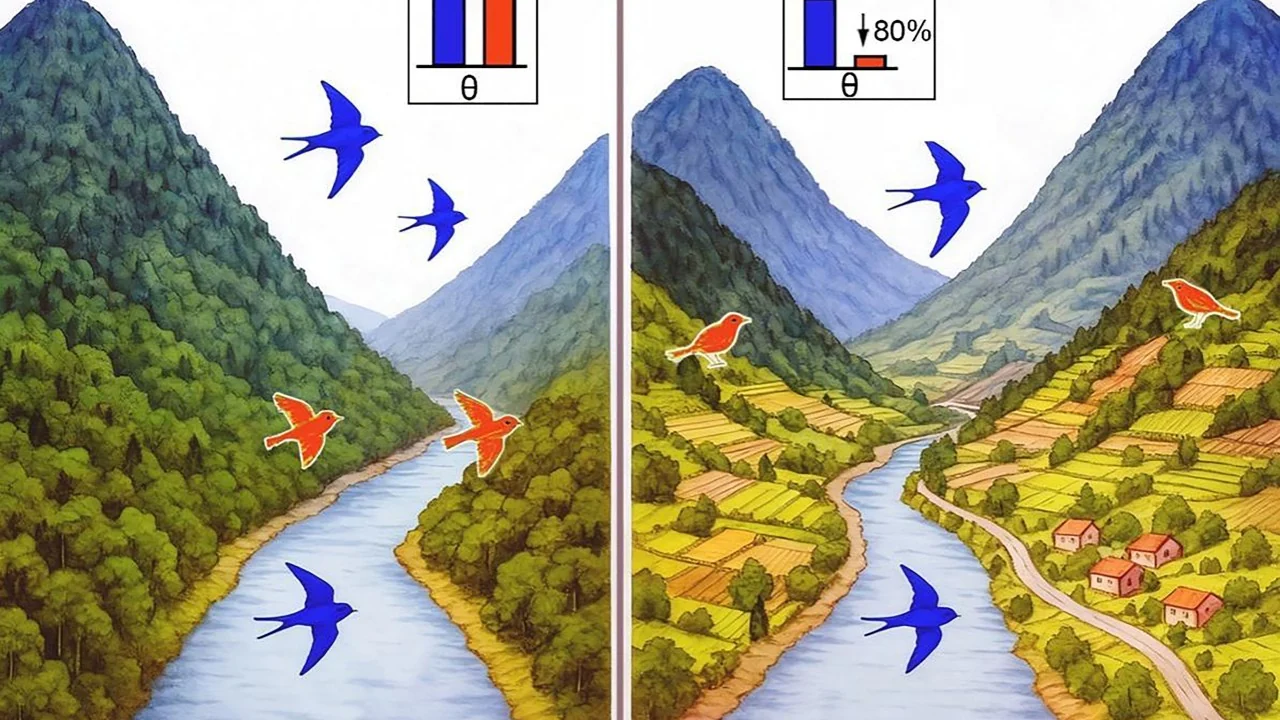
基因多样性是大自然的“保险单”——一种进化安全网,为自然选择提供了基础构建模块。
Genetic diversity is nature’s insurance policy – an evolutionary safety net that provides the building blocks for natural selection.
同一物种的成员拥有大体相同的基因组,一小部分独特的基因变异决定了它们的个体特征。当这种多样性遭到侵蚀、种群变得更加均一时,可能会使它们对相同的威胁变得脆弱,且在新威胁出现时无法适应。
While members of the same species share a mostly identical genome, a sliver of unique genetic variants determines their individual traits. When this diversity erodes, and a population becomes more uniform, it could leave them vulnerable to the same threats and unable to adapt when new ones emerge.
在中国,科学家发现常见鸣禽物种丧失基因多样性的速度比此前估计的更快,暴露出全球保护和灭绝风险监测中的一个“基因盲区”。
In China, scientists have found that common songbird species were losing genetic diversity faster than previously estimated, exposing a “genetic blind spot” in global conservation and extinction-risk monitoring.
上个月发表在《科学》杂志上的一项新研究中,中国科学院昆明动物研究所的研究人员发现,即使物种在其他方面很丰富,这种侵蚀也可能发生,揭示了当前保护措施之外一种无声的灭绝风险。
In a new study published in the journal Science last month, researchers from the Chinese Academy of Sciences’ Kunming Institute of Zoology found this erosion could happen even when a species was otherwise abundant, uncovering a silent risk of extinction beyond our current conservation measures.
这表明,尽管种群数量庞大,基因受损的鸟类物种可能会被一次疾病爆发或环境冲击消灭殆尽,而基因更多样的种群本可能承受住这些冲击。
This indicates that despite a large population, a genetically eroded bird species could be wiped out by a single disease outbreak or environmental shock that a more diverse population might have withstood.
通过比较云南高黎贡山数十种常见物种的历史与现代基因组,研究团队发现,这些鸟类在过去五十年间平均经历了近 50% 的基因组多样性丧失。
Comparing historical and modern genomes across dozens of common species in southwestern China’s Gaoligong Mountains, the team found that the birds had experienced an average genomic diversity loss of nearly 50 per cent over the past five decades.
虽然基因侵蚀在稀有或濒危物种中已被广泛认知,但该研究揭示,即使是种群数量庞大的物种,也可能正在积累“隐性灭绝债”,威胁其适应气候变化的能力。
While genetic erosion is widely recognised in rare or endangered species, the study reveals that even species with large populations could be accumulating “cryptic extinction debt” that threatens their ability to adapt to a changing climate.
论文第一作者董峰写道:“生物多样性丧失可能有一个隐性维度——即使物种表现出明显的恢复力,其基因多样性也可能在隐性地遭到侵蚀。”
“Loss of biodiversity can have a hidden dimension – the cryptic erosion of genetic diversity even in the face of apparent species resilience,” lead author Dong Feng said in the paper.
根据该团队对山地生物多样性热点地区62种鸣禽的基因组研究,这些鸟类平均失去了43%至49%的遗传多样性。
Based on the team’s genomic study of 62 songbird species in the mountainous biodiversity hotspot, the birds lost between 43 and 49 per cent of their genetic diversity on average.
研究人员发现,这种损失主要由栖息地破碎化驱动——即自然土地被分割成更小、相互孤立的斑块。
The researchers found that the loss was driven primarily by habitat fragmentation – the break-up of natural land into smaller, isolated patches.
研究人员表示,常见物种受到这种损失的影响“不成比例”。所有被研究的物种也均被世界自然保护联盟列为“无危”,这是根据现行标准,不符合濒危、易危或面临灭绝威胁条件的物种所获得的状态。
Common species were “disproportionately affected” by this loss, the researchers said. All studied species were also listed by the International Union for Conservation of Nature as “Least Concern”, a status assigned to species that do not qualify as endangered, vulnerable or threatened with extinction based on current standards.
“我们的结果揭示了一条将全球森林破碎化与基因组侵蚀联系起来的景观遗传途径,”该团队表示。“我们呼吁将基因组指标迅速纳入全球保护框架。”研究人员指出,随着人类改变了地球生态系统,当代灭绝率已超过史前时代至少100倍。
“Our results reveal a landscape-genetic pathway linking global forest fragmentation to genomic erosion,” the team said. “We call for genomic metrics to be rapidly integrated into global conservation frameworks.”As humans have transformed Earth’s ecosystems, contemporary extinction rates have come to exceed prehistoric times by at least 100-fold, the researchers noted.
“然而,灭绝风险不仅限于种群数量下降,因为遗传多样性的下降也威胁着物种的持续存在和适应潜力,”他们写道。
“Yet the extinction risk extends beyond population declines, because declines in genetic diversity also threaten species persistence and adaptive potential,” they wrote.
人类基因组大部分是相同的,不到1%负责我们在外貌和特征方面的巨大多样性。
Most of the human genome is identical, with less than 1 per cent accounting for our vast diversity in looks and traits.
根据保护遗传学联盟的说法,遗传多样性最初是由于遗传密码中的突变在几代人中积累而产生的。
Genetic diversity originally occurs due to mutations in the genetic code that build up over generations, according to the Coalition for Conservation Genetics.
这种遗传变异是自然选择的一个重要方面,自然选择是进化过程,使得具有更适合当前环境特征的个体能够生存并将其传递给后代。
This genetic variation is a vital aspect of natural selection, the evolutionary process by which individuals with traits better suited to their current environment survive to pass them on to future generations.
基因组侵蚀是指这种遗传多样性的丧失,导致物种内的个体在环境压力变化时,可供利用的独特遗传变异减少。
Genomic erosion refers to the loss of this genetic diversity, resulting in individuals within a species having fewer unique genetic variants to draw upon when environmental pressures change.
昆明研究所的研究员董某于11月3日告诉《中国科学报》,物种的遗传多样性“影响种群的长期生存”。
Dong, a researcher at the Kunming Institute, told China Science Daily on November 3 that the genetic diversity of a species “affects the long-term survival of the population”.
遗传多样性更高的种群,更能适应并抵御气候、病虫害的变化。在人为气候变化驱动的快速变迁中,这种韧性尤为重要。
More genetically diverse populations are better equipped to adapt to and withstand shifting climates, pests and diseases. This resilience is particularly important amid the rapid shifts driven by man-made climate change.
低遗传多样性危害的经典案例是19世纪的爱尔兰马铃薯饥荒。当时一种马铃薯晚疫病菌株在基因单一的单一种植作物中蔓延,导致大规模饥荒。
A classic example of the dangers of low genetic diversity is the 19th century Irish potato famine, which occurred after a strain of potato blight ran through a genetically uniform monoculture of the crop, leading to mass starvation.
这仍然是一个紧迫的全球问题。香蕉等重要作物至今仍以单一种植方式种植,使其容易受到新出现的疾病乃至生物武器的威胁。
This remains a pressing global concern, as important crops like bananas are still grown as monocultures, leaving them vulnerable to emerging diseases and even engineered bioweapons.
“尽管遗传多样性的重要性显而易见,但种群遗传学理论预测与实证观察之间仍存在显著差异,”该团队表示。
“Although the importance of genetic diversity is clear, notable contrasts persist between predictions from population genetic theory and empirical observations,” the team said.
他们关注高黎贡山。这是一个生物多样性热点地区,面积仅占全球陆地面积的0.02%,却栖息着近十分之一的全球鸣禽物种。
They focused on the Gaoligong Mountains, a biodiversity hotspot home to nearly one-tenth of global songbird species despite covering only 0.02 per cent of global land area.
该地区历史上与人类活动相对隔绝,但如今面临日益加大的压力,近几十年来森林破碎化加剧。
While historically insulated from human activity, the region now faces mounting pressure, with forest fragmentation intensifying in recent decades.
栖息地破碎化是指自然环境因自然灾害以及农业、伐木和基础设施建设等人类活动,被切割成更小的斑块。研究人员表示,该山区地形的变化为他们提供了一个“自然实验”,用于量化基因组侵蚀,并确定景观破碎化是否是这种损失的主要驱动因素。
Habitat fragmentation occurs when natural environments are carved into smaller patches by natural disasters as well as human activities such as agriculture, logging and infrastructure development. The researchers said the mountains’ changing terrain provided them with a “natural experiment” to quantify genomic erosion and determine whether landscape fragmentation served as the primary driver of this loss.
研究人员发现,基因组侵蚀的速度超过了先前的估计,并确定景观尺度的破碎化是其主要驱动因素。昆明动物研究所研究员董风表示,虽然栖息地丧失是全球生物多样性危机的主导力量,但栖息地破碎化——即使在保护区之间也可能发生——会使剩余种群相互隔离。
We found genomic erosion at rates exceeding previous estimates and identified landscape-scale fragmentation as its principal driverDong Feng, researcher, Kunming Institute of Zoology While habitat loss is the dominant force behind the global biodiversity crisis, habitat fragmentation – which can occur even across protected areas – can isolate populations that remain.
此外,他们指出,鸟类在主要分类群中遭受的遗传多样性损失最为严重,并补充说,在鸣禽中观察到的模式可能“预示着热点地区其他不那么敏感的群体将出现类似的轨迹”。
Furthermore, they noted that birds suffer the most severe genetic diversity loss among major taxonomic groups, adding that patterns seen in songbirds could “foreshadow similar trajectories in other, less-sensitive groups within the hotspot”.
该团队对比了两个不同时期的数百份样本,即1960年代至1970年代和2000年代至2020年代,分析了62种常见鸣禽物种的全基因组数据。
Comparing hundreds of samples from two distinct time periods, the 1960s-1970s and the 2000s-2020s, the team analysed whole-genome data from 62 common songbird species.
“我们发现基因组侵蚀的速度超过了先前的估计,并确定景观尺度的破碎化是其主要驱动因素,”该团队表示。
“We found genomic erosion at rates exceeding previous estimates and identified landscape-scale fragmentation as its principal driver,” the team said.
“这些发现表明,即使在广泛受保护的生物多样性热点地区,景观尺度的破碎化也可能是基因组侵蚀的关键驱动因素。”常见物种受到不成比例的影响,这一事实与传统认知相悖,传统认知认为种群数量较大能够缓冲遗传多样性损失。
“These findings suggest that even within extensively protected biodiversity hotspots, landscape-scale fragmentation can be a key driver of genomic erosion.”The fact that common species were disproportionately affected contradicts the traditional understanding that having a larger population buffers against genetic diversity loss.
作者指出,这一发现“为许多常见鸟类在大陆尺度上出现的令人困惑的下降提供了一种潜在机制”。
This finding, the authors noted, “provides a potential mechanism for the puzzling continent-scale declines of many common birds”.
该团队警告称,他们记录的遗传损失已经超过了2022年昆明-蒙特利尔全球生物多样性框架为维持进化潜力所设定的可容忍阈值。
The team warned that the genetic losses they documented already exceeded the tolerable threshold set by the 2022 Kunming-Montreal Global Biodiversity Framework for maintaining evolutionary potential.
他们呼吁将基因组指标纳入生物多样性监测,特别是针对那些可能正在悄然积累遗传损失的种群数量庞大的物种。
They urged that genomic indicators be integrated into biodiversity surveillance, particularly for demographically large species that may be silently accumulating genetic loss.