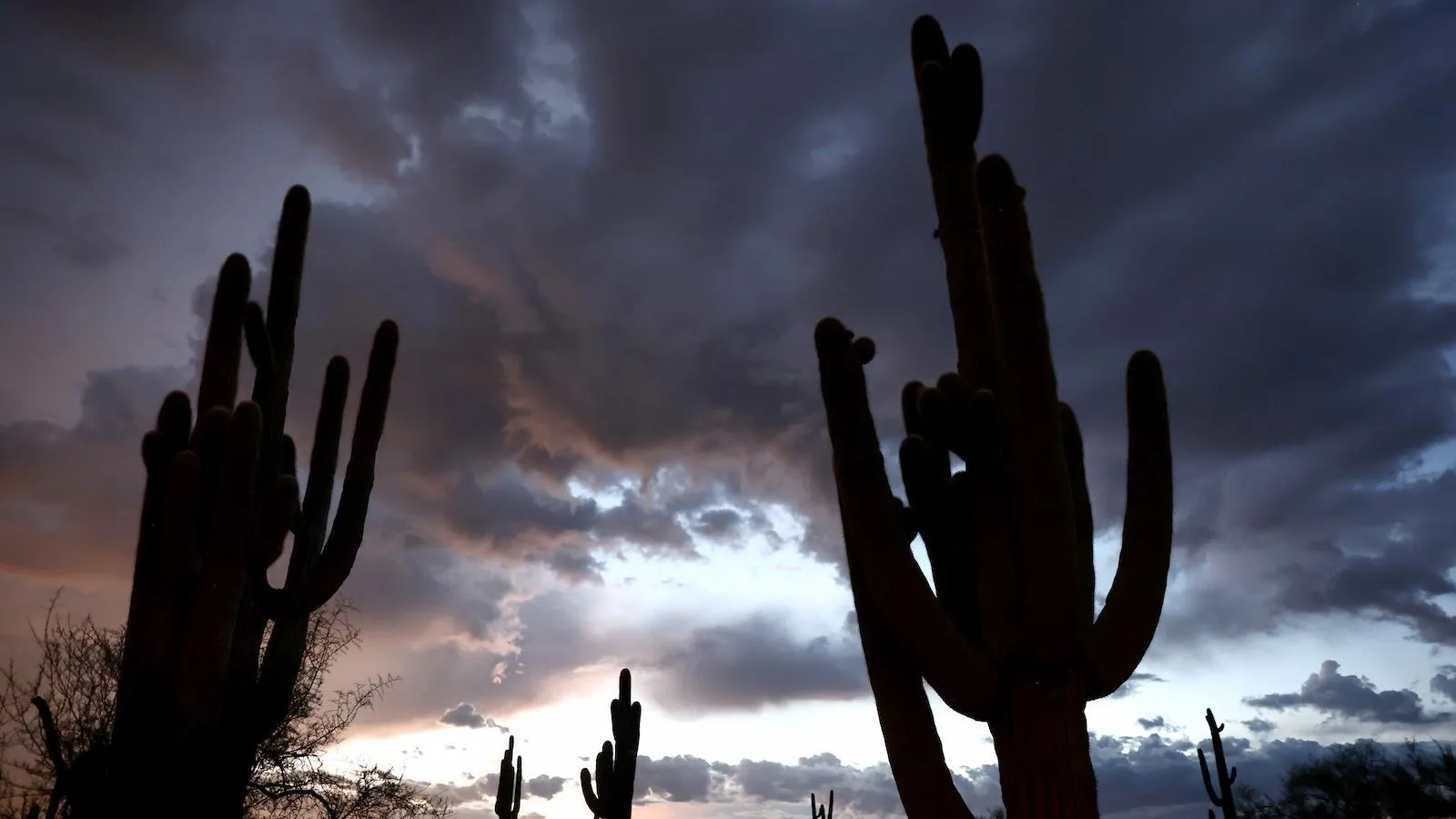
不起眼的仙人掌是坚韧的象征。在降水稀少、烈日炙烤的沙漠中,这些植物不仅能够生存,还能繁衍生息,进而为猫头鹰和其他鸟类提供栖息地,并为蝙蝠和其他授粉媒介提供花朵。
The humble cactus is an icon of resiliency. Stuck in a desert with little rain and abundant searing sun, these plants don’t just survive, they thrive—and in turn provide habitat for owls and other birds, and flowers for bats and other pollinators.
然而,由于栖息地丧失以及为了私人收藏而对物种进行的盗猎,仙人掌正面临严重的危机。根据期刊《自然》上的一项新研究,现在我们可以将日益恶化的干旱加入到这些困境中。研究人员对不仅持续气温上升而且伴随干旱期的未来进行了模拟,发现在气候剧烈变化的情况下,近1000种仙人掌中的大多数将失去栖息地。到2100年,其中超过四分之一的物种可能会失去至少百分之八十的栖息地。
Yet cacti are in serious trouble, due to habitat loss and the poaching of species for private collections. Now we can add worsening droughts to those woes, according to a new study in the journal Nature. Researchers modeled a future of not just relentlessly rising temperatures but also the attendant dry spells, finding that the majority of nearly 1,000 cactus species will lose habitat as the climate radically changes. More than a quarter of those species could lose at least 80 percent of that habitat by 2100.
南佛罗里达大学的保护生态学家、该论文的第一作者米歇尔·皮莱特表示:“公众对仙人掌的普遍看法是,这些生物对干旱有极强的适应能力,而且极其坚韧,能够应对你抛给它们的任何情况。现实中,仙人掌绝对令人惊叹——显然它们是我最喜欢的植物类群——但它们与其他植物并没有本质上的不同。”
“The public perception of cacti tends to be of these organisms that are extremely drought-adapted and are just resilient, can handle anything that you throw at them,” said Michiel Pillet, a conservation ecologist at the University of South Florida and lead author of the paper. “In reality, cacti are absolutely amazing—and they’re my favorite plant group, clearly—but they’re not that different from other plants.”
这意味着仙人掌需要水。例如,在美国西南部沙漠中,它们依赖季节性的季风降雨,这往往使七月或八月成为一年中最湿润的月份。由于这里依然是沙漠,仙人掌已经进化出了一系列适应机制来生存,比如一层有助于它们留住宝贵雨水的蜡质表皮。皮莱特说:“就像其他植物一样,它们是在自己习惯的条件下进化的。当你把它们置于这些条件之外时,它们可能就无法应对了。”
That means cacti need water. In the deserts of the southwestern United States, for example, they rely on seasonal monsoon rains, which tend to make July or August the wettest month in a given year. Because this is still a desert, cacti have evolved a range of adaptations to survive, like a waxy skin that helps them retain that bounty of rainwater. “Just like other plants, they evolved under conditions that they’re used to,” Pillet said. “When you take them outside of those conditions, they might not be able to handle that.”
不妨把这些仙人掌想象成医院里生病的病人。有人可能会因与高温相关的疾病入院,因为他们的身体正在努力降温。但与此同时,他们也可能脱水。随着全球气温上升和干旱加剧,仙人掌也面临着同样的压力。皮莱特说:“当我们考虑干旱状况时,结果表明它们的病情比我们以前认为的要严重得多、严重得多。这些研究结果确实改变了人们对仙人掌的看法,而且很可能也改变了气候变化下更广泛植物的远景。”
Think of these cacti like sick hospital patients. Someone might be admitted for heat-related illness, as their body struggles to cool itself. At the same time, though, they might be dehydrated. Cacti are dealing with the same stresses, as global temperatures rise and dry spells intensify. “When we consider drought conditions, then it turns out that they’re much, much sicker than we previously thought,” Pillet said. “These results really do change the outlook of cacti, and most likely plants more broadly under climate change.”
研究人员没有简单地对这些未来的威胁进行模拟,而是转向了公民科学平台iNaturalist,人们会在该平台上上传植物和动物的照片。这提供了65万条野外仙人掌的观测记录,有助于更清晰地描绘这些物种的生存状况。
Instead of simply modeling these threats going forward, the researchers turned to the citizen science platform iNaturalist, where people upload photos of plants and animals. This provided 650,000 observations of cacti in the wild, helping paint a clearer picture of how species might be faring.
事实上,这并非仙人掌枯萎死亡这么简单。当然,如果持续干旱发生,个体就无法获得水分。但这种压力在时间上也可能很复杂。皮莱特说:“现在我们可以转向这样的问题:哪些生命阶段受到的影响最大?是成株还是幼苗?还有,是哪些生理过程?是生长减缓还是死亡率增加?或者是植物无法开花?”换句话说:仙人掌物种可能会遭受干旱的亚致死效应——缺水可能不会立即杀死它们,但仍然会干扰它们的繁殖。
Really, this isn’t a simple matter of cacti withering and dying. Sure, if relentless droughts take hold, individuals can’t get water. But the stress could be temporally complex, too. “Now we can move towards questions of: What life stages are most affected?”Pillet said. “Is it the adults or is it the seedlings? But also, which processes? Is it reduced growth or is it increased mortality? Or are plants failing to flower?”Put another way: Cactus species could be suffering from sublethal effects of drought—the lack of water may not kill them immediately but still interfere with their reproduction.
如果没有繁衍,种群数量就会萎缩。例如,在索诺兰沙漠中,标志性的高大柱仙人在长期干旱期间繁殖频率降低,因为它们并不总能开花。
And without procreation, populations shrink. In the Sonoran Desert, for example, the iconic, towering saguaro is reproducing less frequently during prolonged droughts, because they’re not always flowering.
部分问题在于,尽管沙漠生态系统表面上看起来坚韧顽强,但它们实际上相当脆弱。未参与该研究的自然保护协会驻亚利桑那州首席科学家马科斯·罗布莱斯说:“一旦受到干扰或退化,它们就无法迅速恢复,这仅仅是因为水量太少而气温又太高。恢复需要几十年的时间,在某些情况下,它们根本无法恢复。”
Part of the problem is that while desert ecosystems may look tough and hardened overall, they’re in fact quite fragile. “They don’t recover quickly once they are disturbed, or once they are degraded, just because there’s so little water and such higher temperatures,” said Marcos Robles, the Nature Conservancy’s lead scientist in Arizona, who wasn’t involved in the research. “It takes multiple decades to recover, and in some cases, they don’t recover.”
现在,干旱正与栖息地丧失和盗猎等其他压力相互交织,将仙人掌物种推向濒危的边缘。在另一个极端,海平面上升带来的过多水分导致了佛罗里达州礁岛群树仙人掌的局部灭绝。更高的夜间温度也是一个问题,因为那是柱仙人掌和其他仙人掌为了避免水分流失而进行呼吸作用的时间。未参与该论文的非营利组织美国仙人掌和多肉植物协会会长罗德·海尼说:“如果夜间温度非常高,它们就无法做到这一点。如果在这种情况下浇水,植物就会腐烂。”
Now drought is compounding with other stressors, like habitat loss and poaching, to drive cactus species to the brink. On the opposite end of the spectrum, too much water from rising seas has led to the local extinction of the Key Largo tree cactus in Florida. Higher nighttime temperatures are a problem, too, since that’s when saguaro and other cacti respire to avoid water loss. “If the nighttime temperatures are very high, they can’t do it,” said Rod Haenni, president of the nonprofit Cactus and Succulent Society of America, who wasn’t involved in the paper. “Then if you water on top of that, the plants just rot.”
尽管如此,一些仙人掌物种可能会通过迁徙来存活下来。当然,不是指单个植物,而是指种群可以蔓延到气候更接近这些物种在数千年前适应的环境的区域。事实上,北极地区也正在发生类似的事情,一些植物为了“寻找”日益宜人的天气和更多的水,正向更北的地方进军。
Still, some cactus species may persist by picking up and leaving. Well, not individual plants, but populations could creep into areas with climates that more closely match what the species adapted to all those millennia ago. A similar thing is happening in the Arctic, actually, where some plants are marching farther north in “search” of increasingly agreeable weather and more water.
归根结底,这类研究的目的是更好地为保护专业人员确定工作重点提供参考。当然,他们无法阻止干旱,但他们可以转移足够数量的仙人掌,在植物园中建立种群,随着气候变得连最顽强的沙漠植被都难以辨认,这些仙人掌可以在那里得到照顾。在某些情况下,这些物种甚至可以被重新引入野外,只要干旱和高温不再对该种群构成威胁。
In the end, the purpose of this sort of research is to better inform where conservation professionals might concentrate their efforts. They can’t stop droughts, of course, but they can evacuate enough cacti to establish populations in botanical gardens, where they can be cared for as the climate grows more unrecognizable to even the hardiest desert vegetation. Species can even be reintroduced to the wild in some cases, so long as drought and high temperatures don’t remain a threat to a population.
海尼表示,政府也需要保护仙人掌受到威胁的土地。他补充说,这项新研究可能会促成这一点。海尼说:“希望这能唤醒人们。但问题是,许多涉事的政府对此漠不关心。这些国家里有很多人并不冷漠,但掌权的不是他们。”这篇报道最初发表在Grist网站上,是“气候服务台”合作项目的一部分。
Governments, too, need to protect the lands where cacti are threatened, Haenni said. This new research, he added, could make that happen. “Hopefully, it’ll wake people up,” Haenni said. “But the problem is that a lot of the governments involved are indifferent to this. There are a lot of people in the countries who are not indifferent, but they’re not running the governments.”This story originally appeared on Grist and is part of the Climate Desk collaboration.