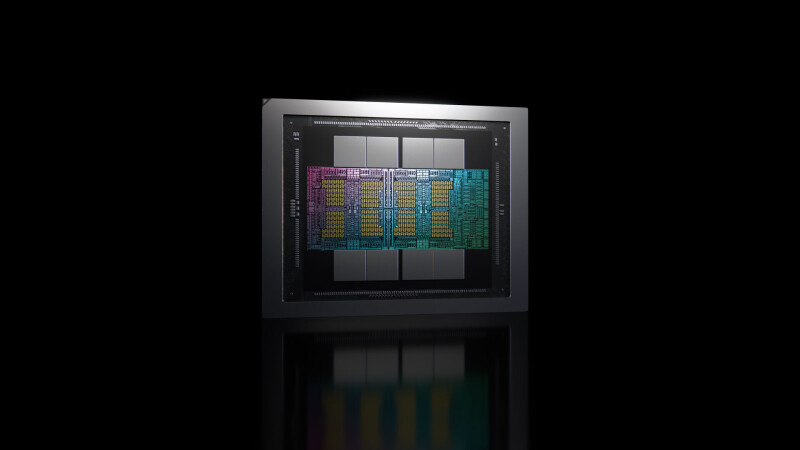
在本周的2026年超级计算大会上,英伟达发布了其Rubin GPU的一个新变体,瞄准的是一一你绝对想不到一一高性能计算(HPC)。这款命名颇具创意的Rubin HPC承诺提供超过5万个CUDA核心,几乎是英伟达今年早些时候发布的、面向AI的版本的两倍。它将在2028年某个时候推出。据英伟达超级计算高级总监丹·恩斯特介绍,这款新芯片提供了一种重新平衡的架构,针对HPC和科学计算领域常见的模拟、工程和高性能分析类工作负载进行了优化。
At Supercomputing 2026 this week, Nvidia unveiled a new variant of its Rubin GPUs aimed at – you’ll never believe it – high performance computing (HPC). The creatively named Rubin HPC promises more than 50,000 CUDA cores, nearly twice that of the AI-focused version of the chip that Nvidia unveiled earlier this year. It will arrive sometime in 2028. According to Dan Ernst, Nvidia’s senior director of supercomputing, the new chip offers a rebalanced architecture optimized for the kinds of simulation, engineering, and high-performance analytics workloads common in the HPC and scientific computing communities.
这并非英伟达首次推出专用硬件。去年,该公司针对AI推理工作负载优化了其B300加速器。“Rubin HPC是同样的思路,”恩斯特对《The Register》表示。“在Rubin平台之内,我们正在构建变体,以真正聚焦于某个特定的应用子领域。”细节仍然少得惊人。英伟达尚未披露峰值性能、内存容量或带宽。尽管如此,这款芯片很可能包含一些特性,显示英伟达能够超越AI进行思考,并且仍然关心HPC社区。
This is not the first time Nvidia has introduced specialized hardware. Last year, the company optimized its B300 accelerator for AI inferencing workloads. “Rubin HPC is the same idea,” Ernst told El Reg. “Within the Rubin platform, but we’re building variants to really focus on a specific sub domain of applications.”Details remain remarkably thin. Nvidia hasn’t disclosed peak performance memory capacity or bandwidth.
担心英伟达可能忽视HPC是有理由的,因为从Blackwell Ultra(B300/GB300)的发布开始,该公司就用更低精度的更高吞吐量换掉了双精度矩阵加速。结果是一款在FP4下能输出15千万亿次AI计算性能、但在FP64下仅有1.3万亿次浮点运算的芯片。这对AI有利,但对科学家来说用处不大。当英伟达发布Rubin时,这家GPU厂商似乎会延续这一趋势。
That said, the chip will likely include features which show Nvidia can think beyond AI and still cares about the HPC community. Fearing that Nvidia could ignore HPC is reasonable becuase beginning with the launch of Blackwell Ultra (B300/GB300), the company traded double-precision matrix acceleration for higher throughput at lower-precisions. The result was a chip that at FP4 churned out 15 petaFLOPS of AI compute, but just 1.3 teraFLOPS at FP64. That's good for AI, but less useful for scientists.
该芯片在FP64下为33万亿次浮点运算,不仅比它所取代的Blackwell GPU更慢,也比英伟达如今已有四年之久的Hopper加速器更慢。
When Nvidia unveiled Rubin, it seemed the GPU-slinger would continue this trend.
英伟达主张,对于以高性能共轭梯度(HPCG)基准测试衡量的、稀疏且以向量为主的工作负载,更高的内存带宽与算力之比应能带来显著的性能提升。与此同时,对于以高性能林帕克(HPL)等基准测试为代表的、稠密且以矩阵为主的工作负载,英伟达采取了一项新策略:FP64仿真。我们今年早些时候已更详细地讨论过这项技术的利弊,但简而言之,它使用一种源自所谓“尾崎方案”(Ozaki Scheme)的算法。
At 33 teraFLOPS, the chip was not only slower at FP64 than the Blackwell GPUs it replaced, but slower than Nvidia’s now four-year-old Hopper accelerators as well. Nvidia contended that for sparse vector-heavy workloads measured by the High Performance Conjugate Gradients (HPCG) benchmark, the higher ratio of memory bandwidth to compute should deliver meaningful performance gains. Meanwhile, for dense matrix-heavy workloads, for which benchmarks like High-Performance Linpack (HPL) are representative, Nvidia adopted a new strategy: FP64 emulation.
该算法的原理是将FP64矩阵运算分解为一连串INT8运算,这些运算在英伟达的张量核心上运行时,可达到高于原生性能的水平。我们被告知,英伟达并未使用INT8,但它确实在释放可观的性能提升,至少对某些工作负载而言是如此。据英伟达称,Rubin最高可输出200万亿次仿真的FP64矩阵浮点运算每秒(teraFLOPS)。
We discussed the pros and cons of this technique in greater detail earlier this year, but in a nutshell it uses an algorithm derived from the so-called Ozaki Scheme. The algorithm works by decomposing FP64 matrix operations into a string of INT8 operations that, when run on Nvidia’s tensor cores, achieve higher-than-native performance. Nvidia, we’re told, isn’t using INT8, but it is unlocking substantial performance gains, at least for certain workloads.
虽然恩斯特没有提供任何具体细节,但他向我们保证,英伟达的HPC硬件应能提供原生FP64矩阵性能,客户不必完全依赖仿真。评估这款新芯片的向量性能则要容易得多。凭借超过5万个CUDA核心(据我们计算,应接近53,248个),该芯片在双精度下应能提供至少高出86%的向量性能。AMD的HPC猛兽AMD也在打造新的HPC芯片。
According to Nvidia, Rubin can churn out up to 200 emulated FP64 matrix teraFLOPS. While Ernst didn’t offer any specifics, he assured us that Nvidia’s HPC hardware should offer native FP64 matrix performance and customers won't have to rely entirely on emulation. Assessing the new chip's vector performance is much easier. With more than 50 thousand CUDA cores (by our calculation, it should be closer to 53,248), the chip should deliver at least 86 percent higher vector performance at double precision.
在上周末发布的一篇博客文章中,AMD公布了其MI400系列GPU针对HPC优化的版本。Instinct MI430X拥有432 GB的HBM4、23 TB/s的内存带宽,以及高达288万亿次浮点运算每秒(teraFLOPS)的峰值双精度算力。AMD并不依赖FP64仿真。相反,AMD利用其模块化小芯片架构,打造了两个不同版本的MI400系列加速器:一个针对AI优化,另一个则专为在HPC和科学计算工作负载中表现出色而设计。
AMD’s HPC beast AMD is also cooking up new HPC chips. In a blog post published late last week, AMD revealed the HPC-tuned version of its MI400-series GPUs. The Instinct MI430X boasts 432 GB of HBM4, 23 TB/s of memory bandwidth and a whopping 288 teraFLOPS of peak double precision grunt. AMD isn’t relying on FP64 emulation.
AMD已就这些芯片在Top500几项主要基准测试中的表现给出了预测。毫无意外,这家“禅宗之家”表示,如果EuroHPC的Alice Recoque和橡树岭国家实验室即将推出的Discovery超级计算机从其早期的Instinct MI300A和MI250X产品升级,将获得显著的性能提升。®
Instead, AMD took advantage of its modular chiplet architecture to build two distinct versions of its MI400-series accelerators: one optimized for AI and another designed to excel in HPC and scientific computing workloads. AMD has shared predictions as to how the chips will perform in several of the Top500’s headline benchmarks. In a total non-surprise, the House of Zen says systems like EuroHPC’s Alice Recoque and Oak Ridge National Laboratories’ upcoming Discovery supers would enjoy significant performance gains if they upgrade from its earlier Instinct MI300A and MI250X-based offerings. ®