随着训练机器人所需的真实世界数据需求不断增长,印度公司Humyn Labs已筹集4700万美元A轮融资,用于帮助美国人工智能和机器人公司构建能够在物理环境中运行的模型。
As demand grows for real-world data to train robots, India’s Humyn Labs has raised $47 million in Series A financing to help U.S. AI and robotics companies build models that can operate in physical environments.
本轮融资包括2600万美元股权融资,由Accel领投,Cactus Partners跟投,Prosus Ventures、BeeGlobal、Bajaj Finance旗下的Finserv Intelligence和Bajaj Alts AI Opportunities Fund、Dallas Venture Capital、Lighthouse Canton以及Jump Trading参与。融资还包括2100万美元风险债务,由Lighthouse Canton Growth Debt Fund II领投,Trifecta Capital参与。
The funding comprises $26 million in equity led by Accel alongside Cactus Partners, with participation from Prosus Ventures, BeeGlobal, Bajaj Finance’s Finserv Intelligence and Bajaj Alts AI Opportunities Fund, Dallas Venture Capital, Lighthouse Canton, and Jump Trading. It also includes $21 million in venture debt led by Lighthouse Canton Growth Debt Fund II, with participation from Trifecta Capital.
世界各地的公司都在尝试制造能够执行人类日常任务的机器人,但获取足够的高质量数据来训练它们仍然困难。Mecka AI、XDOF和MicroAGI等初创公司已经在通过收集真实世界数据用于机器人训练来解决这一问题。总部位于班加罗尔的Humyn Labs希望与它们竞争。
Companies around the world are trying to build robots capable of performing everyday human tasks , but getting enough quality data to train them remains difficult. Startups including Mecka AI , XDOF , and MicroAGI are already tackling the problem by collecting real-world data for robotics training. Bengaluru-based Humyn Labs aims to compete with them.
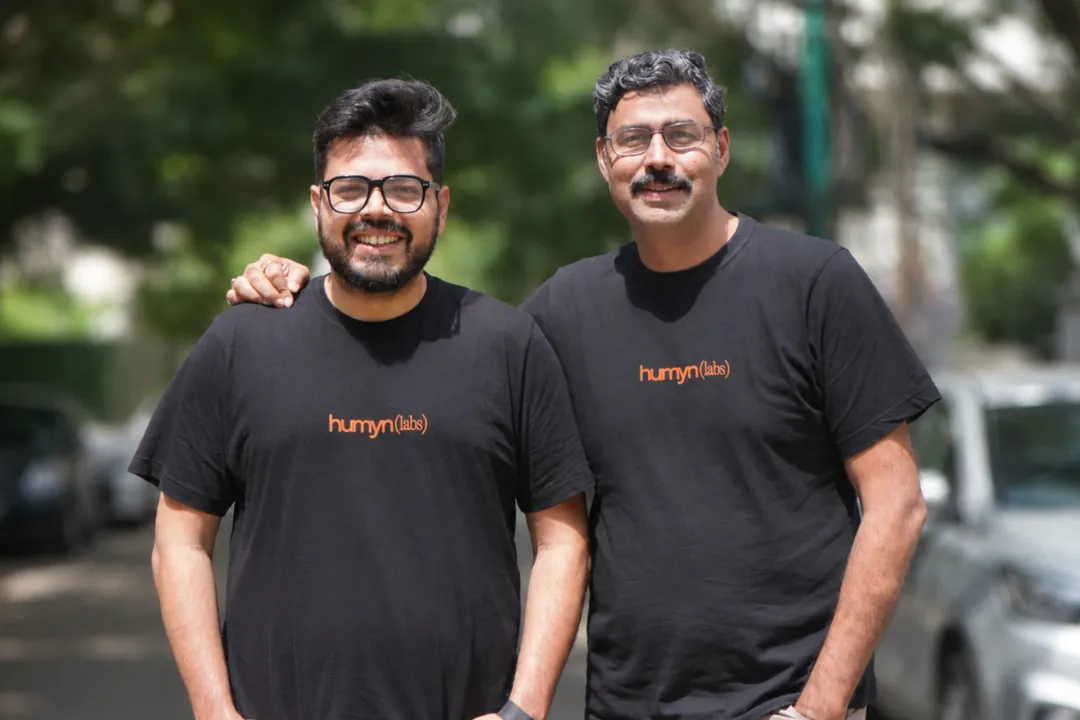
Humyn Labs开发了自己的双摄像头硬件,用于记录人们执行日常任务的过程。随后,公司利用其软件处理和标注这些影像,也就是为每段视频中发生的事情打上标签,以便AI从中学习。联合创始人马尼什·阿加瓦尔(上图右)在接受采访时表示,这家初创公司在拉丁美洲和亚洲的20多个国家收集数据,主要枢纽为巴西、印度和韩国。
Humyn Labs has developed its own two-camera hardware to record people performing everyday tasks. It then uses its software to process and label the footage, which means tagging what happens in each clip so AI can learn from it. The startup collects data across over 20 countries in Latin America and Asia, with Brazil, India, and South Korea serving as its main hubs, co-founder Manish Agarwal (pictured above, right) said in an interview.
阿加瓦尔是印度游戏公司Nazara Technologies的前首席执行官,今年2月,他与酿酒巨头百威英博前高管伊尚克·古普塔(上图左)共同创立了Humyn Labs。两人此前曾创办Kratos Studios,该公司现名为KGeN。两位创始人向TechCrunch表示,KGeN在新兴市场拥有一个贡献者网络,这个网络帮助Humyn Labs在人们家中采集数据。
Agarwal, the former CEO of Indian gaming company Nazara Technologies, founded Humyn Labs in February with Ishank Gupta (pictured above, left), a former executive at the brewing giant AB InBev. The duo previously founded Kratos Studios, now known as KGeN . KGeN has a network of contributors across emerging markets, and that network helps Humyn Labs collect data in people’s homes, the founders told TechCrunch.
阿加瓦尔表示,采集人类活动的影像只是挑战的一部分。他补充说,Humyn Labs还使用软件追踪手部动作、与物体的交互以及其他细节,将原始录像转化为AI模型可以学习的数据。
Collecting footage of human activity is only part of the challenge, Agarwal said. He added that Humyn Labs also uses software to track hand movements, interactions with objects, and other details, turning raw recordings into data that AI models can learn from.
“规模、多样性和质量是重要的方面,它们需要协同发挥作用,”阿加瓦尔说。
“Scale, diversity, and quality are important aspects, and they need to work in tandem,” Agarwal said.
Humyn Labs表示,公司目前有12家付费客户,包括前沿AI实验室、机器人公司以及世界模型的开发者。古普塔说,公司约90%的收入来自美国,但他拒绝透露具体客户名称。
Humyn Labs says it has 12 paying customers, including frontier AI labs, robotics companies, and developers of world models. About 90% of its revenue comes from the U.S., Gupta said, though he declined to name specific customers.
阿加瓦尔告诉TechCrunch,这家初创公司在4月至10月间创造了1000万美元的收入,另有2000万美元的已签约合同,此外还有2000万美元的交易尚未最终敲定。
The startup generated $10 million in revenue between April and October and has another $20 million in signed contracts, Agarwal told TechCrunch, adding that a further $20 million in deals has yet to be finalized.
阿加瓦尔表示,这种增长也增加了Humyn Labs对营运资金的需求,他以此解释为何选择2100万美元的风险债务融资。这家初创公司按日或按周向工人和数据采集合作伙伴付款,但通常需要等待30至60天才能从AI实验室客户那里收到款项。他说,借款有助于填补这一缺口,而且比出售更多股权对股权的稀释更小。
That growth has also increased Humyn Labs’ need for working capital, Agarwal said, explaining the $21 million venture debt component. The startup pays workers and data collection partners daily or weekly but typically waits 30 to 60 days to receive payments from its AI lab customers. Borrowing helps bridge that gap and is less dilutive than selling more equity, he said.
过去几个月里,印度已成为收集所谓物理AI训练数据的中心,Human Archive和BuildAI等初创公司利用该国庞大的劳动力队伍,录制人们执行日常任务的视频。然而,这种做法也引发了关于隐私和同意的质疑,尤其是当人们在家中被人拍摄时。
Over the last few months, India has emerged as a hub for collecting training data for so-called physical AI, with startups including Human Archive and BuildAI tapping into the country’s large workforce to record people performing everyday tasks. However, the practice has also raised questions about privacy and consent, particularly when people are recorded inside their homes.
阿加瓦尔表示,Humyn Labs收集的是人们从事日常工作或家务时的数据,而不是要求他们表演预设的活动。这家初创公司与当地合作伙伴合作,确定采集地点并监督整个过程。他说:“工人是有报酬激励的工人,但为了获得正确的输入,他需要被监测和监督。”
Agarwal said Humyn Labs collects data from people doing their usual work or household chores instead of asking them to perform staged activities. The startup works with local partners to identify collection sites and oversee the process. “The worker is a worker who is incentivized, but he needs to be monitored and supervised for the right input,” he stated.
阿加瓦尔说,Humyn Labs目前有51名全职员工,大多数在班加罗尔,此外在其收集数据的各个国家还有一个当地合作伙伴网络。
Humyn Labs currently has 51 full-time employees, most based in Bengaluru, plus a network of local partners across the countries where it collects data, Agarwal said.