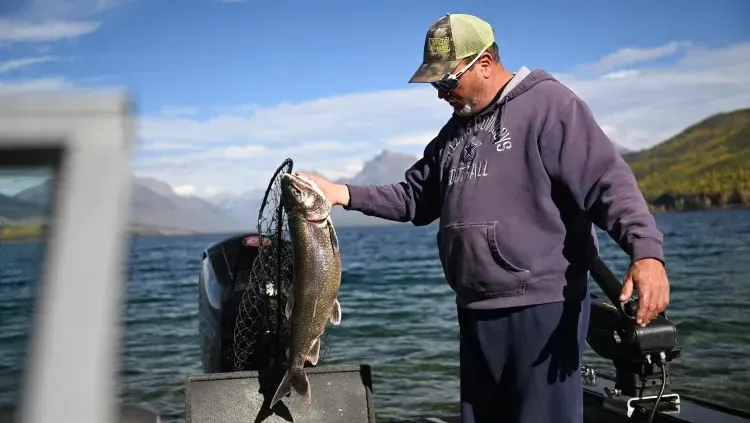
本文最初由Vox发表,此处作为气候台合作内容转载。1992年夏天,一名男子将满满一冷藏箱的黄鲈鱼倒入蒙大拿州西北部的玛丽罗南湖。
This story was originally published by Vox and is reproduced here as part of the Climate Desk collaboration. On a summer day in 1992, a man dumped a cooler full of a fish called yellow perch into Lake Mary Ronan, in northwest Montana.
我们之所以知道这件事,是因为两名青少年目睹了他的行为;他们记下了他的车牌号,并向蒙大拿州鱼类、野生动物与公园管理局(FWP)举报,该局立即派出生物学家,用渔网和毒药捕获并杀死这些鲈鱼。
We know this because two teenagers saw him do it; they wrote down his license plate number and called in a tip to the Montana Fish, Wildlife, and Parks department (FWP), which immediately dispatched biologists to capture and kill the perch with nets and poison.
这两名青少年因他们的努力各获得500美元奖励,而那名男子则被控非法向湖中引入非本地鱼类,被处以小额罚款后便获准离开。法律不久后便修改了:如今,故意向蒙大拿州水域引入非本地入侵物种属于重罪,最高可判处两年监禁或最高2.5万美元罚款,或两者并罚。
The teenagers got a reward of $500 each for their efforts, while the man was charged with illegally introducing non-native fish into the lake, slapped with a small fine, and sent on his way. The law changed soon after: Now, intentionally introducing a non-native, invasive species to Montana’s waters is a felony punishable by as long as two years in prison or a fine of up to $25,000, or both.
“一个人做出的决定可以影响整个相互关联的生态系统。这就像纵火。”
“A decision made by one person can affect an entire interconnected ecosystem. It’s like an act of arson.”
但那些鲈鱼呢?黄鲈——至少其中两条——活了下来,繁殖增多,并很快开始造成严重破坏。它们在湖中确立了优势地位,消灭了湖中一种名为西坡割喉鳟的本地鱼类种群,并造成其他生态系统的破坏。这种情况并非只发生在这里:蒙大拿遍布数千个美丽的的高山湖泊和河流,坐落于那种曾让人们向往西部的崎岖地带。然而,在全州各地,人们不断未经许可向这些水域倾倒非本地鱼类。
But the perch? The yellow perch—at least two of them—survived, multiplied, and quickly went on to wreak havoc. They established dominance in the lake, wiping out its population of a native fish called the Westslope Cutthroat trout and causing other ecosystem disruptions. This hasn’t only happened here: Montana is filled with thousands of beautiful alpine lakes and rivers, nestled in the sort of rugged territory that sold people on the idea of the West. Yet, across the state, without permission, people keep dumping non-native fish into them.
原因很简单:一些垂钓者认为,引入的鱼比蒙大拿州水域里已有的鱼更好钓。但这种“游击生态学”——有人称之为“水桶生物学”——可能会颠覆脆弱而由来已久的生态系统,不仅伤害本地鱼类,也伤害依赖它们生存的动物,比如白头海雕、熊和水獭。它可能把蒙大拿州纯净的水域变成浑浊的烂摊子,还需要每年花费数百万美元清理和额外维护。
The reason is simple: The introduced fish, according to some anglers, are more fun to fish than the stuff that’s already swimming around in Montana’s waters. But this guerrilla ecology—or “ bucket biology ” as some call it—risks upending delicate, longstanding ecosystems, harming not only native fish, but also animals that depend on them, like bald eagles, bears, and otters. It could turn Montana’s pristine waters into murky messes that also require millions of dollars in cleanup and additional maintenance every year.
这也不只是蒙大拿州的问题。全美各州都在设法阻止人们往湖里放不属于那里的鱼。这个问题风险很高,其影响可能远远超出单个湖泊的水下范围;阻止非法放鱼的努力如今催生了从高额赏金到专门的鱼类法证等各种手段。“一个人做出的决定可以影响整个相互关联的生态系统,”萨利什和库特奈部落联盟(CSKT)渔业项目经理克雷格·巴富特说,“这就像纵火。”
And it’s not just a problem in Montana. Across the country, states are trying to stop people from filling lakes with fish that don’t belong. It’s a high-stakes issue with ramifications that can reach far beyond the underwater neighborhood of a single lake; efforts to stop illegal fish-dumping have now spawned everything from high-dollar bounties and dedicated fish forensics. “A decision made by one person can affect an entire interconnected ecosystem,” said Craig Barfoot, Fisheries Program Manager for the Confederated Salish and Kootenai Tribes (CSKT), which is based on the Flathead Reservation in northwestern Montana and oversees some of the most pristine aquatic habitats in the state. “It’s like an act of arson.”
该部落联盟位于蒙大拿州西北部的弗拉特黑德保留地,管理着该州一些最原始的水生栖息地。弗拉特黑德湖位于冰川国家公园以南约一小时车程处,是那种明信片上的风景胜地。这个湖长27英里,一半位于弗拉特黑德保留地内(由部落管理),一半由州政府管理,是人口稠密地区最干净、最清澈的湖泊之一——去年的一项调查发现,湖水清澈见底,能见度约达36英尺——这吸引了各种生物来到岸边。
Flathead Lake, about an hour’s drive south of Glacier National Park, is the sort of place postcards were made for. The 27-mile-long lake, half within the Flathead Reservation (and overseen by the tribes) and half managed by the state, is one of the cleanest, clearest lakes in the populated world—a survey last year found that the lake is clear down to about 36 feet—which draws all sorts of creatures to its shore.
10月的一次为期两天的探访中,我看到一只黑熊在岸边漫步,一只白头海雕停在树上,撕扯着它从水里抓到的鱼。
During a two-day visit in October, I saw a black bear ambling along the shore and a bald eagle sitting in a tree, tearing into a fish it had scooped out of the water.
弗拉特黑德湖生物站副主任汤姆·班萨克说,这个巨大的冰川湖“大约1.5万年前还是冰”。该生物站是位于湖中的研究站,由蒙大拿大学运营。“在西方人到来之前,湖里大概有8到10种鱼,对于这么大的湖来说并不算多。”
This massive glacial lake “was ice about 15,000 years ago,” said Tom Bansak, associate director of the Flathead Lake Bio Station, a research station in the lake that’s run by the University of Montana. “Before western contact, there were maybe eight to 10 species of fish in the lake, which is not very many for a lake of its size.”
从19世纪末开始,情况发生了变化。当时联邦和州一级的野生动物管理者决定开始向全国各地的湖泊投放鱼类,这些鱼在孵化场养殖,然后放入水中供休闲垂钓。几十年来,各州在决定投放何种鱼时,主要不是依据当地生态,而是依据人们想钓什么鱼,于是湖里被放满了鳟鱼、鲈鱼、大眼狮鲈和狗鱼等非本地鱼类。如果你住在美国,你附近最热门的钓点很可能满是投放的鱼;在弗拉特黑德湖,野生动物管理者引入了大约30种不同的非本地鱼,其中约十几种建立了产卵种群,如今非本地鱼的数量已超过本地鱼。
That changed starting in the late 1800s, when wildlife managers at the federal and state levels decided to start stocking lakes around the country with fish that were raised in hatcheries and released into the water for recreational fishing. For decades, states mostly made stocking decisions based not on local ecologies but rather on the kinds of fish people wanted to catch, filling them with nonnative fish like trout, bass, walleye, and pike. If you live in the United States, there’s a good chance the closest popular fishing spot is filled with stocked fish; at Flathead Lake, wildlife managers introduced around 30 different kinds of non-native fish, of which about a dozen established spawning populations, and today non-native fish outnumber native ones.
“其中一些人在想把鱼挪来挪去这件事上心怀恶意。人们对我们很生气,而且大声说了出来。”
“Some of these people are spiteful in their desire to move fish around. People are mad at us, and they vocally say it.”
最终,州野生动物机构开始意识到,这种由休闲垂钓驱动的投放可能损害当地生态系统:例如在20世纪70年代,蒙大拿州决定停止在该州大多数溪流和河流中投放非本地鱼。不过,该州仍在其一些湖泊和水库中投放大量鱼类,包括少数非本地物种,其他大多数州也是如此。
Eventually, state wildlife agencies began to realize that this sort of recreation-driven stocking can harm local ecosystems: In the 1970s, for example, Montana decided to stop stocking non-native fish in most of its streams and rivers. It still stocks plenty of fish , though, including a few non-native species, in some of its lakes and reservoirs, as do most other states.
然而,对一些人来说,这还不够。一些垂钓者认为,蒙大拿州的本土鱼,如公牛鳟、割喉鳟和鲟鱼,就是不如北狗鱼和大眼狮鲈之类钓起来有趣、吃起来美味——而这两种鱼近年来都被非法引入该州水域。
For some people, however, that’s not enough. Some anglers believe the fish native to Montana, like bull trout, cutthroat trout, and sturgeon, just aren’t as fun to catch or as tasty to eat as, say, northern pike and walleye—both of which have been illegally introduced to the state’s waters in recent years.
于是,鱼类生物学家登场了。改变整个湖泊的鱼类种群,可能只需要一桶鱼,这意味着如果有人对自己当地湖泊的钓鱼选择感到厌倦,他可以单方面决定给湖里加点新花样,而被抓的风险很小。尽管在蒙大拿州(以及至少另外四个州),引入非本地鱼类如今已是重罪,但那里没有一个人被起诉,更不用说被定罪了;30多年前两名少年在玛丽·罗南湖看到的那个人,是唯一一个被举报过的人。
Enter the bucket biologists. It can take as little as a bucketful of fish to alter the population of an entire lake, which means that if someone is bored of the fishing options at their local lake, they could unilaterally decide to spice things up with little risk of getting caught. Despite nonnative fish introductions now being a felony in Montana (and at least four other states), not a single person has been charged, let alone convicted there; that man the two teens saw at Lake Mary Ronan more than 30 years ago is the only person to have ever even been reported.
但鱼类和野生动物官员知道这种事仍在发生,因为他们不断在该州的水道中发现非本地鱼类,而这些鱼最可能的来源是有人非法将它们放流进去。
But fish and wildlife officials know it’s still happening because they keep finding non-native fish in the state’s waterways, and the most likely way they got there is by someone illegally dumping them in.
“他们显然是热心的钓鱼爱好者,我们很可能认识他们,”在弗拉特黑德湖附近工作的蒙大拿州鱼类、野生动物与公园管理局(FWP)渔业生物学家萨姆·布勒特说。调查非法引入鱼类是布勒特的专长:《大瀑布城论坛报》称他为“鱼类侦探”,因为他开创了一种法医技术,通过查看耳石(鱼类石状的耳骨)内部的化学线索来判断它们可能来自哪里。
”They’re obviously avid anglers, and we probably know them,” said Sam Bourret, a fisheries biologist at FWP based near Flathead Lake. Investigating illegal fish introductions is Bourret’s speciality: The Great Falls Tribune called him the “ fish detective ” for pioneering a forensic technique that looks at chemical clues inside otoliths , fishes’ stone-like ear bones, to figure out where they might have come from.
他还利用基于海拔和垂钓压力等条件的数据建模,来判断哪些湖泊未来最容易遭到鱼类引入,这有助于将资源导向这些湖泊,并阻止潜在的“水桶生物学家”。
He’s also used data modeling based on conditions like elevation and fishing pressure to figure out which lakes might be most vulnerable to future fish introductions, which could help steer resources towards them and stop would-be bucket biologists.
从他在工作岗位上的经历来看,其中包含许多与垂钓者的直接接触,他能看出很多人都感到恼火,因为他们不能想在哪里放养自己想要的鱼就在哪里放养。“我确实认为其中一些人执意要挪动鱼类是出于恶意,”布瑞特说。“人们对我们很生气,而且会大声说出来。”
From his time on the job, which has included many firsthand interactions with anglers, he can tell many of them are irked that they can’t stock the fish they want wherever they want them. “I do think some of these people are spiteful in their desire to move fish around,” Bourret said. “People are mad at us, and they vocally say it.”
有时罪魁祸首并非有意为之。养在私人领地池塘里的非本地鱼(严格来说,建造和放养这类池塘需要许可证,但往往能蒙混过关)可能在暴风雨期间池塘溢水时进入附近的河流或湖泊,也可能被鸟叼起后丢入另一片水域。今年早些时候,布瑞特团队中蒙大拿州鱼类、野生动物与公园管理局(FWP)的生物学家从蒙大拿州汤普森河畔一家酒店的池塘里清除了4000条金鱼;这个池塘一直是带着小孩入住该酒店的家庭的一个吸引点,孩子们喜欢用网从水里捞鱼。
但金鱼可能对淡水生态系统造成灾难性后果,而FWP希望确保它们不会溜进相邻的河流,再从那里进入附近的湖泊。
Sometimes the culprit is less intentional. Non-native fish that are kept in ponds on private property (which technically require permits to build and stock but often slip by under the radar) can get into nearby rivers or lakes if the pond overflows during a storm, or by being picked up by a bird and then dropped into another waterbody. Earlier this year, FWP biologists on Bourret’s team removed 4,000 goldfish from a pond at a hotel on the edge of Montana’s Thompson River; the pond had been an attraction for families visiting the hotel with small children, who liked to scoop fish out of the water with nets. But goldfish can be disastrous for freshwater ecosystems , and the FWP wanted to be sure they wouldn’t slip into the adjacent river—and from there into a nearby lake.
但他们往往无法在潜在问题出现之前就提前防范。“引入的鱼类很可能经常未被发现,”布瑞特说。“我们通常是通过大海捞针般的捕获才知道它们的存在。一旦某个种群在湖泊中立足,那就已经太晚了。”
But they often don’t get so far ahead of a potential problem. “Introduced fish probably go undetected often,” Bourret said. “We usually find out about them through a needle in a haystack catch. Once a population sets up in a lake, it’s already way too late.”
监测河流、湖泊和溪流水下环境中的物种,远比在陆地上困难得多。“陆生动物不属于这里时,要明显得多,”FWP渔业管理局局长安德鲁·吉尔汉姆说。“如果你在蒙大拿看到一匹斑马,你大概会觉得奇怪。但如果人们看到一条来自欧洲的褐鳟,就不会以同样的方式意识到不对劲。”
Monitoring species in the underwater realm of rivers, lakes, and streams is vastly more challenging than it is on land. “It’s a lot more obvious when a terrestrial animal doesn’t belong,” says Andrew Gilham, Fisheries Management Bureau Chief at FWP. “If you see a zebra in Montana, you’d probably think it’s weird. But if people see a brown trout, which is from Europe, it just doesn’t register in the same way.”
这可能还与公众对几条鱼能产生多大影响的理解有关。他说:“部分原因可能只是,他们并不真正理解非法引入物种可能带来的后果。”
And that may even play into the general public’s understanding of just how much impact a few fish can have. “Some of it may just be that they don’t really understand the consequences that can follow illegal introductions,” he said.
水生生态系统是一种微妙的平衡。在一个健康的湖泊中,鱼类、捕食者以及浮游动物和浮游植物等微小生物的数量通常处于一种来之不易的平衡状态。大大简化地说,通常有足够的浮游动物来吃掉浮游植物,防止藻类大量繁殖;有足够的吃浮游动物的鱼,防止浮游动物吃光所有浮游植物;也有足够的捕食者来控制这些吃浮游动物的鱼的数量——但捕食者又不能多到让较小的鱼被消灭殆尽。
Aquatic ecosystems are delicate balances, and in a healthy lake the populations of fish, predators, and small organisms like zooplankton and phytoplankton typically exist in a hard-won equilibrium. To simplify greatly, there are usually enough zooplankton to eat phytoplankton and prevent algal blooms, enough zooplankton-eating fish to prevent the zooplankton from eating all the phytoplankton, and enough predators to keep those zooplankton-eating fish in check—but not so many that the smaller fish get wiped out.
“如果你在蒙大拿看到一匹斑马,你大概会觉得奇怪。但如果人们看到一条来自欧洲的褐鳟,就不会以同样的方式觉得不对劲。”
“If you see a zebra in Montana, you’d probably think it’s weird. But if people see a brown trout, which is from Europe, it just doesn’t register in the same way.”
“水桶生物学”,尤其是涉及狗鱼这类贪吃的食肉动物时,有点像把一枚鱼形手榴弹扔进湖里。如果新来者建立起产卵种群,它们就能与本地鱼争夺资源,或直接吃掉本地鱼,最终引发所谓的营养级联:一系列多米诺骨牌式的事件,可能颠覆整个生态系统。
Bucket biology, especially with voracious carnivores like pike, is a bit like tossing a fish-shaped grenade into the lake. If the newcomers establish a spawning population, they can compete for resources with the native fish or eat them directly, eventually causing something called a trophic cascade: a domino-like series of events that can upend an entire ecosystem.
湖中鱼类的遭遇也会对湖外的生物产生巨大影响。在黄石地区,黄石湖长期以来一直是一种名为割喉鳟的本地鱼类的家园。这些鱼会沿着黄石湖和河流系统进行漫长而曲折的产卵洄游,在那里,大约四种哺乳动物和16种鸟类——包括熊、水獭、鹰和鹈鹕等——会把它们从水中叼出来当作美餐。洄游的割喉鳟还是营养物的重要载体,这些营养物来自鱼的粪便,是水道内及沿岸生长的植物和藻类的重要食物来源。
What happens to fish in a lake can have huge effects on the creatures outside of it, too. In the Yellowstone region, Yellowstone Lake had long been home to a native fish species called the cutthroat trout. These fish would make long, winding spawning migrations through the Yellowstone lake and river system, where some four mammal species and 16 bird species—bears, otters, eagles, and pelicans, among others—would pluck them out of the water for meals. The migrating cutthroat were also important vectors for nutrients, which came from the fish’s poop and were important food sources for plants and algae growing in and along the waterways.
但到了20世纪90年代,一种非本地物种出现了(很可能是通过非法引入的方式):湖鳟。湖鳟以割喉鳟为食,而且自身没有任何天敌,因此可以毫无阻碍地大量吞食这种体型较小的鱼。湖鳟一旦在黄石湖出现,便使割喉鳟种群数量急剧减少;根据美国国家公园管理局的一份报告,到1998年,湖中约有12.5万条湖鳟,当年它们吃掉了大约300万至400万条割喉鳟。
But then, in the 1990s, a non-native species arrived (likely through an illegal introduction): lake trout . Lake trout eat cutthroat, and without any predators of their own, they could feast on the smaller fish without anything to stop them. Once the lake trout appeared in Yellowstone Lake, they decimated cutthroat populations; according to a report from the National Park Service , by 1998, there were some 125,000 lake trout in the lake, and they ate somewhere between 3 and 4 million cutthroat that year.
湖中原本被割喉鳟捕食的浮游动物数量激增,进而导致浮游植物减少。此外,湖鳟只留在湖中,不像割喉鳟那样洄游于河流溪涧之间,这不仅使这些水域失去了割喉鳟带来的额外养分,还夺走了熊、水獭和鸟类的一种高价值食物来源。溪流沿岸熊和水獭的活动减少;熊是机会主义觅食者,很可能找到了其他食物来源,而水獭要找到补充食物的替代来源则可能更加困难。割喉鳟消失后,白头海雕筑巢的成功率大幅下降,鹗的巢数从2001年的60个降至2008年至2015年间的3至5个。
Zooplankton in the lake, which the cutthroat used to eat, had a population boom, which led to a decline in phytoplankton. And the lake trout just stayed in the lake rather than migrating through the rivers and streams like the cutthroat did, which not only robbed those waters of the additional nutrients they brought, but also took a of a high-impact food source away from bears, otters, and birds. Bear and otter activity alongside the streams declined; while bears are opportunistic feeders and likely found another food source, the otters probably had a harder time finding something to supplement their diets. Bald eagle nests saw a sharp decline in their success rates after cutthroat disappeared, and osprey nest counts fell from 60 in 2001 to 3-5 from 2008-2015.
“我们不想只是随意地把东西搬来搬去,”萨利什库特奈学院渔业实验室主任尼尔·克兰西说,“因为我们学到的一点是,我们不擅长预测影响——而且很有可能出现我们没想到的问题。”
“We don’t want to just be moving things around willy-nilly,” said Niall Clancy , director of the Fisheries Lab at Salish Kootenai College. “Because one thing we learned is that we are bad at predicting the impacts—and there’s a good chance that something will go wrong that we didn’t think of.”
克兰西还说,这类引入行为除了会引发营养级层面的连锁反应,还会造成财务上的连锁影响:蒙大拿州鱼类、野生动物与公园管理局(FWP)如今每年花费数百万美元,用于减少该州湖泊中的入侵鱼类数量,并通过孵化场项目增加本地鱼类数量。这反过来又挤占了其他项目的资金。
And, Clancy added, these sorts of introductions can cause financial cascades alongside trophic ones: FWP now spends millions of dollars each year to reduce invasive fish populations in the state’s lakes and boost native fish populations through hatchery programs. This, in turn, diverts money away from other programs.
阻止非法引入鱼类几乎是不可能完成的任务;要当场抓获违法者,就需要对蒙大拿州成千上万英里的湖岸线进行严密监控。因此,FWP和CSKT等组织转而投资于教育宣传项目,并在人流密集的滨水区设立标牌,劝告人们不要放生活鱼,并警告这样做属于重罪。
Stopping illegal fish introductions is a nearly impossible task; catching someone red-handed would require vigilantly monitoring thousands and thousands of miles of shoreline in Montana. Instead, FWP and groups like the CSKT are investing in things like an educational outreach program and signs along popular waterfronts that exhort people not to dump live fish, warning that doing so is a felony.
FWP还与“鳟鱼无限”等组织合作,为提供“水桶生物学家”线索的人提供巨额奖励。“鳟鱼无限”是一家倡导鱼类和水道保护的非营利组织。例如,2017年,他们悬赏超过3.5万美元,征集与斯旺湖非法引入大眼狮鲈有关的线索。斯旺湖位于弗拉特黑德湖正东约八英里处。但即便悬赏金额巨大也未能奏效,至今无人前来提供线索。于是,FWP宣布对褐鳟和大眼狮鲈等入侵鱼类开放捕杀,要求任何捕到这些鱼的人将其杀死,而不是扔回水中,然后把整条鱼送到FWP办公室,供生物学家研究。
FWP has also teamed up with groups like Trout Unlimited, a nonprofit that advocates for fish and waterway conservation, to offer massive rewards for information on bucket biologists. In 2017, for example, they offered a reward of over $35,000 for information related to the illegal introduction of walleye in Swan Lake, a lake about eight miles east of Flathead as the crow flies. But even the promise of a big reward hasn’t worked, and nobody has come forward yet. Instead, FWP declared open season on invasive fish like brown trout and walleye, requiring that anyone who catches one of the fish kill it rather than toss it back into the water, and then bring the entire fish into a FWP office so that biologists can study it.
“它们是我们传统和文化的一部分,一旦消失就永远消失了。就像失去我们的语言一样。”
“They’re part of our heritage and our culture, and when they’re gone, they’re gone. It’s like losing our language.”
FWP的生物学家还在探索其他解决方案,比如效仿华盛顿州,向湖泊中引入不育的非本地鱼类。这样做会让有繁殖能力的非本地鱼把交配精力浪费在永远无法繁殖的鱼身上,从而减少非本地鱼的数量。
Biologists at FWP are also exploring other solutions like following the lead of Washington state in introducing sterile non-native fish to lakes. This would reduce the populations of non-native fish by tricking fertile ones into wasting their mating efforts on fish that will never be able to reproduce.
对联盟萨利什和库特奈部落来说,这个问题超出了科学范畴。“我们有关于本地公牛鳟和本地西橡割喉鳟的故事,可以追溯到殖民之前,”CSKT自然资源部负责人里奇·詹森说。“它们是我们遗产和文化的一部分,一旦消失就永远消失了。就像失去我们的语言一样。”
For the Confederated Salish and Kootenai Tribes, the issue goes beyond the science. “We have stories about the native bull trout and the native West Oak cutthroat going back to before colonization,” said Rich Janssen, head of the CSKT’s department of natural resources. “They’re part of our heritage and our culture, and when they’re gone, they’re gone. It’s like losing our language.”
弗拉特黑德湖的下半部分位于弗拉特黑德保留地内。通过早先联邦和州放养计划引入的鱼类,基本上与本地鱼类进入了共存状态。但这并不意味着它们完全无害:它们与公牛鳟和割喉鳟争夺资源,导致这两种鱼数量减少。如今,CSKT已对公牛鳟和割喉鳟的捕捞作出限制,禁止人们捕捞这些鱼,宗教原因除外,并加大力度主动监测弗拉特黑德湖中新出现的非本地鱼类。
At Flathead Lake, the lower half of which is in the Flathead Reservation, the fish that were introduced through earlier federal and state stocking programs largely settled into a state of coexistence with the native fish. That doesn’t mean they were completely harmless, however: They competed for resources with the bull trout and cutthroat, which led to a reduction in those fish. Today, the CSKT has placed restrictions on bull trout and cutthroat fishing, banning people from taking those fish except for religious reasons, and has stepped up efforts to proactively monitor for new non-native fish at Flathead Lake.
他们还取消了部落水域内对小口黑鲈和北美狗鱼的捕捞限制。这两个物种被非法引入该湖,不仅能在竞争中压过公牛鳟和割喉鳟,还会直接捕食它们,因此现在欢迎垂钓者尽可能多地把这些非本地鱼捕走。
They’ve also removed fishing restrictions for smallmouth bass and northern pike in tribal waters. Both species were illegally introduced to the lake and can not only outcompete the bull trout and cutthroat but eat them outright, so anglers are now welcome to take as many of those non-native fish out of the water as they’d like.
今年秋天,当我在弗拉特黑德湖游泳时,湖水清澈平静得令人惊叹,偶尔有游鱼或昆虫掠过水面,泛起阵阵涟漪。但在更北边,弗拉特黑德河汇入湖泊的地方,一群饥肠辘辘的狗鱼正守株待兔,等待着逆流而上产卵的公牛鳟。尽管湖水冰冷——毕竟这是一座冰川湖——但随着气候变化,水温也在不断升高,这为小口黑鲈产卵创造了更多温暖的水域,同时也压缩了公牛鳟和割喉鳟所喜爱的冷水区域。
When I went for a swim in Flathead Lake this fall, the water was startlingly clear and calm, the surface broken every now and then by ripples from a passing fish or insect. But farther north, where the Flathead River meets the lake, a gauntlet of hungry pike lay in wait for bull trout making their way upriver to spawn. And as cold as the water was—it is a glacial lake, after all—it has also been warming with climate change, creating more pockets of warmer water for smallmouth bass to spawn in and shrinking the cold-water areas that the bull and cutthroat trout like.
我向一艘经过的摩托艇挥了挥手,艇侧的支架上插着一根钓鱼竿。近年来,越来越多的人被粗犷的自然风光和西部的魅力所吸引,搬到了蒙大拿州;弗拉特黑德湖的岸边涌现出许多新房和码头。但就像狗鱼和鲈鱼一样,他们的到来给当地景观带来了更大的压力。如果这些新居民认为蒙大拿州的鱼不如他们家乡的好,他们可能会让问题变得更糟。这座湖泊以及全国各地许多类似湖泊的未来,都充满了不确定性。未来会变成什么样,很大程度上取决于人们决定如何处理他们的水桶。
I waved at a passing motorboat, which had a fishing pole stuck into a holder on its side. More and more people have been moving to Montana in recent years, attracted by the rugged nature and the allure of the West; new houses and docks have sprung up along Flathead Lake’s shoreline. But much like the pike and bass, their presence has been putting more pressure on the local landscape, and the newcomers could make the problem worse if they decide Montana’s fish aren’t as good as what they have back home. The future of the lake, and many others like it across the country, is murky. What it will look like depends, in large part, on what people decide to do with their buckets.