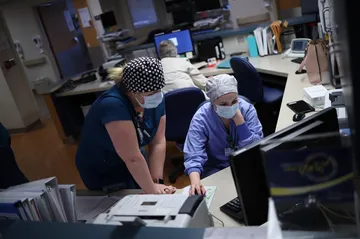
发布时间:2026-11-18T22:40:15+08:00 参与一份关于医院人工智能新报告的护士们表示,一个排班程序让她们连续上了六个班次,无视了她们的休假请求,并且在一次情况中,导致重症监护室某个班次严重人手不足。
Published: 2026-11-18T22:40:15+08:00 Nurses who took part in a new report on artificial intelligence in hospitals say a scheduling program has put them on six shifts in a row, ignored their requests for days off and, in one case, severely understaffed a shift at an intensive care unit.
据公司介绍,这款名为Timpani的软件目前已在130多家HCA Healthcare医院使用。护士们在接受该研究采访时表示,这是正在大幅改变她们工作的几款人工智能工具之一。
The software, called Timpani, is now in use in more than 130 HCA Healthcare hospitals, according to the company. It’s one of several AI tools that the nurses interviewed for the study say are dramatically reshaping their work.
政策研究中心AI Now Institute本周发布的《人工智能向护理业袭来》报告认为,医院正在快速引入人工智能工具,而且往往不告诉护士发生了什么变化。作者表示,几乎没有独立证据表明这些工具能如宣传那样发挥作用,而且当它们出错时,谁应负责也没有明确答案。
“AI Comes for Nursing,” published this week by the policy research center AI Now Institute, argues that hospitals are adding artificial intelligence tools quickly, often without telling nurses what has changed. Little independent evidence shows they work as advertised, the authors say, and there is no clear answer on who is responsible when they fail.
该报告基于相对较小的受访者群体。作者在4月至6月期间与六个州的16名注册护士举行了八场焦点小组讨论,并在9月与约60名护士举行了一次研讨会。
The report is based on a relatively small group of interviewees. The authors held eight focus groups with 16 registered nurses in six states between April and June, plus a September workshop with about 60 nurses.
所有护士都属于全国护士联合会。该工会称拥有超过22.5万名成员,并批评了医院使用人工智能的方式。为保护隐私,参与者均使用化名。
All of the nurses belong to National Nurses United, a union that says it has more than 225,000 members and has criticized how hospitals use AI. The participants are identified by pseudonyms to protect their privacy.
HCA此前曾吹捧该软件为“护理管理者节省了数百小时”,该公司在一份声明中表示,来自“16名与工会有关联的个人”的评论并不是衡量该工具有效影响的合理方式。
HCA, which has previously touted the software for saving “nursing leaders hundreds of hours,” said in a statement that comments from “16 union-affiliated individuals” aren’t a reasonable way to measure the tool’s impact.
作者承认,他们无法说明这些护士的经历有多普遍,也无法说明在营利性、非营利性和公立医院之间是否存在差异。
The authors acknowledge that they can’t say how common the nurses’ experiences are, or whether they differ among for-profit, nonprofit and public hospitals.
尽管如此,AI Now高级研究员、该报告合著者凯蒂·韦尔斯表示,这类定性研究很重要,因为关于这些工具的独立研究十分稀缺。她在接受采访时说,护士们的讲述表明,人工智能“在打着拯救医疗保健的旗号推销的同时,可能实际上正在贬低这些工作岗位”。
Still, Katie Wells, a senior fellow at AI Now and a co-author of the report, said such qualitative work matters because independent research on the tools is scarce. The accounts from the nurses show how AI, “while being sold to save healthcare, might be really degrading these jobs,” she said in an interview.
这些发现与公众对人工智能日益加深的怀疑态度不谋而合。据《选票百科》统计,在最近的美国中期选举中,41项地方投票措施里有40项,选民都支持对数据中心加以限制。家长和教育工作者也在课堂上提出反对,全美最大的两个学区纽约市和洛杉矶今年秋天对人工智能实施了全面限制。
The findings coincide with hardening public skepticism of AI. Voters in the recent US midterm elections sided with limits on data centers in 40 of 41 local ballot measures, according to Ballotpedia. Parents and educators are pushing back in classrooms, with two of the nation’s largest school districts, in New York City and Los Angeles, placing sweeping restrictions on AI this fall.
医院是另一个战场。医院和联邦政府都指出护士短缺,但报告作者不认同这一说法,并指出美国有超过700万名持证护士。他们说,真正的问题是削减成本导致的人手不足,而人工智能如今正被宣传为解决这些人手紧张的工作场所问题的良方。
Hospitals are another battlefront. While hospitals and the federal government point to a nursing shortage, the authors reject the notion, noting that the country has more than 7 million licensed nurses. The real problem, they say, is under-staffing driven by cost-cutting, and AI is now being pitched as a remedy for those strained workplaces.
“我认为医疗领域的人工智能是一个不堪重负、压力巨大、资金不足的体系的症状,”韦尔斯说。
“I see AI in healthcare as a symptom of a stretched, stressed, underfunded system,” Wells said.
报告考察了多种人工智能工具,包括用于排班和患者监测的工具。HCA与帕兰提尔科技公司共同开发了排班软件Timpani。帕兰提尔是一家数据分析公司,以与美国国防和情报机构合作而闻名。HCA表示,帕兰提尔提供了软件开发平台和工程师,但该技术的设计由HCA的临床和护理负责人主导。
The report examines several AI tools, including ones for scheduling and patient monitoring. HCA built its scheduling software, Timpani, with Palantir Technologies Inc., the data-analytics company known for its work with US defense and intelligence agencies. HCA said Palantir provided a software development platform and engineers, but HCA’s clinical and nursing leaders led the design of the technology.
全国护士联合会今年抗议了这一合作,部分原因是帕兰提尔为美国移民机构所做的工作。帕兰提尔未回应置评请求,此前曾斥责这些抗议“毫无根据”。Timpani旨在根据预测的患者需求和员工偏好,提前30天预判人员配置需求。但密苏里州一位化名卢克的精神科护士说,他所在机构没有人能更改软件发布的排班表。他说,纳什维尔的一个团队控制着排班,联系他们的唯一途径是通过Timpani应用。HCA表示,其医院的护士负责人可以在患者护理需求出现时调整或推翻排班。
National Nurses United has protested the partnership this year, in part over Palantir’s work for US immigration agencies. Palantir, which didn’t respond to a request for comment, has previously dismissed the protests as “baseless.”Timpani is meant to anticipate staffing needs 30 days out based on predicted patient needs and staff preferences. But a psychiatric nurse in Missouri, identified by the pseudonym Luke, said no one at his facility can change the schedule it posts. A team in Nashville controls it, he said, and the only way to reach them is through the Timpani app. HCA said nurse leaders at its hospitals can adjust or override schedules as patient care needs arise.
在实际操作中,接受该报告采访的护士表示,Timpani并没有解决它本应处理的职业倦怠和排班过满问题。相反,他们担心这套系统正被用作算法管理工具,用来削减劳动力成本、压低工资并推动更精简的人员配置。
In practice, nurses interviewed for the report said, Timpani didn’t solve the burnout and overscheduling problems that it was meant to address. Instead, they feared the system was being used as an algorithmic management tool to cut labor costs, lower wages and promote leaner staffing.
拥有约10万名护士的HCA表示,其护士每年在数百万个班次中,98%的班次偏好都能得到满足,并且可以通过Timpani应用申请调整排班和寻找换班。
HCA, which has about 100,000 nurses, said its nurses get 98% of their shift preferences across millions of shifts a year and can request schedule changes and find swaps through the Timpani app.
患者监测引发了其他担忧。内华达州护士亚历克斯说,他所在的医院用远程监测系统取代了针对有跌倒风险患者的一对一陪护,由一名工作人员同时监控五家不同机构的多名患者,他认为这名工作人员在俄勒冈州。亚历克斯说,他不清楚这名远程陪护总共监控多少名患者,并将该系统比作反乌托邦电影《少数派报告》。
Patient monitoring raised other concerns. Alex, a nurse in Nevada, said his hospital replaced one-to-one sitters for patients at risk of falling with a remote monitoring system, in which a single worker, who he believed was in Oregon, watched multiple patients across five different facilities. Alex said it was unclear to him how many patients the remote sitter watched in total, comparing the system to the dystopian movie “Minority Report.”
接受采访的护士没有人使用过Oxevision,这是一个基于摄像头的监测系统,可估算患者的脉搏和呼吸频率,但报告将其作为远程监测的一个例子进行了审视。作者在英国的精神科病房和科罗拉多州的两家行为健康机构发现了该系统。生产该系统的LIO公司(前身为Oxehealth)表示,它与美国和英国的数百家住院机构有合作。
None of the nurses interviewed used Oxevision, a camera-based monitoring system that estimates patients’ pulse and breathing rates, but the report examines it as an example of remote monitoring. The authors found it in UK psychiatric wards and at two behavioral health facilities in Colorado. LIO, which makes the system and was formerly known as Oxehealth, says it works with hundreds of inpatient facilities in the US and the UK.
报告称,英国已有四起死亡事件与该系统有关,并援引了新闻报道中对兰帕德调查的报道。兰帕德调查是一项正在进行的公开调查,针对英格兰埃塞克斯郡2000多起精神健康住院患者死亡事件。
The report says four deaths in the UK have been connected to the system, citing news coverage of the Lampard Inquiry, an ongoing public investigation into more than 2,000 mental health inpatient deaths in Essex, England.
LIO表示,将其系统与这些死亡事件联系起来是不准确的。该公司称,这四名患者是在装有该公司技术的病房中去世的,但该工具按设计正常运行,也没有任何验尸官将任何一例死亡归因于它。在其中一些案例中,验尸官确实对工作人员如何使用该系统提出了担忧,其中一位验尸官指出,部分工作人员可能依赖该系统,而非进行面对面检查。该调查尚未公布结论。
LIO said it was inaccurate to link the deaths to its system. The four patients died in rooms with its technology, the company said, but the tool worked as designed and no coroner attributed any of the deaths to it. Coroners in some of those cases did raise concerns about how staff used the system, including one who noted that some staff may have relied on it instead of face-to-face checks. The inquiry hasn’t issued its findings yet.
在报告描述的一起案例中,该工具被设置为:如果一名16岁患者在浴室停留时间过长,就向工作人员发出警报。死因研讯获悉,该警报被静音,这名患者在被独自留置28分钟后死亡。陪审团认定她的死亡本可避免,验尸官在推广部署期间提到了Wi-Fi信号差以及“Oxevision系统运行不正常”。LIO表示,病房工作人员将警报静音或未对警报采取行动,并且没有完成规定的身体检查。
In one case the report describes, the tool was set to alert staff if a 16-year-old patient spent too long in the bathroom. The inquest heard the alert had been muted, and the patient died after she had been left alone for 28 minutes. A jury found her death could have been prevented, and the coroner cited poor Wi-Fi and “the Oxevision system not operating correctly” during the rollout. LIO said ward staff muted or failed to act on the alerts and didn’t complete the required physical checks.
LIO表示,技术不能也不应取代护士,通过将常规合规任务自动化,并在不吵醒患者的情况下检查生命体征,其系统让护士有更多时间进行面对面护理。其生命体征和睡眠监测软件已获美国食品药品监督管理局批准为医疗器械,属于该机构的中等风险类别。
LIO said technology cannot and should not replace nurses, and that by automating routine compliance tasks and checking vital signs without waking patients, its system gives nurses more time for face-to-face care. Its vital-signs and sleep-monitoring software has been cleared by the US Food and Drug Administration as a medical device in the agency’s moderate-risk category.
哈佛法学院研究卫生法和生物伦理学的教授I·格伦·科恩表示,FDA批准和外部审计可以成为工具有效的有用信号。但他表示,“即使是经过充分验证的工具,也可能在一种环境中运行良好,而在另一种环境中则不然,原因在于人员配置、患者构成和资源方面的差异”,因此医院需要在本地进行测试,并在投入使用后持续监测。
FDA clearance and outside audits can be useful signals that a tool works, said I. Glenn Cohen, a Harvard Law School professor who studies health law and bioethics. But “even well-validated tools may operate well in one setting but not in another due to differences in staffing, patient mix, resources,” he said, so hospitals need to test them locally and keep monitoring them after they’re in use.
报告称,这类技术可能将责任推给最近的护士。作者表示,即使公司承诺实现自动化,当出现问题时,它们也会免除自身责任。LIO 表示,公司已增加了临床医生个人登录和体检提示功能。该公司还引用了其对 265 名美国前精神科住院患者的调查,其中 72% 的受访者更倾向于夜间非接触式监测,而非人工巡查。
The report says this kind of technology may shift blame to the nearest nurse. Even as companies promise automation, they also disclaim responsibility when things go wrong, the authors said. LIO said it has added individual clinician sign-ins and prompts for physical checks. It also cited its own survey of 265 former US psychiatric inpatients, 72% of whom preferred contactless monitoring at night to in-person checks.
韦尔斯表示,参与报告的护士并非反技术。她称,她们“迫切希望使用能让工作更轻松的工具”,有些人还称赞了那些具有特定用例且对患者有明确益处的工具,例如持续血糖监测仪。
Wells said the nurses who participated in the report aren’t anti-technology. They “desperately love things that make their lives easier,” she said, and some praised tools with specific use cases that had a clear benefit to patients, such as continuous glucose monitors.
科恩表示,医院应让医生、护士和患者参与关于采用哪些 AI 工具的决策。他说:“我们还必须认识到,某些形式的 AI 在改变医疗职业的本质方面所起的作用。除非临床医生在实施决策中拥有一席之地,否则存在真正的风险。”
Cohen said hospitals should bring doctors, nurses and patients into decisions about which AI tools to adopt. “We also must recognize the role that some forms of AI play in changing the very nature of the health professions,” he said. “Unless clinicians are given a seat at the table in making implementation decisions there is a real risk.”