
一种被称为直立人的远古人类祖先,早在18.4万年前就能长途跋涉、生活在茂密的树冠雨林中,这是根据在中国南方两个洞穴中发现的牙齿进行的新研究得出的结论。
A distant human ancestor known as Homo erectus covered long distances and lived in dense, canopied rainforests as recently as 184,000 years ago, according to new studies of teeth discovered in two caves in southern China.
研究人员此前认为,这种充满挑战的环境仅属于我们自己的物种——智人,但证据表明这种神秘物种也能在此繁衍生息,这改变了科学家对直立人的看法。直立人是最早走出非洲、跨越大陆的古人类,在灭绝前曾在全球游荡了近200万年。最新研究表明,该物种可能比科学家意识到的要聪明得多。
Evidence that the enigmatic species was able to thrive in a challenging environment that researchers previously believed had been the sole domain of our own species, Homo sapiens, changes how scientists think about Homo erectus. The first archaic human to leave Africa and cross continents, Homo erectus ultimately roamed the planet for almost 2 million years before going extinct. The species was possibly far smarter than scientists had realized, the latest research suggests.
德国马克斯·普朗克地球人类学研究所教授帕特里克·罗伯茨在一份新闻稿中说:“虽然人们越来越认识到,我们自己的物种智人在10万至1.3万年前适应了世界各地的雨林,但这是我们第一次获得另一种古人类生活在这些栖息地内的明确、直接证据。”罗伯茨是周三发表在《自然》期刊上关于这些牙齿的两项研究之一的合著者。
“While there has been growing recognition that our own species, Homo sapiens, adapted to rainforests around the world between 100,000 and 13,000 years ago, this is the first clear, direct evidence we have for another hominin living within these habitats,” said Patrick Roberts, a professor at the Max Planck Institute of Geoanthropology in Germany, in a news release. Roberts is a coauthor of one of two studies on the teeth that published the journal Nature on Wednesday.
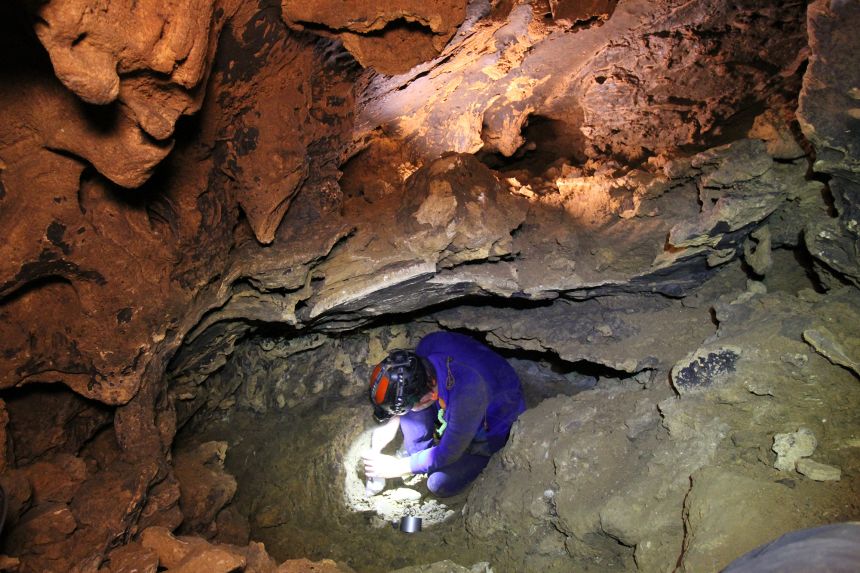
这支由澳大利亚、中国和欧洲研究人员组成的团队,研究了从广西省喀斯特石灰岩地貌中相距15公里(约9英里)的两个洞穴出土的9颗古人类牙齿和动物化石。该地区地貌壮观,有岩石陡峭的山丘、平坦的山谷和陷落坑。
The team of Australian, Chinese and European researchers studied nine hominin teeth and animal fossils unearthed from two caves 15 kilometers (about 9 miles) apart in the limestone karst of Guangxi province in southern China, a dramatic landscape of rocky, steep-sided hills, flat valleys and sinkholes.
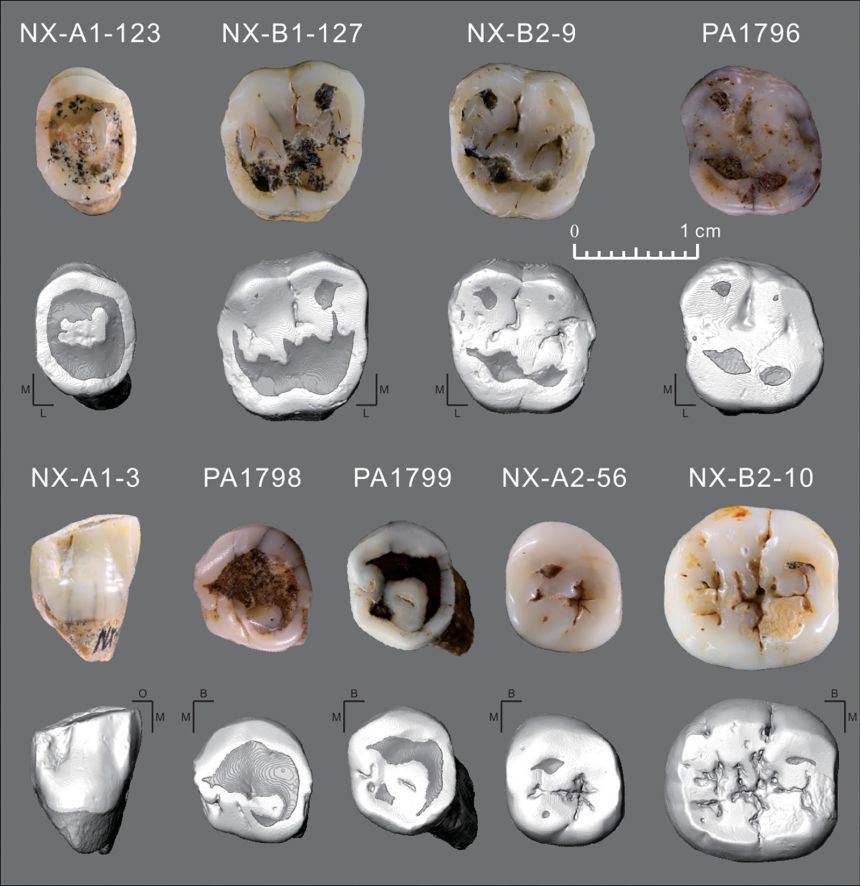
科学家通过分析牙齿的凸起和沟纹,确认其中8颗属于直立人。他们还从4颗牙齿的釉质中提取了分子信息,显示与今年早些时候在直立人牙齿中发现的蛋白质有关联。直到最近,由于可研究的遗传物质稀缺,该物种一直是人类起源研究中的一个重大谜团。
The scientists identified eight of the teeth as having belonged to Homo erectus by analyzing their bumps and grooves. They also recovered molecular information from the dental enamel of four teeth that suggested a link to proteins found in Homo erectus teeth earlier this year. With scarce genetic material available to study until recently, the species has been a major mystery in human origins.
科学家们利用五种测年技术对牙齿或周围的洞穴沉积物和矿物形成物进行测定,确定了化石的年代。这些发现共同表明,直立人在32.4万至18.4万年前生活在中国南方,当时人们认为该物种已经从该地区——以及世界上大多数其他地方——消失了。发现的最年轻的直立人化石在印度尼西亚,年代为10.8万年前。
The scientists determined the age of the fossils by using five dating techniques applied to the teeth or the surrounding cave sediments and mineral formations. Together, the findings revealed that Homo erectus was living in southern China between 324,000 and 184,000 years ago, a time when the species was thought to have already disappeared from that region — and most other places in the world. The youngest Homo erectus fossils were found in Indonesia and date to 108,000 years ago.
研究团队还研究了牙齿中被称为同位素的化学特征,以了解直立人如何在景观中移动。通过分析牙釉质中的锶——一种反映当地地质的化学元素——研究人员发现,一些个体可能在童年时期——即牙齿形成时——穿越森林喀斯特地区,活动范围惊人地大,行程可能达250公里(约155英里)。
The team also studied chemical signatures in the teeth known as isotopes to understand how Homo erectus moved across the landscape. By analyzing strontium, a chemical that reflects the local geology, in the tooth enamel, the researchers found that some individuals may have spent their childhoods — when teeth form — moving through forested karst regions across surprisingly large areas, perhaps traveling distances of up to 250 kilometers (about 155 miles).
“这是一个迷人的发现,因为它证实了直立人存在于我们意想不到的地点,且处于我们未曾考虑的时间,”地质年代学家、共同第一作者基拉·韦斯特韦在声明中说。韦斯特韦是澳大利亚悉尼麦考瑞大学的教授。“这对我们试图了解直立人灭绝原因的时间线具有重大意义。”未参与该研究的康涅狄格大学人类学系附属研究科学家本·厄廷表示,关于直立人最终灭绝的假设解释包括无法适应新颖且快速变化的环境。“但这项研究表明,直立人的行为灵活性远超以往认知,”他说。
This is a “fascinating discovery because it confirms the presence of Homo erectus in a location we were not expecting and at a time we hadn’t considered,” said geochronologist and co-lead author Kira Westaway, in the release. Westaway is a professor at Macquarie University in Sydney, Australia. “This has huge implications for the timeline of Homo erectus as we attempt to understand the causes of its extinction.”Proposed explanations for the eventual demise of Homo erectus include a failure to adapt to novel and rapidly changing environments, said Ben Utting, an affiliate research scientist in the University of Connecticut Department of Anthropology, who wasn’t involved in the research. “But this study demonstrates that Homo erectus was far more behaviorally flexible than previously thought,” he said.
在印度尼西亚爪哇岛发现的直立人化石表明,该物种约在10.8万年前生活在开阔林地,这引发了一个问题:当时不断扩张的闭合树冠森林是否导致了该物种的消失?研究指出。
The Homo erectus fossils found in Java, Indonesia, have suggested the species lived in open woodland about 108,000 years ago, prompting questions about whether encroaching closed-canopy forests at that point in time contributed to the species’ disappearance, the research said.
“热带雨林是人类最难生存的环境之一,尤其是在没有农业的情况下,”厄廷通过电子邮件表示。“这项研究的发现表明,直立人能够居住在这些要求苛刻的环境中,其时间在人类进化史上比以往理解的要早得多。更广泛地说,这提出了一种可能性:热带雨林在人类远古历史中扮演的角色,比我们传统认知的要重要得多。”
“Tropical rainforests are among the most challenging environments for humans to inhabit, particularly without agriculture,” Utting said via email. “The findings of this study suggest that Homo erectus was capable of inhabiting these demanding environments much earlier in human evolutionary history than previously understood. More broadly, it raises the possibility that tropical rainforests played a much more important role in deep human history than we have traditionally considered.”
厄廷补充道,同样令人着迷的是,直立人竟然进行了如此长距离的迁徙:“这种规模的旅程需要对周围地形有深入的了解,包括区域地貌特征和随季节变化的河流网络。”研究团队无法确定在洞穴中发现的第九颗牙齿的归属。其形态与直立人、智人和尼安德特人截然不同,后者在约4万年前灭绝,但据信并未生活在东亚。这颗牙齿也不含有从被鉴定为直立人的牙齿中提取的蛋白质所具有的相同分子特征。
Equally fascinating, Utting added, is the fact that Homo erectus traveled such long distances: “Journeys of this scale would have required a sophisticated understanding of the surrounding terrain, including regional landscape features and river networks that change with the seasons.”The team wasn’t able to definitively identify the ninth tooth uncovered in the caves. Its shape was distinct from Homo erectus, Homo sapiens and Neanderthals, the last of which disappeared around 40,000 years ago but wasn’t thought to live in East Asia. The tooth also did not contain the same molecular signature as the proteins recovered from the teeth identified as Homo erectus.
华盛顿特区史密森尼国家自然历史博物馆的古人类学家瑞安·麦克雷表示,这颗牙齿可能属于另一个已知的古人类群体——丹尼索瓦人,即龙人,或者是丹尼索瓦人与直立人的后代。麦克雷未参与这两项研究。
It’s possible that the tooth might belong to another ancient human population known as the Denisovans — Homo longi — or Denisovan-Homo erectus offspring, said Ryan McRae, a paleoanthropologist at the Smithsonian National Museum of Natural History in Washington, DC, who wasn’t involved in the two studies.
两项《自然》研究之一指出,这两个物种现在已知曾大致在同一时期栖息于同一地区,并将这种重叠描述为“引人入胜”。
The two species are now known to have inhabited the same region at roughly the same time, one of the Nature studies noted, describing the overlap as “intriguing.”
今年早些时候发表的研究中,科学家从在中国出土的六颗直立人牙齿中提取了古代蛋白质,首次揭示了直立人与龙人等后期人类物种之间的分子联系。
In research published earlier this year, scientists retrieved ancient proteins from six Homo erectus teeth unearthed in China that, for the first time, revealed a molecular link between Homo erectus and later human species such as Homo longi.
麦克雷说:“发现的九颗牙齿中有一颗可能属于丹尼索瓦人,或者是混血个体,而非直立人。他们并不真正愿意断定这一点,但肯定是在暗示这一点。” 伦敦自然历史博物馆人类起源科学助理克里斯·斯特林格也同意这是一种可能性。“近期研究表明,直立人谱系与龙人/丹尼索瓦人谱系之间曾发生过杂交,而新证据增加了这种情况发生的可能性,至少是偶尔发生过,”斯特林格在电子邮件中说。他也没有参与这项研究。
“One of the nine teeth discovered may be Denisovan, or a hybrid, rather than Homo erectus. They don’t really commit to calling that, but they certainly hint at it,” McRae said via Chris Stringer, a scientific associate in human origins at the Natural History Museum in London agreed it’s a possibility. “Recent research suggested that there had been interbreeding between the erectus and longi/Denisovan lineages, and the new evidence increases the likelihood that this happened, at least on occasions,” Stringer said in an email. He also wasn’t involved in the research.
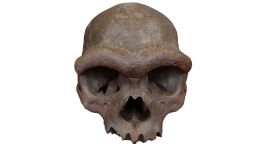
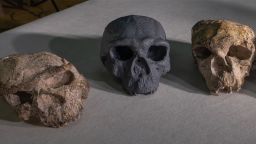
直立人是最早拥有与智人相似身体比例的人类物种。他们身材高大,直立行走,拥有巨大的面部、突出的眉脊和无下巴。
Homo erectus was the earliest human species to have body proportions similar to those of Homo sapiens. They were tall, had an upright stance, a large face with a protruding brow and no chin.
根据伦敦自然历史博物馆的说法,直立人的化石证据见于非洲、亚洲和欧洲,跨度超过150万年,远长于智人存在的40万年,使该物种成为迄今为止生存时间最长的人类亲属。
Fossil evidence for Homo erectus has been found in Africa, Asia and Europe and stretches over more than 1.5 million years, far longer than the 400,000 years that Homo sapiens have been around, making the former species by far the longest surviving of all human relatives, according to London’s Natural History Museum.
麦克雷说:“我们对直立人的了解越多,就越意识到他们与我们并没有那么大的不同。”
“The more we discover about Homo erectus the more we are coming to realize that they are not that different than ourselves,” McRae said.