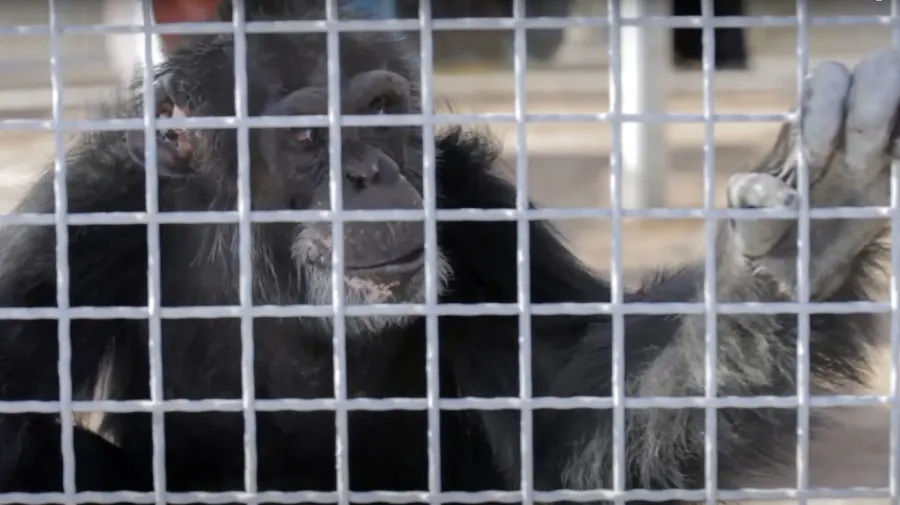
美国国立卫生研究院(NIH)周三宣布,将于2027年初把最后一批政府拥有的研究用黑猩猩放归保护区,从而结束长达十年、旨在让这些动物离开联邦实验室的努力。NIH表示,这34只黑猩猩目前饲养在得克萨斯州巴斯特罗普的基林比较医学与研究中心,将被转移到“黑猩猩天堂”。该保护区位于路易斯安那州,占地200英亩,是政府拥有的类人猿的官方养老院。
The National Institutes of Health (NIH) announced Wednesday it will release the last government-owned research chimpanzees in early 2027 to a sanctuary, ending a decade-long effort to get the animals out of federal laboratories. The 34 chimpanzees, currently housed at the Keeling Center for Comparative Medicine and Research in Bastrop, Texas, will be transferred to Chimp Haven, a 200-acre Louisiana sanctuary that serves as the official retirement home for the government-owned apes, the NIH said.
NIH院长杰伊·巴塔查里亚在声明中说:“完成这些转移将兑现NIH于2015年11月宣布的承诺,即将NIH拥有的所有黑猩猩送往保护区养老。”巴塔查里亚还表示,转移预计将于明年年初开始,具体时间将“以黑猩猩的健康、福利和社交群体情况为指导”。2015年,在动物权利活动人士呼吁保护这一濒危物种并表达强烈不满后,该机构宣布将不再开展或资助涉及黑猩猩的侵入性研究。
“Completing their transfers will fulfill NIH’s commitment, announced in November 2015, to retire all NIH-owned chimpanzees to sanctuary,” NIH Director Jay Bhattacharya said in a statement. Bhattacharya added the timing of the transfers, which are expected to begin early next year, will be “guided by the chimpanzees’ health, welfare and social groupings.”The agency announced in 2015 it would no longer conduct or fund invasive research involving chimpanzees following outrage from animal rights activists calling to protect the endangered species.
由于黑猩猩在生物学上与人类相似,它们历史上曾被用于HIV、肝炎和癌症等疾病的生物医学研究。科学家曾利用这些灵长类动物研究病毒,并测试药物和辐射等医学疗法的安全性,直到NIH于2011年暂停资助此类做法。该机构随后承诺将所有政府拥有的动物送往保护区养老,理由是有一项独立评估认为黑猩猩对生物医学研究的用处有限,并且所有黑猩猩已于2015年根据《濒危物种法》被列为濒危物种。
Chimps were used historically for biomedical research on diseases such as HIV, hepatitis and cancer due to their biological similarities to humans. Scientists used the primates to study viruses and test the safety of medical treatments — including pharmaceutical drugs and radiation — until the NIH suspended funding for the practice in 2011. The agency then pledged to retire all government-owned animals to sanctuaries, citing an independent assessment of the usefulness of chimpanzees for biomedical research and the designation of all chimps as endangered under the Endangered Species Act in 2015.
时任NIH院长弗朗西斯·S·柯林斯当时表示:“我们没有发现任何证据表明有必要继续对黑猩猩进行侵入性研究,现在没有,将来也不会有。”此后,已有200多只黑猩猩被转移到位于路易斯安那州基思维尔的“黑猩猩天堂”。
“We find no evidence that there is a need to continue to do research of an invasive sort on chimpanzees, not now and not going to in the future,” then-NIH Director Francis S. Collins said at the time. Since then, more than 200 chimpanzees have been relocated to Chimp Haven in Keithville, Louisiana.
在“黑猩猩庇护所”,这些动物生活在大片森林区域和模仿其自然栖息地设计的社群中。“这是一条漫长的路,也是许多人曾以为永远不会发生的事,”人道世界动物组织负责动物研究事务的副总裁凯瑟琳·康利在给《纽约时报》的一份声明中说。“这确实是一个历史性时刻。这将终结政府对黑猩猩的使用及其在实验室中的圈禁。”
At Chimp Haven, the animals live in large, forested areas and social groups designed to resemble their natural habitats. “This has been a long road and something that many people thought would never happen,” Kathleen Conlee, vice president of animal research issues at Humane World for Animals, said in a statement to The New York Times. “It’s a really historic moment. This will be the end of the government’s use and confinement of chimps in labs.”