欧洲开始探索从轨道投送常规军事载荷的可能性,德国防务巨头MBDA的德国分公司与空间运输公司ATMOS Space Cargo联手,共同研究一个名为“精准轨道深度打击”(PODS)的概念。该提案涉及将军事载荷送入太空,待命后再让其重返大气层,这可能为远程精确打击提供一种截然不同的方法。
Europe is beginning to explore the possibility of delivering conventional military payloads from orbit , with the German arm of defense behemoth MBDA and space transportation company ATMOS Space Cargo teaming up to investigate a concept known as Precision Orbital Deep Strike (PODS). The proposal involves putting military payloads into space before sending them back through the atmosphere when commanded, potentially offering a radically different approach to long-range precision strike.
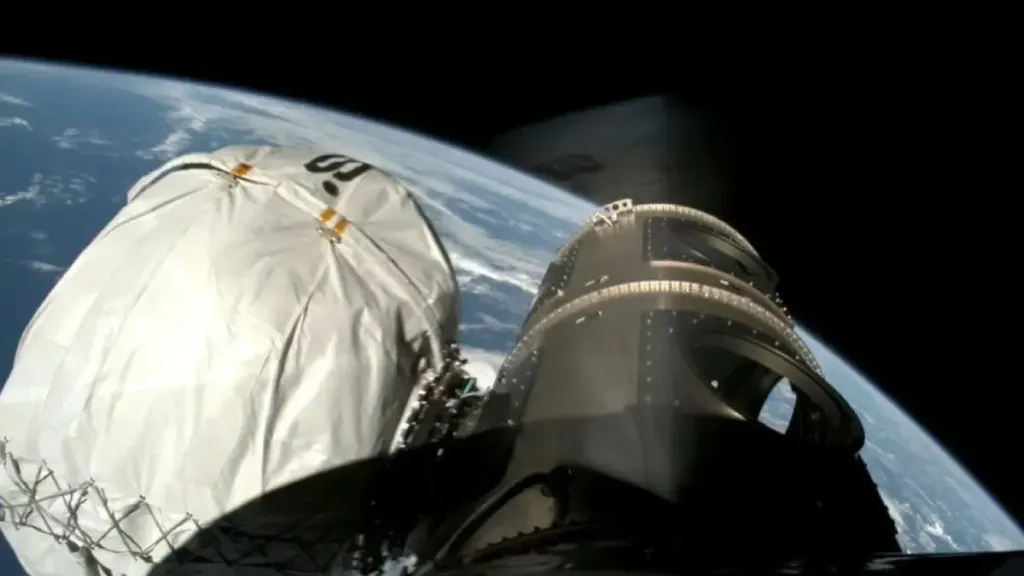
ATMOS Space Cargo的“凤凰1号”返回舱在2025年4月21日的任务中,连接在猎鹰9号火箭的上面级上。ATMOS Space Cargo两家公司于11月18日宣布达成合作协议,建立联合可行性研究框架,并对拟议能力进行设计、开发和演示。初步工作将考察系统架构、技术可行性、载荷集成以及潜在的技术演示。
ATMOS Space Cargo’s Phoenix 1 capsule is seen attached to the upper stage of its Falcon 9 rocket during its mission on April 21, 2025. ATMOS Space Cargo The companies announced their cooperation agreement on November 18, establishing a framework for joint feasibility studies and the design, development, and demonstration of the proposed capability. Initial work will examine system architecture, technical feasibility, payload integration, and potential technology demonstrations.
这一概念无疑极具雄心。将载荷送入轨道并使其返回地球,与开发一种能够在可预测时间精确打击指定目标的可靠武器,是完全不同的问题。考虑到这一点,该协议代表了为确定此类能力在技术和作战层面是否可行而做出的初步努力。
The concept is undoubtedly hugely ambitious. Getting a payload into orbit and returning it to Earth is a very different problem from developing a reliable weapon capable of striking a designated target with precision and at a predictable time. With that in mind, the agreement represents an initial effort to determine whether such a capability is technically and operationally feasible.
ATMOS 与 MBDA 德国公司(@MBDADeutschland)已同意评估并推进“精确轨道深度打击”(PODS)能力的研发。目标是探索这些轨道技术如何能够强化欧洲的常规威慑。我们的民用“凤凰”计划仍在…… pic.twitter.com/Rte5WqLRU5—— ATMOS Space Cargo(@AtmosSpaceCargo)2026年11月18日
ATMOS and @MBDADeutschland have agreed to assess and pursue the development of a Precision Orbital Deep Strike (PODS) capability. The objective is to explore how these orbital technologies could strengthen Europe's conventional deterrence. Our civil PHOENIX programme remains… pic.twitter.com/Rte5WqLRU5 > — ATMOS Space Cargo (@AtmosSpaceCargo) > November 18, 2026
旧概念的新路径利用轨道轨迹向地球目标投送武器的想法并不新鲜。冷战期间,苏联研发并短暂运行了部分轨道轰炸系统(FOBS),旨在将核弹头送入部分轨道轨迹,随后再将其引导回目标;中国近年也重提这一构想。美国早先提出的轨道动能轰炸武器方案,常被称为“上帝之杖”,则探讨从太空实施常规打击的可能性。
A New Approach To An Old Concept The idea of using orbital trajectories to deliver weapons against targets on Earth is not new. During the Cold War, the Soviet Union developed and briefly operated a Fractional Orbital Bombardment System (FOBS), designed to place nuclear warheads into partial orbital trajectories before bringing them back toward their targets; China has more recently revisited the idea . Earlier American proposals for orbital kinetic bombardment weapons, often referred to as “ Rods from God ,” meanwhile explored the possibility of delivering conventional effects from space.
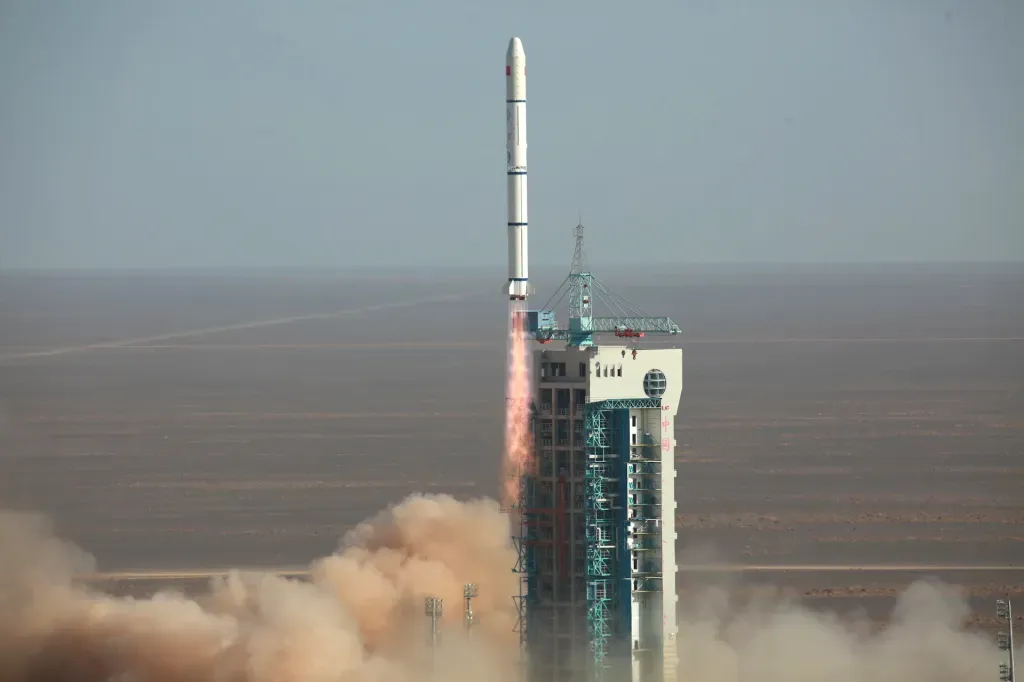
一枚长征二号丙运载火箭在中国某发射场点火升空。据报道,长征二号丙曾用于中国部分轨道轰炸系统(FOBS)的试射。央视新闻PODS 似乎采取了不同路径,借助现代商业轨道运输与大气层再入技术,潜在地投送常规军事载荷。这些载荷可能是单纯从太空坠落的动能弹体,也可能是进入大气层后从舱体释放的其他类型弹药。
A Long March 2C space launch rocket blasts off from a pad in China. The Long March 2C has reportedly been used for test launches of the Chinese Fractional Orbital Bombardment System (FOBS). CCTV News PODS appears to be pursuing a different approach, drawing on modern commercial orbital transportation and atmospheric re-entry technologies to potentially deliver conventional military payloads. Those payloads could consist of kinetic projectiles that simply fall from space, or perhaps some other type of munitions that emerge from a capsule after entering the atmosphere.
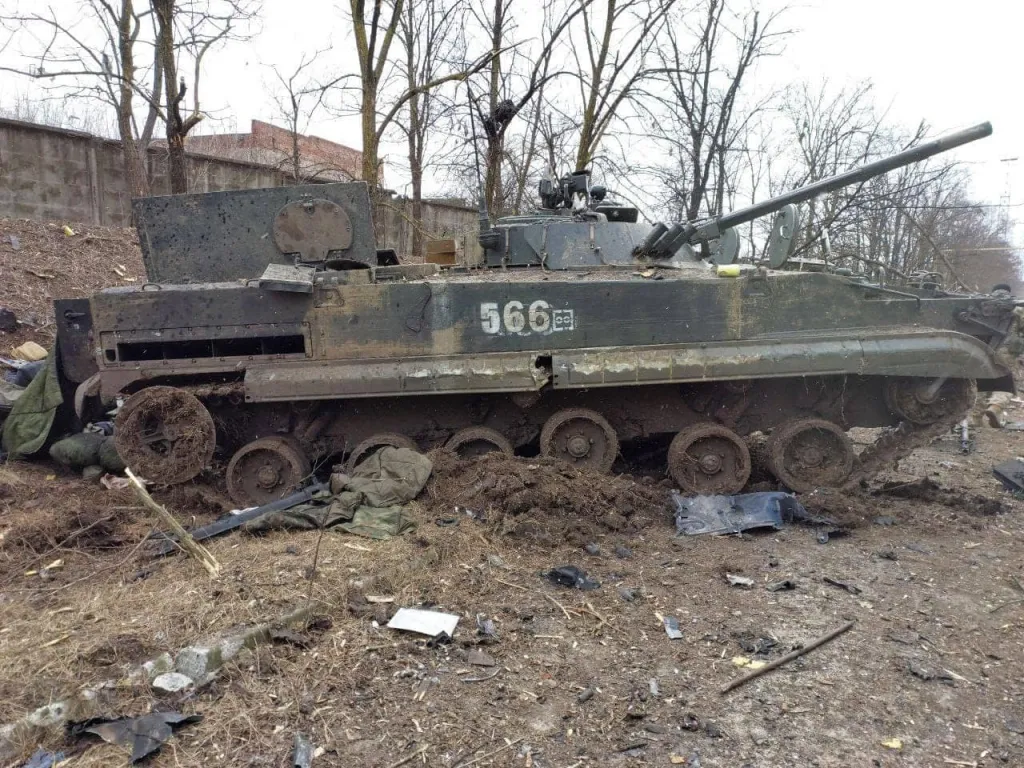
《伦敦时报》本月早些时候报道,ATMOS 已经在研发一个原型概念,涉及由卫星携带、并由再入飞行器防护的常规弹丸。据报道,自 2022 年俄罗斯全面入侵乌克兰以来,该公司一直在探索其空间系统的军事应用,并寻找一家大型防务企业合作伙伴来帮助推进这一概念。现在,MBDA 已被确定为潜在候选者。乌克兰内务部德国商业报纸《商报》 报道,该概念最终可能涉及数十个在近地轨道运行的舱段,军事载荷在太空中待命,直到需要时才使用。
The London Times reported earlier this month that ATMOS had already been working on a prototype concept involving a conventional projectile carried by a satellite and protected by a re-entry vehicle. The company had reportedly been exploring military applications since Russia’s full-scale invasion of Ukraine in 2022 and was looking for a major defense-industry partner to help advance the concept. Now, MBDA has been identified as a potential candidate. A Russian BMP-3 infantry fighting vehicle destroyed by Ukrainian troops in Mariupol. The full-scale invasion of Ukraine by Russia has prompted ATMOS to look at military applications for its space systems. Ministry of Internal Affairs of Ukraine
近地轨道(LEO)是指距离地球表面约 100 英里至 1200 英里(约 160 公里至 1930 公里)的一段空间,该区域高度拥挤。目前不清楚计划是使用可回收舱段携带武器,在再入过程中或到达目标前释放武器,然后继续飞往单独的回收区域,还是采用单程载荷投送方式,即舱段及其载荷在打击中消耗殆尽。我们已向 ATMOS 寻求更多细节。
与此同时,据报道,ATMOS 首席执行官塞巴斯蒂安·克劳斯描述了一种旨在 60 分钟内打击地球上任何目标的系统。
According to the German business newspaper Handelsblatt , the concept could eventually involve dozens of capsules operating in low Earth orbit, with military payloads held in space until needed. Low Earth Orbit (LEO) refers to a band of space that measures roughly 100 miles to 1,200 miles above the Earth, and which is highly congested . It is unclear if the plan is to use a recoverable capsule that carries a weapon, releases it during re-entry or before reaching the target, then continues to a separate recovery area, or if this is a one-way payload delivery, with the capsule and its payload expended in the strike. We have approached ATMOS for more details.
低地球轨道卫星的飞行速度约为每小时17500英里,但这并不意味着它们能在可预测的时间范围内打击地球上的任意地点。响应时间将受到轨道倾角、航天器位置、合适定位飞行器的可用性、再入要求等因素的影响。因此,实现真正的响应式全球覆盖可能需要一个庞大的星座,以及在发射和补给基础设施方面的大量投资。
Meanwhile, ATMOS CEO Sebastian Klaus reportedly described a system intended to reach targets anywhere on Earth in less than 60 minutes. Satellites in low Earth orbit travel at approximately 17,500 miles per hour, but this does not mean they can strike any location on Earth within a predictable timeframe. Response times will be affected by orbital inclination, spacecraft positioning, the availability of suitably positioned vehicles, re-entry requirements, and more. Achieving genuinely responsive global coverage could therefore require a substantial constellation and considerable investment in launch and replenishment infrastructure.
商业航天技术对接军事需求ATMOS 正在开发用于将货物运送入轨并返回地球的可复用系统。其“凤凰”计划旨在支持科学研究和工业制造等应用,大气再入技术是该公司方法的核心。凤凰一号再入舱。ATMOS Space Cargo这些技术可为目前与 MBDA 共同探索的军事应用提供切入点。不过,两家公司将 PODS 描述为一个专门的国防计划,独立于面向民用的“凤凰”计划,后者被定位为一种用于自主货运作业的可复用轨道转移和返回飞行器(OTRV)。
Commercial Space Tech Meets Military Need ATMOS is developing reusable systems for transporting cargo into orbit and returning it to Earth. Its Phoenix program is intended to support applications including scientific research and industrial manufacturing, with atmospheric re-entry technology at the heart of the company’s approach. The Phoenix I re-entry capsule. ATMOS Space Cargo These technologies could provide a starting point for the military applications now being explored with MBDA. However, the companies describe PODS as a dedicated defense initiative, separate from the civilian Phoenix program , billed as a reusable orbital transfer and return vehicle (OTRV) for autonomous cargo operations.
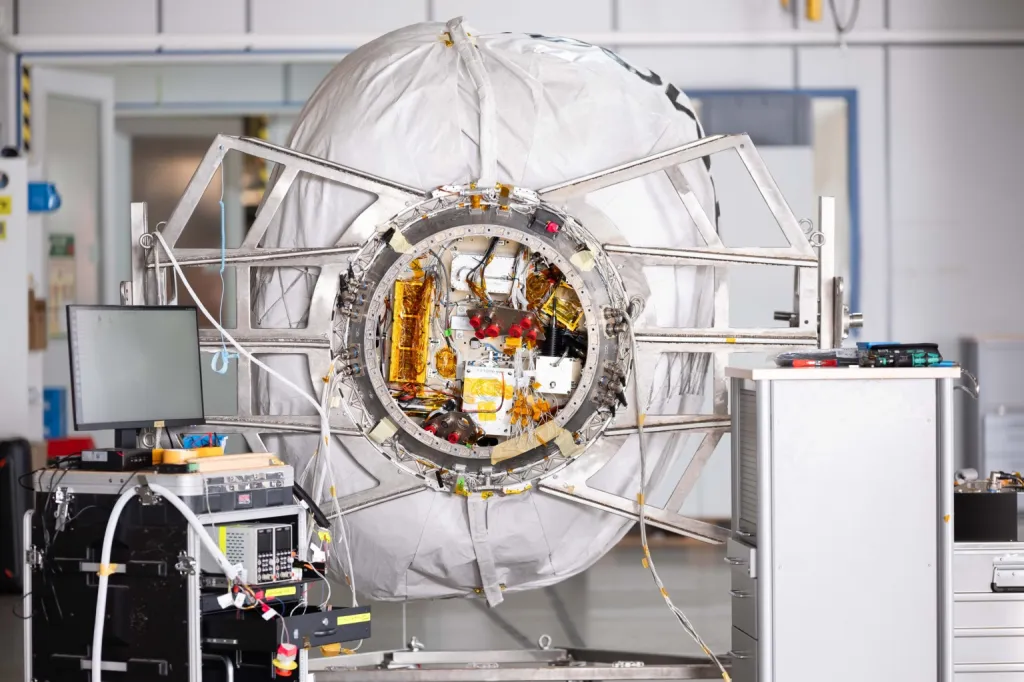
迄今为止,ATMOS 已证明其再入技术能够经受住轨道飞行和大气再入的考验,使用的是其充气式大气减速器(IAD),但尚未演示可回收、可独立机动的轨道飞行器。
To date, ATMOS has demonstrated that its re-entry technology can survive an orbital flight and atmospheric entry, using its Inflatable Atmospheric Decelerator (IAD), but has not demonstrated a recoverable, independently manoeuvring orbital vehicle.
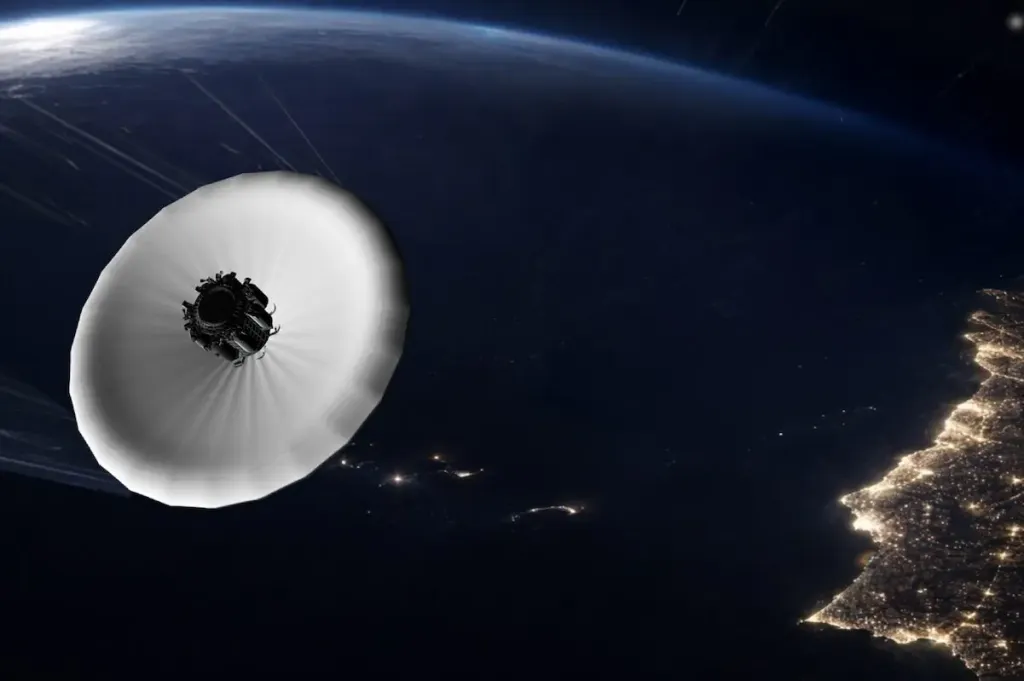
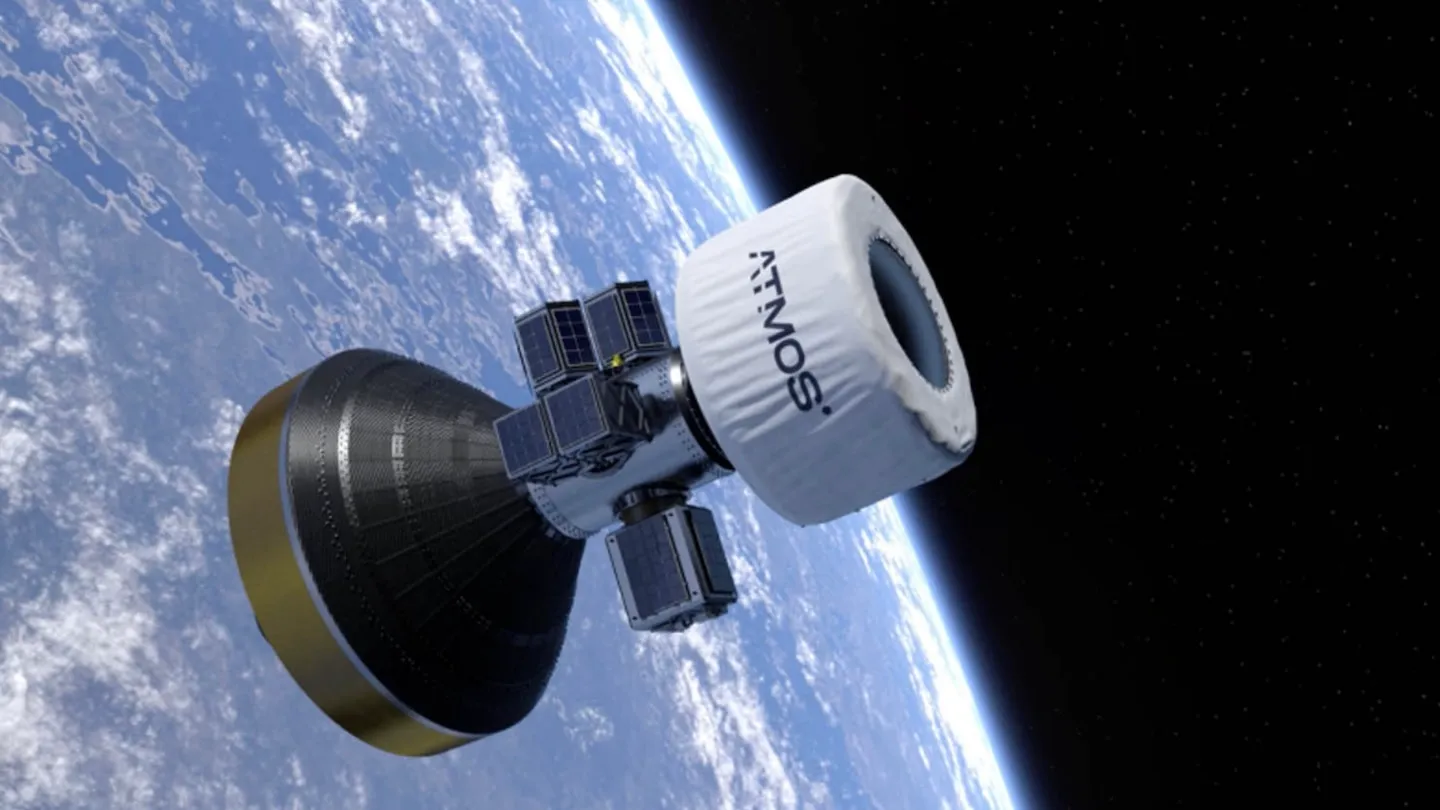
ATMOS 下一代飞行器及其充气减速器的渲染图。ATMOS Space Cargo开发一艘能够从轨道返回货物的航天器,与打造一套能将载荷精准投送至指定地点的军事投送系统之间,同样存在巨大鸿沟。再入飞行器必须应对极端高温、快速变化的气动条件以及巨大的应力。在整个过程中保持可预测的飞行特性,本身就是一项相当大的工程挑战。
A rendering of ATMOS’s next-generation vehicle with its inflatable decelerator. ATMOS Space Cargo There is also a huge gulf between developing a spacecraft capable of returning cargo from orbit and creating a military delivery system capable of placing a payload accurately at a designated location. Re-entry vehicles must contend with extreme heating, rapidly changing aerodynamic conditions, and enormous stresses. Maintaining predictable flight characteristics throughout that process is already a considerable engineering challenge.
引入军用载荷会带来进一步的复杂性。系统需要考量载荷的特定特性、其在再入过程中的生存能力,以及预定任务的要求。两家公司均未说明正在考虑何种军用载荷,也未解释拟议系统将如何实现预定精度。
Adding a military payload introduces further complications. The system would need to account for the payload’s specific characteristics, its survivability during re-entry, and the requirements of its intended mission. Neither company has explained what kinds of military payloads are being considered or how the proposed system would achieve its intended accuracy.
目前也不清楚“PODS”是否涉及专用的轨道武器平台、送入轨道的单个再入飞行器,还是其他完全不同的配置。
It is also unclear whether PODS would involve a dedicated orbital weapons platform, individual re-entry vehicles carried into orbit, or another configuration altogether.
显而易见的期望是,MBDA在导弹研发、制导系统和军用载荷集成方面的经验,结合ATMOS在轨道运输和再入系统方面的专长,将成为一个有意义的切入点。
The hope is clearly that the combination of MBDA’s experience in missile development, guidance systems, and military payload integration, combined with ATMOS’s expertise in orbital transportation and re-entry systems, will be a meaningful starting point.
经济性与军事效用仍不明朗即便工程挑战得以解决,“PODS”是否具有军事意义仍是一个悬而未决的问题。
The Economics And Military Utility Remain Unclear Even if the engineering challenges can be addressed, whether PODS would make military sense remains an open question.
一个旨在从轨道提供快速全球打击覆盖的系统,可能需要使用运载火箭、替补发射能力和地面基础设施。与其提供的动能打击能力规模相比,维护这样一个星座的成本可能极高。就数量而言,德国媒体报道称,“数十个”返回舱即可完成任务。这对于其主要任务——仅打击极高价值和/或时间敏感目标,并作为一种“银弹”武器系统——来说已足够。
A system intended to provide rapid global strike coverage from orbit could require access to launch vehicles, replacement capacity, and ground infrastructure. Maintaining such a constellation could prove expensive in comparison to the volume of kinetic strike capability they provide. In terms of numbers, German media reports suggest that “dozens” of capsules could do the job. This would be sufficient for its primary mission of striking only extremely high value and/or time sensitive targets and acting as a ‘silver bullet’ weapon system.
生存能力也会面临质疑。低地球轨道卫星相对容易追踪,其可预测的轨道路径可能使军事平台容易受到中国和俄罗斯正在积极从事的反太空能力的威胁。因此,一个旨在提供持续轨道打击选项的系统,在大国冲突中可能成为一个极具吸引力的目标。
There would also be questions about survivability. Satellites in low Earth orbit are relatively easy to track, and their predictable orbital paths could make military platforms vulnerable to the kinds of counterspace capabilities that China and Russia are both actively engaged in.
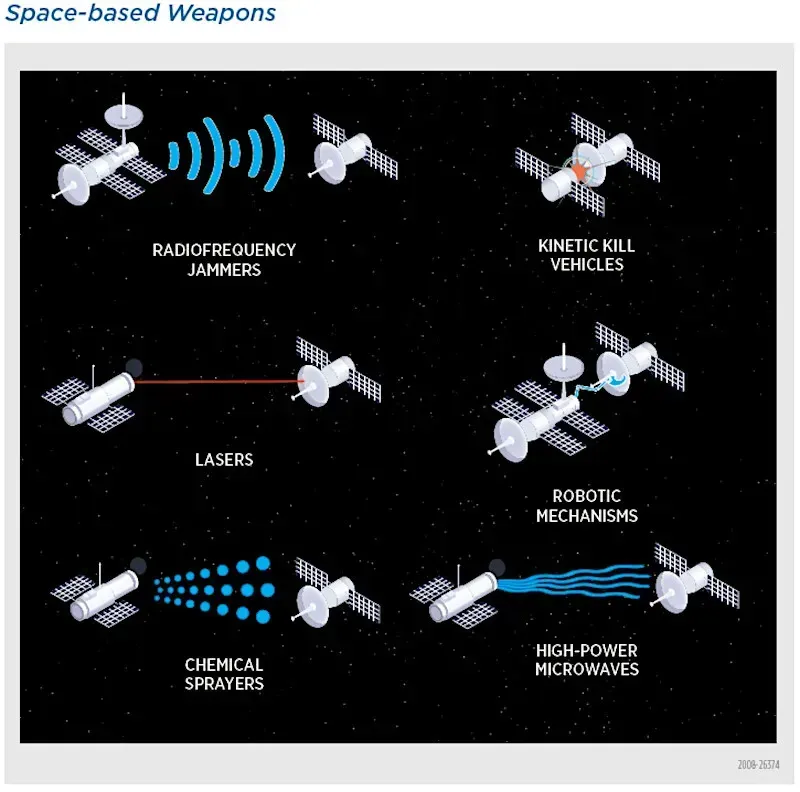
美国国防情报局的一张图表,突出显示了在轨攻击的一些实施方式。 国防情报局战略优势显而易见。除了射程,PODS还将提供极高的不可预测性、极快的反应时间和非常规的进近轨迹,以及惊人的速度,使其非常难以防御。这足以证明额外的费用和复杂性是合理的。将武器部署在轨道上,至少在大多数情况下,将比部署在地面上提供更好的生存能力。
A system designed to provide persistent orbital strike options could therefore become a very attractive target in a major conflict. A U.S. Defense Intelligence Agency graphic highlighting some of the ways on-orbit attacks can be carried out. DIA The strategic advantages are clear. As well as reach, PODS would offer extreme unpredictability, a very fast response time and unconventional approach trajectories, as well as blistering speed, making it very hard to defend against. This could be enough to justify the additional expense and complexity. Having the weapon in orbit would provide better survivability than on the ground, at least in most cases.
另一方面,基于空间的平台并非天然无懈可击,轨道力学也施加了制约。
On the other hand, space-based platforms are not inherently invulnerable, and orbital mechanics impose constraints, too.
这一概念还将引发重大的法律和战略问题。《1967年外层空间条约》禁止在轨道上部署核武器和其他大规模杀伤性武器,但并未包含同等的、全面禁止在近地轨道部署常规武器的条款。尽管如此,管辖武力使用和敌对行动行为的国际法仍将适用。
The concept would also raise significant legal and strategic questions. The 1967 Outer Space Treaty prohibits placing nuclear weapons and other weapons of mass destruction in orbit, but does not contain an equivalent blanket prohibition on conventional weapons in Earth orbit. Despite that, international law governing the use of force and the conduct of hostilities would remain applicable.
这也可能对战略稳定产生后果。其他国家可能难以区分商业轨道运输系统与军事平台,特别是如果后者设计为搭载可在短时间内返回地球的载荷。即使是常规武器系统,也可能被视为重大的战略威胁,从而可能鼓励进一步的反空间发展。
There could also be consequences for strategic stability. Other countries might have difficulty distinguishing between commercial orbital transportation systems and military platforms, particularly if the latter were designed to carry payloads that could be returned to Earth at short notice. Even a conventional weapons system could be perceived as a significant strategic threat, potentially encouraging further counterspace developments.
话虽如此,空间武器化现在正变得更加普遍,相应的伦理准入门槛也随之降低。除了中俄的活动,美国已承认拥有轨道武器,未来的“金顶”系统也将包括基于空间的拦截器。
Having said that, weaponization of space is now becoming much more common, with the ethical barrier to entry accordingly eroded. As well as Chinese and Russian activities, the United States has admitted to having orbital weapons now and the future Golden Dome will include space-based interceptors .
一个欧洲战略雄心,前路漫漫随声明一同发布的表述明确指出,该计划还旨在支持欧洲发展主权军事能力的雄心。这包括建立更常规的欧洲远程打击能力的努力,例如亚音速巡航导弹,也包括新兴的高超音速能力。
A European Strategic Ambition With A Long Way To Go The statements accompanying the announcement make clear that the initiative is also intended to support Europe’s ambition to develop sovereign military capabilities . This includes efforts to establish more conventional European long-range strike capabilities , such as subsonic cruise missiles , but also emerging hyperconic capabilities. “Europe must be able to develop, build, and operate its critical defense capabilities through its own industry — and that starts with infrastructure,” ATMOS CEO Sebastian Klaus said.
“欧洲必须能够通过自身的工业来开发、建造和运营其关键国防能力——而这始于基础设施,”ATMOS首席执行官塞巴斯蒂安·克劳斯表示。他将轨道运输和大气层再入描述为战略基础设施的新层面,并辩称,对这些技术的掌控将决定欧洲能够独立实现什么。
He described orbital transportation and atmospheric re-entry as a new layer of strategic infrastructure, arguing that control over these technologies will determine what Europe can achieve independently.
MBDA德国公司总经理托马斯·戈特希尔德同样将此次合作描述为该公司在航天领域更广泛战略愿景的一部分,旨在为欧洲武装部队提供主权能力。
MBDA Deutschland Managing Director Thomas Gottschild similarly described the cooperation as part of the company’s wider strategic vision in the space sector, with the aim of providing European armed forces with a sovereign capability.
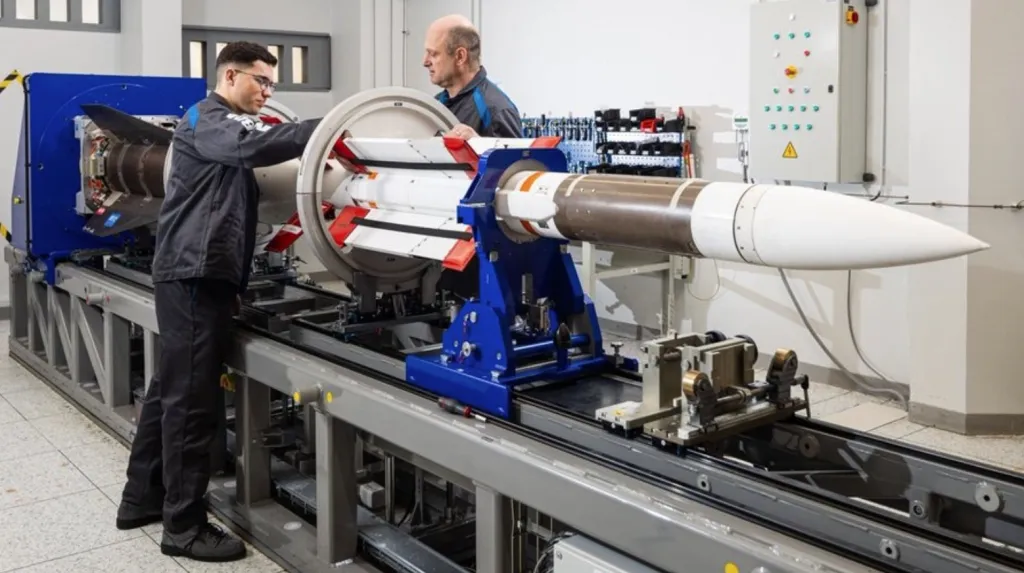
位于欧洲的MBDA设施内生产的“阿斯特”防空导弹。MBDA供图这些雄心反映出欧洲对将太空视作作战领域的兴趣日增,以及减少对外部供应商在关键国防技术方面依赖的意愿,无论这些供应商位于何处。
Production of Aster air defense missiles at an MBDA facility in Europe. MBDA Those ambitions reflect growing European interest in space as an operational domain and in reducing dependence on external suppliers for critical defense technologies, wherever they might be based.
与此同时,双方公司均未披露开发预算或作业时间表。MBDA表示,具体的开发活动及后续项目将需要进一步评估和单独协议。
At the same time, neither company has disclosed a development budget or an operational timetable. MBDA says that specific development activities and subsequent projects will require further evaluation and separate agreements.
这一合作伙伴关系仍值得关注。它将一家欧洲空间运输公司与欧洲主要导弹制造商之一的合作正式化。这家空间运输公司已探索军事应用数年。
The partnership is nevertheless noteworthy. It formalizes cooperation between a European space transportation company that has been exploring military applications for several years and one of the continent’s leading missile manufacturers.
这种组合最终能否产生实用的轨道打击能力,仍是一个极其开放的问题。技术障碍、潜在成本以及不确定的军事优势都十分巨大。欧洲部署一套能够例行性地从轨道打击目标的武器系统,在未来仍遥不可及,甚至可能根本不可行。然而,欧洲至少开始探索商业空间运输与常规军事打击之间的界限。
Whether that combination can ultimately produce a practical orbital strike capability remains a very open question. The technical hurdles, potential costs, and uncertain military advantages are substantial. A European system fielding weapons capable of routinely striking targets from orbit remains far away in the future, if it’s even feasible. However, Europe is at least starting to explore the boundaries between commercial space transportation and conventional military strike.