韩国人权监督机构周一表示,已建议一家移民拘留中心尽量减少对在押人员通讯自由的限制。此前该机构认定,该拘留中心不允许一名在押人员与病危父亲视频通话,侵犯了其追求幸福的权利。
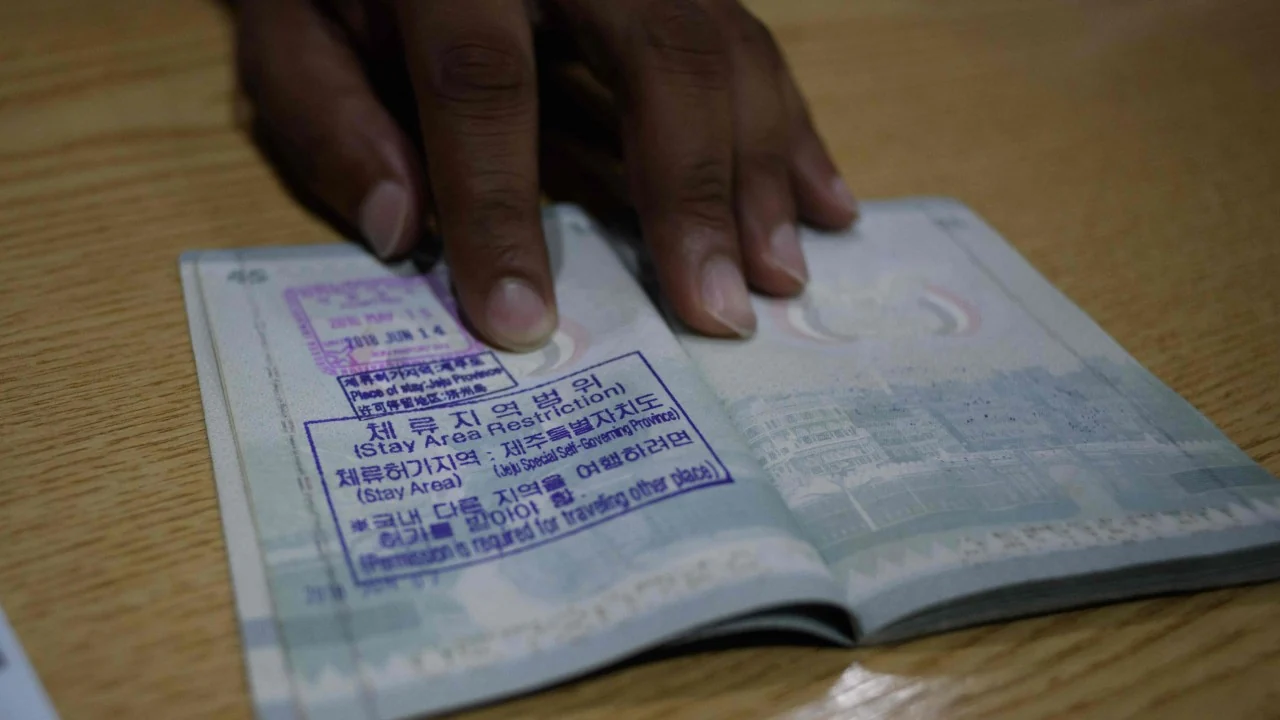
The commission says that the chance to talk to a dying family member one last time is an opportunity that cannot be regained once missed. A Yemeni asylum seeker shows a South Korean visa in his passport in Jeju on July 4, 2018. Photo: AFP South Korea ’s rights watchdog said on Monday it recommended that an immigration detention centre minimise restrictions on detainees’ freedom of communication, after it found that a facility violated a detainee’s right to pursue happiness by not allowing a video call with a dying father.
韩国国家人权委员会上周提出这一建议,呼吁该中心保证在押人员在紧急且严重的人道主义情况下,例如家庭成员病危或濒临死亡时,能够在必要范围内使用个人手机。
The National Human Rights Commission of Korea, which made the recommendation last week, called on the centre to guarantee that detainees can use their personal mobile phones to the extent necessary in urgent and serious humanitarian cases, such as when a family member is critically ill or dying. The complainant, a foreign national held at the centre, brought the case to the commission in November last year.
投诉人是关押在该中心的一名外籍人士,于去年11月向委员会提出申诉。这名在押人员称,曾向工作人员申请使用个人手机,与病危的父亲进行最后一次视频通话,但遭到拒绝。其父亲当天去世,投诉人表示,这一拒绝剥夺了其追求幸福这一最基本的人权。
The detainee claimed that they were refused after asking staff for permission to use a personal mobile phone to see their critically ill father one last time over a video call. The father died that day, and the complainant said the refusal deprived them of the most basic human right to pursue happiness. The centre said it had never received the request and would have considered necessary measures if it had. It added that it had previously allowed other detainees who lost their family members while in custody to use their phones.
该中心表示从未收到这一请求,如果收到会考虑采取必要措施。中心还称,此前曾允许其他在押期间失去家人的在押人员使用手机。
[embedded media] Although no material directly verified the detainee’s request to use a phone, the commission concluded that the records or staff members’ recollection of the incident could inaccurate, and accepted that the complainant had asked for a video call with the father.
尽管没有材料直接证实在押人员曾请求使用手机,但委员会认定,相关记录或工作人员对事件的回忆可能存在不准确之处,并采信了投诉人曾请求与父亲视频通话的说法。
It based its finding on the fact that the father died on the day the request was made as well as records showing the complainant sought counselling that same day and the detention centre having to correct its initial response to the commission after mistaking another person’s file for the complainant’s.
它的结论基于以下事实:父亲在提出请求的当天去世,且记录显示投诉人同一天寻求了咨询,而拘留中心在误把他人档案当作投诉人档案后,必须纠正其对委员会的最初回应。
The commission stressed that the chance to see a dying family member one last time, say goodbye and mourn the deceased was a significant personal interest that was hard to regain once missed. It added that the complainant lost that chance with their father because they were not allowed to use a phone despite asking, a violation of the right to pursue happiness guaranteed under Article 10 of the Constitution.
委员会强调,最后一次见到垂危的家属、说再见并哀悼逝者的机会是一项重要的个人利益,一旦错失便难以重新获得。
This article was first published by The Korea Times Sections: News / Asia / East Asia | Topics: South Korea, Human rights
委员会补充说,投诉人因被拒绝使用电话而失去了与父亲的这次机会,构成了对《宪法》第10条所保障的追求幸福权利的侵犯。
Short link: https://sc.mp/ro19c Read the original article on SCMP