日本常滑 —— 汽车与机器人企业正在丰田汽车总部所在地、日本中部爱知县接受现实检验,它们正寻求将人形机器人与物理 AI 结合,转化为车辆行业的实际应用。
TOKONAME, Japan -- Automotive and robotics companies are facing a reality check in central Japan's Aichi prefecture, home to Toyota Motor, as they seek to turn a combination of humanoids and physical AI into practical applications for the vehicle industry.
旨在解决制造业课题、汇集约 620 家参展商的“工厂创新周 2026”本周在爱知县常滑市开幕,展期至周五。
Factory Innovation Week 2026, a trade show with around 620 exhibitors and aimed at solving challenges in the manufacturing sector, opened this week in the city of Tokoname in Aichi.
在一项演示中,两台人形机器人在约 7 平方米的区域内展示,其中一台跳舞、表演功夫,吸引驻足观看的参观者赞叹不已。然而,该技术仍需进一步发展,才能应对汽车工厂的复杂作业。
The event runs through Friday. In one demonstration, two humanoid robots were on display in a roughly seven-meter-square area, with one dancing and performing kung fu, drawing visitors who stopped to watch in admiration. Yet the technology still needs further development before it can handle the complex operations of automobile factories.
中国宇树科技日本分销商的一名工作人员承认,人形机器人“目前能帮汽车工厂做的事还不多”,并指出图像识别存在局限,难以用于精准拾取随机散落零件等制造任务。
A staff member for the Japanese distributor of China's Unitree Robotics acknowledged that there is "still not much humanoid robots can do" to help auto factories, citing limitations in image recognition that make it difficult to use them for manufacturing tasks such as accurately picking up randomly scattered parts.
该工作人员表示,日本的大多数订单来自研究机器人能力的大学和企业。
Most orders in Japan come from universities and companies researching what the robots can do, the staffer said.
人形机器人不仅因完成后空翻等病毒式视频吸引公众目光,更因作为物理 AI 承诺的化身而备受关注,物理 AI 是一个宽泛术语,指利用人工智能让机器感知并与物理世界互动。
Humanoid robots have captured public attention not just through viral videos of them performing backflips, but also as the embodiment of the promise of physical AI, a broad term for enabling machines to perceive and interact with the physical world using artificial intelligence.
但在汽车制造领域,该技术最初可能在传统工业机器人上找到更实际的应用。
But in automotive manufacturing, the technology may initially find more practical applications in conventional industrial robots.
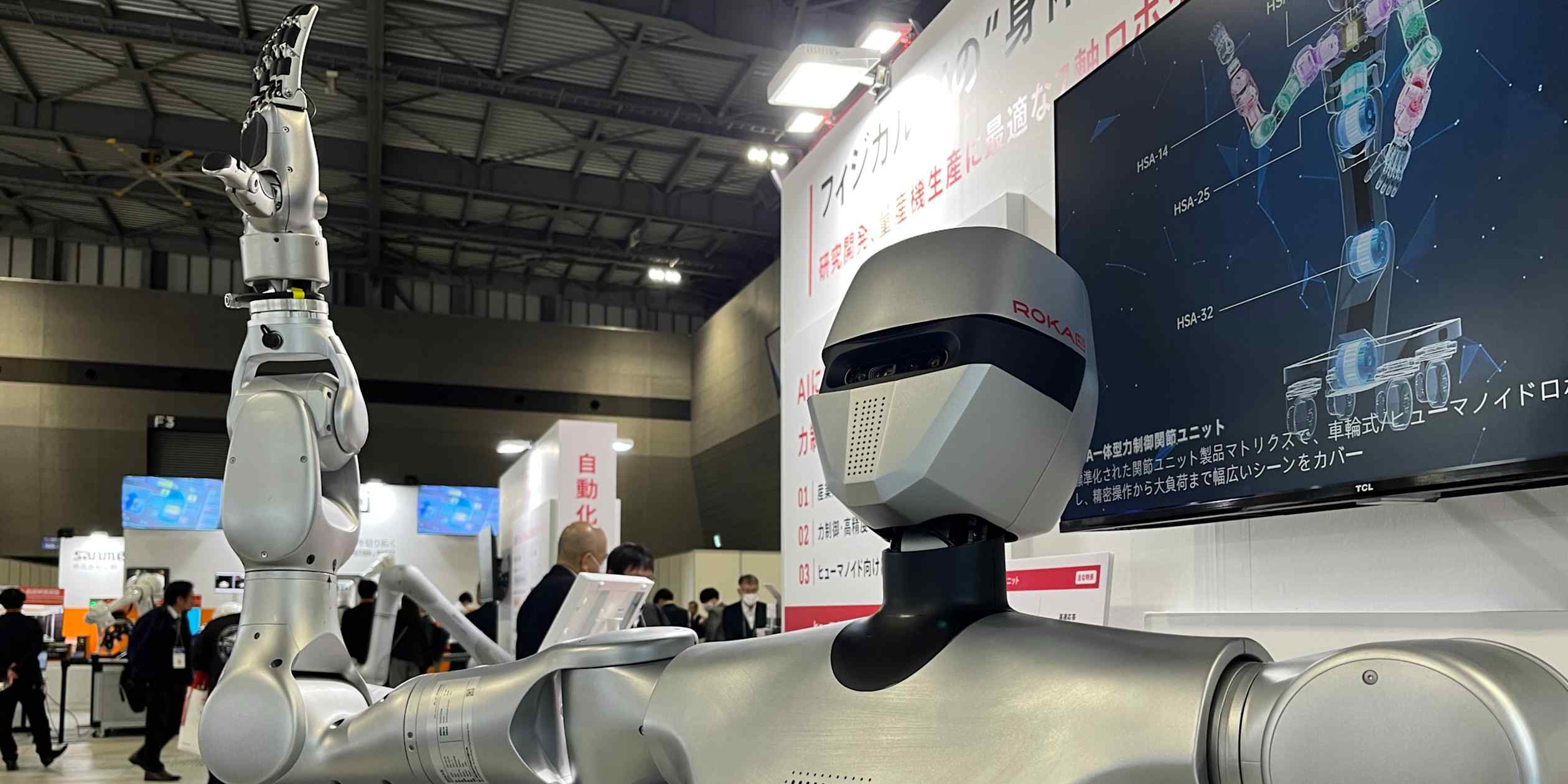
中国洛可机器人日本分销商表示,该公司在日本的主力产品是一台近 3 米高的单臂机器人,专为搬运重物设计,而非人形机器人。
A Japanese distributor for Chinese robot developer Rokae Robotics said the company's main product in Japan is a nearly three meter high, single-arm robot designed for loading heavy objects, rather than a humanoid.
爱知县是丰田供应链的核心。根据爱知县政府的数据,该县占日本汽车设备出货额的44%,2023年出货额约为31.7万亿日元(约合1990亿美元)。
Aichi is at the heart of Toyota's supply chain. The prefecture accounts for 44% of Japan's shipments of automobile equipment, which was worth around 31.7 trillion yen ($199 billion) in 2023, according to the prefectural government.
丰田近期宣布,从2028年起,每年将投入1万亿日元用于升级其内部供应链中老化的工厂。丰田及其集团公司还计划在2028年至2040年间,在其供应链中总共部署40万台机器人。
Toyota recently announced plans to spend 1 trillion yen a year starting in 2028 to upgrade the aging factories in its internal supply chain. The automaker and its group companies also plan to deploy a total of 400,000 robots across its supply chain from 2028 through 2040.
丰田勾画了一条渐进路径:从使用遵循预设指令的机器人进行传统自动化,转向协作机器人(即协作机器人)与人类并肩作业的生产系统——丰田将这种模式称为“工厂自动化3.0”。但据供应商透露,这一雄心勃勃的自动化计划并不意味着丰田即将跟风投身人形机器人领域。
The automaker outlined a gradual shift from conventional automation using robots that follow predefined instructions towards a production system in which collaborative robots, or cobots, work alongside humans -- an approach the automaker dubbed "Factory Automation 3.0." But the ambitious automation plans do not necessarily mean Toyota is about to jump on the humanoid robot bandwagon, according to suppliers.
一家生产线设备供应商表示,丰田集团旗下的一家公司最近已在爱知县启用了一条下一代制造生产线,在焊接工序的相关环节部署了协作机器人。该供应商称,这种做法距离能够自主执行广泛制造任务的通用型机器人愿景仍有很大差距。
A supplier of production-line equipment said a company in the Toyota group had recently started operating a next-generation manufacturing line in Aichi that deploys cobots for tasks surrounding the welding process. The approach remains a far cry from the vision of general-purpose robots capable of autonomously performing a wide range of manufacturing tasks, the supplier said.
丰田此前曾展示一款安装在轮式底座上的双臂机器人,能够学习将零件从一个箱子转移到另一个箱子、折叠T恤等简单任务。该机器人通过观察人类演示来学习执行这些任务。
The automaker previously showcased a dual-arm robot mounted on a wheeled base that can learn simple tasks, such as transferring parts from one box to another or folding a T-shirt. The robot learns to perform these tasks from human demonstrations.
围绕人形机器人的大部分热情,源于人们期待机器能根据简单的口头指令执行多种任务。但它们的实际应用范围目前仍相对狭窄。
Much of the excitement surrounding humanoid robots stems from the prospect of machines that can perform a variety of tasks in response to simple verbal instructions. But their practical applications remain relatively narrow.
麦肯锡公司在2025年底发布的一份报告中写道:“在汽车和仓储领域,机器人测试主要集中在已绘制地图的区域内搬运零部件和周转箱,侧重于移动能力而非精细操作。”
"In automotive and warehousing, robots are tested primarily for moving components and totes in mapped areas, emphasizing mobility over fine manipulation," McKinsey & Company wrote in a report published in late 2025.
目前的机器人技术擅长“可预测路线和可重复任务,而非高灵巧度装配”,丰田补充道。
Current robot technology excels in "predictable routes and repeatable tasks, not from high-dexterity assembly," it added.
包括人形机器人在内的通用型机器人面临一个根本性的权衡:它们越通用,在任何特定任务上超越人类就越困难。
General-purpose robots, including humanoids, face a fundamental trade-off: the more versatile they become, the harder it is for them to outperform humans at any given task.
另一家供应商表示,丰田不太可能简单地“跳上新技术的顺风车”。在将一项技术引入生产线之前,这家车企会严格测试,以确保其满足安全和质量要求以及丰田自身的标准。即便如此,丰田过去也会在并行工序中部署新机器人,或在生产计划中预留缓冲,以防机器人故障在生产线上造成瓶颈,该供应商说。
Another supplier said Toyota was unlikely to simply "jump on to a new technology." Before introducing a technology on a production line, the automaker rigorously tests it to ensure it meets safety and quality requirements as well as Toyota's own standards. Even then, Toyota in the past deployed new robots in parallel processes or built buffers into its production plans to prevent robot failures from creating bottlenecks on the line, the supplier said.
丰田执行副社长宫崎洋一本月早些时候在财报发布会上表示:“我们的目标是利用机器人提高工厂现场的生产率,让员工的工作更有价值。”“在引入自动化之前,尽可能彻底地消除生产流程中的低效环节,是部署机器人的基础,”他补充道。
Yoichi Miyazaki, Toyota's executive vice president, said during an earnings news conference earlier this month, "Our aim is to use robots to improve productivity on the factory floor and make work more rewarding for employees." "Eliminating inefficiencies in production processes as thoroughly as possible before introducing automation is the foundation for deploying robotics," he added.
在展会上,一家生产设备供应商正在展示一款机械臂,它使用预训练 AI 模型从桌面上拾取物体并将其安装到固定的汽车零部件上。
At the trade show, a production equipment supplier was showcasing a robotic arm that uses a pretrained AI model to pick up objects from a table and fit them onto a stationary automotive component.
该供应商展位的一名工作人员表示,积累 AI 驱动机器人的专业知识,将使公司在丰田探索此类机器人的开发和部署时占据优势。
A staff member at the supplier's booth said building expertise in AI-powered robotics would give the company an advantage as Toyota explores the development and deployment of such robots.
但该机器人的视觉识别能力仍然有限,光照条件的变化甚至桌面材质都会影响其表现。其成功率未达到汽车制造所要求的近乎完美的可靠性。该工作人员表示,该供应商“尚未准备好”向丰田展示该产品。
But the robot's visual recognition capabilities remain limited, with variations in lighting conditions and even the material of the tabletop affecting its performance. Its success rate fell short of the near-perfect reliability required in automotive manufacturing. The supplier is "not ready" to show the product to Toyota, the staff member said.