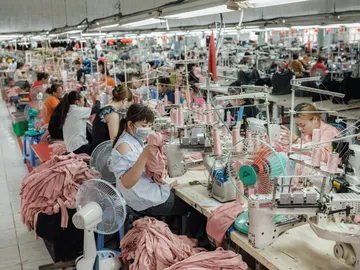
总统唐纳德·特朗普最新推出的关税举措,可能会破坏自美中贸易战爆发以来全球制造业标志性转变的核心——即将供应链迁出中国的进程。
Published: 2026-11-26T16:05:24+08:00 President Donald Trump’s latest tariff push risks undercutting one of the signature shifts in global manufacturing since the US-China trade war began: the movement of supply chains out of China.
这些针对亚洲和欧洲14个经济体的关税,将打击所谓“中国+1”投资热潮中的一些最大赢家。像越南这样的国家,其面临的税率最终可能会接近甚至在某些情况下超过中国商品,尽管许多豁免条款使得实际征收的税率低于名义税率。
The levies on 14 economies in Asia and Europe would hit some of the biggest winners from the so-called “China+1” investment boom. Countries like Vietnam could end up with rates approaching or even in some cases exceeding those on Chinese goods, though there are many exemptions that keep effective charges lower than the headline rates.
尽管如此,这些周三宣布的措施除了引发各国政府的不满外——各国正排队谴责最新的美国贸易攻势——也可能会让许多公司总部感到不安。这些措施表明,将生产转移出美国这个超级大国的竞争对手,可能已不足以让企业独善其身。
Still, as well as upsetting governments — who’ve been lining up to condemn the latest US trade offensive — the measures announced Wednesday will likely cause unease in plenty of corporate headquarters too. They signal that shifting production away from America’s superpower rival may no longer be enough to keep companies insulated.
新加坡欣桥基金会贸易政策主管黛博拉·埃尔姆斯表示,许多公司“会说:‘好吧,见鬼去吧,我们干脆回中国算了。’‘如果我们不需要面对这种海量的文书工作、合规成本以及未来充满威胁的关税变动,我们为什么要应对这些。’”特朗普政府正试图恢复此前被最高法院推翻的关税,因为这些关税缺乏适当的法律基础。新关税将根据美国对制造业产能过剩的评估来征收,产能过剩的定义是:由于政府政策或干预,生产持续超出市场条件所能支持的水平。
A lot of firms “will say: ‘Well, screw it, we’re just going to go back to China,’” said Deborah Elms, head of trade policy at the Hinrich Foundation in Singapore. “‘Why would we be dealing with this massive amount of paperwork, compliance costs and tariff changes with the threat ahead if we don’t need to.’”The Trump administration is seeking to restore tariffs that were shot down by the Supreme Court because they lacked proper legal foundations. The new ones will be imposed based on US assessments of overcapacity in manufacturing, defined as production persistently above what market conditions would support because of government policies or intervention.
在概述其新政策时,美国贸易代表指责中国鼓励扩大海外制造业产能。这在东南亚尤为相关,随着中国企业纷纷在当地设厂,许多人看到该地区对美国的工厂产量和出口激增。美国指责该地区国家未能充分应对来自“非市场”经济体(通常指代中国)的投资和货物转运。
Outlining its new policy, the US Trade Representative blamed China for encouraging the expansion of manufacturing capacity abroad. That’s particularly relevant in Southeast Asia, where many have seen a surge in factory output and exports to the US as Chinese firms set up shop there. The US faulted the region’s countries for failing to adequately address investment, and transshipment of goods, from “non-market” economies, typically code for China.
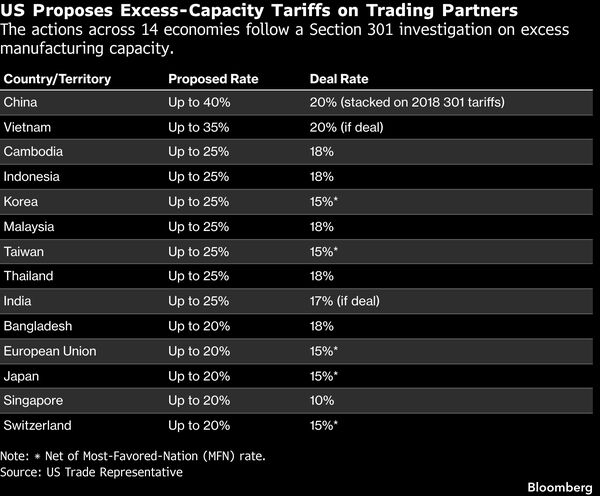
美国拟议的关税对越南最高可达35%,对印度为25%,对新加坡为20%,不过这些国家可以通过与华盛顿达成协议来获得较低的税率。中国将在其他原有税费的基础上被加征20%的关税,如果贸易停火协议破裂,中国可能面临更严厉的关税。
The proposed US tariffs could rise as high as 35% for Vietnam, 25% for India and 20% for Singapore, though countries could secure lower rates by cutting deals with Washington. China will be charged 20% on top of other pre-existing duties, and may face steeper levies if the trade truce breaks down.
在华盛顿于2018年首次对中国商品征收关税后,寻求摆脱对中国依赖的步伐加快,促使制造商在亚洲其他地区扩大业务,同时往往保留在中国国内的运营和供应商。截至2025年,流入东南亚的外商直接投资达到了创纪录的2460亿美元,自20世纪90年代初以来首次超过东亚。
The push to diversify from China accelerated after Washington first imposed tariffs on Chinese goods in 2018, prompting manufacturers to expand elsewhere in Asia while often retaining operations and suppliers in China. By 2025, foreign direct investment into Southeast Asia had reached a record $246 billion, surpassing East Asia for the first time since the early 1990s.
根据东南亚国家联盟的数据,仅去年一年,制造业外商直接投资就飙升了近50%,达到40亿美元,该地区吸引了电子、半导体、汽车和其他行业的投资。
Manufacturing FDI soared almost 50% last year alone to $40 billion, according to the Association of Southeast Asian Nations, as the region attracted investment in electronics, semiconductors, vehicles and other industries.
马来西亚银行新加坡证券经济学家埃丽卡·泰表示,假设现有的贸易协议得以完成,新税率“将缩小”许多东南亚出口产品相对于中国商品的优势,但可能不会完全抹杀这一优势,因为制造业供应链“根深蒂固,难以根除”。
Assuming outstanding trade deals are completed, the new rates “would narrow” the advantage many Southeast Asian exports have over Chinese goods, though probably not erase it because manufacturing supply chains are “challenging to uproot,” said Erica Tay, an economist at Maybank Securities Singapore.
越南是受冲击最严重的经济体之一。作为特朗普第一场贸易战的最大受益者之一,在智能手机和笔记本电脑等电子产品产量的激增推动下,越南已成为东南亚的增长冠军。
Vietnam is among the economies most exposed. One of the biggest beneficiaries of Trump’s first trade war, it has emerged as Southeast Asia’s growth champion, driven by surging output of electronic products like smartphones and laptops.
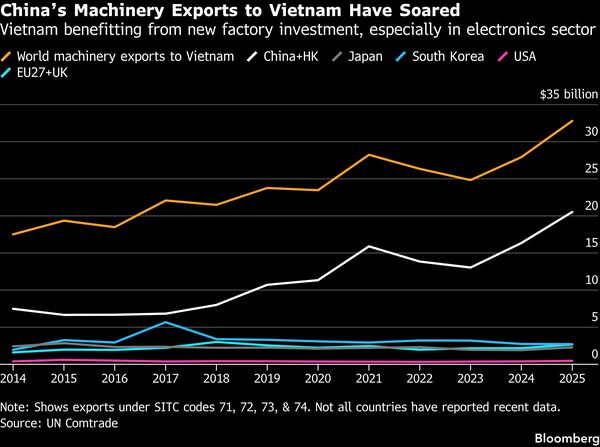
根据美国人口普查局的数据,仅在2026年前九个月,越南对美国的贸易顺差就达到了1910亿美元,超过了2025年全年的178亿美元。与此同时,越南对提供大部分进口商品的中国的贸易逆差也大幅膨胀。
Vietnam posted a $191 billion trade surplus with the US just in the first nine months of 2026, surpassing the $178 billion posted in the full year of 2025, according to US Census data. At the same time, its deficit with China, which supplies most of its imports, also ballooned.
美国商会驻越南执行董事特拉维斯·米切尔表示,拟议的35%关税“将使越南处于竞争劣势”。“企业可能别无选择,只能探索将部分生产转移到其他国家,这可能会扰乱历时多年才建立起来的供应链。”越南工贸部对新税率回应称,将参与美国调查的下一个阶段,并继续致力于达成一项互惠贸易协议。
The mooted 35% tariff “would put Vietnam at a competitive disadvantage,” said Travis Mitchell, executive director of the American Chamber of Commerce in Vietnam. “Companies may have little choice but to explore shifting some of their production to other countries, potentially disrupting supply chains that have taken years to build.”Vietnam’s Ministry of Industry and Trade responded to the new rates by saying it will participate in the next steps of the US investigation and continue to work toward a reciprocal trade agreement.
其他贸易伙伴也表达了反对意见,新加坡表示对美国最新举措“非常失望”,日本则称其“令人遗憾”。
Other trade partners have voiced objections, with Singapore saying it was “very disappointed” by the latest US measures and Japan calling them “regrettable.”
新加坡尤索夫伊萨东南亚研究所客座高级研究员贾扬特·梅 Menon 表示:“这开创了一个令人担忧的先例,将一个行业概念——结构性产能过剩——扩大到了整个经济层面。”
“It sets a worrying precedent in extending an industry concept — structural excess capacity — to an economy-wide one,” said Jayant Menon, a visiting senior fellow at the ISEAS-Yusof Ishak Institute in Singapore.
越南美国商会的米切尔表示,对于企业而言,这是又一层混乱,使它们更难看清前方的道路。
For businesses, said Mitchell at the American Chamber in Vietnam, it’s yet another layer of confusion that makes it harder to see the road ahead.
他说:“企业越来越难以在定价、销售预测、生产规划和未来投资方面做出决策,因为它们不知道自己将在未来几个月面临什么样的关税税率。”
“It is increasingly difficult for companies to make decisions on pricing, sales forecasts, production planning and future investments,” he said, “without knowing what tariff rates they will be facing in the coming months.”