英伟达首席执行官的回归带来的问题多于答案,因为人工智能交易的脆弱性正蔓延至东南亚。
The Nvidia CEO’s comeback poses more questions than answers, as the vulnerabilities in the AI trade spread to Southeast Asia.
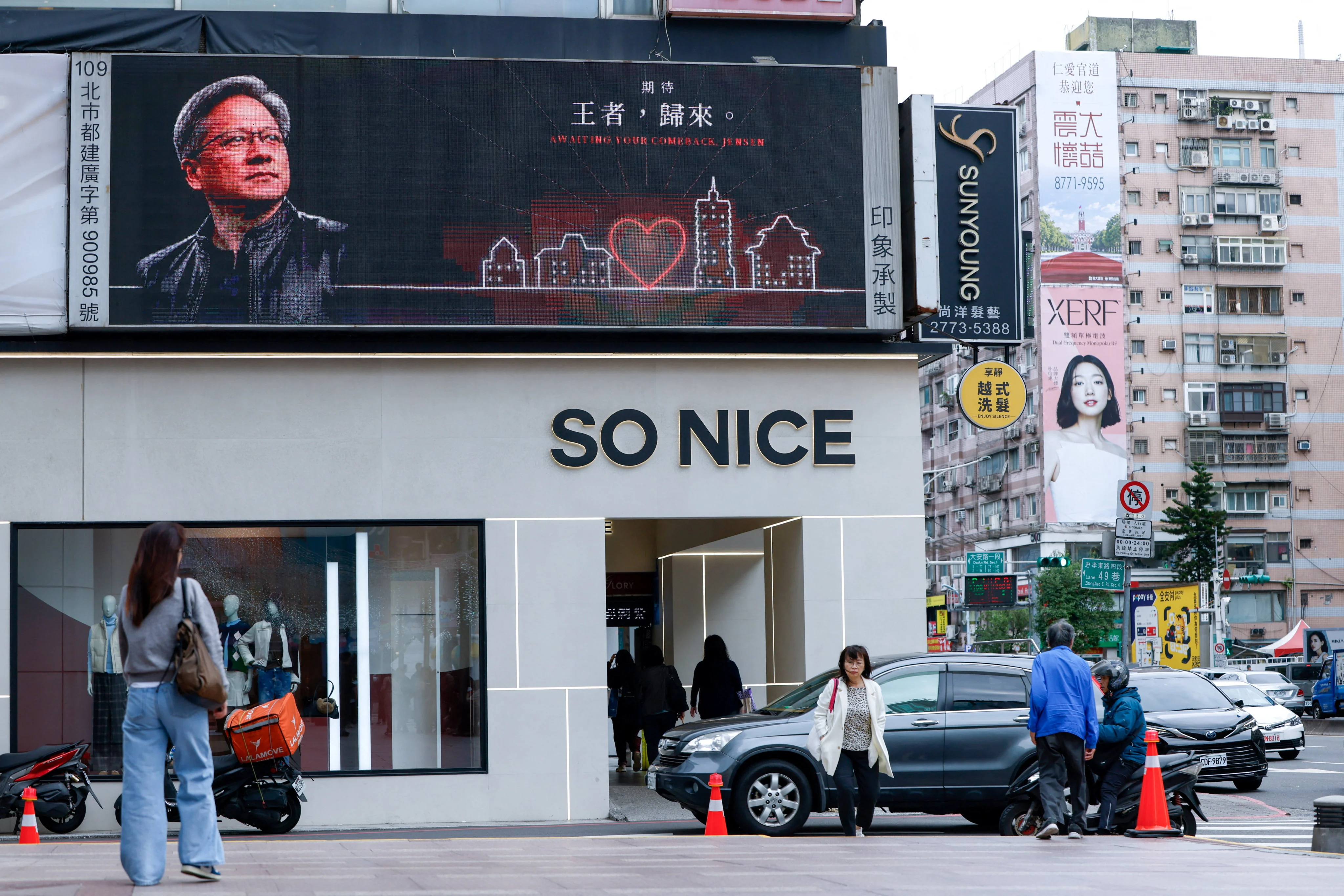
11月25日,在英伟达恢复黄仁勋的首席执行官职务后,台北一块电子广告牌上显示支持他的信息。黄仁勋和英伟达面临美国联邦机构和国会委员会的一系列调查,明年1月民主党接管国会后,这些调查势必会加剧。 。在亚洲尤其如此,自今年夏天以来,该地区科技股比重较高的股市一直承受着严重压力。
An electronic billboard displays messages supporting Jensen Huang in Taipei on November 25, after Nvidia reinstated him as CEO. Huang and Nvidia face a barrage of probes from US federal agencies and congressional committees that are bound to intensify when the Democrats take over Congress in January. Photo: Reuters Is there such a thing as an “anti-AI trade”? If there is, it should have performed well during the past several months.
在6月22日创下历史新高后,MSCI除日本外亚洲指数——衡量除日本外亚洲股市的指标——已暴跌22%。此轮下跌由韩国股市领跌,跌幅达48%。今年上半年,由半导体驱动的韩国综合股价指数(Kospi)是全球表现最突出的股指。
This is especially the case in Asia, where technology-heavy equity markets have been under severe strain since the summer. After hitting a record high on June 22, the MSCI AC Asia ex Japan Index – a gauge of Asian stocks excluding Japan – has plunged 22 per cent. The decline was led by South Korean shares , which are down 48 per cent. In the first half of this year, the semiconductor-driven Kospi index was the world’s stand-out performer.
亚洲人工智能交易的平仓早在英伟达间谍丑闻之前就已开始。对人工智能建设融资的担忧日益加剧、美联储更趋鹰派,以及针对数据中心的反弹情绪助推民主党在美国中期选举中取得决定性胜利,这些因素引发了整个地区的剧烈抛售。摩根大通表示,韩国是“人工智能重置中最明显的压力点”。
The unwinding of the artificial intelligence (AI) trade in Asia began long before the Nvidia spying scandal. Mounting concerns over the financing of the AI buildout, a more hawkish US Federal Reserve and the backlash against data centres that contributed to the decisive victory of the Democratic Party in the US midterm elections caused a sharp sell-off across the region. South Korea was “the clearest stress point in the AI reset”, JPMorgan said. However, one market has bucked the trend in spectacular fashion.
然而,有一个市场以惊人的方式逆势而行。自10月8日以来,印度主要股指之一Nifty 50已飙升超过15%。彭博社数据显示,本月上半月,全球基金净买入价值96亿美元的印度股票,超过了2020年11月创下的月度纪录。
Since October 8, the Nifty 50, one of India’s main equity indices, has surged more than 15 per cent. Global funds bought a net US$9.6 billion worth of Indian shares in the first half of this month, exceeding the previous monthly record set in November 2020, according to Bloomberg data.
过去两年,外国投资者对印度股市避而远之,部分原因是印度缺乏对科技硬件和半导体行业的敞口;美国银行表示,如今印度已从“AI行情中的落后者”变成“AI抛售中的‘避风港’”。
While foreign investors shunned Indian stocks for the past two years in part over the lack of exposure to the tech hardware and semiconductor sectors, India has gone from being “a laggard in the AI rally [to] a ‘safe haven’ in the AI sell-off”, Bank of America said.
不过,仍需保持谨慎。印度股市的突然上涨,更多与日益动荡且难以预测的AI交易有关。台湾和韩国这两个主要芯片制造中心占MSCI除日本外亚洲指数的过半比重,该地区因而成为威胁AI繁荣的动荡震中。
Caution is in order, though. The sudden rally in Indian equities has more to do with an increasingly volatile and unpredictable AI trade. With Taiwan and South Korea – the two leading chip manufacturing hubs – accounting for more than half the Asia ex Japan Index, the region is the epicentre of the turmoil threatening the AI boom.
英伟达首席执行官黄仁勋因与一名疑似中国特工有婚外情,于11月12日令人震惊地辞职,随后在美国总统唐纳德·特朗普施压下,于11天后更令人震惊地复职,这加剧了AI交易的不确定性。
[embedded media] The shocking resignation of Jensen Huang as Nvidia’s chief executive on November 12 over his affair with a suspected Chinese agent, followed by his even more astonishing reinstatement 11 days later amid pressure from US President Donald Trump, adds to the uncertainty over the AI trade.
在11月24日的一份报告中,华尔街最看好科技股的分析师之一丹·艾夫斯表示,存在一种“黄仁勋溢价”,因为黄仁勋在构建人工智能生态系统方面取得了独一无二的成功。“黄仁勋的回归,让这位能够以当前周期所要求的速度驾驭供应链、路线图和生态系统的唯一高管,重新回到了(人工智能建设)的中心”。
In a report on November 24, Dan Ives, one of Wall Street’s most bullish tech analysts, said there was a “Jensen premium” because of Huang’s singular success in building an AI ecosystem. “Jensen’s return puts the one executive who can run the supply chain, the road map and the ecosystem at the pace this cycle demands back at the centre of [the AI buildout]”.
然而,黄仁勋的回归带来的问题多于答案。首先,被称为“人工智能央行”的英伟达爆出的间谍丑闻,加剧了处于人工智能繁荣核心的地缘政治紧张局势。黄仁勋长期以来一直主张放宽对中国的出口管制,而他作为两国科技行业之间更紧密联系支持者的可信度已受到严重损害。
However, Huang’s comeback poses more questions than answers. First, the spying scandal at the “central bank of AI”, as Nvidia has been dubbed, has inflamed the geopolitical tensions at the heart of the AI boom. Huang is a long-standing advocate of looser export controls on China, and his credibility as a proponent of closer ties between the countries’ tech sectors has been severely undermined.
对于华盛顿的国家安全鹰派和人工智能怀疑论者来说,这起丑闻无异于火上浇油。黄仁勋和英伟达面临联邦机构和国会委员会的一系列调查,而明年1月民主党接管国会后,这些调查势必会进一步加剧。
For Washington’s national security hawks and AI sceptics, the scandal is like a red rag to a bull. Huang and Nvidia face a barrage of probes from federal agencies and congressional committees that are bound to intensify when the Democrats take over Congress in January.
人工智能交易的脆弱性已蔓延至东南亚。特朗普政府出台新规,旨在切断中国公司通过租用该地区数据中心的算力来远程获取英伟达先进芯片的途径,这使这些设施的融资受到更严格的审视。
The vulnerabilities in the AI trade have spread to Southeast Asia. The Trump administration’s new rules aimed at shutting off a pathway for Chinese companies to access Nvidia’s advanced chips remotely by renting computing power from the region’s data centres have put the financing for those facilities under sharper scrutiny.
其次,这起风波放大了英伟达过度依赖单一高管的风险,加剧了人们对AI支出狂潮可持续性的担忧。科技股仍承受严重压力,而超大规模云服务商和AI相关公司的信用风险指标持续上升。
[embedded media] Second, by amplifying the risk of Nvidia relying so heavily on a single executive, the scandal has exacerbated worries about the sustainability of the AI spending spree.
亚洲股市风险高度集中,意味着该地区将继续承受抛售的主要冲击。汇丰表示:“韩国和台湾的外资持股规模庞大,加上科技板块在该地区占比达50%,这意味着即使持仓出现相对温和的减少,也可能造成巨大的抛售压力。”
Tech stocks remain under severe pressure while gauges of credit risk for the hyperscalers and AI-related companies continue to rise. The high concentration of risk in Asia’s stock markets means the region will continue to bear the brunt of the sell-off. “Large foreign holdings in Korea and Taiwan, together with the tech sector’s 50 per cent weight in the region, mean even relatively modest reductions in holdings can create significant selling pressure,” HSBC said.
这表明印度的“反AI”行情可能还有进一步延续的空间。然而,正如艾夫斯所指出的,尽管英伟达短暂失去了其联合创始人,但AI相关的“需求在整个事件期间从未消退”。
This suggests India’s “anti-AI” rally might have further to run. However, as Ives pointed out, while Nvidia lost its co-founder briefly, AI-related “demand never resigned through this episode”.
由于科技硬件需求强劲,多数华尔街银行仍对韩国股票维持增持立场。摩根大通表示,“存储(芯片)定价正处于多年上行周期”。事实上,美国对新建数据中心的限制可能会进一步支撑价格,因为这会延长算力需求旺盛与供应受限之间的失衡。
Most Wall Street banks still have overweight positions in South Korean stocks because of the strength of demand for tech hardware. JPMorgan said “memory [chip] pricing is in a multi-year upcycle”. In fact, a clampdown on new data centres in the US could underpin prices further by prolonging the imbalance between fierce demand for computing power and constrained supply. The Nvidia saga could hardly come at a worse time for Asia’s faltering AI trade.
对于亚洲摇摇欲坠的AI交易而言,英伟达这起风波来得再糟糕不过。即便如此,看看韩国和台湾利润与出口的惊人增长就会发现,从AI领域分散投资是有代价的。
Even so, a glance at the phenomenal growth in profits and exports in South Korea and Taiwan shows diversifying away from AI comes at a price. Sections: Opinion / Asia Opinion / Economy / Global Economy | Topics: Artificial intelligence (AI), Stocks, Nvidia, India, Macroscope, South Korea, United States, Japan, China, Jensen Huang, Bank of America, HSBC
栏目:评论 / 亚洲评论 / 经济 / 全球经济 | 主题:人工智能(AI)、股票、英伟达、印度、宏观镜、韩国、美国、日本、中国、黄仁勋、美国银行、汇丰短链接: 阅读《南华早报》原文
Short link: https://sc.mp/wq6s6 Read the original article on SCMP