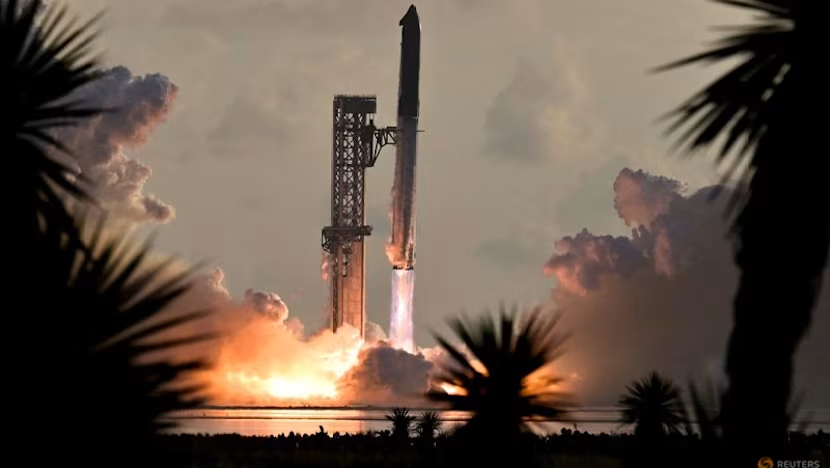
墨尔本:本周,在感恩节假期前夕,美国联邦通信委员会批准了SpaceX发射一百万颗“Starmind”人工智能(AI)数据中心卫星的计划。这一决定反映了卫星热潮、AI泡沫以及特朗普政府无视环境监管的交汇。
MELBOURNE: This week, on the eve of the Thanksgiving holiday, the United States Federal Communications Commission approved SpaceX’s plan to launch one million “Starmind” artificial intelligence (AI) data centre satellites This decision reflects the convergence of a satellite boom, an AI bubble and the Trump administration’s disregard for environmental regulation. If Starmind proceeds in full, the number of operational satellites will be multiplied by a factor of 50.
如果Starmind计划全面推进,在轨运行卫星的数量将增加50倍。太空和我们的夜空将变得繁忙得多。
Space and our night skies will become vastly busier places. SpaceX’s pitch is to take the impact of data centres away from Earth, using a million solar-powered satellites to do AI data crunching in space and beam the results to Earth.
SpaceX的主张是将数据中心的影响从地球移开,利用一百万颗太阳能卫星在太空进行AI数据处理,并将结果传回地球。
But what is the impact of one million satellites, both in space and on Earth?
但一百万颗卫星对太空和地球会产生什么影响?联邦通信委员会为何做出这一决定?一百万颗卫星真的会最终进入轨道吗?
Why has the Federal Communications Commission made this decision? And will a million satellites actually end up in orbit? UPS AND DOWNS We are currently in a satellite boom, and constellations of hundreds or thousands of satellites are a key feature.
起伏 我们目前正处于卫星热潮之中,由数百或数千颗卫星组成的星座是一个关键特征。
The Starlink internet satellites (another SpaceX project) is the best known example of such a constellation.
Starlink互联网卫星(另一个SpaceX项目)是此类星座最著名的例子。轨道火箭发射频率已增加至近乎每天一次,而在轨运行卫星的数量正逼近2万颗。但Starmind代表着另一种情况。一百万颗卫星。
Orbital rocket launches have increased to almost one per day, while the number of operational satellites is creeping towards 20,000. But Starmind represents something else. A million satellites. To get so many satellites into orbit would be a vast undertaking.
要将如此多的卫星送入轨道将是一项浩大的工程。如果卫星寿命为五年(类似于Starlink卫星),那么每天大约需要发射500颗卫星。
If the satellites have a lifetime of five years (similar to Starlink satellites), then roughly 500 satellites would need to be launched every day. This also implies that roughly 500 satellites would eventually need to be disposed of every day.
这也意味着最终每天大约需要处置500颗卫星。对于高度低于2000公里的卫星,处置通常意味着再入大气层并在大气中烧毁。而这会产生后果。
For satellites less than 2,000 kilometres above Earth, disposal usually means reentry and burning up in the atmosphere. And this has consequences. When satellites burn up in the atmosphere, their materials react with and are deposited into the upper atmosphere.
当卫星在大气层中烧毁时,其材料会与大气发生反应并沉积在高层大气中。如今,卫星向大气层沉积的铝、钛、铜和铅远超陨石带来的自然含量。
We now have satellites depositing far more aluminium, titanium, copper and lead into the atmosphere than the natural quantities from meteors. Aluminium is of particular concern, as alumina can lead to the destruction of ozone in the upper atmosphere.
铝令人特别担忧,因为氧化铝会导致高层大气臭氧层遭到破坏。这可能会增加地表紫外线辐射和皮肤癌风险。天空日益拥挤 卫星数量增加50倍将改变我们仰望天空的景象。
This could increase ultraviolet light on Earth and the risk of skin cancers. IT’S GETTING BUSY Increasing the number of satellites by a factor of 50 is going to change our view of the sky. If you look up during the early evening, you will see the stars your ancestors saw.
如果你在傍晚早些时候抬头仰望,你会看到祖先看到的星星。但一两分钟内,你就会看到一颗卫星。一个光点无声地从地平线移动到另一端地平线。我们对夜空的观感可能发生根本性改变。
But within a minute or two you will see a satellite. A point of light silently moving from horizon to horizon. Our view of the night skies could fundamentally change. Each satellite would be 75 metres wide and in the early evening they will be brighter than any star.
每颗卫星宽75米,在傍晚早些时候它们将比任何恒星都亮。若轨道上有一百万颗卫星,无论你身在何处,地平线以上都将有数百颗“星链”卫星。轨道拥挤带来现实风险。
And with a million satellites in orbit, there will be hundreds of Starmind satellites above the horizon irrespective of where you are. The orbital clutter comes with real risks. Satellites travel at speeds of roughly seven kilometres per second, and collisions produce clouds of debris that can produce further collisions.
卫星飞行速度约为每秒七公里,碰撞会产生碎片云,进而引发更多碰撞。一个噩梦般的场景是“凯斯勒综合征”——碎片引发的连锁碰撞失控,导致近地轨道无法使用。
A nightmare scenario is the Kessler Syndrome – a runaway cascade of debris producing collisions that render low Earth orbit unusable. Of course, SpaceX is aware of the risks of orbital collisions, and it already mitigates this risk with Starlink by manoeuvring satellites away from potential collisions.
当然,SpaceX意识到轨道碰撞的风险,并已通过机动“星链”卫星避开潜在碰撞来降低这一风险。然而,这种机动需要卫星处于运行状态,而一些卫星失效在所难免。那些失控的卫星将构成真正的危险。
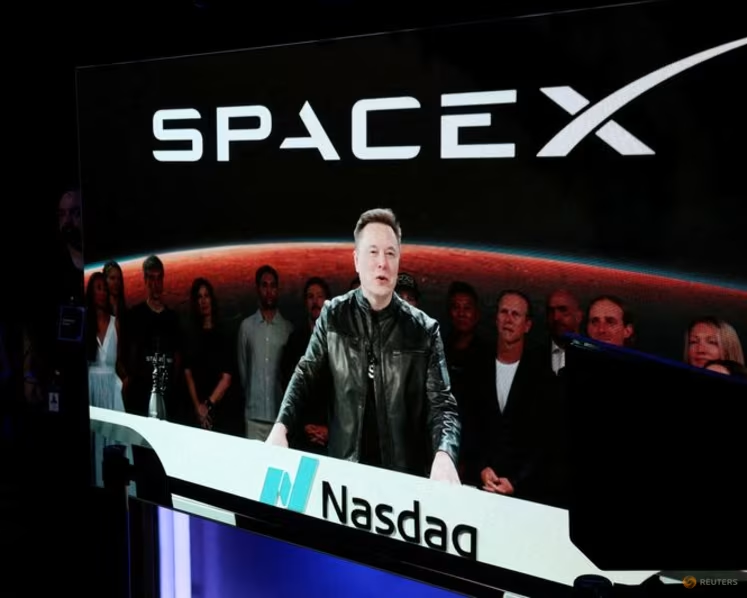
However, such manoeuvres require operational satellites and it is inevitable some satellites will fail. Those uncontrolled satellites will pose a real danger. Founder, CEO, Chairman, and Chief Engineer of SpaceX, Elon Musk, speaks via videolink on the day of SpaceX's initial public offering (IPO) at the Nasdaq MarketSite in New York City, Jun 12, 2026.
SpaceX创始人、首席执行官、董事长兼首席工程师埃隆·马斯克于2026年6月12日,在SpaceX首次公开募股(IPO)当天,通过视频连线在纽约纳斯达克市场发表讲话。监管者还是推动者?
REGULATOR OR PROMOTER? The Federal Communications Commission has been a key regulator for American satellites.
美国联邦通信委员会一直是美国卫星的关键监管机构。这包括监管卫星用于地面通信的无线电频率、卫星在使用寿命结束时的处置以及环境影响。
This has included regulating the radio frequencies that satellites use for communications to and from Earth, the disposal of satellites at the end of their useful lives and environmental impacts. However, under the Trump administration, the commission is taking a looser approach to regulating satellites.
然而,在特朗普政府领导下,该委员机构正在采取更宽松的方式监管卫星。这包括不考虑环境影响,这反映在委员会关于“星智”的决定中。文件称,委员会“将不会要求根据《国家环境政策法》对SpaceX的‘星智’系统进行进一步的环境审查”。
This includes no consideration of environmental impacts, which is reflected in the commission’s decision on Starmind. It says the commission “will not require further environmental review under the National Environmental Policy Act […] for SpaceX’s Starmind system”. There are also some statements from the commission on Starmind that are, quite frankly, bizarre.
委员会关于“星智”的一些表述坦白说相当离奇。例如,它声称“星智”“承诺让人类种族更接近卡达舍夫II型文明——一种能够利用太阳全部能量的文明”。
For example, it claims Starmind “promises to bring the human race closer to a Kardashev II civilization – one that can harness the full power of the sun”. This is sci-fi silliness.
这是科幻小说式的胡扯。卡达舍夫II型文明需要在太阳轨道上部署数万亿平方公里的技术设施。“星智”并非通往巨大“戴森球”的垫脚石——戴森球是一种假设的巨型结构,将包围太阳并捕获其能量。
A Kardashev II civilisation would need many trillions of square kilometres of technology in orbit around the Sun. Starmind is not a stepping stone to a vast “Dyson sphere” – a hypothetical megastrucutre that would surround the Sun and capture its energy. Professor Quentin Parker, Director of the Laboratory for Space Research at the University of Hong Kong, tells CNA that the rising volume of satellites and debris in low Earth orbit poses an increasing risk to space operations.
香港大学太空研究实验室主任彭文顿教授告诉中央通讯社,低地球轨道上不断增加的卫星和碎片体量,对空间操作构成了日益增长的风险。
BUT CAN IT WORK?
但它行得通吗?地面数据中心之所以不受欢迎,原因之一是它们消耗宝贵资源,包括用于冷却发热计算机处理器的水。但在太空冷却更难。身处真空中,只能通过辐射散热。如果你熟悉真空瓶,就会知道这是一个缓慢的过程。
One reason data centres are so unpopular on Earth is their use of precious resources, including water for cooling hot computer processors. But cooling in space is harder still. When stuck in a vacuum, one can only radiate heat away. And if you are familiar with vacuum flasks, you will know this can be a slow process.
当然,在太空调节热量是可能的,卫星一直在这么做。但它们通常不像数据中心那样倾泻大量热量。
Of course, it is possible to regulate heat in space, and satellites do it all the time. But they typically aren’t pouring out heat like data centres do.
谷歌最近将一颗 AI 演示卫星送入轨道,并让它执行 AI 计算任务。但它必须在计算之间安排停机时间,以散发多余的热量。除了物理限制,还有财务问题。
Google recently launched an AI demonstrator satellite into orbit and tasked it with undertaking AI calculations. But it had to have downtime between calculations to dispose of excess heat. And apart from the physics there’s the finance.
目前我们正处于 AI 繁荣期,投资流入远高于收入。而在轨道上部署 AI 的成本,将远高于在地球上部署同等规模的 AI。
Right now we are in an AI boom, with the inflow of investment being vastly higher than revenues. And the cost of deploying AI in orbit will be vastly higher than equivalent AI on Earth.
如果 AI 繁荣是一场泡沫,那么泡沫破裂可能会让“星智”计划落地。
If the AI boom is a bubble, then the burst can bring Starmind back to Earth.
Michael J. I. Brown 是莫纳什大学天文学副教授。本评论首发于《对话》网站。
Michael J. I. Brown is Associate Professor in Astronomy at Monash University. This commentary first appeared on The Conversation.