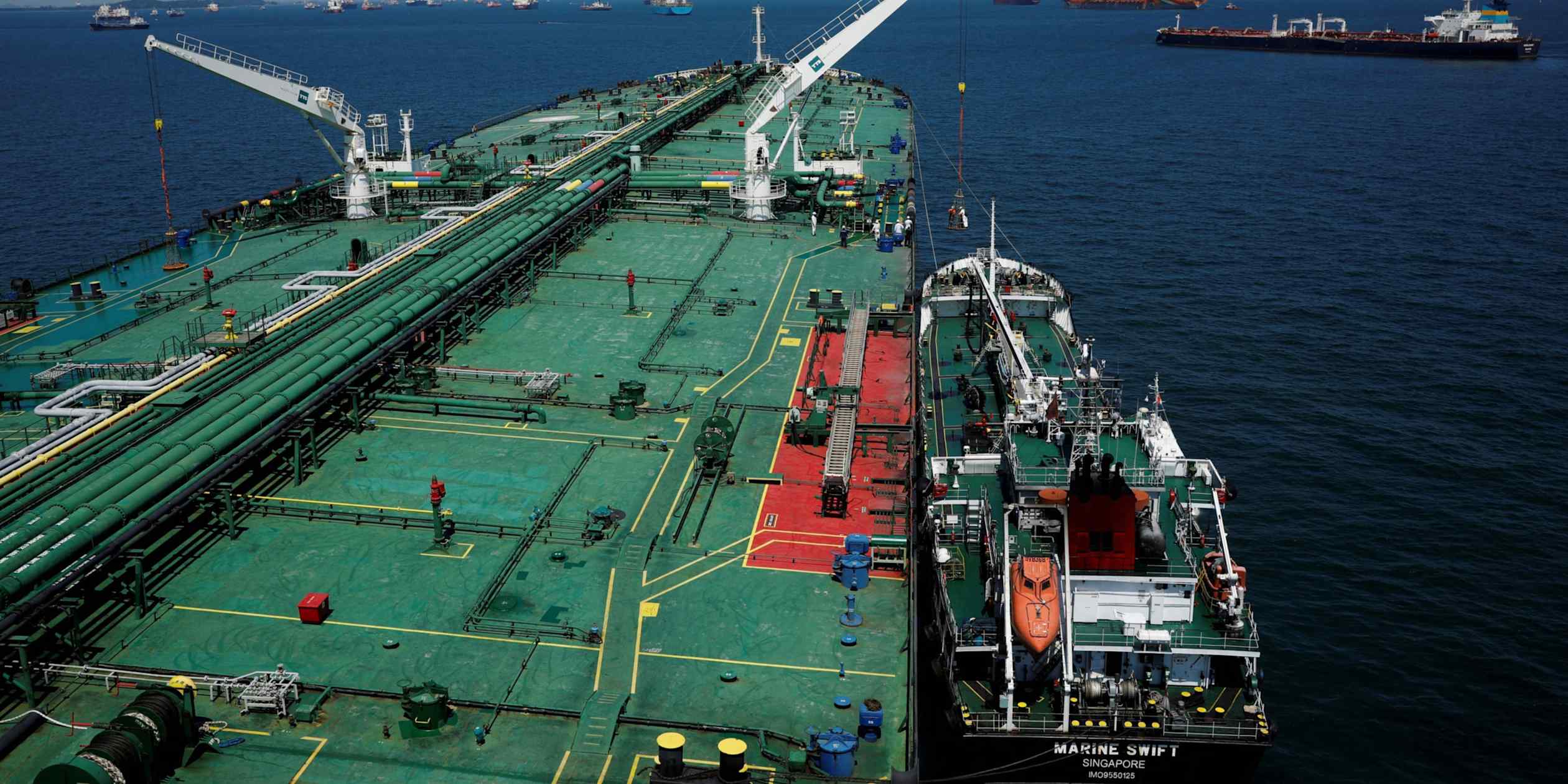
东京——据《日本经济新闻》获悉,沙特阿拉伯和阿联酋将协助亚洲增加石油储备。亚洲虽然依赖石油进口,但一直未能拥有充足的石油供应。
TOKYO -- Saudi Arabia and the United Arab Emirates will help amass oil reserves in Asia, a region that has not held ample supplies despite being dependent on imports, Nikkei has learned.
由日本主导、包括11个国家的亚洲零排放共同体(AZEC)将于周四在菲律宾举行部长级会议。沙特阿拉伯和阿联酋政府高级官员将参加特别磋商,预计将表达参与石油储备合作的意向。
The Asian Zero Emissions Community (AZEC), which is led by Japan and comprises 11 countries, holds a ministerial meeting in the Philippines on Thursday. Senior officials from the Saudi and UAE governments will participate in special consultations and are expected to express their intent to cooperate on oil reserves.
10月11日,石油生产国与进口国之间的部长级对话机制“国际能源论坛”将在沙特阿拉伯举行。预计日本将参加,并向亚洲介绍合作框架。
And on Oct. 11, the International Energy Forum, a ministerial-level dialogue between oil producing and importing countries, will be held in Saudi Arabia. Japan is expected to participate and share a framework for cooperation with Asia.
AZEC会议将把成果汇总为联合声明,作为成员国与中东产油国讨论加强石油储备合作的基础。各方随后将举行双边磋商敲定相关合作的细节和规模。预计沙特阿拉伯和阿联酋将扩大对目标国家的石油出口,并在紧急情况下优先供应。
The AZEC meeting will compile its results into a joint statement serving as a basis for member states to discuss strengthening oil reserves with Middle Eastern oil producing countries. Bilateral discussions will be held later to hammer out the details and scale of such efforts. Saudi Arabia and the UAE are expected to expand exports to the target countries and provide priority supply in times of emergency.
与亚洲开展合作也有利于产油国。由于霍尔木兹海峡事实上已经关闭,沙特阿拉伯和阿联酋的原油出口大幅下降。通过建立由进口国参与储备的合作框架,即使海运受阻,仍可从储油罐中调运石油。
Cooperation with Asia also benefits oil producing countries. Saudi Arabia and the UAE's crude oil exports fell sharply due to the de facto closure of the Strait of Hormuz. By establishing a framework for cooperation in stockpiling by importing countries, shipments from storage tanks can continue even when sea transport is difficult.
日本将国内民间企业的储油罐出租给沙特阿拉伯及其他国家的国有企业。紧急情况下,日本将优先购买这些储油罐中的原油。这一机制可能成为亚洲开展更广泛合作的先例。
Japan leases the tanks of private-sector businesses in the country to state-owned companies of Saudi Arabia and other nations. Japan is given priority to buy the crude oil in these tanks during emergencies. This mechanism could serve as a precedent for broader cooperation in Asia.
4月,日本首相高市早苗提出“POWERR亚洲”,即“广泛能源与资源韧性伙伴关系计划”,这是一项以100亿美元资金支持为核心的合作计划。根据即将举行的AZEC会议预计达成的协议,日本将提供资金援助,并就石油储备提供专业知识。
In April, Japanese Prime Minister Sanae Takaichi proposed POWERR Asia, or Partnership on Wide Energy and Resources Resilience, an energy cooperation plan centered on $10 billion in financial support. Japan is poised to offer financial assistance and provide know-how regarding oil reserves based on the agreement expected to be reached at the upcoming AZEC meeting.
东南亚在历史上和地理上一直严重依赖中东的能源。2月,美国和以色列袭击伊朗,伊朗则通过封锁霍尔木兹海峡这一重要海上运输通道予以反击,使东南亚面临石油供应中断的风险。
Southeast Asia historically and geographically has relied heavily on the Middle East for energy. In February, the U.S. and Israel attacked Iran, and Iran retaliated by blocking the Strait of Hormuz, a vital maritime transport route, putting Southeast Asia at risk of oil supply disruptions.
日本吸取了20世纪70年代石油危机的教训,建立了完善的石油储备体系,储备量位居世界前列——可满足超过200天的需求。但亚洲其他国家的准备相对不足。
Japan, having learned from the 1970s oil crisis, has established a robust oil reserve system, securing one of the world's largest reserves -- more than 200 days' worth. But the rest of Asia was less prepared.
日本资源能源厅的数据显示,截至3月,泰国原油和石油制品的综合储备量可满足61天需求,菲律宾可满足53天,越南更少,仅能维持30天。霍尔木兹海峡被封锁后,亚洲各国被迫限制消费,例如限制加油量。
Japan's Agency for Natural Resources and Energy reports that as of March, Thailand had combined reserves of crude oil and petroleum products equivalent to 61 days, while the Philippines had 53 days' worth. Vietnam had even fewer, at only 30 days' worth. After the blockade of the Strait of Hormuz, Asian countries were forced to restrict consumption, such as limiting gasoline refueling.
各国的能源危机也波及日本。日本超过99%的医用橡胶手套和血液透析管依赖进口,主要来自东南亚。医疗机构及其他组织的咨询如潮水般涌向日本厚生劳动省,促使政府释放储备的医用手套。
The energy crises in various countries impacted Japan as well. Over 99% of medical rubber gloves and hemodialysis tubes are imported, primarily from Southeast Asia. Japan's Ministry of Health, Labor and Welfare was inundated with inquiries from medical institutions and other organizations, prompting the government to release its stockpiled gloves.