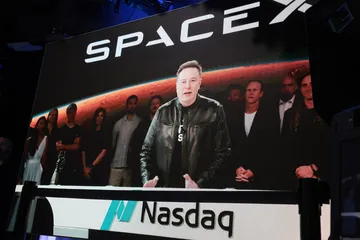
作者:Shuli Ren 埃隆·马斯克对华尔街而言是一把双刃剑。他主导的大规模融资交易不仅带来了丰厚的投资银行手续费,也重塑了全球市场的格局。
By Shuli Ren Elon Musk has been a mixed blessing for Wall Street. His mega-financing deals have generated lucrative investment-banking fees while reshaping global market dynamics.
例子不胜枚举。SpaceX 今年 6 月以 750 亿美元完成上市,吸走了大量市场流动性,甚至可能推迟了 Anthropic PBC 和 OpenAI 的首次公开募股。如今,大规模 IPO 的窗口期似乎正在关闭。
There are plenty of examples. SpaceX’s $75 billion listing in June soaked up so much liquidity that it may have delayed the initial public offerings of Anthropic PBC and OpenAI. Now, the window for blockbuster IPOs appears to be closing.
此外,还有马斯克 2022 年收购社交媒体平台 Twitter 一事。为完成这笔交易而发行的 130 亿美元债务让银行们苦不堪言,这些债务长期压在其资产负债表上,也打击了杠杆融资交易的市场情绪。当时时局尤为严峻:就在马斯克完成融资方案后不久,借贷成本便迅速飙升,因为美联储在短短 16 个月内连续加息 525 个基点。
Then there was Musk’s 2022 acquisition of social media platform Twitter. Banks were stuck for years with $13 billion of debt used to finance the deal, weighing on their balance sheets and souring the mood for leveraged-finance transactions. The timing was brutal. Borrowing costs jumped soon after Musk finalized his financing package, as the Federal Reserve delivered 525 basis points of hikes in just 16 months.
这引出了一个问题:如今 SpaceX 再次开启大规模借贷,接下来会发生什么?该公司正寻求筹集 400 亿美元,用于采购英伟达公司的芯片,而就在几个月前,它还从美国企业债券市场融资了 250 亿美元。
Which raises the question: What happens now that SpaceX is embarking on another borrowing spree? The company is seeking to raise $40 billion to fund purchases of Nvidia Corp. chips, just months after tapping the US corporate bond market for $25 billion.
不过,要断定这场由人工智能驱动的信贷周期已经转向,还为时过早。
It’s too early, however, to say the AI-fueled credit cycle is turning.
债券市场仍有容量。SpaceX 的融资行动紧接在 9 月这个异常平静的月份之后,当时各大超大规模科技公司并未发行任何高评级美元债务。此外,科技公司的增长空间可能还更大。根据彭博社整理的数据,银行在美国 2.3 万亿美元的企业债券市场中仍占 18% 的份额,而科技行业仅占 10.5%。
The bond market still has capacity. SpaceX’s capital raise comes on the heels of an unusually quiet September, when hyperscalers issued no high-grade dollar debt. And technology firms can have more room to grow. Banks still account for 18% of the $2.3 trillion US corporate bond market, compared with just 10.5% for the tech industry, according to data compiled by Bloomberg.
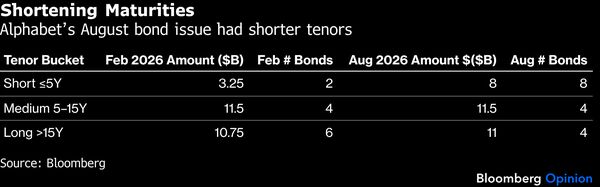
尽管借贷成本上升、投资者趋于谨慎,人工智能企业仍在推进交易。随着美国国债收益率曲线变陡,科技巨头正在缩短其债券发行的到期期限。8月,Alphabet Inc. 发行了总额达80亿美元的八只债券,所有债券的到期时间均在五年以内,这与六个月前该搜索巨头将发行重点放在长期端的做法形成了明显转变。根据高盛集团(Goldman Sachs Group Inc.)的数据,自年中以来,超大规模科技公司发行的短期债券占比已从上半年的30%上升至46%。
AI firms are pushing through deals even as borrowing costs rise and investors get cautious. As the Treasury yield curve steepens, tech giants are shortening the maturities of their bond offerings. In August, Alphabet Inc. sold eight notes totaling $8 billion, all due within five years, a marked shift from six months earlier, when the search giant concentrated its issuance at the longer end. According to Goldman Sachs Group Inc., the share of hyperscaler bonds sold at shorter maturities has risen to 46% since midyear, from 30% in the first half.
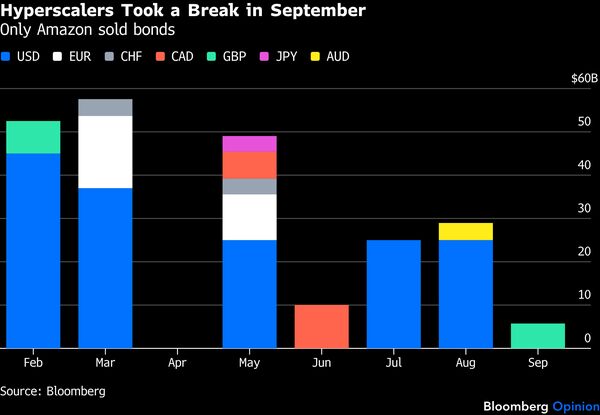
这些公司还开始拓展至美元以外的市场,通过发行日元和澳元证券来寻求更广泛的投资者群体。例如,继Alphabet之后,Amazon.com Inc. 上个月通过首次英镑债券发行筹集了57亿美元。
The companies are also venturing beyond the dollar, by selling securities in Japanese yen and Australian dollars, in search of a broader pool of investors. Amazon.com Inc., for instance, raised $5.7 billion from its first-ever pound bond sale last month, following in the footsteps of Alphabet.
与此同时,规模较小且风险较高的公司正在优化其融资结构以吸引投资者。例如,人工智能云服务提供商Volta Infrastructure Holdings 正在提供一笔50亿美元的杠杆贷款,收益率约为11%,这是市场上最高的利率之一。更不寻常的是,该贷款采用全额摊销模式,即本金将在贷款期限内逐步偿还,而不是像企业债务通常那样在到期时一次性偿还。
Meanwhile, smaller and riskier companies are sweetening their financing structures to lure investors. For instance, Volta Infrastructure Holdings, an AI cloud services provider, is offering a $5 billion leveraged loan yielding about 11%. That’s one of the highest rates in the market. More unusually, the loan fully amortizes, which means the principal is paid down over its life rather than coming due in a lump sum at maturity, as is typical with corporate debt.
换言之,全球债券收益率的上升并未削弱人工智能公司的风险偏好。它们的银行家将量身定制息票支付和交易结构,以维持投资者的支持。毕竟,人工智能竞赛已从技术前沿扩展到了资本争夺战,而融资能力和快速扩张的能力最终可能决定谁是赢家。近几个月来,中国公司加快了融资步伐。那么,美国公司为何要在此时按下暂停键呢?
In other words, rising global bond yields have not dampened AI companies’ risk appetite. Their bankers will tailor coupon payments and deal structure to keep investors on board. The AI race, after all, has expanded from the technological frontier to the battle for capital, where the ability to raise money and scale quickly may ultimately determine the winners. China Inc. has accelerated its fundraising in recent months. Why should American companies hit the pause button now? To be sure, given the size of the offering, SpaceX’s underwriters will need to structure the deal carefully if they want to keep the AI debt boom going. Offering a wide range of maturities would help the market absorb such a large offering. Pricing will matter, too: Cut premiums too aggressively and orders can evaporate overnight, wreaking havoc, as Paramount Skydance Corp.’s $52 billion transaction demonstrated. At this scale, execution is everything.
当然,鉴于此次发行的规模,如果SpaceX的承销商希望维持人工智能债务的持续扩张,就需要谨慎设计交易结构。提供多种到期期限将有助于市场消化如此大规模的发行。定价同样至关重要:如果溢价削减过于激进,订单可能一夜之间消失,造成严重冲击,正如Paramount Skydance Corp.那笔520亿美元的交易所显示的那样。在这一规模上,执行能力至关重要。
But for now, the AI party rolls on. Musk may be testing the limits of the debt boom, but he’s unlikely to break it.
但眼下,人工智能的狂欢仍在继续。马斯克或许正在测试债务扩张的极限,但他不太可能打破这一趋势。
OPIN To contact the author of this story: at sren38@bloomberg.net